 Ed Neuhaus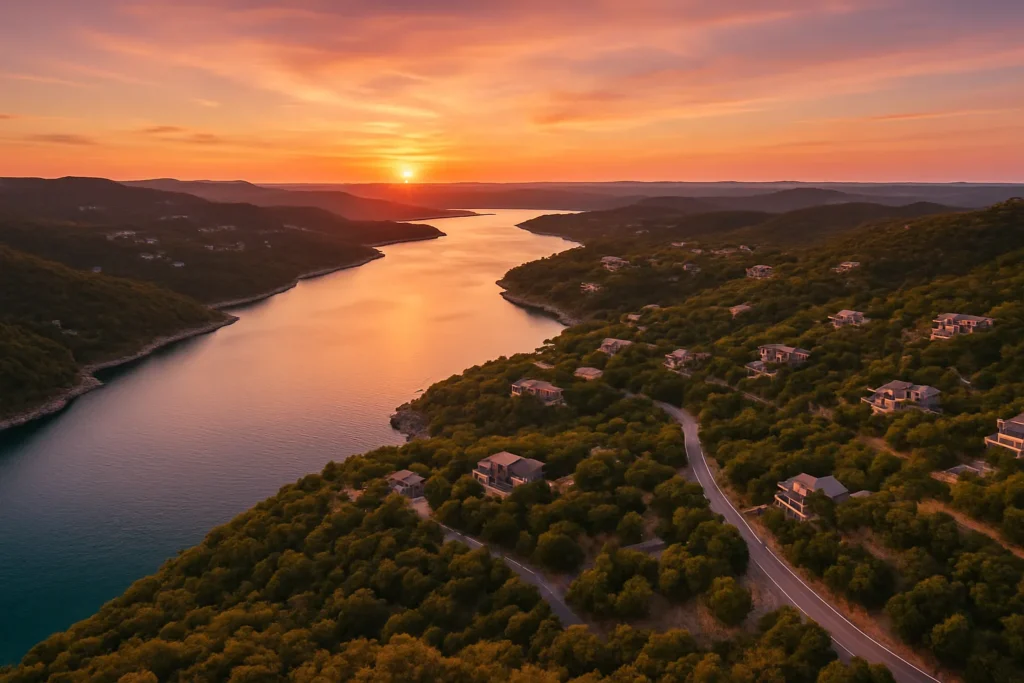
If you are reading this, you are probably considering a move to the Austin Hill Country. Maybe you have been looking at homes online. Maybe you drove through on a weekend and thought “this is different.” Maybe your realtor mentioned Bee Cave or Lakeway or Dripping Springs and you started googling.
Here is what I want you to know up front: the Hill Country is not Austin proper. It is not the suburbs of Austin, either. It is its own thing. And whether you will love it here or hate it depends entirely on what you value and how honest you are with yourself about what you are willing to trade off.
I have been selling real estate in this market since 2009. I have helped hundreds of families make this move. Some thrive. Some sell within two years and head back to town. The difference is not luck. The difference is knowing what you are actually buying.
This guide walks you through everything: what the Hill Country actually is, the major communities and their differences, what to watch out for when buying here, and how to decide if this lifestyle fits you. I have also linked to every detailed guide we have published on specific cities, neighborhoods, schools, costs, and market conditions. Use this as your starting point.
What “Hill Country” Actually Means
The Hill Country is not a political boundary. It is a geographic and cultural region that stretches west from Austin through a series of communities built on limestone, live oaks, rolling hills, creeks, and Lake Travis.
When people say “Hill Country real estate,” they are usually talking about the corridor that runs from west Austin (Westlake, Rollingwood) through Bee Cave, Lakeway, Dripping Springs, and out to Wimberley, Johnson City, and Fredericksburg. Some people include Spicewood, Lago Vista, Marble Falls, and Horseshoe Bay when they talk about the Lake Travis market.
What all these places have in common is landscape. Limestone rock. Elevation changes. Live oak canopy. Cedar breaks. Hill Country views. Dark skies at night. Creeks that run in the spring and dry up in the summer. Land that is harder to build on than the flat blackland prairie closer to town.
The landscape creates the lifestyle. You are farther from things. You have more space. You see fewer people. You hear less noise. You deal with well water and septic and wildlife and volunteer fire departments and MUD taxes and all the infrastructure realities that come with living outside the urban core.
Some people find this liberating. Some people find it isolating. Your experience depends entirely on what you value.
Why People Move Here (and Why Some Leave)
Lets start with the draw. Why do people choose Hill Country real estate over staying in Austin or moving to Round Rock or Pflugerville or Cedar Park?
Space. You get more land for your money. A $700K home in Bee Cave or Lakeway sits on half an acre to an acre. A $700K home in Austin proper sits on a 6,000 square foot lot. If you want room for a pool, a shop, a garden, space between you and your neighbors, the Hill Country delivers.
Schools. Lake Travis ISD and Eanes ISD are two of the highest-rated districts in the state. Dripping Springs ISD is growing fast and investing heavily. If you have school-age kids and you care about academics, these districts compete with private schools in Austin. We wrote a detailed comparison of Lake Travis ISD vs Dripping Springs ISD if you want the breakdown.
Nature. You are not living next to a park. You are living in the landscape. Deer in your yard. Hawks overhead. Creeks on your property. Lake Travis five minutes away. Waterfront homes on Lake Travis offer direct boat access, swimming, fishing, and sunset views. If outdoor access matters to you, the Hill Country delivers it daily, not just on weekends.
Community. The Hill Country towns have distinct identities. Bee Cave is polished and suburban. Lakeway is established and lake-focused. Dripping Springs is rural and growing. Each has its own vibe, its own social fabric, its own sense of place. People who move here tend to stay here. Turnover is lower than in the urban core.
So why do some people leave?
Commute. If you work downtown or in the Domain and you are not remote, the drive will wear on you. Bee Cave to downtown is 45-60 minutes in traffic. Dripping Springs to downtown is 60-90 minutes. Lakeway to downtown is 40-60 minutes. Some people are fine with this. Some people hate their lives after six months. Be honest about your tolerance for windshield time.
Retail and dining. Bee Cave has the Hill Country Galleria, which covers basics. Lakeway has some retail and dining. Dripping Springs has almost nothing. If you are used to having a Whole Foods and a sushi place and a Target within five minutes, you will feel the difference. You can still access everything Austin offers, but it requires planning and drive time.
Water and infrastructure. Many Hill Country homes rely on well water and septic systems. Wells can fail. Septic systems require maintenance. If you are used to city utilities, this is a mindset shift. MUD and PID taxes can add thousands per year to your property tax bill. Lake Travis water levels fluctuate. LCRA regulations affect waterfront properties. These are real costs and real constraints that do not exist when you buy in the city limits.
Isolation. Some people love the space. Some people feel cut off. If you thrive on spontaneous social interaction, walkability, and dense urban energy, the Hill Country may feel lonely. This is not a walkable lifestyle. You drive everywhere. You plan your trips. You see your neighbors less frequently.
The people who thrive here are the ones who want space more than they want convenience. They are remote workers, retirees, families who prioritize schools and land, and people who are already oriented toward outdoor recreation and a slower pace. The people who struggle are the ones who thought they wanted space but actually wanted access.
The Major Communities: Where to Focus Your Search
The Hill Country is not one market. It is a collection of distinct communities with different price points, different amenities, and different lifestyles. Here is the breakdown.
Bee Cave: Suburban Polish in the Hill Country
Bee Cave sits on the west side of Austin, just past the Y at Oak Hill. It is the most suburban of the Hill Country cities. The Hill Country Galleria gives it retail and dining that the other towns lack. Bee Cave is split between Lake Travis ISD and Eanes ISD, which means you get access to two of the best districts in the state depending on where you buy.
Price range: $600K to $3M+. Median is around $900K.
What you get: Newer construction, HOA communities, proximity to Austin, shopping and dining within city limits, excellent schools. The trade-off is less land per dollar compared to Dripping Springs and higher density than the more rural Hill Country towns.
Who it fits: Families who want top schools and suburban convenience but still want Hill Country views and a bit more space than they would get in Austin proper. Also appealing to people who work in Austin but want to minimize commute time compared to Dripping Springs.
We have published detailed guides on the best neighborhoods in Bee Cave and the current Bee Cave real estate market conditions. If you are considering Bee Cave, start there.
Browse current Bee Cave homes for sale.
Lakeway: Established Lake Lifestyle
Lakeway is the oldest of the Hill Country communities. It was master-planned in the 1960s around golf, the lake, and resort living. It has an established feel. Mature trees. Older homes mixed with newer builds. A strong sense of community identity.
Price range: $400K to $3M+. Median is around $725K.
What you get: Lake Travis access, golf courses, parks, trails, lower density than Bee Cave, Lake Travis ISD schools. Lakeway is also home to some of the best neighborhoods in the Hill Country, including Rough Hollow, The Uplands, and Lakeway Highlands. We wrote a full breakdown of the best neighborhoods in Lakeway if you want the details.
Who it fits: Lake people. Golfers. Families who want LTISD schools without the density of Bee Cave. Retirees who want an established community with amenities. People who value the lake lifestyle and do not mind older housing stock.
The Lakeway market has softened in the past year. Inventory is higher. Price reductions are common. This is a buyer opportunity market right now. We published a detailed Lakeway market analysis for 2026 that walks through current conditions and where we see opportunities.
Browse current Lakeway homes for sale.
Dripping Springs: Rural, Growing, and Polarizing
Dripping Springs is the most rural of the three main Hill Country cities. It is also the fastest growing. It sits 30 miles west of Austin on Highway 290. Until recently, it was a small town surrounded by ranches. Now it is one of the hottest growth markets in Central Texas.
Price range: $350K to $1.5M+. Median is around $575K.
What you get: More land for less money. Dark sky ordinance (you can see the stars). Proximity to wineries, distilleries, and the Texas wine country. Dripping Springs ISD schools, which are improving rapidly but still lag behind LTISD and Eanes. A true Hill Country lifestyle with more separation from Austin.
Who it fits: People who want land and privacy. Remote workers who do not commute to Austin. Retirees. Families willing to trade school rankings for lower cost and more acreage. People who value the rural lifestyle and do not mind the distance from urban amenities.
Dripping Springs is also the most volatile market right now. New construction flooded the market in 2023-2024. Builders are cutting prices to move inventory. If you are looking for a deal, Dripping Springs offers opportunities. If you are looking for stability, Dripping Springs is riskier than Bee Cave or Lakeway.
We have published comprehensive guides on moving to Dripping Springs, the best neighborhoods in Dripping Springs, the new construction market, the current market conditions, and whether Dripping Springs is actually a good place to live. If you are considering Dripping Springs, read all five.
Browse current Dripping Springs homes for sale.
Spicewood, Lago Vista, and the North Shore
Spicewood and Lago Vista sit on the north side of Lake Travis. They are more rural than Bee Cave or Lakeway, less developed than Dripping Springs, and generally more affordable. These towns appeal to people who want waterfront access without the Lakeway price tag, or who want a more off-the-grid Hill Country experience.
Price range: $300K to $1M. Lower entry point than the main three cities.
What you get: Waterfront opportunities, larger lots, lower cost per acre, a quieter lifestyle. Schools are less competitive than LTISD or Eanes. Retail and dining are minimal. You are farther from Austin.
Who it fits: People who prioritize affordability and land over schools and convenience. Retirees. Lake people who want direct water access without the Lakeway premium.
How to Choose: The Decision Tree
If you are trying to decide where to focus your search, start here:
- If you want the best schools for the money: Bee Cave or Lakeway. Both give you access to Lake Travis ISD or Eanes ISD. Lakeway is cheaper. Bee Cave has newer housing stock. Read our school district comparison for the full breakdown.
- If you want lake lifestyle: Lakeway or Spicewood. Lakeway is established, amenity-rich, and pricier. Spicewood is more rural and more affordable. Our waterfront buying guide walks through everything you need to know about Lake Travis properties.
- If you want land and space: Dripping Springs. You get the most acreage per dollar here. Just know you are trading convenience and commute time for space.
- If you want suburban convenience: Bee Cave. It is the only Hill Country city with significant retail and dining inside city limits.
- If you are investing: Start with our Hill Country investment guide, which breaks down which markets offer the best returns and why.
Still not sure? Read our head-to-head comparison of Bee Cave vs Lakeway vs Dripping Springs. It walks through schools, commute, lifestyle, price, and appreciation for all three cities.
Hill Country-Specific Buying Considerations
If you have only bought homes in the city limits before, there are infrastructure and regulatory realities in the Hill Country that will surprise you. These are not dealbreakers. They are just things you need to understand before you buy.
Well Water vs City Water
Many Hill Country homes rely on private wells. Wells can produce excellent water. They can also fail, run dry, or require treatment systems to address minerals or bacteria. When you are looking at a home on well water, ask these questions:
- How deep is the well?
- What is the flow rate?
- When was it last tested?
- Does the home have a water treatment system?
- What happens if the well fails? Is there a backup water source?
Some Hill Country subdivisions have community water systems managed by a MUD (Municipal Utility District). These function more like city water, but you pay MUD fees in addition to your property taxes. More on that below.
Septic vs Sewer
Most Hill Country homes are on septic systems, not city sewer. Septic systems require maintenance. They have capacity limits. They can fail if not properly maintained or if the soil is not suitable. When buying a home on septic, get it inspected. Ask when it was last pumped. Ask if there have been any issues. Factor in the cost of pumping every 3-5 years.
MUD and PID Taxes
This is the big one. Many Hill Country subdivisions are part of a Municipal Utility District (MUD) or Public Improvement District (PID). These districts finance infrastructure like roads, water, and sewer by issuing bonds. You pay off those bonds through an additional property tax levy.
MUD taxes can add $3,000 to $8,000 per year to your property tax bill. This is on top of your regular property taxes. It is not temporary. It lasts for 20-30 years. When you are comparing home prices, factor in the MUD tax. A $700K home in a MUD with $5,000 annual MUD taxes costs more to own than a $750K home outside a MUD.
We wrote a detailed guide on the true cost of living in Bee Cave, Lakeway, and Dripping Springs, which includes a full breakdown of MUD taxes and how to calculate the real cost of ownership.
Wildlife Management and Livestock
If you are buying land in the Hill Country, you may hear about wildlife management exemptions or ag exemptions. These can significantly reduce your property taxes. But they require active management. You cannot just buy land and claim the exemption. You need to file a wildlife management plan with the county and demonstrate that you are actively managing the property for wildlife habitat. Or you need to run livestock.
This is not something to figure out after you close. If you are buying land and you want to take advantage of these exemptions, talk to a land specialist and a tax consultant before you make an offer.
Flood Zones Near Lake Travis
Lake Travis water levels fluctuate. LCRA (Lower Colorado River Authority) manages the dam and can raise or lower the lake level depending on rainfall, downstream demand, and flood control. If you are buying waterfront or near the lake, check the FEMA flood maps. Some properties are in the 100-year floodplain. This affects insurance costs and what you can build.
Wildfire Risk
The Hill Country is prone to wildfires, especially during drought. Most Hill Country communities rely on volunteer fire departments, which means response times are longer than in the city. When buying in the Hill Country, ask about fire protection. Check if the home has defensible space. Consider fire-resistant landscaping and building materials.
Dark Sky Ordinances
Dripping Springs has a dark sky ordinance, which limits outdoor lighting to preserve the night sky. If you are buying in Dripping Springs, be aware that you may not be able to install certain types of outdoor lighting. Some people love this. Some people find it restrictive.
Current Market Conditions: Where the Opportunities Are
The Hill Country real estate market is not one market. Each city is behaving differently right now.
Bee Cave: Stable, Holding Value
Bee Cave is the most stable of the three main markets. Luxury homes above $1.5M are sitting longer, but the core market ($600K-$1.2M) is still moving. Inventory is higher than it was a year ago, but not at distressed levels. If you are buying in Bee Cave, you have more negotiating power than you did in 2021-2022, but you are not seeing fire-sale pricing.
Read our full Bee Cave market analysis for current inventory levels, days on market, and price trends.
Lakeway: Softer Market, Buyer Opportunity
Lakeway is a buyer market right now. Inventory is up. Days on market is up. Price reductions are common. Sellers who bought in 2020-2021 are adjusting expectations. If you are looking for a deal, Lakeway offers more opportunities than Bee Cave or Dripping Springs.
The softness is driven by interest rates, not fundamentals. The schools are still excellent. The lake is still there. The community is still strong. But buyers have more leverage than they have had in years.
Read our full Lakeway market analysis for data on current conditions and where we see the best opportunities.
Dripping Springs: Correcting After Oversupply
Dripping Springs is in correction mode. Builders flooded the market with new construction in 2023-2024. Inventory spiked. Prices dropped. Builders are offering incentives, price cuts, and seller-paid closing costs to move homes.
If you are looking for a new construction deal in the Hill Country, Dripping Springs is where you find it. But be cautious. Oversupply can take years to absorb. If you are buying for appreciation, Dripping Springs is riskier than Bee Cave or Lakeway. If you are buying for lifestyle and you plan to stay 10+ years, Dripping Springs offers value.
Read our full Dripping Springs market analysis and our new construction guide for detailed data on inventory, builder incentives, and where the best deals are.
Is the Hill Country Right for You?
Here is the truth: the Hill Country is not for everyone. It is for people who want space more than they want convenience. It is for people who prioritize schools, nature, and community over walkability and urban density. It is for people who are willing to drive 45-60 minutes to get to downtown Austin because they value what they get at home.
If you work remotely or you have a flexible schedule or you are retired, the Hill Country can offer an extraordinary quality of life. If you commute to downtown Austin five days a week and you value spontaneous social interaction and walkable neighborhoods, you will probably regret the move.
The people who thrive here are the ones who are clear-eyed about what they are trading off. They know they will drive more. They know they will have fewer restaurant options. They know they will deal with well water and septic and MUD taxes and volunteer fire departments. And they decide that the trade is worth it.
If you are not sure, spend time here. Drive the commute during rush hour. Visit the towns on a Tuesday afternoon, not just on a Saturday. Walk around the neighborhoods. Talk to people who live here. Ask about the realities, not just the marketing.
At Neuhaus Realty Group, we specialize in the Hill Country market for a reason. We live here. We know the schools, the neighborhoods, the infrastructure challenges, and the lifestyle trade-offs. We help buyers make informed decisions, not emotional ones.
If you have questions about Austin Hill Country real estate, or if you want to talk through which city and neighborhood fit your priorities, reach out to Ed Neuhaus. I have been guiding buyers through this market since 2009. I will tell you what you need to hear, not what you want to hear.


