 Ed Neuhaus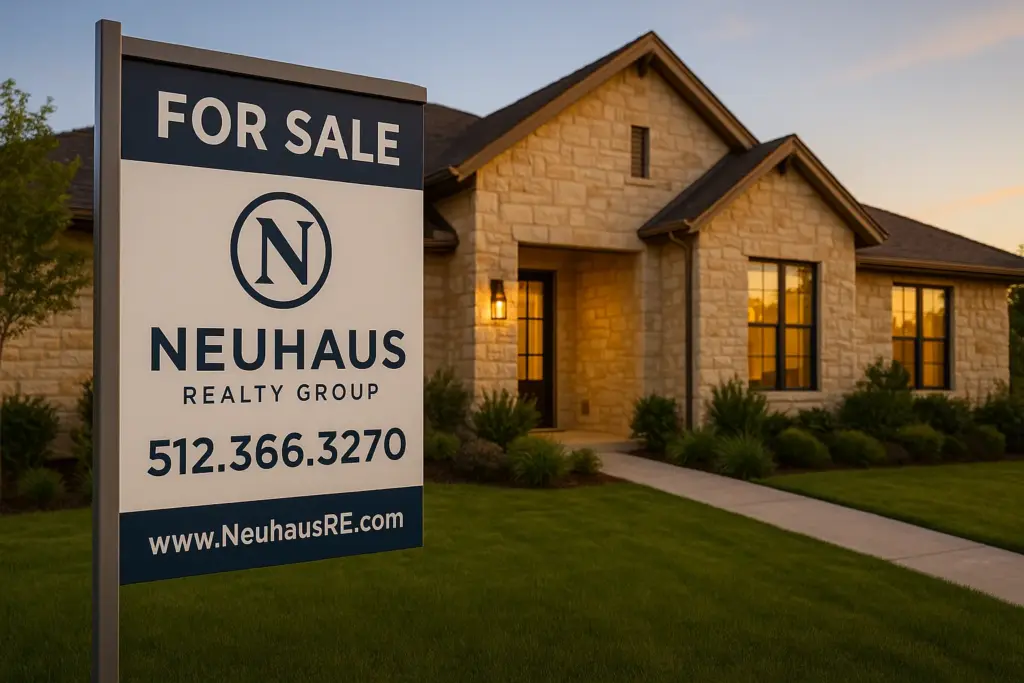
A client of mine, great guy, called me last spring. He’d been watching the market for two years and decided it was time to sell. He had a number in his head, and honestly, it was a round, satisfying number. His house was worth it, in his mind. He’d put $80,000 into the kitchen and bathrooms. He’d watched the neighbors sell for crazy prices in 2021. So he listed at $1.1 million.
Ninety-four days later, he called me back. The house had sat. He’d dropped the price twice. And the offer he finally accepted was $937,000.
The math on that decision is brutal. He didn’t just lose the $163,000 in price. He lost three months of carrying costs, two price reductions that signaled to every buyer that something was wrong with the house, and the psychological leverage that comes from a fresh listing with real interest. The home didn’t sell for less because the market was bad. It sold for less because it was overpriced, and once a listing picks up days on market in Austin in 2026, that number follows you everywhere.
“I watched a seller leave $163,000 on the table by chasing a number that was not there. Ninety-four days on market, two price cuts, and the final sale price was still lower than what comparable homes were selling for at day one. In a market with 12,800 active listings, buyers have no shortage of options. Overpricing does not just cost you the premium, it costs you the leverage you had the day you listed.”
Why Overpricing in a Buyer’s Market Is a Different Kind of Mistake
I want to be honest with you about something most agents won’t say: overpricing was a recoverable mistake in 2021. Buyers were so desperate that they’d circle back to a stale listing and pay close to asking anyway. The market bailed out a lot of bad pricing decisions. That market is gone.
Right now, Austin has roughly 12,800 active residential listings. That’s up almost 12% year over year. Buyers have choices. Real choices. And when a buyer has choices, they are doing something very different when they scroll through listings than what 2021 buyers were doing.
In 2021, buyers were asking: “Can I get this before someone else does?”
In 2026, buyers are asking: “Why hasn’t anyone bought this yet?”
That shift changes everything about how overpricing plays out. A listing that sits in 2026 doesn’t just accumulate days. It accumulates doubt. Every buyer who passes on it, every showing that doesn’t turn into an offer, every week that ticks by, all of it becomes a public record that says “this house has a problem.” Sometimes the problem is condition. Sometimes it’s location. But most of the time, the problem is price.
The First Two Weeks Are the Whole Game
Here’s how a listing actually works, and I find most sellers don’t fully understand this part.
When your home hits the MLS, it goes out as a new listing notification to every buyer who has saved a search in your price range and zip code. Every agent in the market gets it. Every real estate app surfaces it at the top. You get a burst of attention that you will never get again on that listing, not at any price.
That first two weeks is your moment. If you’re priced right, that burst of attention turns into showings, and showings turn into offers, and multiple offers turn into negotiating leverage. If you’re overpriced, all those same buyers look, do the math, and move on. They don’t call. They just… pass. And by week three, you’re no longer a new listing. You’re inventory.
The data backs this up. Austin homes priced correctly in the current market are generating their best activity in weeks one and two. Homes sitting past 60 days are averaging close-to-list ratios below 91%, which in real dollars on a $700,000 home is $63,000 you’re leaving on the table. Not counting the carrying costs.
What the Absorption Rate Actually Tells You
Your agent should be showing you the absorption rate for your price bracket before you decide on a number. If they’re not, ask.
Absorption rate is simple: it measures how fast the existing inventory would sell out if nothing new came on the market. A healthy seller’s market has an absorption rate above 40%. Below 20% is a buyer’s market. Austin’s current absorption rate is sitting around 23%, significantly below the historical average of 31%.
But here’s what matters even more than the overall number: absorption rate varies dramatically by price bracket in Austin.
The $400,000 to $600,000 range moves faster than anything else. Those are the move-up buyers, the relocators, the tech workers. Demand there is real and consistent. But climb above $800,000 and the market gets noticeably slower. Climb above $1.2 million and you’re in territory where months of inventory stretch well past twelve. That’s not a problem with the homes, it’s a math problem. There are fewer buyers in that bracket, period, and pricing just one percent above where the market actually is can mean the difference between a thirty-day close and a ninety-day standoff.
So before you pick a price, you need to know the absorption rate for your specific price bracket, not the city-wide average. The city-wide number will lie to you if you’re at the high end.
How to Read a CMA Without Getting Lost
A Comparative Market Analysis is what your agent builds to recommend a listing price. Done well, it’s genuinely useful. Done poorly, it’s a document that tells you what you want to hear rather than what the market will pay.
Lets walk through what a good CMA actually looks like.
Comparable Sales (Comps)
The foundation of any CMA is sold comps: homes that actually closed, ideally in the last 90 days, within a half-mile to one-mile radius, with similar square footage and condition. Closed sales are what matter. Active listings and pending sales tell you what sellers are asking. Sold comps tell you what buyers are actually paying. Those are not the same number in 2026.
If an agent is basing your price off active listings or off 2022 sold data, that’s a problem. The market has moved significantly from 2022, and in most Austin zip codes, it’s moved down from the peak.
Adjustments
Here’s where the analysis gets interesting, and where a lot of sellers get confused.
No two homes are identical. So when an agent compares your house to a sale down the street, they have to adjust the comp’s price to account for differences. Bigger garage? Add value. Older roof? Subtract. Pool? Add. No pool? Subtract from the comp.
The adjustments are where an agent’s local knowledge makes or breaks the analysis. In the Hill Country, this is especially true, because you have features that don’t exist in most urban markets.
Hill Country Comp Adjustments: What Actually Moves the Needle
I’ve been selling homes in West Austin and the Hill Country for sixteen years, and I can tell you that three features generate more confusion in pricing than anything else: pools, acreage, and views. They all have real value, but that value is almost impossible to nail without local experience.
Pools
In Austin proper, a pool adds somewhere between $20,000 and $40,000 to a home’s appraised value in most price ranges. That’s the general range you’ll see appraisers use, and it holds in a lot of markets. But in Bee Cave, Lakeway, and the Hill Country communities west of 71, pools are table stakes in the upper price brackets. At $800,000 and above, if your home doesn’t have a pool or an outdoor living setup that makes up for it, you’re already competing at a disadvantage. The adjustment isn’t just about pool value. It’s about buyer expectation.
At the same time, in communities like Provence or the newer sections of Rough Hollow, where HOA amenities include resort-style pools and lazy rivers, a private pool adds less than it does in older neighborhoods where the community pool doesn’t exist. That’s the kind of nuance that makes a generic comp adjustment wrong.
Acreage
Lot value in the Hill Country is surprisingly hard to comp. You can’t just divide a comp’s price by square footage when one lot is a quarter-acre flat and another is two acres of limestone ridge. The usable land matters more than the total acreage. A five-acre lot where three acres is steep rock and cactus is not worth three times a comparable flat lot.
What we typically do is back out the land value separately. Look at what raw, comparable land has sold for in the area, apply that to the subject lot’s usable acreage, and add it to the improved value of the structure. It’s more work, but it’s the right way to do it when you’re pricing a home with meaningful acreage in the Hill Country.
Views
Ok, this one is the most subjective and the most significant. Hill Country views, whether that’s a canyon view from Barton Creek, a lake view from Rough Hollow, or a 30-mile horizon from one of the ridge properties in Driftwood or Wimberley, can add anywhere from $50,000 to several hundred thousand dollars depending on the home’s price range and the quality of the view.
The key word is “quality.” A partial view from a secondary bedroom window is not the same as a full panoramic view from the main living area and primary suite. An appraiser will typically use paired sales analysis to determine view premium, comparing homes in the same community with and without comparable views. But in practice, I’ve found that buyers will pay more for a view than any formal adjustment captures, because the emotional component of waking up to a Hill Country sunrise from your kitchen every morning is real and hard to quantify.
What this means for pricing: if you have a genuinely spectacular view, don’t let an agent talk you into an adjustment that ignores it. But also don’t assume your view premium applies to a buyer who cares more about schools or commute time than scenery. Know your buyer.
The “Price It Right From Day One” Data
I know “price it right from day one” sounds like a bumper sticker. But there’s actual data behind it, and the numbers are stark enough that I think they’re worth walking through.
Homes in Austin that are priced within 3% of their final sale price at the time of listing are selling in an average of 30-45 days and closing within 3-4% of list. That’s a predictable, clean transaction.
Homes that start overpriced by 5% or more are following a very different path. Most go through at least one price reduction. The average price reduction in the Austin market right now runs about 4-5% of the original list price. But here’s the thing about a price reduction: it doesn’t just lower the price. It advertises to every buyer in the market that the seller was wrong about what the house was worth. And buyers who’ve watched a listing for six weeks before a price cut are no longer in competition with each other. They know they’re the only ones. So they offer at the bottom of their range, not the top.
One more number worth knowing: the average close-to-list ratio in Austin right now is around 90.6%. For a $700,000 home, that’s about $63,000 below asking, on average. For sellers who have priced correctly and created competition, close-to-list ratios can run much closer to 96-100%. The difference between a well-priced listing and a stale one, in real dollar terms, often exceeds the difference between listing with a discounted agent and listing with an experienced one. That’s the math I think sellers need to internalize.
What to Do If Your Home Has Been Sitting
If you’re already on the market and you’re past 45 days with no offer, you have three choices: reduce the price, take the home off and re-list, or wait for the market to come to you. The third option is not really a strategy in this environment. The market is not moving toward overpriced listings right now.
Taking the home off the MLS and re-listing after 30 days does reset your days on market in most cases, which helps with the “how long has this been listed” question. But it doesn’t fix the underlying issue if the price doesn’t change, and sophisticated buyers and buyer’s agents will track the listing history anyway. You can’t really hide a stale listing from an experienced buyer’s agent.
The cleanest path is to have the pricing conversation before you list. That’s what the pricing strategy session exists for, and it’s genuinely the most valuable hour you can spend before the sign goes in the yard.
Take a look at the Overpriced in Bee Cave breakdown I did a while back. That real-world example is worth reading if you want to see exactly how this plays out when the market rejects a listing price.
The Seller’s Checklist Before Setting a Price
So here’s how I walk through this with every seller before we decide on a number. Not a sales pitch, just the actual process.
First, we pull 90-day sold comps within a half-mile, filtered to similar square footage (within 15%) and same school zone. We look at the adjusted price per square foot and the days on market for each sale. If the fast sales are clustering around $250 per square foot and the slow ones are at $280, that’s a pretty clear signal about where the market is.
Second, we check the absorption rate for your specific price bracket. If you’re thinking about listing at $850,000, what’s the months of inventory for that range in your area? In parts of Bee Cave and Lakeway, it can run six to eight months above $800,000 right now. That number matters a lot for setting realistic expectations.
Third, we adjust for your home’s specific features. Pool or no pool. Acreage. View quality. Recent updates versus deferred maintenance. We’re not just running the comps, we’re adjusting them to your actual house, because no comp is a perfect match.
Fourth, we talk about your timeline. If you need to be out in sixty days, your pricing strategy looks different than if you can sit on the market for four months. Motivation affects pricing, and being honest about that upfront produces a better outcome than pretending you have flexibility you don’t.
And fifth, we look at the competitive set: what else is on the market right now in your price range, in your area, in similar condition? You’re not just competing with past sales. You’re competing with active listings. And in this market, you’re probably competing with some new construction that comes with rate buydown incentives from the builder. That’s real competition and it has to factor into the price.
For sellers in Westlake and Barton Creek, check the current price breakdown by neighborhood to understand where your specific area is landing. And if you’re in the Lakeway or Bee Cave market, the Bee Cave market analysis and Lakeway market analysis are worth a read before you set a number.
Frequently Asked Questions
Get the Pricing Right Before You List
Pricing is the decision that determines everything else about your selling experience. Get it right and the whole process is faster, cleaner, and more profitable. Get it wrong and you spend three months second-guessing a number while your listing slowly goes stale and buyers start wondering what’s wrong with the house.
I do a pricing strategy session with every seller before they list, and it’s different from the standard CMA walkthrough most sellers get. We look at your specific home’s strengths, the absorption rate for your exact price bracket, the competitive set you’ll be up against, and we build a pricing recommendation based on what the market will actually do, not what we hope it does.
If you’re thinking about selling in the next three to six months, reach out to Ed Neuhaus before you decide on a number. That conversation is free. The cost of getting the price wrong is not.
You can also browse current listings in Westlake, Bee Cave, and Lakeway to get a feel for what the competitive landscape looks like right now.
Thinking About Selling?
The first step is knowing what your home is actually worth. Our free tool uses real MLS comps — not Zestimate guesswork.


