 Ed Neuhaus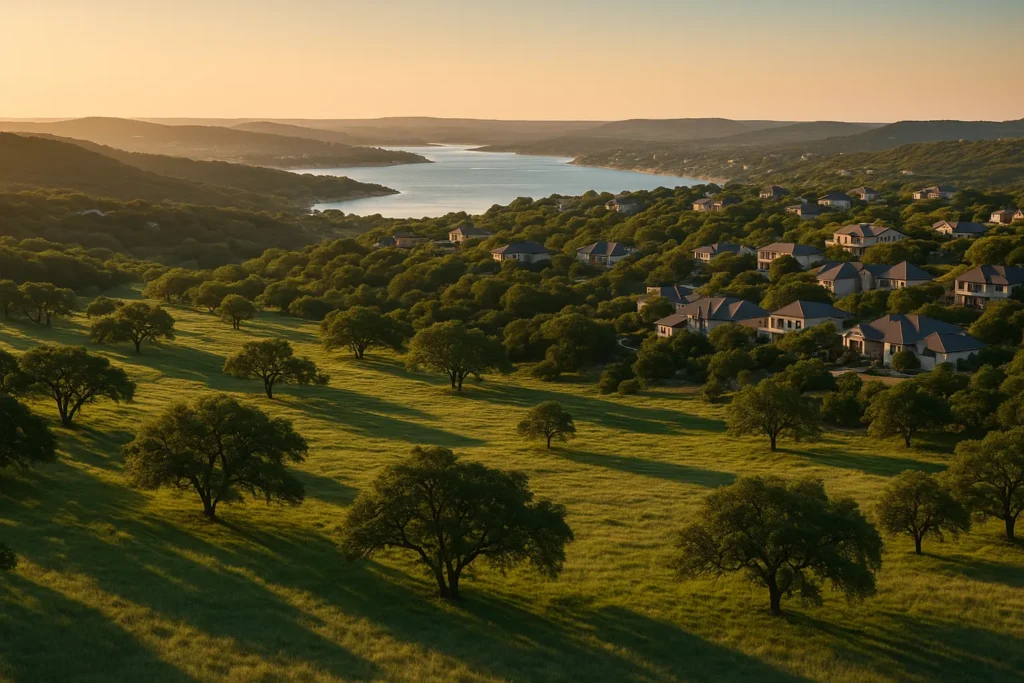
You are looking at three Austin Hill Country suburbs. All within 30 miles of downtown. Two of them share the same school district. All three have that same Hill Country vibe you moved to Texas for.
So which one do you actually pick?
This is the question I get asked more than any other from buyers relocating to the Austin area. Bee Cave vs Lakeway vs Dripping Springs. They sound interchangeable on paper. But the lived experience in each one is completely different. Pick wrong and you will be annoyed every single day. Pick right and you will wonder why you didn’t move here sooner.
I have been selling real estate in the Lake Travis corridor and Hill Country since 2009. I have helped hundreds of families make this exact decision. And I can tell you the answer is not “which one is best” — it is “which one matches how you actually live.”
So lets walk through this step by step. Not city profiles. Not generic pros and cons lists. A decision framework that gets you to the right answer based on your actual priorities.
The Money Reality Check: What Your Budget Actually Buys
The first thing to know about Bee Cave vs Lakeway vs Dripping Springs is that your dollar goes dramatically different distances in each city.
What $600,000 Gets You
In Bee Cave at $600K you are looking at a smaller home in a newer neighborhood, likely with a MUD or PID, probably under 2,000 square feet. You are not getting Spanish Oaks or Falconhead at that price. You are getting a builder-grade home in a subdivision that was farmland five years ago.
In Lakeway at $600K you are in a similar boat but with a slightly bigger lot. Maybe 2,200 square feet. Possibly an older home in an established neighborhood without the lake premium. Not waterfront. Not Rough Hollow. But a solid family home in a good location.
In Dripping Springs at $600K you are getting significantly more house. 2,500-3,000 square feet is realistic. Possibly some acreage if you are willing to go a bit further out. This is where the value proposition starts to tilt.
What $1,000,000 Gets You
At $1M in Bee Cave you are in the luxury tier. Spanish Oaks, Falconhead, The Homestead. Custom or semi-custom builds. 3,500+ square feet. High-end finishes. This is where Bee Cave shines.
At $1M in Lakeway you might get waterfront. Not on the main basin, but on a cove or canal. Or you get a very nice home in a premium neighborhood like Rough Hollow without water access. The lake premium is real here.
At $1M in Dripping Springs you are getting a estate-level property. Significant acreage. Possibly a guest house. Custom build. This is “I want land and privacy” money in Dripping Springs.
The Real Numbers (2026 Median Prices)
Here is what the data actually shows for early 2026.
| City | Median Price | Price per Sq Ft | Year-over-Year |
|---|---|---|---|
| Bee Cave | $1,000,000 | $293-$356 | +6.9% |
| Lakeway | $760,000 | ~$293 | +6.1% |
| Dripping Springs | $480,000-$686,000 | $217 | -4.7% to -12.7% |
Source: Redfin Market Data
Bee Cave is the most expensive of the three and it is not close. Dripping Springs is the value play. Lakeway sits in the middle.
The Hidden Monthly Costs Nobody Talks About
This is where buyers get surprised six months after closing.
Property Tax Breakdown
All three cities sit in Travis County except Dripping Springs which is in Hays County. That matters for your tax bill.
Travis County (Bee Cave and Lakeway): 37.58 cents per $100 of taxable value in fiscal year 2026. Source: Travis County 2026 Tax Rate
Hays County (Dripping Springs): 39.99 cents per $100 of taxable value. Source: Hays County 2026 Tax Rate
But county tax is only one piece. You also pay school district tax, city tax, emergency services district tax, and potentially MUD or PID assessments.
City tax rates:
- Bee Cave: 2 cents per $100 (one of the lowest in Texas)
- Lakeway: 16.96 cents per $100
- Dripping Springs: Varies by whether you are in city limits or ETJ
So Bee Cave has a much lower city tax rate than Lakeway. But that advantage disappears when you factor in MUD and PID costs.
MUD and PID: The $200-$1,000 Monthly Surprise
If you buy in a newer neighborhood in any of these cities, you will almost certainly be in a MUD (Municipal Utility District) or PID (Public Improvement District).
A MUD is a special district created to build water, sewer, and drainage infrastructure. The district issued bonds to pay for construction. You repay those bonds through an ongoing property tax that shows up on your annual tax bill for 20-30 years.
A PID is similar but the assessment is fixed. You know the exact annual cost upfront. It does not fluctuate with your home value. And you can often prepay it.
In some neighborhoods, I have seen combined MUD and PID costs exceed $800 per month. That is nearly $10,000 per year on top of your base property taxes.
True Monthly Cost Example
Lets say you buy a $700,000 home in Lakeway in a neighborhood with a MUD.
- Mortgage (20% down, 6.5% rate): ~$3,540/month
- Property tax (2.5% effective rate): ~$1,458/month
- MUD tax (0.5% additional): ~$292/month
- HOA: ~$150/month
- Insurance: ~$250/month
Total monthly cost: $5,690
Compare that to the same $700,000 home in an older neighborhood without a MUD:
Total monthly cost: $5,348
That is a $342 per month difference. Over 30 years that is $123,120.
Commute and Access: How Much of Your Life You Spend in the Car
Commute to Downtown Austin
Bee Cave: 25-45 minutes depending on time of departure. If you leave before 7am or after 9am you can make it in 25-30 minutes. Leave at 8am and you are looking at 40-45 minutes.
Lakeway: 40-60 minutes. Add 10-15 minutes to the Bee Cave commute. Fewer route options.
Dripping Springs: 50-65 minutes. The longest commute of the three. If you are commuting downtown five days a week, this adds up fast.
The time you leave matters more than the distance. If you have flexibility to leave at 6:30am or 9:30am, even the Dripping Springs commute is manageable. If you are locked into an 8am start time, it is brutal.
And in 2026 with remote and hybrid work being the norm, a lot of buyers are only commuting 2-3 days per week. That changes the calculus entirely.
Schools: Lake Travis ISD vs Dripping Springs ISD
Bee Cave and Lakeway are both served by Lake Travis ISD. Dripping Springs is served by Dripping Springs ISD.
According to Niche’s 2026 rankings:
- Dripping Springs ISD: Ranked #3 in Austin area, A grade
- Lake Travis ISD: Ranked #9 in Austin area, A grade
Both are excellent. You are not making a bad choice either way. But the experience is different.
Lake Travis ISD is larger with multiple campuses. Strong academics, competitive sports (especially football and swimming), robust extracurriculars. The downside is some campuses are better than others, and kids on the district edges have long bus rides.
Dripping Springs ISD is smaller and more centralized. Tight-knit community. Parents know the teachers. Teachers know the kids. Growing fast, which means new facilities but also growing pains.
If you want a larger district with more campus options and elite athletics, Lake Travis ISD. If you want a tight-knit community with a small-town school experience, Dripping Springs ISD. You are choosing a vibe, not a quality difference.
Lifestyle Match: Who Actually Thrives Where
This is the section that matters most. You can adjust to a longer commute. You can budget for higher property taxes. But if the lifestyle does not match how you actually want to live, you will be miserable.
Bee Cave: Upscale Suburban Convenience
Bee Cave is the most developed of the three. Hill Country Galleria, corporate office parks, dense neighborhoods. The vibe is polished. Newer homes. Manicured landscaping. Grocery stores, restaurants, and services within a 5-10 minute drive.
Who thrives: Corporate relocators who want suburban amenities. High-income buyers who prioritize proximity to Austin. Families who want walkable neighborhoods and close retail.
Who does not: Buyers who want land and privacy. People who find HOA culture stifling. Budget buyers.
Lakeway: Lake Life Every Single Day
Lakeway is built around Lake Travis. Boating, swimming, wakeboarding, fishing. Multiple marinas, waterfront parks, neighborhoods with private lake access. Golf carts, boat trailers, and people in swim trunks at the grocery store.
Lakeway has an older, more established feel than Bee Cave. Many neighborhoods built in the 1980s and 1990s. Mature trees. Larger lots. Less cookie-cutter.
Who thrives: Active adults and retirees who want resort-style living. Families who will actually use the lake. Buyers who want a slower pace with more amenities than Dripping Springs.
Who does not: People who will never own a boat. Tight commute schedules. Buyers who want brand-new construction.
Dripping Springs: Small-Town Hill Country Charm
Dripping Springs is the least developed. Small-town main street. Local breweries and BBQ joints. Rodeos and farmers markets. You can get 1-5 acre lots at prices that buy you 0.25 acres in Bee Cave. You see stars at night.
But you are further from everything. Grocery store runs take longer. And the city is growing fast.
Who thrives: Buyers who want land, privacy, and a slower pace. Investors who believe in the long-term growth story.
Who does not: People who need quick access to urban amenities. People who hate driving.
Investment Outlook: Where Is Your Money Going?
Bee Cave: Stable Luxury Market
Median home price up 6.9% year-over-year. The luxury tier (Spanish Oaks, Falconhead) tends to hold value better during corrections. High-net-worth buyers are less payment-sensitive.
Lakeway: Lake Premium + STR Potential
Waterfront homes are scarce and demand is consistent. Lakeway also has strong short-term rental potential. Lake Travis is a vacation destination. I have clients who cover 50-70% of their mortgage with STR income. Homes are sitting longer (135 days on market), which is good news for buyers with negotiating leverage.
Dripping Springs: The Growth Play
Prices down 4.7% to 12.7% year-over-year. But massive development is coming: Big Sky Ranch (700 homes), Double L Ranch (2,200 homes planned), and more.
I have been doing this long enough to know that the furthest suburb always looks like a risky bet until it does not. Bee Cave was “too far out” in 2005. Lakeway was “too far out” in 1995. Dripping Springs might be “too far out” in 2026. Or it might be perfectly positioned.
The broader Texas housing market is expected to see modest gains in 2026, with falling interest rates toward 5-5.5% by mid-year stimulating buyer activity. Source: Texas A&M 2026 Forecast
The Honest Downsides Nobody Mentions
Bee Cave Downsides
You pay a premium for convenience. Lot sizes are smaller. The vibe is corporate. It feels like suburban anywhere. HOAs are everywhere with rules about everything from fence height to mailbox color.
Lakeway Downsides
The commute is long. 80-120 minutes per day. Over a year that is two weeks of your life. The lake is a commitment. Marina fees, boat maintenance, storage, insurance. Older homes need work. Factor renovation into your budget.
Dripping Springs Downsides
You are far from everything. 50-65 minutes from downtown. Amenities are limited. You will drive to Bee Cave or Austin for most shopping. Growth pains are real. Construction noise, traffic, overcrowded schools during transitions.
Decision Framework: How to Actually Choose
If commute is your #1 priority: Bee Cave. Closest to downtown. Best highway access. Shortest airport drive.
If you will actually use the lake: Lakeway. Do not buy in Lakeway because you like the idea of the lake. Buy because you will be on the water every weekend.
If you want land and space: Dripping Springs. The only place of the three where you can get 2-5 acres without spending $2M+.
If schools are your #1 priority: Either. Both Lake Travis ISD and Dripping Springs ISD are excellent. Visit the campuses. Talk to parents.
If budget is tight: Dripping Springs. Most house per dollar. The trade-off is commute and amenities.
If you want turnkey convenience: Bee Cave. Everything within 10 minutes.
If you are buying as an investment: Lakeway or Dripping Springs. Lakeway for STR potential. Dripping Springs for the long-term growth play.
The Bottom Line
There is no wrong answer here. Just wrong fit.
Bee Cave is upscale suburban convenience with a premium price tag. Lakeway is lake life with a longer commute and older homes. Dripping Springs is small-town charm with space and a bet on future growth.
Which one fits how you actually live?
I have been helping buyers make this decision since 2009. The ones who are happiest five years later are the ones who were honest about their priorities upfront. Not what they thought they should want. What they actually wanted.
If you want to talk through your specific situation, I am happy to help. No pressure. No sales pitch. Just a conversation about which Hill Country city makes sense for you.
Contact Ed Neuhaus for personalized guidance on buying in Bee Cave, Lakeway, or Dripping Springs.
Explore Listings:


