 Ed Neuhaus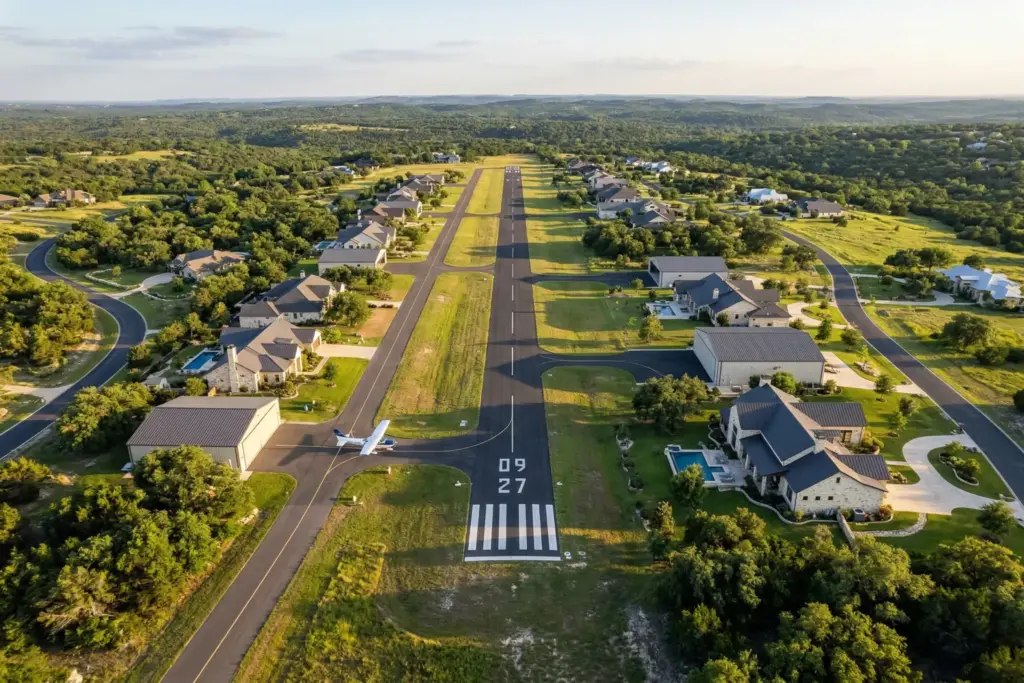
There are roughly 700 residential airpark communities in the United States, and about 650 of them are not worth your time. That sounds harsh right. But I’ve been a licensed pilot and real estate broker for 19 years, and the gap between the best fly-in communities and the mediocre ones is massive. We’re talking the difference between a purpose-built aviation lifestyle and a grass strip next to someone’s cattle ranch.
So I put together my list. Ten communities, ranked, with actual runway specs and price ranges because those are the two things every pilot asks about first. I’ve personally flown into several of these, walked the taxiways, and talked to the people who live there. For the rest, I’ve done enough homework to feel confident putting my name on this list.
According to the Recreational Aviation Foundation and AirparkMap.com, Texas leads with 84 airparks and Florida is right behind with 80. But raw numbers don’t tell you which ones are actually great places to live. Lets get into it.
1. Spruce Creek Fly-In (Port Orange, FL)
You have to start here. Spruce Creek is the world’s largest residential airpark and it’s not even close. 1,300 homes, over 700 hangars, 400+ based aircraft, and a 4,000-foot paved runway with PAPI lights and a full parallel taxiway system. This is a small city that happens to have an airport in the middle of it.
The amenities read like a resort brochure (because it basically is one). Championship 18-hole golf course, fine dining at the country club, tennis courts, swimming pools, 24/7 manned security gates. And the flying community is unbelievably active. You’ll see everything from Cessna 150s to warbirds to the occasional Lear taxiing past the pro shop.
Homes range from townhomes around $275,000 to hangar estates north of $2 million. That spread is part of what makes Spruce Creek work. You don’t have to be a multimillionaire to live here. A retired airline captain on a pension can buy in just as easily as a tech executive.
Runway: 4,000 x 47 ft, paved, lighted, PAPI
Homes: ~1,300 (townhomes, single-family, hangar estates)
Price range: $275K to $2M+
Best for: The pilot who wants the most complete airpark experience in America. Period.
2. Lakeway Airpark (Lakeway, TX)
Ok I’m biased. I live five minutes from this airpark and I sell real estate in Lakeway for a living. But bias aside, Lakeway Airpark is genuinely one of the best fly-in communities in the country for one simple reason: location.
You get a 3,930-foot paved runway at 905 feet elevation (density altitude matters less than you think here), 32 homesites with direct taxiway access, and you’re 15 minutes from downtown Austin. Lake Travis is right there. The Hill Country golf courses are right there. The food scene, the live music, the tech economy. Name another airpark in America where you can tie down your Bonanza and be at a world-class restaurant in 20 minutes.
The homes are newer construction, ranging from 3,500 to 6,000 square feet with attached hangars. Prices run $800K to $2M+ depending on size and whether the hangar is built out. The runway operates sunrise to sunset (no night ops), which is the one downside. But for a daytime VFR pilot who wants the Austin lifestyle, this is the play.
I wrote a whole deep dive on fly-in communities in Central Texas if you want the full local picture.
Runway: 3,930 x 70 ft, paved, pilot-controlled lighting
Homes: ~32 homesites
Price range: $800K to $2M+
Best for: The pilot who wants the best location in Texas. Lake Travis lifestyle plus Austin culture, 15 minutes from downtown.
3. Pecan Plantation (Granbury, TX)
If Spruce Creek is the gold standard and Lakeway is the location play, Pecan Plantation is the value play. And honestly it might be the smartest buy on this entire list.
This is a 4,200-acre master-planned community about an hour southwest of Fort Worth, sitting on the Brazos River. Two golf courses, a marina, an equestrian center, multiple pools, a country club. And two airparks. The Landings East has a 3,100-foot paved runway with concrete taxiways and underground utilities on every lot.
Here’s the kicker. Airpark lots start at $189,900. That’s not a typo. You get a 1.5+ acre homesite with taxiway access, city water, sewer, electric, and fiber internet for under $200K. They’ve sold over 174 lots in less than three years, and a huge chunk of the buyers are airline pilots from American, Southwest, and Delta who commute to DFW.
Benjamin Graham wrote that the essence of investment is finding value that others haven’t fully recognized yet. Pecan Plantation is exactly that. The amenity package rivals communities three times the price.
Runway: 3,100 x 40 ft, paved, lighted
Homes: 174+ airpark lots sold, 4,200-acre community
Price range: Lots from $189K, homes from $460K+
Best for: The airline pilot or value-conscious aviator who wants resort amenities without the resort price tag.
4. Stellar Airpark (Chandler, AZ)
Stellar is the luxury gated airpark community near Phoenix, and everything about it is designed for the pilot who wants zero compromises.
The runway is 4,440 feet of paved, lighted surface with an RNAV approach, 100LL and Jet-A fuel on the field. That RNAV approach matters right. A lot of airparks are strictly VFR, which means you’re stuck on the ground if the weather turns. Stellar gives you instrument options, which is a serious quality-of-life upgrade for anyone who actually flies their airplane (as opposed to just parking it).
The community has 40 taxiway homes and 65 gated taxiway lots, all custom-built. Forte Homes is building the newest phase. Every home has an attached hangar with direct taxiway access. Prices run from $1.3 million to over $3 million.
And then there’s the weather. Phoenix averages 299 sunny days per year. As a pilot, that’s basically a year-round flying season with virtually no weather cancellations. You combine premium infrastructure, instrument approaches, fuel on site, 300 days of sunshine, and 20 minutes to downtown Chandler shopping and dining. That’s hard to beat.
Runway: 4,440 x 75 ft, paved, lighted, RNAV approach
Homes: 105 taxiway home sites (40 existing + 65 gated)
Price range: $1.3M to $3M+
Best for: The IFR pilot who wants premium infrastructure and 300 days of flying weather.
5. Alpine Airpark (Alpine, WY)
This one is for the pilot who has the budget and wants the most dramatic setting in American aviation real estate. Full stop.
Alpine Airpark sits on the banks of the Palisades Reservoir in western Wyoming, 35 miles from Jackson Hole. The runway is 5,850 feet (that’s commercial airport length) with GPS approaches, AWOS, and runway lights. At this altitude and runway length, you can comfortably operate turboprops and light jets. This isn’t a Cessna-only strip.
The setting is ridiculous. Three trophy trout streams converge nearby. The Teton Range is your backdrop. Grand Targhee and Jackson Hole ski resorts are both within striking distance. And the community is small and intentional, designed for people who fly in for weekends or seasons rather than living there year-round (though some do).
Lots start around $2.25 million. Yeah. But you’re buying a piece of one of the most exclusive zip codes in the American West, with a runway long enough to bring in your Citation.
Runway: 5,850 x 70 ft, paved, lighted, GPS approaches, AWOS
Homes: Small community, custom builds
Price range: Lots from $2.25M
Best for: The pilot who wants the ultimate mountain retreat and has the budget (and the airplane) to match.
6. Jumbolair Aviation Estates (Anthony, FL)
Ok lets talk about Jumbolair. This is the John Travolta community and it has the longest private paved runway in the United States at 7,550 feet. That’s long enough for a 737. Travolta famously parked his ex-Qantas Boeing 707 at his house here, which tells you everything about the scale of this place.
The runway is 250 feet wide and elevated to prevent flooding. The community sits on about 550 acres of rolling Florida horse country just north of Ocala. It’s gated, exclusive, and operates on a completely different level than most airparks.
Now I’m going to be honest. Jumbolair is more of a flex than a practical recommendation for most pilots. The lots are enormous, the buy-in is significant, and the community is small enough that resale liquidity can be a real consideration. But if you’re in the market for a property where you can land anything short of a 747, or you just want to tell people at the FBO that you live at the same airpark as Danny Zuko (I know, Sandy was the one who flew off at the end, I digress), this is it.
Runway: 7,550 x 250 ft, paved, lighted, elevated
Homes: Small exclusive community, large lots
Price range: Ultra-premium (multi-million dollar estates)
Best for: The jet owner, the collector, the pilot who needs a runway that can handle serious iron.
7. Cameron Airpark Estates (Cameron Park, CA)
Cameron Airpark is the classic. Established in 1963, this is one of the original residential airpark communities in America, and it still works beautifully.
There are about 124 homes, each with a dedicated aircraft hangar. The 4,000-foot paved runway is public-use with pilot-controlled lighting. And here’s the detail that aviation nerds love. The roads are 100 feet wide. Wider than the runway. You taxi your airplane right down the street from your hangar to the runway. The street signs and mailboxes are all under 3 feet tall to clear wing tips. Streets have names like Boeing Road and Cessna Drive.
The community is in the Sierra Nevada foothills east of Sacramento, about 30 miles from downtown. It’s classic California foothill country, golden hills, oak trees, four seasons but mild winters. Homes run around $1.5 million give or take.
What I love about Cameron Airpark is the culture. This isn’t a gated luxury community. It’s a real neighborhood where people happen to keep airplanes in their garages instead of Teslas. There’s a potluck energy to it that the newer, fancier airparks don’t always capture.
Runway: 4,000 ft, paved, pilot-controlled lighting, public use
Homes: ~124 with hangars, plus ~20 undeveloped lots
Price range: ~$1.5M
Best for: The pilot who wants old-school airpark culture and California living.
8. Leeward Air Ranch (Ocala, FL)
Leeward is the sport aviation pilot’s paradise. Full stop. If you build experimental aircraft, fly aerobatics, restore warbirds, or just love being around people who are genuinely obsessed with flying, this is your place.
The runway is 6,247 feet of stabilized, reinforced, lighted, all-weather grass. Grass, not pavement. That’s intentional. The community has a dedicated aerobatic box at the south end of the runway extending from the surface to 3,000 feet. How many airparks have their own aerobatic box? Not many.
You have to be a pilot to buy property here. That single rule shapes the entire community culture. Over 150 homes on half-acre to full-acre lots, most with private hangars. Almost 200 aircraft based on the field. The social calendar revolves around flying, pancake breakfasts, fly-outs, formation clinics. It’s the kind of place where your neighbor helps you rebuild a Continental engine on a Saturday morning.
Central Florida delivers VFR conditions over 300 days a year. Average home prices sit around $706K, which is remarkably affordable for what you’re getting. Robert Greene wrote in Mastery that the key to fulfillment is finding an environment where your obsession is the norm. That’s Leeward.
Runway: 6,247 x 165 ft, stabilized grass, lighted, all-weather
Homes: 150+ on 0.5 to 1-acre lots
Price range: Average ~$706K
Best for: The sport aviation pilot, the homebuilder, the aerobatic pilot. The purist.
9. Mountain Air (Burnsville, NC)
Mountain Air holds a distinction no other airpark on this list can claim. It has the highest private airstrip east of the Mississippi River, sitting at 4,600 feet elevation in the North Carolina Blue Ridge Mountains.
The runway is 2,875 feet of paved surface, which makes it genuinely challenging. This is not a strip for beginning pilots or heavy aircraft. The mountain terrain, the elevation, the approach through the peaks. It requires real stick-and-rudder skill. Mountain Air actually has a multi-step permission process for visiting aviators, including pilot and aircraft registration, liability insurance requirements, and what amounts to an informal skills check.
That selectivity is part of the appeal. The community has been here over 25 years, tucked into the mountains above Burnsville. Golf, fine dining at the clubhouse, a full amenity package. But the vibe is mountain retreat, not suburban development. Cooler summers than the lowlands, fall foliage that makes you forget you own an airplane for a few weeks. And the flying, when the weather cooperates, is some of the most scenic in the eastern United States.
Runway: 2,875 x 50 ft, paved, elevation 4,600 ft
Homes: Exclusive mountain community
Price range: Premium (varies widely)
Best for: The experienced mountain pilot who wants a challenging strip and the beauty of the Blue Ridge.
10. Threshold Ranch (Boerne, TX)
I saved a Texas pick for last because Threshold Ranch is the serious pilot’s airpark. If Lakeway is about location and Pecan Plantation is about value, Threshold is about the airfield itself.
The runway is 5,005 feet of paved, lighted surface, 60 feet wide, with full IFR approaches on runways 17 and 35. AWOS-III weather station. Self-serve 100LL and Jet-A fuel available by truck. On-field maintenance. This is essentially a small municipal airport that happens to have luxury homesites around it.
The IFR approaches plus Jet-A means this is one of the very few residential airparks in the country where you can realistically base a turboprop or light jet and fly it on a schedule. Weather won’t ground you. Fuel won’t ground you. Runway length won’t ground you. For the pilot who treats aviation as transportation (not just recreation), that matters enormously.
Boerne itself is a charming Hill Country town about 30 minutes from San Antonio. German heritage, great restaurants, small-town Texas at its best. And the land around the airpark has that rolling Hill Country character, live oaks and limestone and big sky, that people from other states don’t believe is real until they see it.
Runway: 5,005 x 60 ft, paved, lighted, IFR approaches RWY 17/35, AWOS-III
Homes: Custom hangar homes on individual lots
Price range: Premium
Best for: The instrument-rated pilot who wants an airfield that can handle jets, turboprops, and serious all-weather operations.
A Few Things Every Airpark Buyer Should Know
Before you start touring taxiways, a few practical notes from someone who has helped buyers navigate these communities.
HOA and runway fees are real. Most airparks have association fees that cover runway maintenance, lighting, fuel infrastructure, and common areas. These can range from a few hundred dollars a year at basic strips to several thousand at premium communities. Ask for the fee schedule before you fall in love with a lot.
Not all airparks are created equal on resale. The big established communities (Spruce Creek, Cameron Airpark, Pecan Plantation) have active resale markets because they have critical mass. Smaller airparks with 15 or 20 homes can be trickier. Your buyer pool is limited to pilots, which is already a thin slice, and then further limited to pilots who want THAT specific location right. Liquidity matters.
Insurance works differently. Hangar homes, aircraft stored in attached hangars, fuel storage on residential property. These all create insurance considerations that a standard homeowner’s policy doesn’t cover. Work with a broker who specializes in aviation properties. Don’t just call State Farm.
Runway maintenance obligations vary. At some airparks the HOA handles it entirely. At others, homeowners share responsibility for their section of taxiway. At a few, the runway is municipally owned and maintained separately from the residential community. Know the structure before you buy.
Frequently Asked Questions
Ready to Fly Into Your Next Home?
I sell real estate in the Austin and Central Texas market, and I’m a pilot who actually understands what matters in airpark properties. If you’re interested in Lakeway Airpark, Breakaway Park, Cross Country Estates, or Threshold Ranch, lets talk. These are communities I know personally.
For airpark communities in other states, I work with aviation-savvy agents nationwide through my referral network and can connect you with the right person wherever you’re looking. Whether it’s Spruce Creek in Florida or Alpine in Wyoming, I can make the introduction and make sure you’re working with someone who gets the aviation lifestyle.
Either way, be safe, be good, and blue skies.


