 Ed Neuhaus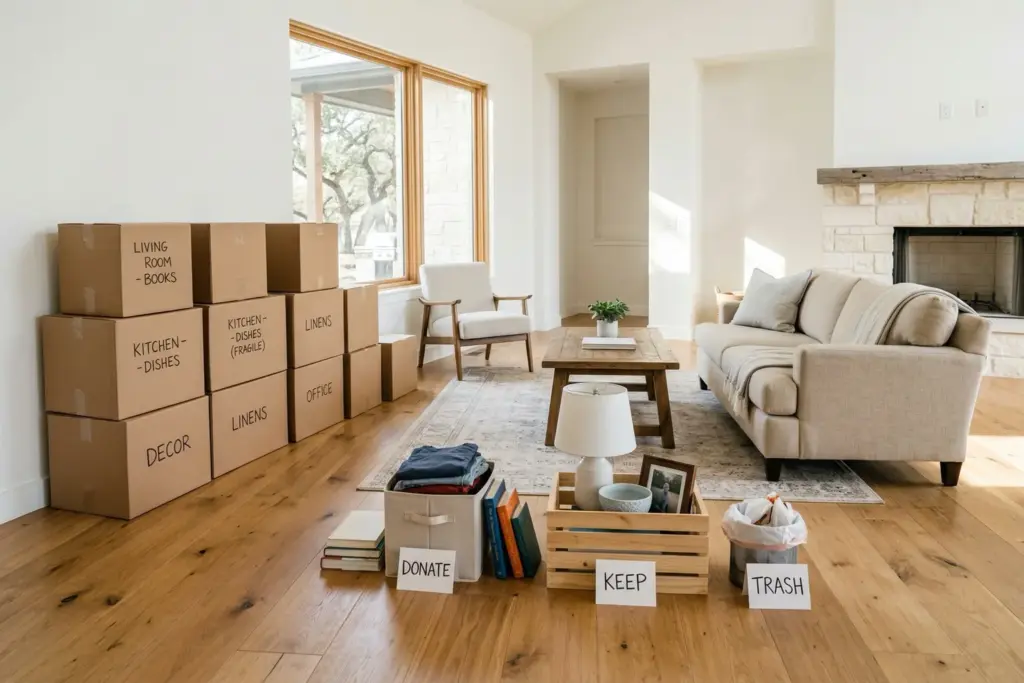
The average long distance move costs about $4,800. But here’s the part nobody thinks about: a significant portion of what you’re paying to move is stuff you haven’t touched in over a year. According to the U.S. Census Bureau, 25.87 million Americans relocated in 2024, and the moving industry keeps growing because we keep hauling boxes of kitchen gadgets and old college textbooks across state lines like they’re family heirlooms.
I help people buy and sell homes for a living, and I can tell you that the single best thing you can do before a move (whether you’re selling first or just packing up) is declutter aggressively. Not organize. Not rearrange. Actually get rid of stuff. It saves you money on the move, it makes your current home show better if you’re selling, and it means less unpacking chaos on the other end. So lets walk through this room by room.
The Framework: Keep, Donate, Sell, Trash
Before you start pulling things out of cabinets, you need a system. I’m a big fan of the four-box method because it forces a decision on every single item. Get four boxes or bags and label them:
Keep means it goes in the moving truck. You use it, you need it, you love it.
Donate means it’s in good condition but you don’t need it anymore. Someone else will.
Sell means it has real resale value and you have the time (and patience) to list it.
Trash means it’s broken, stained, expired, or so worn out that nobody wants it. Be honest with yourself here.
Greg McKeown’s whole thing in Essentialism is that most of what we own isn’t essential, we just never made a deliberate decision about it. That’s exactly what this process forces you to do. Every item gets a verdict. No “maybe” pile. No “I’ll decide later” box. Those are just code for “I’m keeping everything.”
Decision Rules That Actually Work
When you’re staring at something and can’t decide, run it through these filters:
The One Year Rule. Have you used this item in the last 12 months? If no, it goes. Seasonal items get a pass (Christmas decorations, ski gear, that one serving platter for Thanksgiving). Everything else, if it collected dust for a full calendar year, you won’t miss it.
The 20/20/20 Rule. Can you replace this item in under 20 minutes for less than $20? Then let it go. This covers a surprising amount of kitchen gadgets, bathroom products, and random office supplies that feel important until you realize they cost $6 at Target.
The Duplicate Rule. You don’t need four spatulas. Or three sets of sheets for a bed you no longer own. Or eleven coffee mugs when two people live in the house (ok, maybe keep six because guests, but you get the idea right).
Kitchen: Where Decluttering Gets Real
The kitchen is where I tell people to start because it’s usually the worst offender and also the most visible room to potential buyers. If you’re staging your home to sell, clean countertops and organized cabinets make the kitchen feel bigger. And kitchens sell houses.
What to purge:
- Duplicate utensils and cooking tools (how many can openers does one household need)
- Chipped or mismatched dishes, glasses, and mugs
- Specialty appliances you used once (bread maker, fondue set, that spiralizer from 2019)
- Expired spices, condiments, and pantry items. Pull everything out and check dates. You will be horrified.
- Plastic containers without matching lids. Just throw them all away and buy one fresh set after the move. Trust me.
- Cookbooks you’ve never cooked from. Be real.
- Old kitchen towels and worn out potholders
What to keep:
- Your daily use cookware and dishes
- One good set of knives
- The appliances you actually use weekly (coffee maker, toaster, blender if you’re that person)
- Serving pieces for the entertaining you actually do
I’m not going to lie, the kitchen takes the longest. Budget a full afternoon. Put on a podcast. Maybe have a bourbon after.
Living Room and Family Room
Living spaces accumulate stuff slowly and then one day you realize there are decorative pillows on top of decorative pillows and a bookshelf full of books nobody has opened since the Bush administration.
What to purge:
- Old magazines, catalogs, and newspapers (recycle the whole stack, you’re not going back to read them)
- DVDs, CDs, and Blu-rays you haven’t watched in years. Everything is streaming now.
- Board games with missing pieces
- Throw pillows and blankets beyond what you actually use
- Decor that doesn’t fit your style anymore or won’t work in the new space
- Old electronics (VCR? really?) and tangled cables in that drawer everyone has
- Books you’ve read and won’t reread. I say this as a person who has read 400+ books and I keep them all on Audible, not on a shelf collecting dust.
What to keep:
- Furniture that fits the new space (measure before you move, not after)
- Sentimental items that actually mean something to you
- Electronics you use regularly
- A reasonable number of books and media
The living room is also where buyers form their first impression of how the home “lives.” Less stuff in here makes the room feel open and inviting. If you’re thinking about listing, decluttering the living room does double duty. Check out our pre-listing checklist for the full picture.
Bedrooms
Bedrooms are emotional. This is where the closet full of clothes you haven’t worn in three years lives. And the nightstand drawer stuffed with random things that have nowhere else to go. And maybe a box under the bed from two moves ago that you’ve literally never opened.
Closets first. Turn all your hangers backward. After 3 months, anything still backward goes. But if you’re moving sooner than that, here’s the faster version: if you haven’t worn it in the last year, it goes. If it doesn’t fit, it goes. If you’re keeping it because you paid good money for it, that’s the sunk cost fallacy talking and you should let it go anyway.
What to purge:
- Clothes that don’t fit, are damaged, or haven’t been worn in a year
- Old bedding and pillows (pillows should be replaced every 1-2 years anyway)
- Kids’ clothes they’ve outgrown. This one hits hard but they’re not shrinking back into them.
- Unused exercise equipment that’s become an expensive clothes rack
- Old jewelry you never wear
- Nightstand junk drawer contents (half-used candles, old chargers, mystery keys)
What to keep:
- Clothes you wear regularly and love
- One set of backup bedding per bed
- Seasonal items you’ll actually use next season
Pro tip: if you have kids, get them involved in choosing what to keep. Not everything, just their stuff. It teaches them to make decisions about possessions which is (as James Clear would say) building a good identity-based habit early. And it saves you from donating the one stuffed animal that apparently holds the fabric of their universe together.
Bathrooms
Bathrooms are quick but brutal. Open the medicine cabinet and the cabinet under the sink and prepare yourself.
What to purge:
- Expired medications (Austin has medication drop-off locations, don’t just toss them in the trash)
- Old makeup and skincare products. Most makeup expires in 6-12 months. If you can’t remember when you bought it, that’s your answer.
- Travel-size toiletries you grabbed from hotels and will never use
- Worn towels and washcloths (keep your best sets, donate the rest)
- Hair tools you don’t use
- Near-empty bottles of anything. Finish them or toss them.
- That collection of bath bombs someone gave you three Christmases ago
What to keep:
- Current daily use products
- One good set of towels per person plus a guest set
- First aid basics
- Whatever you actually use daily
Bathrooms should take 30-45 minutes each. Put a trash bag right in the room and be ruthless.
Garage and Storage Areas
Ok. This is the big one. The garage is where things go to die slowly. And storage closets, attics, and sheds are basically museums of past hobbies and good intentions.
What to purge:
- Cans of dried-up paint (check if it matches anything in the new house first, and if you’re in the Austin area, Austin Resource Recovery takes paint and chemicals for free)
- Broken tools and duplicates
- Holiday decorations you haven’t put up in years
- Sports equipment nobody uses anymore
- Moving boxes from the last move (yes, really, recycle them)
- Old car parts, chemicals, and mystery containers
- Furniture you moved to the garage “temporarily” a year ago
What to keep:
- Working tools you actually use
- Seasonal items in good condition
- Lawn equipment (if the new place needs it)
- Items with real sentimental value, not “I might need this someday” value
The garage can take a full weekend. It’s the room most people skip and then pay to move three truckloads of stuff they end up throwing away at the new house anyway. Don’t be that person right.
Home Office
The home office has exploded since remote work became the norm, and so has the amount of paper and tech clutter people accumulate.
What to purge:
- Old tax documents beyond the IRS recommended retention period (three to seven years depending on circumstances)
- Outdated manuals for products you no longer own
- Old cables, chargers, and adapters that don’t fit anything
- Broken printers and scanners (anyone still printing?)
- Pens that don’t work. Test every single one, I dare you. Half of them are dead.
- Business cards you’ve never followed up on
- Old notebooks and papers you’ll never reference
What to keep:
- Important documents (tax returns for last 7 years, property records, insurance, medical)
- Working electronics you use
- A streamlined desk setup
Go digital where you can. Scan important documents, shred the paper copies, and move on. Your new office will thank you.
What to Do With All This Stuff
So now you have piles of things in every room. Here’s where it all goes.
Donate
If you’re in or around Austin, you’ve got great options:
- Habitat for Humanity ReStore has three locations (South Austin on Ben White, Northwest Austin on US-183, and San Marcos). They take furniture, appliances, building materials, and home goods. They’ll even do free pickups for larger items Monday through Saturday. Call (512) 478-2165 for the South Austin location.
- Goodwill Central Texas has multiple donation centers across the metro.
- Salvation Army accepts furniture, clothing, and household items with free pickup available for larger donations.
Donations are tax deductible. Keep a list of what you donate and get a receipt. Your accountant will appreciate it.
Sell
For items with real value (furniture in good condition, electronics, brand-name clothing, tools), you have options:
- Facebook Marketplace is the fastest way to sell locally. Take decent photos, price it to move, and be available for pickup. Pro tip: list everything at once as an “estate sale” post with a bulleted list of items. Update the list as things sell.
- Estate sale companies handle everything for you if you have a houseful of items. Austin has several good ones, and they typically charge 35-50% commission on total sales. Worth it if you’re dealing with a large volume or inherited items.
- Consignment stores take 40-60% but handle all the selling for you. Good for higher-end furniture and clothing.
- Craigslist and OfferUp for everything else.
Trash and Recycle
- Austin Resource Recovery offers curbside bulky item pickup. You can schedule online.
- Hazardous waste (paint, chemicals, batteries, electronics) can be dropped off at Austin’s Household Hazardous Waste facility. Don’t put this stuff in regular trash.
- Clothing recycling bins are at most Goodwill locations for items too worn to donate.
The Staging Connection
Here’s something I always tell my sellers: decluttering before you list isn’t just about the move. It’s the single most effective thing you can do to stage your home without spending a dime.
Buyers walk into a cluttered home and see the stuff. They walk into a decluttered home and see the space. That’s the difference between “nice house” and “I can see myself living here.” And “I can see myself living here” is what gets offers.
So if you’re selling before you move (and most of my clients are), do the declutter first. Get a storage unit if you need to, or better yet, actually get rid of things. You’ll stage better, show better, sell faster, and then have way less to pack when the deal closes. It’s the rare situation in real estate where doing one thing solves two problems at the same time.
If you’re planning a long distance move to Austin, decluttering before you pack can easily save $500-$1,000 on moving costs since long distance movers charge by weight. And if you’re downsizing, well, you literally have to declutter. There’s no getting around it.
Frequently Asked Questions
Start Now, Not Later
Look, I get it. Decluttering is not fun. Nobody wakes up excited to sort through a garage full of stuff they forgot they owned. But the people who do it before they move (instead of after) spend less money, sell their homes faster, and actually enjoy the first week in their new place instead of drowning in boxes.
And if you’re buying or selling in the Austin area and want someone who’s been through this process with a few thousand clients over 19 years, lets talk. I can help you figure out the right timeline for decluttering, staging, listing, and moving so nothing falls through the cracks.
Be safe, be good, and be nice to people.


