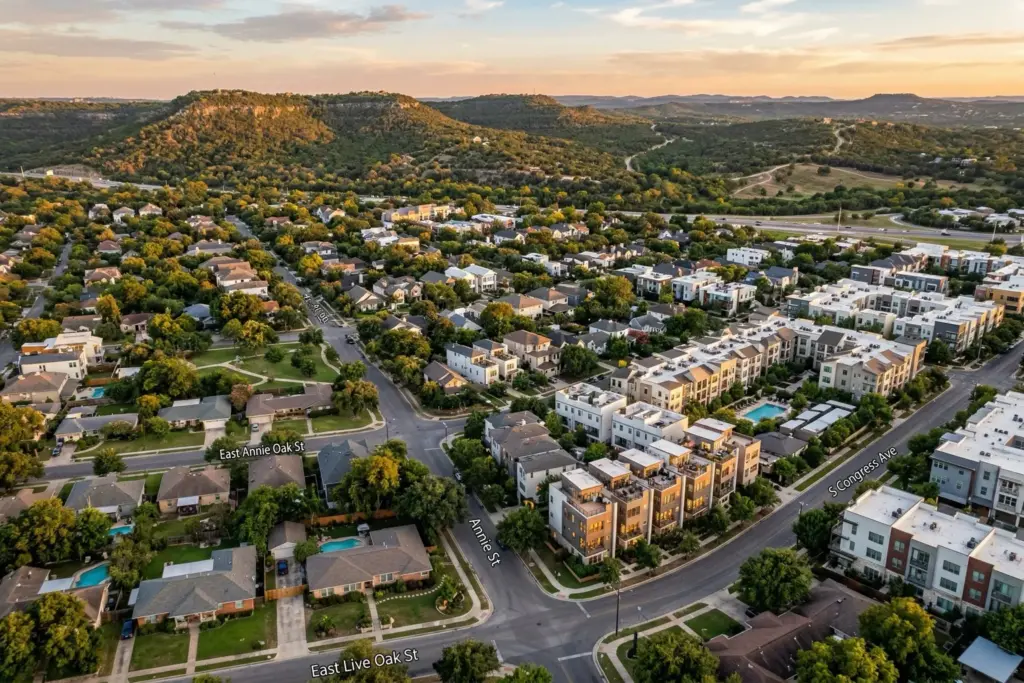
Austin buyers received more than $127 million in down payment assistance through state and local programs in 2025, according to the Texas State Affordable Housing Corporation. That number is up 34% from the year before, and it is still growing. If you are buying a home in the Austin metro in 2026, there is a very real chance you qualify for $10,000 to $40,000 in assistance that you never have to pay back.
That is not a typo. Between grants that require zero repayment, forgivable second liens that disappear after three years, and federal tax credits worth $2,000 per year for the life of your mortgage, the total package available to an Austin buyer can easily exceed $50,000 in lifetime value. The catch? Most buyers do not know these programs exist, and plenty of lenders do not bother to mention them.
This guide covers every active down payment assistance program available in the Austin metro area as of 2026. State programs, city programs, county programs, employer programs, tax credits, gift fund rules, and retirement account strategies. With the Austin median sold price sitting at $545,000 in early 2026 (per MLS data), even a 3.5% FHA down payment means coming up with $19,075. These programs exist specifically to close that gap.
How Down Payment Assistance Works in Texas
Before diving into specific programs, it helps to understand the three main formats that DPA takes in Texas. Every program on this list uses one of these structures, and some let you choose between them.
Grants (Free Money)
A grant is exactly what it sounds like. You receive cash at closing to cover your down payment and closing costs, and you never repay it. No interest, no lien, no strings. The Texas State Affordable Housing Corporation (TSAHC) offers grant options through both of its homebuyer programs. The tradeoff is a slightly higher interest rate on your primary mortgage compared to the forgivable loan option, typically 0.25% to 0.50% higher.
Forgivable Second Liens
This is the most common structure. You receive a second mortgage at 0% interest that is forgiven after a set period (usually 3 to 10 years) as long as you stay in the home and do not refinance. If you sell or refinance before the forgiveness period ends, you repay the remaining balance. Most buyers plan to stay at least three to five years anyway, so the forgiveness window is rarely an issue.
Deferred Payment Loans
Some programs structure DPA as a deferred loan with 0% interest. You do not make monthly payments, but you owe the full balance when you sell, refinance, or pay off the first mortgage. The City of Austin program uses this structure for larger assistance amounts. It is not free money in the same way a grant is, but it effectively eliminates the upfront cash barrier.
| DPA Format | Repayment | Interest | Best For |
|---|---|---|---|
| Grant | Never | None | Buyers who want zero repayment obligation |
| Forgivable Second Lien | Forgiven after 3-10 years | 0% | Buyers planning to stay 3+ years |
| Deferred Payment Loan | At sale, refi, or payoff | 0% | Buyers needing maximum upfront assistance |
Texas State Programs: The Foundation of Your DPA Strategy
Texas has two major state agencies running homebuyer assistance programs. Between them, they cover the vast majority of Austin buyers. These are not niche programs with limited funding. They process thousands of loans every year and have participating lenders across the metro.
TSAHC: Home Sweet Texas and Homes for Texas Heroes
The Texas State Affordable Housing Corporation runs two programs that are functionally identical in structure but differ in who qualifies. Both offer a 30-year fixed-rate mortgage paired with up to 5% of the loan amount in down payment assistance.
Home Sweet Texas is the general population program. Any Texas homebuyer who meets the income and credit requirements can apply.
Homes for Texas Heroes targets specific professions:
- K-12 public school teachers and staff
- Police officers and corrections officers
- Firefighters and EMS personnel
- Registered nurses, LVNs, and nurse practitioners
- Veterans of the U.S. military
The Heroes program sometimes carries slightly more favorable terms (lower rates or higher assistance percentages), but the core structure is the same.
| Feature | Home Sweet Texas | Homes for Texas Heroes |
|---|---|---|
| DPA Amount | Up to 5% of loan | Up to 5% of loan |
| DPA Format | Grant OR 3-year forgivable loan | Grant OR 3-year forgivable loan |
| Loan Types | FHA, VA, USDA, Conventional | FHA, VA, USDA, Conventional |
| Credit Score | 620 minimum | 620 minimum |
| Income Limit | 125% of area median income | 125% of area median income |
| First-Time Buyer? | Not required (targeted areas excepted) | Not required |
| Education Course | Required | Required |
The grant vs. forgivable loan decision: TSAHC lets you pick. The grant means you never repay anything, period. The forgivable loan option typically comes with a lower mortgage interest rate (saving you money monthly) but requires you to stay in the home for three years. For most buyers, the forgivable loan is the better financial choice. If you are confident you will stay put for at least three years, take the lower rate. If there is any chance you will need to move sooner, the grant removes that risk.
Income limits for Austin-area counties (2026): TSAHC raised its income threshold from 115% to 125% of area median family income, which significantly expanded eligibility. For Travis County, that puts the household income limit at approximately $125,000 to $140,000 depending on household size. A dual-income household earning $130,000 combined could qualify. That covers a much larger slice of Austin buyers than most people assume.
How much is 5% worth in real dollars? On a $400,000 home with an FHA loan (3.5% down), the loan amount is $386,000. Five percent of that is $19,300. Your FHA down payment is $14,000. The remaining $5,300 covers a significant chunk of your closing costs. On a $500,000 home, 5% is $24,125. That covers the entire $17,500 down payment plus $6,625 toward closing costs.
TDHCA: My First Texas Home and My Choice Texas Home
The Texas Department of Housing and Community Affairs runs two parallel programs that together cover both first-time and repeat buyers.
My First Texas Home is for buyers who have not owned a home in the past three years (with exceptions for veterans). It offers up to 5% of the loan amount in down payment assistance structured as a 30-year, 0% interest second mortgage.
My Choice Texas Home removes the first-time buyer requirement entirely. Repeat buyers, move-up buyers, and downsizers all qualify. The DPA structure is the same: up to 5% of the loan amount.
| Feature | My First Texas Home | My Choice Texas Home |
|---|---|---|
| DPA Amount | Up to 5% of loan | Up to 5% of loan |
| DPA Format | 0% interest second lien | 0% interest second lien |
| Loan Types | FHA, VA, USDA | FHA, VA, USDA |
| Credit Score | 640 minimum | 640 minimum |
| First-Time Buyer? | Yes (3-year ownership gap) | No |
| Education Course | Required | Required |
One important distinction: TDHCA requires a 640 credit score versus TSAHC’s 620. If your credit is between 620 and 639, TSAHC is your path. If you are above 640, compare the interest rates and DPA terms between both agencies, because rates change periodically and one may be more favorable than the other at any given time.
The Mortgage Credit Certificate: A Tax Credit That Lasts for Decades
The Mortgage Credit Certificate (MCC) is the most underutilized tool in the Austin homebuyer toolkit. It is not cash at closing. It is a federal tax credit worth up to $2,000 per year, every year, for as long as you live in the home and carry the mortgage. Over a 15-year period, that is $30,000 in tax savings.
Here is how it works. The MCC gives you a percentage (typically 20% to 40%, depending on the issuing agency) of your annual mortgage interest as a dollar-for-dollar tax credit. Not a deduction. A credit. That means it reduces your tax bill directly.
The math on a $450,000 mortgage at 6.5%:
- Year 1 mortgage interest: approximately $29,100
- MCC rate of 25%: $7,275
- Annual credit (capped at $2,000): $2,000
- Remaining $5,275 in mortgage interest is still deductible on Schedule A
The MCC can be stacked with both TSAHC and TDHCA programs. You get the down payment assistance at closing AND the annual tax credit going forward. Some lenders will even factor the MCC into your qualifying income, slightly improving your debt-to-income ratio.
Both TSAHC and TDHCA offer MCCs through their participating lenders. Ask specifically about it. If a lender does not mention the MCC, that is a sign they may not be experienced with DPA programs.
Austin-Specific Programs: City and County Assistance
Beyond the state programs, Austin-area buyers have access to local programs with their own funding pools and eligibility criteria. These can sometimes be stacked with state programs for maximum benefit.
City of Austin Down Payment Assistance Program
The City of Austin DPA program is the most generous local option, offering up to $40,000 in assistance. That is a significant number. On a $450,000 home with FHA financing, $40,000 covers your entire down payment ($15,750) plus most of your closing costs ($13,500), with money left over.
The program structure:
- Assistance amount: Up to $40,000
- Format: 0% interest deferred forgivable loan (second lien position)
- Forgiveness: Amounts up to $14,900 are forgiven after 5 years. Amounts above $14,900 are forgiven after 10 years.
- Purchase price cap: $579,025
- Geographic requirement: Property must be within Austin’s full-purpose city limits
Income limits (80% of Area Median Income, 2026):
| Household Size | Maximum Income |
|---|---|
| 1 person | $72,950 |
| 2 people | $83,400 |
| 3 people | $93,800 |
| 4 people | $104,200 |
| 5 people | $112,550 |
The income limits are tighter than the state programs. A single buyer earning $73,000 or a household of four earning $104,000 qualifies. That excludes many Austin tech workers but covers a wide range of service industry, education, healthcare, and government employees.
Eligibility requirements:
- Must be a first-time homebuyer (have not owned a home in the past three years)
- Must complete a HUD-approved homebuyer education course
- Must obtain mortgage pre-approval from a participating lender
- Property must be a single-family home, condo, or townhome within Austin city limits
One thing to know: the City of Austin program has limited funding that gets allocated annually. It does not run out quickly (it is not a first-come-first-served scramble), but availability can vary. Start the process early and get pre-approved before you start shopping.
Travis County Hill Country Home DPA Program
The Travis County Housing Finance Corporation runs the Hill Country Home DPA program. It covers all of Travis County, including Austin, Bee Cave, Lakeway, and surrounding communities.
The standout feature here is the income limit: 140% of area median income, which translates to $138,460 in 2026. That is the most generous income threshold of any program on this list. A household earning $135,000 qualifies for this program but would be over the limit for most others.
Program details:
- DPA amount: 4%, 5%, or 6% of the initial principal loan balance
- Format: 0% interest, 10-year forgivable second mortgage
- Loan types: FHA, VA, USDA, Freddie Mac HFA Advantage
- Credit score: 640 minimum
- DTI ratio: Maximum 45%
- Purchase price limit: $364,452
- Not restricted to first-time buyers
The limitation that jumps out is the purchase price cap of $364,452. With Austin’s median home price above $400,000, this restricts the program to condos, townhomes, and smaller single-family homes. In areas like Pflugerville, Manor, and parts of east Austin, you can find properties under this cap. But in Cedar Park or Round Rock, it is a tight squeeze.
Despite that constraint, the 6% assistance on a $360,000 loan is $21,600, which more than covers a 3.5% FHA down payment ($12,600) and leaves $9,000 for closing costs. And the 10-year forgiveness is quite generous. For buyers who find a property within the price cap, this is an excellent program.
Programs for Surrounding Counties: Williamson, Hays, and Beyond
If you are buying outside Travis County (which includes much of the northern and southern Austin suburbs), additional options exist.
Williamson County
Buyers in Round Rock, Cedar Park, Georgetown, and Leander primarily rely on the statewide TSAHC and TDHCA programs. There is no Williamson County-specific DPA program comparable to Travis County’s Hill Country Home program. However, some areas within Williamson County are designated as “targeted areas” under federal guidelines, which can expand income limits and remove the first-time buyer requirement for certain programs.
Hays County
Buyers in San Marcos, Kyle, Buda, and Dripping Springs also use the statewide programs. Hays County median prices tend to run lower than Travis County, making the TDHCA and TSAHC programs particularly effective here. A $350,000 home in Kyle with 5% DPA means $16,875 in assistance, which covers the down payment and closing costs on an FHA loan with room to spare.
The SETH 5 Star Texas Advantage Program
The Southeast Texas Housing Finance Corporation (SETH) runs the 5 Star Texas Advantage program, which despite the name is available statewide, including all Austin-area counties. It offers down payment assistance as a grant (no repayment required) paired with competitive mortgage rates. SETH is worth comparing against TSAHC and TDHCA, especially for buyers near the edges of income eligibility for other programs.
The Stacking Strategy: Combining Multiple Programs
This is where things get powerful. Several of these programs can be combined, and the math adds up quickly. Not every combination works (you cannot double up on first mortgage programs), but layering a state DPA program with a local program and a Mortgage Credit Certificate can dramatically reduce your out-of-pocket costs.
Example 1: First-time buyer, $420,000 home in Austin, household income $80,000
| Item | Amount |
|---|---|
| Purchase price | $420,000 |
| FHA down payment (3.5%) | $14,700 |
| Estimated closing costs (3%) | $12,600 |
| Total cash needed without help | $27,300 |
| TSAHC Home Sweet Texas grant (5%) | -$20,265 |
| Mortgage Credit Certificate (annual) | -$2,000/year |
| Out of pocket at closing | $7,035 |
| 10-year MCC savings | $20,000 |
If that same buyer also qualifies for the City of Austin DPA (income under $72,950 for a single buyer), the out-of-pocket drops to effectively zero, with the MCC providing ongoing annual savings.
Example 2: Teacher, $380,000 home in Pflugerville, household income $65,000
| Item | Amount |
|---|---|
| Purchase price | $380,000 |
| FHA down payment (3.5%) | $13,300 |
| Estimated closing costs (3%) | $11,400 |
| Total cash needed without help | $24,700 |
| TSAHC Texas Heroes grant (5%) | -$18,335 |
| City of Austin DPA (if in city limits) | -$6,365 (partial, covers remainder) |
| Mortgage Credit Certificate (annual) | -$2,000/year |
| Out of pocket at closing | $0 |
That teacher walks into closing with zero cash out of pocket, carries a lower mortgage rate through the Heroes program, and gets $2,000 back on taxes every year. Over a decade, the total benefit exceeds $40,000.
Stacking Rules to Know
- You can only have one first-lien mortgage program (choose TSAHC, TDHCA, or Travis County, not all three)
- The Mortgage Credit Certificate can be stacked with any first-lien program
- The City of Austin DPA can sometimes be used alongside a state program (confirm with your lender, as this depends on the specific program combination)
- Gift funds and 401(k) loans can supplement any program combination
- Your lender needs to be approved by every program you plan to use. Not all lenders participate in all programs. Start by finding a lender who works with multiple DPA programs.
Beyond Programs: Other Sources of Down Payment Funds
Government programs are not the only way to get help with your down payment. Several other legitimate funding sources are available, and the rules around them are more flexible than most buyers realize.
Gift Funds
Every major loan type (FHA, VA, USDA, and conventional) allows 100% of your down payment to come from gift funds. You do not need to contribute any of your own money if the gift covers the full amount.
The rules:
- FHA loans: Gifts accepted from family members, employers, close friends (with documented relationship), charitable organizations, and government agencies. The donor must provide a signed gift letter stating the money is a genuine gift with no expectation of repayment.
- Conventional loans: Gifts typically must come from family members. If you are putting less than 20% down, the entire down payment can be a gift on some programs (check with your lender on specific requirements).
- VA and USDA loans: Gift funds accepted from a wider range of sources, including friends and employers.
Critical rule: Cash on hand is not an acceptable gift source. If your parents hand you $15,000 in cash, that creates a documentation nightmare. The gift needs to come as a wire transfer, cashier’s check, or electronic transfer with a clear paper trail from the donor’s account to yours.
Tax implications for the donor: In 2026, the annual gift tax exclusion is $19,000 per recipient per donor. A married couple can gift $38,000 to a single recipient (or $76,000 to a couple) without filing a gift tax return. Amounts above that require filing IRS Form 709 but do not necessarily trigger actual tax, as the lifetime gift tax exemption remains above $13 million per person.
Retirement Account Withdrawals
Using retirement funds for a down payment is possible, though the rules differ by account type.
Traditional IRA: First-time homebuyers can withdraw up to $10,000 penalty-free (the 10% early withdrawal penalty is waived). You still owe income tax on the withdrawal. “First-time” means you have not owned a home in the past two years.
Roth IRA: You can always withdraw your contributions (not earnings) penalty-free and tax-free at any time. After five years, up to $10,000 in earnings can also be withdrawn penalty-free for a first-time home purchase.
401(k) loans: Most 401(k) plans allow you to borrow up to 50% of your vested balance (maximum $50,000) and repay yourself with interest over five years. This does not count as a withdrawal, so there is no tax or penalty. The downside: if you leave your job before repaying, the outstanding balance may become due immediately or be treated as a distribution.
401(k) hardship withdrawals: Some plans allow hardship withdrawals for home purchases. You pay income tax plus a 10% penalty if you are under 59.5. This should be a last resort.
| Source | Max Amount | Tax Impact | Penalty | Repayment |
|---|---|---|---|---|
| Traditional IRA | $10,000 | Income tax owed | None (first-time buyer) | No |
| Roth IRA (contributions) | All contributions | None | None | No |
| Roth IRA (earnings) | $10,000 | None (after 5 years) | None (first-time buyer) | No |
| 401(k) loan | $50,000 or 50% vested | None | None | Yes (5 years) |
| 401(k) hardship | Varies | Income tax owed | 10% if under 59.5 | No |
A word of caution: pulling money from retirement accounts reduces your long-term wealth. A $20,000 401(k) withdrawal at age 30 could cost you over $100,000 in lost growth by retirement age, assuming 7% annual returns. If DPA programs can cover your down payment, use those first and keep your retirement funds invested.
Employer Assisted Housing Programs
Several Austin-area employers offer housing assistance to employees, though these programs are less standardized than government DPA.
Austin ISD partners with BCL of Texas and select lenders to offer special down payment assistance and mortgage terms for district employees. Teachers and staff should ask HR about current programs before assuming they need to use a state program (though these can sometimes be combined).
Large tech employers (Apple, Tesla, Samsung, and others with Austin operations) occasionally offer relocation assistance or housing allowances that can be applied toward a down payment. These vary by company and position.
HousingWorks Austin works with the Austin Chamber of Commerce to develop employer-assisted housing strategies. If your employer does not currently offer housing assistance, HousingWorks can help companies set up programs. More information is available at housingworksaustin.org.
Eligibility: Do You Actually Qualify?
The eligibility criteria across these programs can feel overwhelming, but most Austin buyers fit into at least one program. Here is a simplified decision tree.
Credit Score Requirements
| Credit Score Range | Programs Available |
|---|---|
| 620-639 | TSAHC (Home Sweet Texas, Texas Heroes) |
| 640-679 | All programs (TSAHC, TDHCA, Travis County, City of Austin) |
| 680+ | All programs plus better conventional loan terms |
| Below 620 | Limited options. Focus on credit improvement before applying. |
Income Limits by Program (2026 Austin Metro)
| Program | Income Limit Basis | Approx. Limit (Household of 4) |
|---|---|---|
| City of Austin DPA | 80% AMI | $104,200 |
| TSAHC | 125% AMFI | ~$130,000-$140,000 |
| TDHCA | 115% AMFI | ~$103,500 |
| Travis County | 140% AMI | $138,460 |
Notice the range. A household earning $90,000 qualifies for every program on the list. A household earning $130,000 still qualifies for TSAHC and Travis County. Even at $138,000, Travis County’s program remains accessible. This is not just for low-income buyers.
First-Time Buyer Requirement
Several programs require “first-time homebuyer” status, but the definition is more generous than you might think. In most programs, “first-time” means you have not had an ownership interest in a primary residence during the past three years. That means:
- You owned a home but sold it four years ago? You qualify as first-time.
- You owned an investment property but never lived in it? You may qualify (check specific program rules).
- You went through a divorce and your name was removed from the deed more than three years ago? You qualify.
- Veterans are often exempt from the first-time buyer requirement entirely.
Programs that do NOT require first-time status: TSAHC (in most areas), Travis County Hill Country Home, and TDHCA My Choice Texas Home.
The Application Process: Step by Step
Applying for DPA is not a separate process from getting a mortgage. It is integrated into the mortgage application. Here is what the timeline looks like.
Step 1: Homebuyer Education Course (Do This First)
Every DPA program requires a HUD-approved homebuyer education course. This is a 6 to 8 hour course (available online) that covers budgeting, the mortgage process, home maintenance, and avoiding predatory lending. Complete it before you start shopping. You will receive a certificate that lenders require as part of your DPA application.
Approved providers in Austin include:
- Frameworks Homebuyer Education (online, widely accepted)
- BCL of Texas (Austin-based nonprofit)
- NeighborWorks America affiliates
Cost is typically $50 to $100. Some programs reimburse the fee.
Step 2: Find a Participating Lender
This is the most important step. Not every lender participates in every DPA program. You need a lender who is approved by the specific program (or programs) you want to use. TSAHC, TDHCA, and the City of Austin all maintain lists of approved lenders on their websites.
Pro tip: look for a lender who participates in multiple programs. That way they can compare options side by side and recommend the best combination for your situation. A lender who only works with one program will naturally push you toward that program, even if a different option saves you more money.
Step 3: Get Pre-Approved
Your lender will run your credit, verify your income, and determine which programs you qualify for. This is when you find out your actual DPA amount, interest rate, and which program combination works best. Pre-approval typically takes 1 to 3 business days for a standard file.
Step 4: Shop for a Home
With DPA pre-approval in hand, you shop for a home just like any other buyer. Make sure the property meets program requirements (within city limits for City of Austin DPA, under the price cap for Travis County, etc.). Your real estate agent should know these boundaries.
Ed Neuhaus, broker of Neuhaus Realty Group, has guided numerous Austin buyers through DPA programs and notes that working with an agent who understands program-specific property requirements saves time and prevents the frustration of falling in love with a home that does not qualify.
Step 5: Close on Your Home
The DPA funds are disbursed at closing. You do not receive cash. The assistance goes directly toward your down payment and closing costs through the title company. The process is largely invisible to you as the buyer. Your closing disclosure will show the DPA as a credit, reducing the amount you owe at the closing table.
Total timeline from education course to closing: 45 to 75 days is typical, though it can move faster if your file is clean.
Common Mistakes That Cost Austin Buyers Thousands
After years of working with DPA programs, certain mistakes come up repeatedly. Avoiding these can save you significant money and frustration.
Mistake 1: Assuming You Do Not Qualify
The single biggest mistake. A household earning $130,000 assumes DPA is only for low-income buyers and never checks. They come up with $30,000 out of pocket when TSAHC could have covered $20,000 of it as a grant. This happens constantly.
Mistake 2: Using Any Lender Instead of a Participating Lender
Your credit union or online lender might offer a competitive rate, but if they do not participate in DPA programs, you cannot access the assistance. DPA requires a specific lender-program relationship. Always check participation status before committing to a lender.
Mistake 3: Not Asking About the MCC
Even lenders who handle DPA sometimes forget to mention the Mortgage Credit Certificate. It costs nothing extra to apply for, and it saves you $2,000 per year in taxes. Over 10 years, that is $20,000. Over 30 years, it is $60,000 (assuming the full $2,000 annual cap). Ask about it explicitly.
Mistake 4: Making Large Deposits Before Closing
Lenders have to source and document every deposit over a certain threshold (typically $200 to $500 depending on the loan type). If your parents wire you $10,000 for the down payment but you do not have a proper gift letter, it can delay or derail your closing. Plan deposits carefully, document everything, and tell your lender before moving money.
Mistake 5: Ignoring the Forgiveness Timeline
If you take a forgivable second lien and sell or refinance before the forgiveness period ends, you owe the remaining balance. TSAHC forgives after 3 years. Travis County forgives after 10 years. The City of Austin forgives after 5 or 10 years depending on the amount. Know your timeline and plan accordingly. Refinancing to a lower rate in year two could trigger full repayment of your DPA.
Mistake 6: Overlooking Property Eligibility Requirements
City of Austin DPA requires the property to be within the city’s full-purpose jurisdiction. A home in the ETJ (extraterritorial jurisdiction) does not qualify, even if it has an Austin mailing address. Travis County’s program caps the purchase price at $364,452. Some census tracts have different income limits. Verify eligibility for the specific property before making an offer.
Down Payment Assistance for Specific Buyer Profiles
Veterans and Active Military
Veterans have the strongest DPA position of any buyer group. VA loans already require zero down payment, so DPA funds go entirely toward closing costs (which on a $400,000 home run $8,000 to $12,000). The TSAHC Homes for Texas Heroes program, TDHCA programs, and MCC are all available to veterans. Stack a VA loan with Heroes DPA and an MCC and you are looking at zero down, minimal closing costs, and $2,000 per year in tax credits.
Teachers and First Responders
The TSAHC Homes for Texas Heroes program was specifically designed for you. Teachers (K-12 public school), police officers, firefighters, EMS, corrections officers, and nurses all qualify. The terms are at least as good as the general population program and sometimes better. Austin ISD employees should also check with their HR department for district-specific programs through BCL of Texas.
Self-Employed Buyers
Self-employed buyers face extra documentation requirements (two years of tax returns, profit-and-loss statements) but are not excluded from DPA programs. The income verification is more complex, but a good lender experienced with DPA can work through it. Plan for a slightly longer underwriting timeline.
Repeat Buyers
You do not have to be a first-time buyer to get help. TDHCA’s My Choice Texas Home program, TSAHC (in non-targeted areas), and the Travis County program all accept repeat buyers. The MCC is generally limited to first-time buyers, but targeted area exceptions exist. If you sold your previous home more than three years ago, you may qualify as first-time even if you have owned before.
How DPA Affects Your Monthly Payment
A common concern is that DPA programs come with higher interest rates, erasing the benefit. This is partially true for grant options (which carry a 0.25% to 0.50% rate premium) but largely unfounded for forgivable loan options.
Rate comparison on a $400,000 home, FHA loan:
| Scenario | Rate | Monthly P&I | DPA Received | Net Benefit |
|---|---|---|---|---|
| No DPA (market rate) | 6.50% | $2,435 | $0 | Baseline |
| TSAHC forgivable loan | 6.625% | $2,467 | $19,300 | +$19,268 (minus $32/mo) |
| TSAHC grant | 6.875% | $2,530 | $19,300 | +$19,205 (minus $95/mo) |
Even with the grant option’s higher rate, the buyer comes out $19,205 ahead compared to paying $19,300 out of pocket. The $95/month rate premium takes over 16 years to erode the grant benefit. And the forgivable loan option’s $32/month premium takes over 50 years to offset the DPA. The math overwhelmingly favors using DPA even with a slightly higher rate.
Add the MCC’s $2,000 annual tax credit ($167/month effective benefit), and the DPA buyer actually has a lower effective monthly cost than the non-DPA buyer.
Comparing All Austin-Area DPA Programs Side by Side
This master comparison table puts every program next to each other so you can quickly identify which ones fit your situation.
| Program | Max DPA | Format | Income Limit | Credit Score | First-Time? | Price Cap |
|---|---|---|---|---|---|---|
| TSAHC Home Sweet Texas | 5% of loan | Grant or 3yr forgivable | 125% AMFI | 620 | No (varies) | Per FHA/VA limits |
| TSAHC Texas Heroes | 5% of loan | Grant or 3yr forgivable | 125% AMFI | 620 | No | Per FHA/VA limits |
| TDHCA My First Texas Home | 5% of loan | 0% second lien | 115% AMFI | 640 | Yes | Per FHA/VA limits |
| TDHCA My Choice Texas Home | 5% of loan | 0% second lien | 115% AMFI | 640 | No | Per FHA/VA limits |
| City of Austin DPA | $40,000 | 0% forgivable (5-10yr) | 80% AMI | 640+ | Yes | $579,025 |
| Travis County Hill Country | 6% of loan | 0% 10yr forgivable | 140% AMI | 640 | No | $364,452 |
| SETH 5 Star Advantage | Varies | Grant | Varies | 620 | No | Per FHA/VA limits |
| Mortgage Credit Certificate | $2,000/year | Tax credit | 115% AMFI | Per loan type | Yes (exceptions) | Per TSAHC/TDHCA |
What Your Real Estate Agent Needs to Know About DPA
Not every agent understands DPA programs, and that can cost you money. When working with a buyer who plans to use assistance programs, the agent needs to know:
- Property eligibility boundaries. City of Austin DPA requires full-purpose jurisdiction (not ETJ). Travis County has a price cap. Some programs exclude manufactured homes or condos without FHA approval.
- Offer structure implications. DPA does not weaken your offer from the seller’s perspective. The funds come from the program, not from seller concessions. However, some inexperienced listing agents may question DPA-funded offers. A knowledgeable buyer’s agent can explain the process and keep the deal moving.
- Timeline expectations. DPA transactions can take 5 to 10 days longer than a standard purchase due to additional paperwork layers. Build this into your offer timeline.
- Appraisal requirements. Some programs have specific appraisal requirements that differ from standard FHA or VA appraisals. Communicate these to the listing agent early.
According to Neuhaus Realty Group‘s analysis of Austin-area DPA transactions, buyers who work with agents experienced in assistance programs close an average of two weeks faster than those whose agents are learning the process on the fly.
Frequently Asked Questions
Getting Started: Your Next Steps
Down payment assistance is not charity. It is a strategic tool funded by bond programs, tax credits, and housing policy designed to keep homeownership accessible in high-cost markets like Austin. Using it is smart financial planning, not a handout.
If you are ready to explore your options:
- Complete a homebuyer education course. Do this before anything else. Every program requires it, and it gives you a foundation to understand the process. Budget 6 to 8 hours.
- Check your credit score. Know where you stand. If you are below 620, spend 3 to 6 months improving your score before applying. If you are above 640, you have access to every program.
- Find a participating lender. Visit TSAHC’s website or TDHCA’s program page for approved lender lists. Choose one who works with multiple programs so they can compare options for you.
- Connect with an experienced real estate agent. A buyer’s agent who understands DPA programs, property eligibility, and program timelines can save you time and money. Contact Neuhaus Realty Group to work with a team that handles DPA transactions regularly across the Austin metro.
For a more personal take on which programs work best for different buyer situations, read our post on first-time homebuyer programs in Austin. And if you are also researching the broader mortgage process, the Complete Guide to Getting a Mortgage in Austin covers everything from loan types to rate locks.