 Ed Neuhaus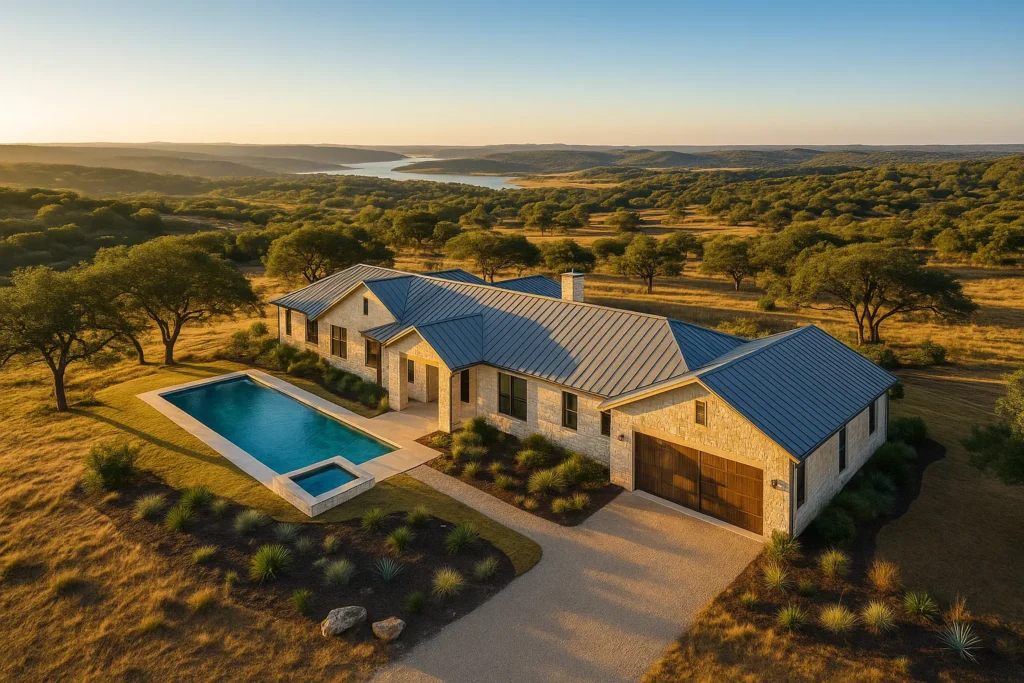
The Austin Hill Country investment property market in 2026 looks very different than it did three years ago. The frenzy is over. Prices have corrected from the 2021-2022 peak. And if you know where to look and how to run the numbers, that creates opportunity.
I have been working this market long enough to know that the best time to buy investment property is when everyone else is sitting on the sidelines. Right now, we are in that window. Inventory is up, competition is down, and the math is starting to work again for buyers who can pencil out real cash flow.
So lets talk about where the numbers actually work in the Hill Country in 2026. Not theory. Not generic advice. Real properties, real income potential, real ROI calculations. This is what I tell my investor clients when they ask me where to put their money.
The State of the Hill Country Investment Market in 2026
The Texas Hill Country real estate market is stabilizing after a correction. The average home value in Austin is $512,937, down 6.8% over the past year. Median listing prices have fallen from the peak, creating a more buyer-favorable climate.
But here is what most people miss. Lower prices do not automatically mean better investment returns. You still need to run the numbers on rent, appreciation potential, vacancy rates, maintenance costs, and property taxes. And in the Hill Country, property taxes can eat you alive if you are not careful.
The good news is that 2026 potentially represents the strongest window of opportunity since 2021 for short-term rentals. Occupancy is expected to bottom out in 2026, then begin climbing into 2027, while average daily rates (ADR) are growing steadily. That is a rare combination that typically signals a buying opportunity.
Short-Term Rental Revenue Potential: What Properties Actually Generate
Ok, lets start with the numbers everyone wants to know. How much can you actually make with a short-term rental in the Hill Country?
Austin short-term rentals average 54% occupancy, $259 daily rate, and $24,037 in monthly revenue according to some data. But more recent 2025 data shows $34,781 average annual revenue, 43% occupancy, and $286 average daily rate. So which numbers do you believe?
The answer is neither. Because the Hill Country is not one market. A Lake Travis waterfront property generates completely different income than a Dripping Springs ranch house. Location, amenities, and property type drive everything.
Lake Travis Waterfront STR Income
This is the premium segment. Waterfront properties with deep-water access, floating docks, and views can command $400-600 per night during peak season (spring and summer). Occupancy runs 60-70% in peak months, dropping to 35-45% in winter.
A $1.2M Lake Travis waterfront home with four bedrooms and a boat dock might generate:
- Peak season (March-September): $450/night x 20 nights/month = $9,000/month
- Off-season (October-February): $350/night x 12 nights/month = $4,200/month
- Annual gross revenue: $84,000
But gross revenue is not profit. You need to subtract property management (20-25%), maintenance, cleaning fees, utilities, insurance, property taxes, and HOA fees. On a $1.2M property, property taxes alone could be $18,000-24,000 per year depending on MUD/PID taxes.
Net cash flow after all expenses? Probably $20,000-30,000 per year if you manage it well. That is a 1.7-2.5% cash-on-cash return. Not great on paper. But you are also betting on appreciation, and Lake Travis waterfront tends to hold value better than most Austin submarkets during downturns.
Dripping Springs Hill Country STR Income
Dripping Springs is different. You are not competing on waterfront access. You are selling Hill Country views, privacy, and the small-town vibe. Properties here typically run $500K-900K.
A $700K Dripping Springs home with three bedrooms, a pool, and Hill Country views might generate:
- Peak season: $300/night x 18 nights/month = $5,400/month
- Off-season: $225/night x 10 nights/month = $2,250/month
- Annual gross revenue: $53,550
Property taxes in Hays County are typically lower than Travis County, but you still have the same management, maintenance, and operating expenses. Net cash flow might be $12,000-18,000 per year, or about 1.7-2.6% cash-on-cash.
The real question with Dripping Springs is appreciation. The market corrected hard after the 2021-2022 boom. Median property sale prices are now $825,000, and traditional rental cash-on-cash returns are around 2.00%. So you are betting on the long-term growth story, not immediate cash flow.
Bee Cave and Lakeway STR Potential
This is where the regulatory landscape gets tricky. Bee Cave does not have STR ordinances in the city code, so you have more flexibility. But Lakeway requires a special-use permit, and they cap the number of permits at 25 single-family homes total. If you can get a permit, great. If not, you are stuck with long-term rentals.
A $650K Bee Cave home near the Hill Country Galleria might generate:
- Peak season: $275/night x 16 nights/month = $4,400/month
- Off-season: $200/night x 9 nights/month = $1,800/month
- Annual gross revenue: $43,400
Again, after expenses, you are looking at net cash flow of $8,000-15,000 per year. The advantage of Bee Cave is location. You are close to the Hill Country Galleria, Lake Travis schools, and easy access to downtown Austin. That drives both rental demand and appreciation potential.
Long-Term Rental Yields: Where Traditional Rentals Make Sense
Short-term rentals get all the attention, but sometimes the math works better with traditional long-term rentals. Lower management costs, more predictable income, fewer regulatory headaches.
The challenge in the Hill Country is that rent-to-price ratios are not great. A $700K home in Lakeway might rent for $3,500-4,200 per month. That is $42,000-50,400 in annual rent on a $700K asset. Before expenses, that is a 6-7.2% gross yield. After property taxes, insurance, maintenance, and vacancy, you might net $12,000-18,000 per year. That is a 1.7-2.6% cash-on-cash return if you put 20% down.
So why would anyone do this? Two reasons. First, you are betting on appreciation. Bee Cave has shown steady appreciation over the past decade, even with the recent correction. Second, you get tax benefits that short-term rentals do not always qualify for.
Neighborhoods with Strong Rental Demand
If you are going the long-term rental route, focus on areas with strong schools, proximity to jobs, and lifestyle amenities. That means:
- Bee Cave: Lake Travis ISD, close to tech jobs, Hill Country Galleria shopping
- Lakeway: Lake Travis ISD, waterfront lifestyle, retirees and families
- Dripping Springs: Dripping Springs ISD, more affordable entry point, growing job market
One thing I always tell my investor clients. Do not buy a rental property you would not want to live in yourself. If you would not live there, your tenants will not stay long either.
Appreciation Trends by Submarket: Where Values Are Heading
Cash flow is only part of the investment equation. Appreciation is where you build real wealth. So where are property values heading in the Hill Country?
Bee Cave: Steady Appreciation with Premium Positioning
Bee Cave has always been the premium Hill Country submarket. Close to Austin, Lake Travis schools, newer construction, and a strong retail and restaurant scene around the Galleria. During the 2021-2022 boom, prices ran up hard. Since then, they have corrected, but not as much as Dripping Springs.
The long-term appreciation story for Bee Cave is solid. Limited inventory, strong schools, and proximity to tech jobs keep demand high. I expect 3-5% annual appreciation over the next five years, assuming the broader Austin economy stays strong.
Lakeway: Softer Market, But Still Stable
Lakeway has been softer than Bee Cave during the correction. Median prices are around $725K, and the market is more balanced than it has been in years. More inventory, less competition, and buyers have leverage again.
The challenge with Lakeway is that it skews older. Retirees, empty nesters, and families looking for the lake lifestyle. That is a narrower buyer pool than Bee Cave, which attracts more move-up buyers and tech workers. I expect 2-4% annual appreciation over the next five years.
Dripping Springs: Long-Term Growth Story, Short-Term Uncertainty
Dripping Springs is the wild card. The market ran up hard during the pandemic as people chased space, privacy, and the small-town vibe. Then it corrected hard. Median prices are still high ($825K), but inventory has increased and buyers are pickier.
The long-term growth story is there. Dripping Springs is the last “small town” feel within 30 minutes of Austin. But the short-term outlook is murky. I expect flat to modest appreciation (1-3%) over the next two years, then a pickup as the Austin metro continues expanding west.
The Regulatory Landscape: What You Need to Know Before You Buy
This is where most investors screw up. They buy a property assuming they can run it as a short-term rental, then find out the city does not allow it. Or they get the permit, but the HOA has restrictions. Or they do not collect the right taxes and get hit with penalties.
So lets break down the regulatory landscape city by city.
Bee Cave STR Regulations
Bee Cave does not have STR ordinances in the city code. That means you can operate a short-term rental as long as you comply with Texas state law and collect the required hotel occupancy taxes. The city has a low hotel occupancy tax rate compared to other Texas cities.
This is one reason I like Bee Cave for STR investors. Less regulatory risk, easier to operate, and you are not competing for a limited number of permits.
Lakeway STR Regulations
Lakeway requires a special-use permit, and they cap the number of permits at 25 single-family homes total. The application fee is $250, but getting approved is the hard part. If the city already has 25 permitted STRs, you are out of luck.
This makes Lakeway tricky for STR investors. You need to verify permit availability before you buy. And even if you get a permit, it adds complexity and cost to the operation.
Dripping Springs STR Regulations
Dripping Springs requires hosts to obtain a permit and pay hotel occupancy tax. The city has a 7% hotel occupancy tax rate for STRs located in the city limits and the extraterritorial jurisdiction (ETJ).
One important note. Reservation services like Airbnb or VRBO do not remit hotel occupancy taxes to Dripping Springs on behalf of property owners. You have to charge and collect the tax yourself, then remit it to the city. Most investors miss this, and it can create compliance headaches down the road.
Travis County vs Hays County Differences
The county matters as much as the city. Travis County has higher property tax rates and more regulatory oversight. Hays County has lower property tax rates but fewer services.
For 2026, Travis County’s tax rate is 37.5845 cents per $100 of taxable value, up slightly from 2025. The overall countywide property tax rate is 1.34%, though cities and school districts levy their own rates on top of that.
Hays County rates vary by taxing unit, but they are generally lower than Travis County. That can make a meaningful difference in your cash flow calculations.
Tax Advantages: How to Actually Save Money on Investment Properties
This is where real estate investment gets interesting. The tax code is written to favor real estate investors. If you know how to use it, you can dramatically improve your after-tax returns.
Standard Depreciation
Residential rental properties depreciate over 27.5 years. So if you buy a $700K property and the land is worth $200K, you can depreciate the $500K building over 27.5 years. That is $18,182 per year in depreciation deductions.
This is a paper loss. You are not actually spending the money. But it reduces your taxable income, which lowers your tax bill. If you are in the 32% tax bracket, that $18,182 deduction saves you $5,818 in taxes every year.
Cost Segregation Studies
This is where it gets powerful. Cost segregation reclassifies parts of a building into shorter-lived asset categories, typically 5-, 7-, or 15-year property. That lets you depreciate those components faster than the building’s standard 27.5-year schedule.
For example, specialty flooring, appliances, lighting, plumbing, and interior upgrades can be accelerated and bonus depreciation applied. A rental property with a cost basis of $500,000 might identify $100,000 in assets eligible for accelerated depreciation. This acceleration could generate $25,000-35,000 in tax savings within the first five years.
And here is the big news for 2026. Bonus depreciation is permanently restored at 100% for qualified property acquired and placed in service after January 19, 2025. That means you can deduct the full cost of eligible improvements the year they are placed in service.
This makes 2025 and 2026 an ideal time for investors to take advantage of tax savings while growing their portfolios. But you need a professional cost segregation study to do it right. Expect to pay $5,000-10,000 for the study, but the tax savings can be 5-10x that amount.
Property Tax Deductions
All property taxes paid on rental properties are fully deductible. In the Hill Country, where property taxes can run $15,000-25,000 per year on investment properties, this is a meaningful deduction.
But here is what most investors miss. MUD and PID taxes are also deductible, even though they are technically bond assessments. MUD taxes can be up to $1.40 per $100 of assessed value, and over time they decrease as bonds are paid off. That can add thousands of dollars per year to your deductible expenses in the early years.
Where I Would Invest Right Now: Specific Areas and Property Types
Ok, so after all that analysis, where would I actually put my money in 2026?
First, I would look at Bee Cave resale homes in the $600K-800K range. Not new construction. Resale. Why? Because new construction prices have not corrected as much as resale, and you get better cash flow with resale properties. Look for properties near the Hill Country Galleria with Lake Travis ISD schools. Strong rental demand, solid appreciation potential, and no STR permit headaches.
Second, I would consider Lake Travis waterfront properties in the $900K-1.2M range if you can find motivated sellers. The cash flow will not blow you away, but waterfront is limited supply, and these properties tend to hold value better during downturns. Plus, you can use it personally when it is not rented. Just make sure you understand the true cost of ownership, including MUD/PID taxes, HOA fees, and maintenance.
Third, I would look at Dripping Springs properties under $700K if you have a longer time horizon. The market has corrected, inventory is up, and you have negotiating leverage. But you are betting on appreciation, not immediate cash flow. So only do this if you can hold for 5-7 years and weather short-term volatility.
New Construction vs Resale for Investment
This is a question I get all the time. Should you buy new construction or resale for investment properties?
The math usually favors resale. New construction prices are still elevated compared to resale, and builders are not offering the same incentives they did in 2023-2024. Plus, with resale you can see the actual neighborhood, the actual schools, the actual amenities. With new construction, especially in new developments, you are betting on what the neighborhood will become.
That said, new construction in Dripping Springs can make sense if you are looking for specific features that are hard to find in resale inventory. Modern floor plans, energy efficiency, lower maintenance costs. Just make sure you are not overpaying for the shiny new factor.
The Numbers: Real ROI Calculations at Different Price Points
Lets put some real numbers on paper. Here are three scenarios at different price points.
Scenario 1: $600K Bee Cave Resale (Long-Term Rental)
| Item | Amount |
|---|---|
| Purchase price | $600,000 |
| Down payment (20%) | $120,000 |
| Loan amount | $480,000 |
| Mortgage (7% / 30 years) | $3,194/month |
| Property taxes (2.5%) | $1,250/month |
| Insurance | $200/month |
| HOA fees | $100/month |
| Maintenance (1% annually) | $500/month |
| Vacancy (5%) | $175/month |
| Total monthly expenses | $5,419 |
| Monthly rent | $3,800 |
| Monthly cash flow | -$1,619 |
| Annual cash flow | -$19,428 |
| Cash-on-cash return | -16.2% |
Wait, that is negative cash flow. So why would anyone do this?
Because you are not investing for cash flow. You are investing for appreciation and tax benefits. If the property appreciates 4% per year, that is $24,000 in year one. Plus you get $18,000 in annual depreciation deductions, which saves you $5,760 in taxes (32% bracket). So your total economic benefit is $10,332 in year one, even with negative cash flow.
This is why real estate is a long-term game. You lose money every month, but you build wealth over time through appreciation, principal paydown, and tax savings.
Scenario 2: $850K Lake Travis Waterfront (Short-Term Rental)
| Item | Amount |
|---|---|
| Purchase price | $850,000 |
| Down payment (25%) | $212,500 |
| Loan amount | $637,500 |
| Mortgage (7.5% / 30 years) | $4,459/month |
| Property taxes (2.8%) | $1,983/month |
| Insurance | $300/month |
| HOA fees | $150/month |
| Utilities | $400/month |
| Maintenance (1.5% annually) | $1,063/month |
| Property management (25%) | $1,583/month |
| Total monthly expenses | $9,938 |
| Monthly gross revenue (STR) | $6,333 |
| Monthly cash flow | -$3,605 |
| Annual cash flow | -$43,260 |
| Cash-on-cash return | -20.4% |
Even worse cash flow. But again, you are betting on appreciation and personal use. Lake Travis waterfront is scarce. If the property appreciates 3% per year, that is $25,500. Plus you get depreciation deductions and the ability to use the property yourself.
This is not a pure cash flow play. This is a lifestyle investment with appreciation potential.
Scenario 3: $700K Dripping Springs (Short-Term Rental)
| Item | Amount |
|---|---|
| Purchase price | $700,000 |
| Down payment (20%) | $140,000 |
| Loan amount | $560,000 |
| Mortgage (7% / 30 years) | $3,726/month |
| Property taxes (2.3%) | $1,342/month |
| Insurance | $250/month |
| Utilities | $350/month |
| Maintenance (1.5% annually) | $875/month |
| Property management (25%) | $1,113/month |
| Total monthly expenses | $7,656 |
| Monthly gross revenue (STR) | $4,463 |
| Monthly cash flow | -$3,193 |
| Annual cash flow | -$38,316 |
| Cash-on-cash return | -27.4% |
The worst cash flow of all three scenarios. But Dripping Springs has the lowest entry price and the most appreciation upside if the market recovers. If the property appreciates 5% per year, that is $35,000. Plus tax benefits.
Again, this is not a cash flow play. This is a bet on long-term appreciation in a market that has corrected hard.
Risk Factors to Consider
I would not be doing my job if I did not talk about the risks. Real estate investing is not a guaranteed path to wealth. Here are the things that can go wrong.
Interest Rate Risk
Mortgage rates are still high. If you are financing at 7-7.5%, your cash flow will be terrible unless rents go up significantly. And if rates drop, you might regret locking in at today’s rates.
The flip side is that if rates drop to 5-6%, you can refinance and dramatically improve your cash flow. But that is a bet, not a certainty.
Appreciation Risk
All three scenarios above assume 3-5% annual appreciation. But what if the market stays flat? Or worse, what if prices drop another 5-10%?
This is why you need a long time horizon. If you are forced to sell in a down market, you will lose money. But if you can hold for 7-10 years, appreciation typically smooths out over time.
Regulatory Risk
STR regulations can change. Lakeway could stop issuing permits. Bee Cave could adopt new ordinances. Austin could expand its STR restrictions to the ETJ.
This is why I prefer markets with fewer regulatory restrictions. Bee Cave and unincorporated areas give you more flexibility than Lakeway or Austin proper.
MUD/PID Tax Risk
Most investors underestimate MUD and PID taxes. In new developments, these can add $5,000-10,000 per year to your property tax bill. And they do not decrease as fast as people think.
Always ask about MUD and PID taxes before you buy. Run the numbers with the full tax burden, not just the base property tax rate.
Final Thoughts: Is Now the Right Time to Invest?
The Hill Country investment property market in 2026 is not a slam dunk. Cash flow is terrible, prices are still high compared to historical norms, and regulatory uncertainty is real.
But if you have a long time horizon, access to capital, and the ability to weather short-term volatility, this could be one of the better entry points we have seen in years. Inventory is up, competition is down, and the tax code is favorable for real estate investors right now.
The key is running the numbers honestly. Do not assume 10% appreciation. Do not ignore MUD/PID taxes. Do not underestimate maintenance and vacancy. And do not buy anything you would not be comfortable holding for 7-10 years.
If you can check those boxes, there are good opportunities in Bee Cave, Lakeway, and Dripping Springs right now. You just have to know where to look.
Have questions about where to invest in the Hill Country? Contact Ed Neuhaus for a data-driven analysis of your investment options. I have been working this market since 2009, and I can help you find properties that actually pencil out.


