 Ed Neuhaus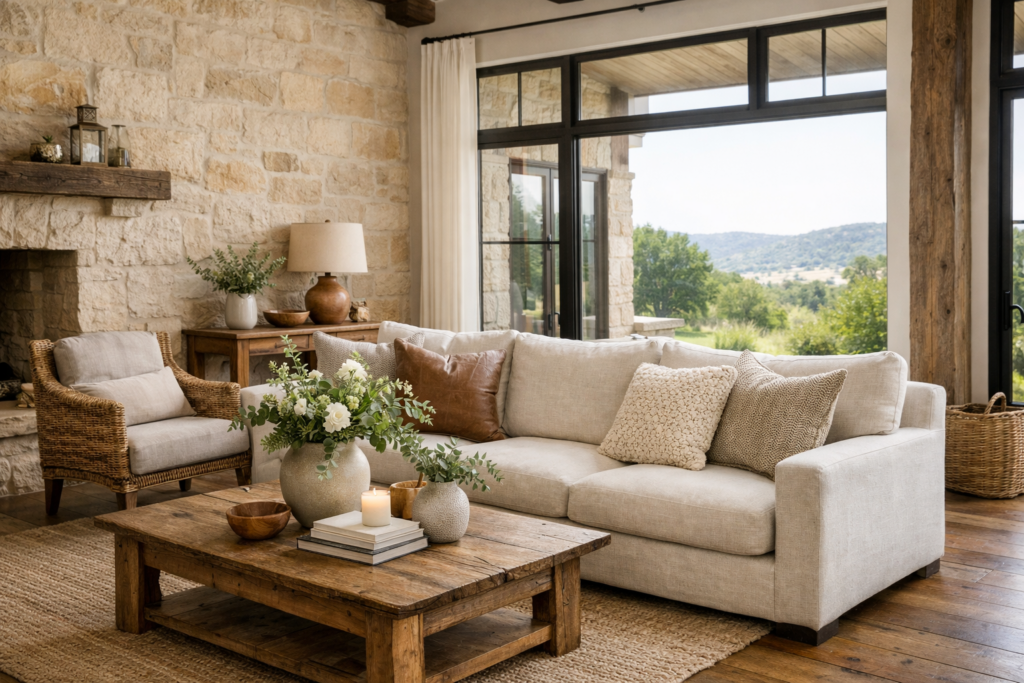
I walked through a listing last spring that had been sitting for 94 days. Nice house, good location, competitive price. I walked in and immediately understood why it hadn’t sold. The living room furniture was pushed to the walls. The kitchen counters had a coffee maker, a toaster, a knife block, a fruit bowl, a paper towel holder, and a stack of mail. The master bedroom smelled like a dog (there was no dog). And the backyard, which backed up to the Hill Country treeline, had a rusting swing set front and center blocking the view that should have been the whole selling point.
Nobody was going to buy that house. Not because it wasn’t a good house. Because buyers couldn’t see it.
We’re in a buyer’s market in Austin right now. 89 average days on market. Over 12,000 active listings. Buyers have choices, and when they have choices, their standards go up fast. If you’re getting ready to list, staging isn’t a nice-to-have anymore. It’s the difference between a sale in 30 days and a price cut in 90.
Let me walk you through what actually works. This isn’t generic staging advice. This is specifically for Hill Country and West Austin homes, the rustic modern aesthetic that sells here, and what 2026 buyers actually expect when they walk through the door.
Why Staging Matters More in a Buyer’s Market
First, lets be honest about where we are. When inventory was tight and buyers were waiving inspections and writing love letters, you could throw a few throw pillows on the couch and call it staged. Those days are gone for now.
Today a buyer clicking through Zillow has 47 other homes in your price range to look at. If your listing photos don’t stop the scroll in the first two seconds, they move on. And if a buyer does schedule a showing and walks into a house that feels cluttered, lived-in, or like it hasn’t been touched since 2018, they walk out and make an offer on the next one.
The data on this is pretty clear. Staged homes sell 73% faster than unstaged ones. Sellers who invest in staging see an average return of 8 to 10 times what they spent. We’re not talking about a $30,000 renovation. We’re talking about strategic, intentional preparation that signals to buyers: this home is move-in ready and it was cared for.
The other thing staging does, and this is underrated, is it protects your price. When buyers walk into a house that isn’t staged, they mentally start discounting. “I’d need to paint that.” “Those counters would have to go.” “There’s so much stuff I can’t tell how big the room actually is.” Every mental deduction comes off your number. Staging eliminates those deductions before they happen.
And if you want to see the full list of what sends a listing sideways, the top 10 mistakes Austin sellers make covers a lot of ground beyond just staging.
The Hill Country Aesthetic: What Actually Sells Here
Austin staging isn’t the same as staging in Houston or Dallas. We have a specific aesthetic that buyers come here expecting, and if your home doesn’t deliver it, you’re fighting against their vision instead of feeding it.
What sells in West Austin, Bee Cave, Lakeway, Westlake, and the Hill Country corridor right now is rustic modern. Not farmhouse-kitschy with shiplap and galvanized metal chicken wire. Not cold industrial. Rustic modern: warm wood tones, natural stone, clean lines, and nothing that looks like it came from a suburban furniture store in Ohio.
Think exposed cedar or live-edge wood accents, linen and neutral upholstery, woven textures, ceramic and clay decorative pieces. Think rooms that feel like a Hill Country lodge that got renovated by someone with excellent taste and a lot of money. That’s the vibe buyers are paying a premium for.
If your home already has limestone walls, exposed beams, or wood floors, your job is to get out of the way and let those features breathe. Don’t cover the limestone with art. Don’t put a shaggy rug over the hardwoods. Clear the clutter and let the architecture do the work.
Room-by-Room Staging Checklist
Curb Appeal: The First 30 Seconds
Buyers decide how they feel about a house in the first 30 seconds. If the driveway is stained, the beds are overgrown, and the front door is peeling, they walk in already looking for reasons not to buy it.
For Austin and Hill Country homes, curb appeal is a little different than the rest of the country. Here’s what to focus on:
- Pressure wash everything. Driveways, sidewalks, the limestone facade if you have one. Texas heat and humidity grow algae and mildew on surfaces fast. A pressure wash can make a driveway look five years younger in two hours.
- Native landscaping beats sod. Buyers in 2026 are not impressed by thirsty grass that needs twice-weekly watering. They want xeriscaping, drought-tolerant plants, and something that looks intentional. Texas Sage, Red Yucca, and Mexican Feathergrass are beautiful and signal low maintenance. Add decomposed granite pathways for a Hill Country finish that looks custom.
- Front door matters more than you think. A fresh coat of paint on the front door is one of the highest ROI updates in real estate. Pick something that works with your exterior palette: a deep navy, a warm charcoal, or an earthy terracotta all work beautifully against limestone.
- Clear the driveway. No cars in the driveway during showings or listing photos. It makes every home look smaller and more congested.
- Solar or EV infrastructure? If you have EV charging in the garage or solar panels on the roof, make sure those are photographed and called out in the listing. Buyers are actively searching for these features in 2026. They’re not a bonus anymore, they’re a differentiator.
Entry: Set the Tone Fast
The entry is where buyers decide if they’re emotionally in or out. I’ve seen incredible houses lose buyers in the first ten feet because the entry felt cramped, dark, or forgotten.
- Clear it out completely. No shoe piles, no mail, no jackets draped over chairs.
- Add a mirror if there isn’t one. Makes the space feel larger and gives buyers a moment to orient.
- One intentional piece: a simple console table with a clean lamp and a single piece of art or a plant. That’s it.
- Make sure it smells right. Not perfumed, not chemically clean. Just neutral. Fresh air is better than air freshener.
Living Room: The Heart of the Showing
Most sellers make the living room staging mistake in the same direction: too much furniture, furniture pushed to the walls (counterintuitive, but this actually makes rooms feel smaller), and too much personal decor. Photos of the family, kids’ art on the walls, a collection of something.
The buyer needs to be able to picture their family in this room. They can’t do that if yours is already there.
- Pull furniture off the walls. Create a conversation grouping in the center of the room. Leave walkable space around all sides.
- Remove at least 30% of decorative items from shelves and surfaces. You want curated, not collected.
- Warm textiles. A linen throw, a woven basket, a sisal rug if the flooring needs help. Nothing that looks mass-produced.
- If you have a fireplace, stage it. Even if it’s summer. A stack of birch logs, a simple set of tools, and clean glass doors tell a story.
- Lighting matters more than most sellers realize. If your lighting is yellow and dim, get some warmer LED bulbs that read well on camera.
Kitchen: Where Buyers Go Straight
The kitchen is the room buyers walk to first. It’s where they spend the most time during a showing and the room they talk about the most when they’re standing outside deciding whether to make an offer. Get this room right.
- Clear the counters. Everything. Coffee maker goes in a cabinet. Toaster goes in a cabinet. Knife block goes in a drawer. Leave one or two items maximum: a nice fruit bowl or a single plant is enough.
- Clean the appliances until they look new. Inside the microwave too. Buyers open everything.
- If your hardware is dated, replace it. Cabinet pulls and knobs are one of the cheapest updates with one of the highest visual impacts. A set of matte black or brushed brass hardware on older cabinets can update the kitchen by a decade for a few hundred dollars.
- If the countertops are old and dated, don’t panic, but do consider whether painting or refinishing is worth it. Sometimes the right staging just frames around them well enough that it doesn’t matter.
- Tuck away the pet bowls, the cleaning supplies under the sink, the extra paper towels. Buyers open cabinets. Every cabinet. Keep things neat.
Primary Bedroom: Sell the Escape
Buyers, especially buyers in the $600K-$1.5M range we’re seeing in Lakeway, Bee Cave, and Dripping Springs, want the primary bedroom to feel like a hotel. Not sterile. Luxurious. Like they’re going to come home and actually exhale.
- White or neutral bedding, freshly pressed. If you’re using a busy comforter, box it up and get a simple white duvet for the listing period.
- Nightstands should be clear except for a lamp, a small plant, and maybe one book.
- All personal items off dressers. No jewelry, no prescription bottles, no framed photos.
- Closets will be opened. They always are. Go through them now and remove at least half of what’s in there. Buyers want to imagine having plenty of storage. They can’t do that if your closet is packed to the ceiling.
- If the primary bathroom is connected, treat it as part of the same staging job. White towels, clear counters, and a few spa-style details: a tray with some nice soap, a candle, a small plant. Hotels do this for a reason.
Home Office: The Room That Can Close a Deal
If you have a home office, you are sitting on gold right now. This is the room that 2026 buyers come in hoping to find, and a lot of Austin listings still don’t have one or haven’t staged one effectively.
Buyers today are remote or hybrid workers. They need a dedicated workspace with a door. If your home has a room that could function as an office and you’re using it as a storage dump or a playroom that hasn’t been updated since 2015, fix that before you list.
- Desk, chair, simple shelving, good lighting. That’s the template.
- If it’s a dual-purpose room (office plus guest room), make that explicit. Stage it so both functions are visible and intentional. A daybed with the right pillows reads as guest room. A desk in the corner reads as office. Buyers understand the concept and appreciate the flexibility.
- Wired ethernet and visible cable management signal that this is a real workspace, not an afterthought.
Secondary Bedrooms: Efficient and Neutral
Secondary bedrooms don’t need as much work, but they still need to be done. Clean, neutral, beds made, closets organized. Remove all but a few pieces of kid artwork. Buyers love kids, they just don’t want to feel like they’re walking through someone else’s kids’ territory.
If you have a secondary bedroom that could be a nursery or a flex room, you can lightly stage it as a neutral guest room and let buyers mentally fill in their own vision.
Backyard: The Hill Country Bonus Room
This is where Austin sellers either nail it or waste their biggest asset. A Hill Country backyard with a view, mature oaks, or a pool is one of the most powerful emotional selling tools you have. Don’t cover it up with clutter.
- Clear patio furniture down to one seating area. One table, a few chairs, maybe a small firepit setup if you have one. Buyers want to imagine their version of outdoor living. Too much stuff gets in the way of that imagination.
- String lights work really well in listing photos and showings. They’re inexpensive and add warmth without taking up space.
- If you have a pool, it needs to be clean, chemically balanced, and visually clear for every showing and every photo. There’s no negotiating on this.
- Cut back overgrown trees and bushes to reveal views. I’ve walked homes where the whole selling point was a Hill Country treeline view and you couldn’t see it because three live oaks hadn’t been trimmed in five years.
- Remove the rusting trampoline, the deflated basketball hoop, the old grill that hasn’t been used in three years. All of it.
What 2026 Buyers Are Actually Checking
Beyond the aesthetic, buyers walking through homes in 2026 are also looking at specific mechanical and functional items. I tell every seller: buyers in today’s market have been burned before. They’re doing their homework. Here’s what they’re checking.
HVAC
This is the number one thing buyers ask about in Central Texas, and it makes sense. Running AC in an Austin summer on an aging system is a known and expensive problem. Get a pre-listing inspection done and know the age and condition of your system before buyers find out for you.
If your HVAC is under ten years old, say so. Display it. If it’s been recently serviced, leave the service paperwork out on the counter. Buyers notice. If your system is 18 years old and you know it, price accordingly or budget for a negotiated replacement. Either way, don’t be surprised by it at the inspection.
Smart Home Features
Smart thermostats, smart locks, and video doorbells are no longer premium upgrades. Buyers expect them. If you have them, good. If you don’t, a $200 Nest or Ecobee installation is one of the better small investments you can make before listing. Just make sure to disclose what conveys and what doesn’t before you get into contract.
Water Heater and Major Appliances
If a buyer is going to ask about it, you should already know the answer. Water heater age, roof age, when the appliances were last updated. Have these answers ready. Buyers who have to ask three times for basic information about a home start to get nervous that the sellers are hiding something, even if they aren’t.
Professional Staging vs. DIY: When Each Makes Sense
Let me be straight about this. For most Austin homes, you don’t need a full professional staging service. What you need is a ruthless declutter, the right furniture placement, and maybe a few rented pieces where your existing furniture is too worn or too personal.
But there are situations where professional staging is clearly worth it:
- Vacant homes. Empty houses are harder to sell than almost any other situation. Without furniture, buyers can’t judge room sizes, flow, or scale. A vacant house also tends to look clinical and cold on camera. If your home is vacant, get staging. The investment on a $700K listing is around $1,500-$3,000 for the first month and it will pay for itself.
- Luxury market listings. Anything over $1.5M in Westlake or the premium Bee Cave communities needs to look like a magazine. At those price points, buyers have usually seen the best and they have high expectations. Bring in a professional.
- Unusual layouts or challenging spaces. If a room reads as confusing or awkward, a professional stager knows how to define the function visually in a way most homeowners can’t figure out on their own.
For everything else, a solid DIY effort with the room-by-room checklist above will get you most of the way there. The single most impactful thing you can do is declutter. Aggressively, ruthlessly, take-a-truck-to-storage declutter. That’s free, and it’s worth more than any furniture rental.
Virtual Staging: The Budget Option That Wins Online
If you have a vacant property and full staging isn’t in the budget, virtual staging is worth considering. This is where a company digitally adds furniture and decor to your listing photos. The results today are remarkably good, much better than they were even two years ago.
Virtual staging runs $50-$200 per photo and can make a vacant home look fully furnished online. The catch is that you have to disclose that photos are virtually staged, and buyers who show up expecting the furnished home will see the empty one in person. So virtual staging works best as a supplemental tool, maybe for a few hero photos, while you keep the rooms as clean and well-lit as possible for in-person showings.
One honest caveat: virtual staging doesn’t help with showings. It only helps with the online click-through. So use it to get people in the door, then let the actual property close the deal.
Staging FOR the Camera (Not Just for Showings)
Here’s something most sellers don’t think about: staging for showings and staging for photography are actually different jobs. And in 2026, when most buyers decide on their shortlist entirely from online photos before ever stepping foot in a house, the camera version matters at least as much as the in-person version.
A few things that make a massive difference in listing photos:
- Lighting. Natural light is everything. Schedule your photo shoot on a day with good natural light, midmorning or midday. Open every curtain and blind before the photographer arrives. Turn on all interior lights. Replace any burnt bulbs. The difference between a dark listing photo and a bright one is not subtle.
- Camera lines. Photographers shoot at a specific angle that makes rooms look larger. Put yourself at the corner of a room and imagine the photo. Anything in that line of sight that doesn’t add to the scene should be moved. A single chair in the wrong place can make a room look half its size.
- Color pops work differently on camera. A green plant in an otherwise neutral room photographs beautifully and adds life without visual clutter. A collection of colorful throw pillows can look chaotic on camera even if it looks fine in person. Think about how each room reads at small scale, because that’s how buyers are first seeing it on their phone.
- Remove everything from refrigerator doors. Magnets, photos, calendars, kids’ artwork. All of it. The photographer will get the kitchen in every wide shot and a sticker-covered fridge will show up.
- Make beds military-tight. You’d be surprised how much of a listing photo is just the bed. Get it tight, get the pillows right, and it photographs like a hotel suite.
The Real ROI: What Staging Actually Returns
Ok, lets talk numbers. I know some of you are reading this thinking “all of this sounds great but I’m not spending $3,000 on staging when I don’t know if the house will even sell.”
Fair. Here’s the math.
NAR data shows staged homes sell for an average of 25% more than comparable unstaged homes. On a $700,000 Austin listing, that’s the difference between $700,000 and $875,000. And sellers who invest around 1% of the home’s value in staging see returns of 5 to 15 times that investment.
Put another way: spending $3,000 to $5,000 to stage a $700K home is one of the few investments in real estate where you have a reasonable sense of the return before you write the check. Most other improvements, a kitchen remodel, new flooring, bathroom update, you get partial value back. Staging is different because it’s not about the physical improvement, it’s about the buyer’s emotional experience. And that pays back at a level that remodels can’t touch.
The flip side: if your home sits on the market for 90 days unstaged because buyers can’t see its potential, you’re going to end up doing a price reduction anyway. Usually 1-3% of the asking price. The pricing strategy piece covers this pattern in detail, but unstaged homes that miss the mark on day one almost always need a reduction. A staged home at the right price almost never does.
And if you want to understand the full cost picture of selling, including what most sellers don’t account for when they’re planning, that’s worth a read before you decide what to invest in preparation.
Decluttering the Oversized Hill Country Home
One challenge specific to the Hill Country and West Austin market is that we’re selling bigger homes. 3,000, 4,000, 5,000 square feet. And bigger homes accumulate more stuff, in more places, with more surface area to be cluttered.
My rule for Hill Country homes: do the declutter in two phases. First pass, anything in a dedicated storage area (garage, closets, utility room) that isn’t in active daily use gets boxed up and put in a storage unit. This usually takes one day and a rented truck. Second pass, walk every room and every flat surface and apply the “does this add to the room or distract from it” test. Anything that doesn’t add gets boxed.
Most sellers are surprised by how much better their home looks after the second pass. It feels bare to them because they live there. To buyers walking in for the first time, it looks open, spacious, and move-in ready.
If you’re in Bee Cave, Lakeway, or Dripping Springs and you have a property over 3,000 square feet, budget two full weekend days for the declutter alone. It’s the work nobody talks about and the preparation step that makes the biggest difference.
Frequently Asked Questions
Ready to List? Start With a Staging Consultation
At Neuhaus Realty Group, we include a staging consultation with every listing. Not a recommendation to hire a stager. An actual walkthrough, where we go room by room and tell you exactly what to move, what to remove, what to update, and what to leave alone.
I’ve been doing this for 16 years. I’ve walked through hundreds of homes in this market, before and after staging, and I know what photographs well and what 2026 buyers in this specific market are looking for. The consultation is part of the service because staging is part of the job. You can’t price a home strategically without knowing what condition it needs to be in for that price to hold. They’re connected.
If you’re thinking about listing in the next 60-90 days and want to start that conversation, reach out here. We’ll talk through timing, pricing, and staging as one integrated strategy.
And if you’re still working through the bigger picture of the market, this piece on selling in Austin’s 2026 market and this one on what to do if your home didn’t sell the first time are both worth reading before you make any decisions.


