 Ed Neuhaus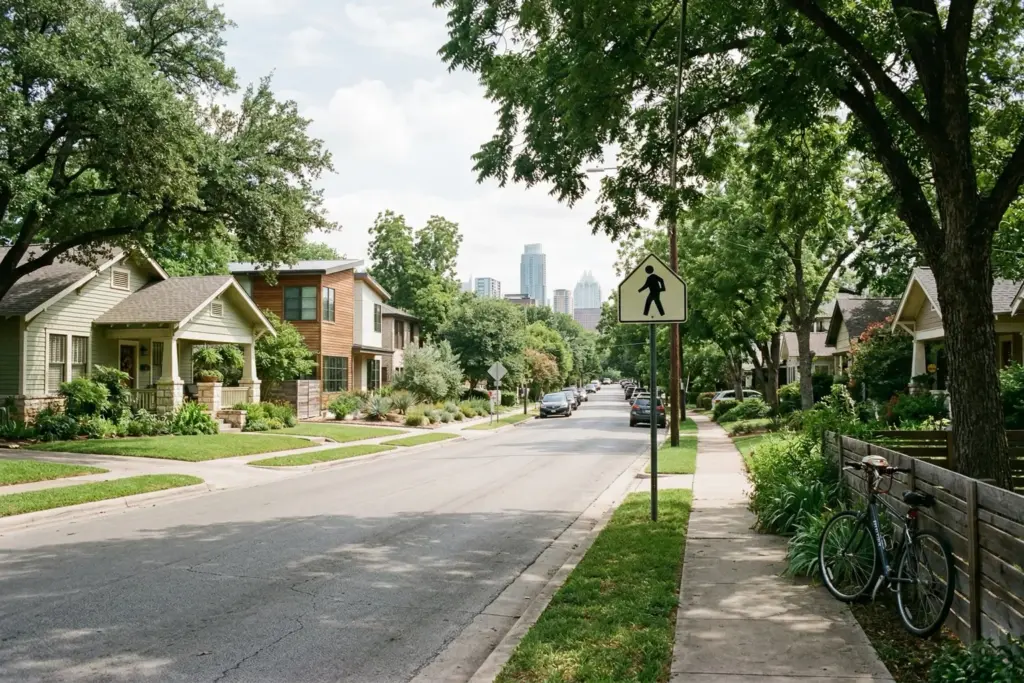
What Buyers Actually Need to Know About Lamar and Webb
Lamar Middle School earned a 90 out of 100 on its 2025 TEA accountability rating, its first A in the school’s recent history. Webb Middle School, less than two miles east, scored a 59. That is a real gap, and I am not going to pretend it is not. But the story of these two schools is more complicated than the scorecard suggests, and if you are looking at homes in central or north Austin with a budget under $350,000, both of these zones deserve your attention for different reasons.
I get calls from buyers all the time who are searching in this part of Austin ISD. They have found a house they love, they look up the school assignment, and they want to know what they are actually getting. So lets walk through the numbers, the neighborhoods, and the context that the TEA rating alone does not tell you.
Lamar vs Webb: Quick Comparison
| Lamar Middle School | Webb Middle School | |
|---|---|---|
| TEA Rating | A (90/100) | F (59/100) |
| Enrollment | 1,109 students | 502 students |
| Grades | 6 – 8 | 6 – 8 |
| District | Austin ISD | Austin ISD |
| Median Home Price | $298,900 | $299,900 |
| Feeds Into | Anderson / Austin / McCallum / LBJ HS | McCallum / LBJ / Travis HS + LASA |
TEA School Performance Comparison (2025)
The Texas Education Agency evaluates every public school annually across multiple performance domains. Here is how both campuses performed in the 2025 accountability cycle.
| Performance Metric | Lamar Middle School | Webb Middle School |
|---|---|---|
| Overall Rating | A (90/100) | F (59/100) |
| Student Achievement | A (92/100) | F (50/100) |
| School Progress | B (87/100) | F (55/100) |
| Academic Growth | B (87/100) | F (55/100) |
| Closing the Gaps | B (85/100) | C (70/100) |
| Enrollment | 1,109 students (6 – 8) | 502 students (6 – 8) |
| Economically Disadvantaged | 22.2% | 98.0% |
| English Learners | 10.6% | 78.5% |
| TEA Distinctions | 7 of 7 earned | Not eligible (F-rated) |
The numbers here tell a clear story. Lamar just hit its all-time high at 90, earning an A for the first time after years of steady B ratings. The school earned all 7 TEA distinctions, which puts it in genuinely rare company among Texas middle schools. Lamar is performing at a level that would be impressive in any district, anywhere in the state.
Webb’s situation is different. The school has carried an F rating since 2019, and the 2025 score of 59 represents the upper end of its recent range. The one bright spot in the TEA data is the Closing the Gaps domain, where Webb earned a C (70/100). That domain measures how well a school serves its most vulnerable student populations, and a C there while the other domains sit in the 50s tells you the staff is doing real work in challenging circumstances. Nearly all of Webb’s students qualify as economically disadvantaged, and more than three-quarters are English learners. Those are numbers that put enormous pressure on any campus.
For the full TEA breakdown on each campus, including rating history and all distinctions, visit the Lamar Middle school page or the Webb Middle school page.
Lamar Middle: Central Austin’s Flagship
Lamar is a big school. Over 1,100 students. It draws from 18 different Austin ISD elementary campuses, which means the student body pulls from neighborhoods all across central and north Austin. That breadth gives the school a genuine energy and keeps enrollment stable year after year. The campus has invested heavily in academics, arts, and extracurriculars, and the 2025 A rating validates what a lot of people in these neighborhoods have been saying for years: Lamar is one of the strongest middle schools in the city.
The school has been on a steady climb. It was a B at 87 in 2019, held at 88 to 89 through the post-COVID years, and finally cracked 90 in 2025. That kind of consistent upward trajectory is not something you see everywhere. And the feeder pattern is strong on both ends. Students come from well-regarded elementaries like Bryker Woods, Casis, and Brentwood, and they move on to high schools like Anderson, Austin High, and McCallum.
Webb Middle: The Feeder Pattern Story
I am going to be straightforward here. Webb’s TEA scores are low, and I would not be doing you any favors by pretending otherwise. But there are two things about this zone that genuinely matter for buyers.
First, the high school options. Webb graduates can apply to the Liberal Arts and Science Academy (LASA), which is consistently ranked among the top public high schools in all of Texas. That is a district-wide magnet program with a competitive application process, and motivated students from Webb have that pathway available to them. The zone also feeds into McCallum (known for its outstanding fine arts program), and both Navarro and Northeast Early College high schools, where students can earn college credit before graduation at no cost.
Second, the price point. At roughly $300,000 median, the Webb zone offers some of the most accessible homeownership in central Austin. Period. You are buying into authentic, established neighborhoods with mature trees and real neighborhood identity at a price that barely exists anymore in the core of the city.
The Neighborhoods
The Lamar zone reads like a greatest hits of central and north Austin. Allandale is the crown jewel: wide lots, mid-century ranch homes, and one of the strongest neighborhood identities in Austin. Mueller brings the opposite aesthetic with walkable new urbanism, modern construction, and a vibrant town center. Crestview Station, Ridgetop, and Northfield round out the inventory with everything from bungalows to contemporary townhomes.
The Webb zone centers on neighborhoods like St Johns College, University Hills, Georgian Acres, Dean Terrace, and Windsor Park. These are established north and northeast Austin communities with solid housing stock, mature trees, and the kind of authentic neighborhood character that newer developments struggle to create. St Johns in particular has seen significant investment and revitalization in recent years.
At nearly identical median prices (around $299,000), the financial calculus between these two zones comes down to what you value in a neighborhood rather than budget. Browse all homes zoned to Lamar or homes zoned to Webb.
Which School Fits You?
This is a comparison where the TEA data creates a clear distinction, but the neighborhood and affordability story adds important context.
You might lean toward Lamar if:
- TEA performance is your top priority in choosing a school zone
- You want a campus that earned an A rating with 7 of 7 distinctions
- Access to neighborhoods like Allandale and Mueller appeals to you
- A large, established campus with strong arts and extracurriculars matters
You might lean toward Webb if:
- The high school feeder pattern (LASA, McCallum fine arts, early college) is the bigger picture for you
- You prioritize homeownership in central Austin at the most accessible price point possible
- Neighborhoods like University Hills and Windsor Park match your lifestyle
I will tell you what I tell buyers who ask me about this part of Austin. If the middle school TEA score is the deciding factor, the data points clearly to Lamar. But if you are thinking about the full K through 12 picture, and especially the high school pathway, the Webb zone opens doors (LASA in particular) that not every zone in Austin ISD can offer. And the neighborhoods in both zones are genuinely great places to live. This is not a situation where one area is desirable and the other is not. Both parts of Austin have real character and real community.
Frequently Asked Questions
Ready to Find Your Home?
If you are weighing the Lamar and Webb zones, lets talk through what matters most to you. I have been helping buyers find the right neighborhood in Austin for 19 years, and I know both of these areas well enough to walk you through the block-by-block details that matter.
Be safe, be good, and be nice to people.


