 Ed Neuhaus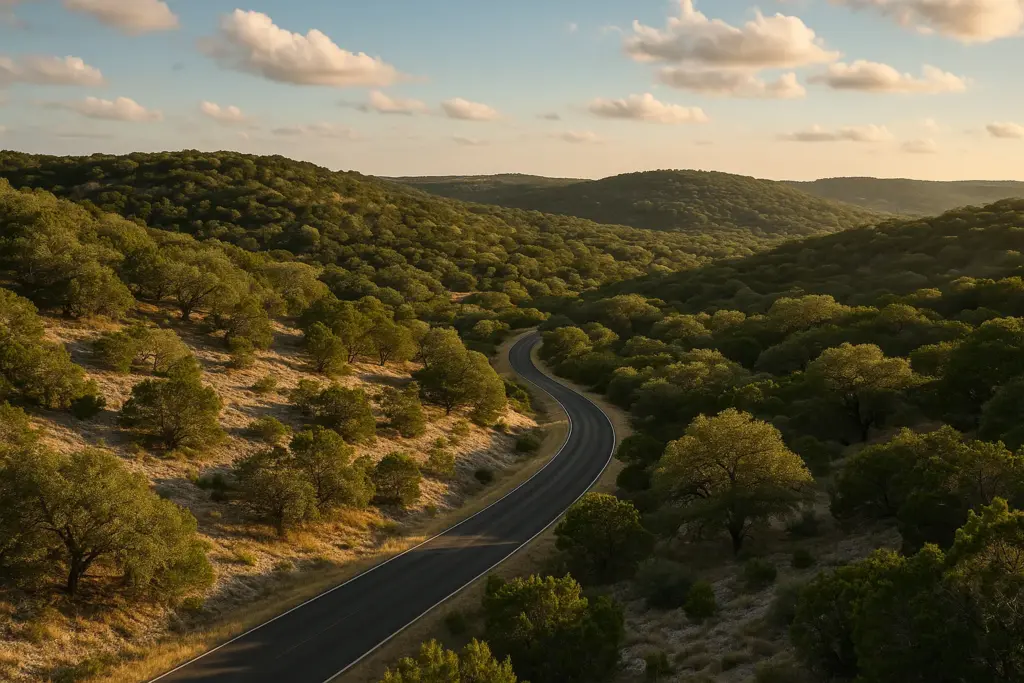
Why Bee Cave, Texas Keeps Making People’s Short Lists
I live in Bee Cave. And I say that not as a sales pitch but as context, because when you actually live somewhere, you notice things that the glossy relocation guides tend to skip. You notice that the H-E-B on 71 has the best parking lot sunset views in Travis County. You notice that the guy at the coffee shop knows your order. You notice that your property tax bill is suspiciously low compared to your friends in Austin proper, and you start wondering if there’s been some kind of clerical error. There hasn’t. It’s just Bee Cave.
So if you’re researching what living in Bee Cave, Texas actually looks like on a Tuesday afternoon (not just a glossy weekend visit), this is the guide I’d want someone to hand me. I’ve been selling homes in this market for over 15 years, and I’ve watched Bee Cave evolve from a quiet Hill Country hamlet into one of the most sought-after communities west of Austin. But here’s the thing that keeps surprising people: it still feels like a small town. The population is around 8,861. The median age is 38.1. And the city’s property tax rate is two cents per hundred dollars of assessed value. Two cents. We’ll get into that.
Where Exactly Is Bee Cave?
Bee Cave sits about 17 miles west of downtown Austin, right where Highway 71 meets RR 620. If you’re driving from downtown, you’re looking at roughly 26 minutes on a good day, maybe 40 during rush hour if the MoPac interchange decides to have feelings. The city is nestled in the Texas Hill Country, near the south shore of Lake Travis, and gets its name from the bee colonies that early settlers found along the limestone bluffs of Barton Creek. That’s not a marketing story, by the way. There were genuinely a lot of bees.
The location is the kind of sweet spot that’s hard to replicate. You’re close enough to Austin for work, dining, and culture, but far enough out that you get real Hill Country terrain, mature live oaks, and neighborhoods where people actually wave when they drive past. The city of Bee Cave is bordered by Lakeway to the north, West Lake Hills to the east, and unincorporated Travis County land to the south and west. That geography matters because it determines your tax district, your school zone, and whether your Amazon packages arrive on time.
The Neighborhoods That Define Bee Cave
Bee Cave isn’t one-size-fits-all, and that’s part of its appeal. The neighborhoods here range from ultra-luxury gated golf communities to established equestrian properties on acreage, and everything in between. Here’s a quick lay of the land.
Provence is the newest major development, and it’s enormous. We’re talking 1,600 planned homes on 910 acres, with a resort-style pool, vineyard, and trail system. If you want new construction with modern floor plans and a master-planned community feel, Provence is where the action is right now. Homes range from the mid-$500s to over $1 million depending on lot size and builder.
Spanish Oaks is the luxury play. Guard-gated, Bobby Weed-designed golf course ranked #3 in Texas by Golfweek, and a 450-member cap on the club. Custom homes here start around $1.4 million and go well north of $3 million. It’s invitation-only membership, which tells you something about the vibe.
Falconhead hits the sweet spot for families who want golf course living without the seven-figure country club initiation fee. The course is public-fee (PGA Tour Design), the homes are solid in the $650K to $1.5M range, and the neighborhoods feed into Lake Travis ISD schools.
Lake Pointe and Sweetwater are the family workhorses. Good schools, community pools, trail systems, and the kind of neighborhoods where kids ride bikes until the streetlights come on. These are the subdivisions that quietly appreciate year over year because demand never really lets up.
The Homestead and Signal Hills are Bee Cave’s best-kept secrets. Large lots (some over 5 acres), established trees, horses in the pasture next door, and a quieter pace of life. If you want acreage without driving an hour from civilization, these are your spots.
For a deeper look at every neighborhood, check out our complete guide to Bee Cave’s best neighborhoods.
Schools: Lake Travis ISD
Bee Cave is served by Lake Travis ISD, which is consistently rated among the top districts in the Austin metro. Niche gives it an A-minus rating, and it ranks as the 3rd best school district in the area. The elementary schools serving Bee Cave include Bee Cave Elementary, Lake Pointe Elementary, and Serene Hills Elementary. Middle schoolers head to Hudson Bend Middle School, and everyone converges at Lake Travis High School, which has strong AP participation rates and above-average graduation numbers.
I have a daughter at Lake Travis High School, so I’m not speaking theoretically here. The academics are strong, the extracurriculars are deep (the football program alone is legendary), and the parent community is engaged without being overbearing. For the full breakdown on every campus, read our complete parent’s guide to Bee Cave schools. And if you’re comparing districts, we’ve covered the Lake Travis ISD vs Dripping Springs ISD comparison in detail.
The Property Tax Advantage
This is where Bee Cave genuinely separates itself. The city’s property tax rate is $0.02 per $100 of assessed value. That’s not a typo. The average Bee Cave homeowner pays about $154 per year in city taxes. Compare that to Lakeway at $0.17, or Austin at $0.44 and climbing. On a $750,000 home, the difference in city taxes alone between Bee Cave and Austin is roughly $3,150 per year. Over a decade, that’s $31,500 you kept in your pocket.
Now, city taxes are only one piece of the total bill. You still pay Travis County taxes, Lake Travis ISD taxes, and potentially MUD (Municipal Utility District) taxes depending on your subdivision. But that city line item being essentially zero is a real, tangible financial advantage. We break all of this down in our complete guide to Bee Cave property taxes, and you can see how it stacks up against neighboring cities in our true cost of living comparison.
Dining, Shopping, and the Galleria
Hill Country Galleria is Bee Cave’s anchor for dining and shopping. It’s a 1.3 million square foot mixed-use development with over 100 shops and restaurants, a 14-screen Cinemark theater, a Whole Foods, and about 50 acres of green space. They host over 150 events per year, from outdoor concerts on the lawn to seasonal markets and community festivals. I’ll admit I spend an unreasonable amount of time at the Galleria, partly because the restaurants are legitimately good and partly because there’s always something happening on the amphitheater stage.
Beyond the Galleria, Bee Cave has solid dining along the 71 corridor, and you’re a short drive from the restaurant scenes in Lakeway and West Austin. For the full local’s perspective on where to eat and shop, check out our Galleria dining and shopping guide.
Parks, Trails, and Outdoor Living
This is Hill Country living, so outdoor recreation is baked into the DNA. Bee Cave Central Park covers 50 acres and includes sports fields, playgrounds, picnic areas, and a splash pad that becomes the center of the universe from May through September. The Bee Cave Sculpture Park is a quieter, more contemplative space with rotating art installations along walking paths. And the Greenway Primitive Trails offer about 5 miles of natural surface hiking through Hill Country terrain, right inside the city limits.
Lake Travis is minutes away, which means boating, paddle boarding, swimming, and waterfront dining are all part of the weekly rotation, not a special occasion. We covered the waterfront lifestyle in detail in our guide to buying waterfront on Lake Travis. For the complete rundown on local activities, see our best things to do in Bee Cave guide.
Who Lives Here?
Bee Cave’s demographics tell an interesting story. The average individual income is $90,122, which skews well above the national median. The population leans toward established professionals and young families who want excellent schools, low taxes, and proximity to Austin without the urban density. You’ll find a lot of tech workers, medical professionals, and small business owners. And increasingly, you’ll find remote workers who moved here during the pandemic and realized they never wanted to leave.
The community is active but not frantic. There’s a farmers market, a strong PTA presence at the schools, youth sports leagues, and enough neighborhood events to keep your social calendar as full (or as empty) as you want it. Bee Cave is the kind of place where you can know everyone on your street or keep to yourself entirely, and nobody judges either way.
Bee Cave vs the Alternatives
Most people considering Bee Cave are also looking at a few other communities. Here’s how I’d frame the key comparisons.
Bee Cave vs West Lake Hills: West Lake Hills is closer to downtown (about 6 miles vs 17), has Eanes ISD schools (which are arguably the best in the state), and tends to run higher on home prices. But you pay for that proximity. Bee Cave gives you more home for the money, significantly lower city taxes, and a more suburban feel. If your commute isn’t downtown-centric, Bee Cave is the better value play.
Bee Cave vs Lakeway vs Dripping Springs: Lakeway gives you Lake Travis waterfront access and a resort-style lifestyle but at a higher tax rate. Dripping Springs gives you more acreage and a small-town atmosphere but with a longer commute to Austin. Bee Cave splits the difference on almost every metric.
The Real Estate Market
Bee Cave’s housing market has been remarkably resilient. Even during the 2023-2024 correction that hit much of Austin, Bee Cave held its values better than most submarkets. Part of that is the limited land supply (there’s only so much buildable terrain in the Hill Country), and part of it is the school district and tax advantages that keep demand consistently high.
For current market data, pricing trends, and inventory levels, read our Bee Cave Real Estate Market Report for 2026. And if you’re thinking about relocating, our complete relocation guide covers everything from timing your move to choosing a neighborhood.
Why I Live Here
People ask me this sometimes, usually with a slightly suspicious tone, like they’re trying to figure out if I’m just selling them on my own neighborhood. And the honest answer is that Bee Cave hits an unusual combination of things that are hard to find together. Good schools. Low taxes. Hill Country beauty. Proximity to a major city. A sense of community that doesn’t require you to join every committee. And enough dining and shopping that you don’t feel like you’re in the middle of nowhere.
Is it perfect? No. Traffic on 71 during rush hour will test your patience. The summer heat is real (this is still Central Texas). And if you want true walkable urbanism, this isn’t it. But for families, professionals, and anyone who values space and nature without sacrificing convenience, Bee Cave is genuinely hard to beat.
If you want to explore what’s available in Bee Cave right now, browse current Bee Cave listings or reach out to me directly. I’m happy to show you around my neighborhood.


