 Ed Neuhaus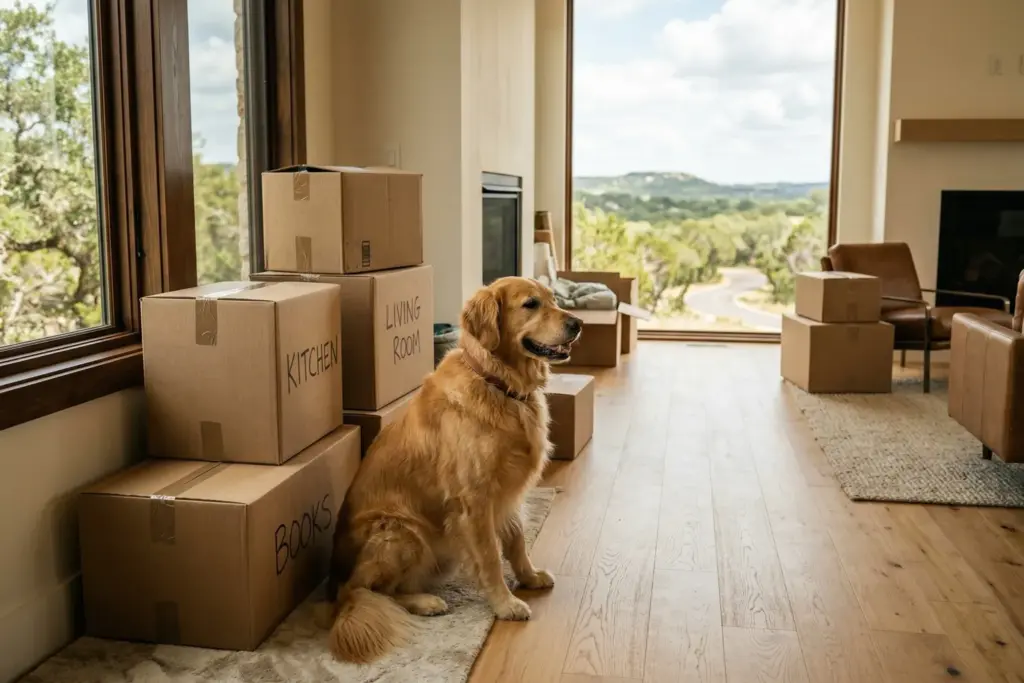
Moving Is Stressful Enough. Now Add a Nervous Labrador.
If you’ve ever tried to pack boxes while your dog thinks every cardboard flap is a personal attack, you already know the challenge. Moving with pets takes extra planning, but it doesn’t have to be a disaster. Whether you’re relocating to Austin from across the country or just moving across town, here’s what I’ve learned from helping hundreds of pet owners settle into their new homes.
Before the Move: Prep Work That Pays Off
Update Your Vet Records Early
Don’t wait until the last week. Request a complete copy of your pet’s medical records at least 30 days before your move. If you’re coming from out of state, Texas requires a Certificate of Veterinary Inspection (CVI) issued within 30 days of entry. Your current vet can handle this, but it takes time to schedule.
Austin has no shortage of excellent veterinarians. A few that consistently get high marks from clients:
- Thrive Affordable Vet Care on Research Blvd for budget-friendly routine care
- Austin Vet Care at Central Park for a full-service neighborhood practice
- Texas A&M Veterinary Medical Teaching Hospital in College Station for specialized or emergency referrals
Get your new vet appointment booked before you arrive. The good ones fill up fast.
Microchip and Tag Updates
Update your microchip registration with your new Austin address the day you close on your home. If your pet isn’t microchipped yet, do it before the move. Austin Energy’s animal services requires all dogs and cats to be microchipped if they end up in the shelter system, and it’s your best chance of reunion if they bolt during the chaos of moving day.
Update collar tags too. A simple tag with your new address and phone number costs about $8 at any pet store and could save you days of panic.
Stock Up on Comfort Items
Keep your pet’s bed, favorite toys, and a worn shirt of yours in an easily accessible bag (not buried in the moving truck). Familiar smells reduce anxiety more than anything else you can do. If your pet takes anxiety medication, make sure you have enough to cover the move plus two extra weeks.
Moving Day: Keeping Everyone Calm
Create a Safe Zone
On moving day, put your pet in one room with the door closed and a sign taped to it: “DO NOT OPEN. Pet inside.” Movers are focused on furniture, not watching for a cat darting through an open door.
If that’s not possible, arrange for your pet to spend the day with a friend, at doggy daycare, or at a boarding facility. This isn’t just about their safety. It’s about yours. Tripping over a scared dog while carrying a couch down stairs is how people end up in the ER.
Car Travel Tips
For drives under 8 hours, most dogs do fine with regular stops every 2 to 3 hours for water and a quick walk. Cats should stay in a carrier with a small litter tray. Never let animals ride loose in the car, and never leave them in a parked car in Texas, even in March. Temperatures inside a car hit dangerous levels within 15 minutes.
For longer drives, plan your overnight stops at pet-friendly hotels along your route. La Quinta and Motel 6 are consistently pet-friendly chains with no breed restrictions.
Flying with Pets
If you’re flying into Austin-Bergstrom International Airport, most airlines allow small pets (under 20 lbs) in the cabin for $95 to $200 each way. Larger dogs must fly cargo, which has stricter temperature embargoes. Many airlines won’t ship pets as cargo between May and September when tarmac temperatures in Texas can exceed 120°F.
An alternative: pet transport services like CitizenShipper or uShip connect you with ground transport drivers who specialize in moving pets across the country. Costs run $500 to $1,500 depending on distance.
Austin’s Pet-Friendly Culture
Here’s the good news. Austin is one of the most pet-friendly cities in the country. You picked a great spot.
Dog Parks Worth Knowing
Austin has over 20 dedicated off-leash dog parks. The standouts:
- Zilker Park Off-Leash Area is the crown jewel, with direct access to Barton Creek for swimming. Your dog will thank you.
- Red Bud Isle is an entire island in Lady Bird Lake that’s fully off-leash. It’s as good as it sounds.
- Auditorium Shores offers downtown skyline views while your dog plays in the lake.
- Yard Bar in North Austin combines a dog park with a bar and food trucks. Yes, really.
- Norwood Estate Dog Park is a locals’ favorite with a more chill vibe than Zilker.
Pet-Friendly Neighborhoods
Almost every Austin neighborhood works for pet owners, but a few stand out:
- Mueller was designed with walkability in mind. Wide sidewalks, nearby parks, and a community feel that’s hard to beat for daily dog walks.
- Circle C Ranch in Southwest Austin has miles of greenbelt trails right in the neighborhood. Big yards too.
- Steiner Ranch backs up to the Balcones Canyonlands Preserve with trail access from multiple entry points.
- 78704 (South Austin) is close to Zilker, the greenbelt, and dozens of pet-friendly patios on South Lamar.
Pet-Friendly Rentals
If you’re renting before you buy, know that Austin’s rental market is generally pet-friendly, but breed restrictions are common. Pit bulls, Rottweilers, and German Shepherds are the most frequently restricted breeds at apartment complexes, though private landlords are often more flexible.
Expect to pay a pet deposit ($200 to $500) plus monthly pet rent ($25 to $50 per pet). Some complexes cap it at two pets.
Austin Pet Regulations You Should Know
Licensing and Registration
The City of Austin requires all dogs and cats to be registered with Austin Animal Center. Registration is free for spayed/neutered pets and $51 annually for intact animals. You’ll need proof of rabies vaccination.
Leash Laws
Austin has a leash law everywhere except designated off-leash areas. The fine for an off-leash dog outside those areas is up to $500 for a first offense. More importantly, Austin’s urban coyote population is real, and an off-leash small dog near a greenbelt is at risk, especially at dawn and dusk.
Austin’s No-Kill Policy
Austin was the largest no-kill city in America for years. Austin Animal Center maintains a save rate above 95%. This is worth knowing because it means the shelter system works to reunite lost pets with their owners rather than euthanizing for space. Another reason to microchip.
Setting Up Your New Home for Pets
Once you’re in your new Austin home, give your pet time to adjust. Here’s the playbook:
- Start small. Let them explore one room at a time rather than the whole house at once.
- Keep the routine. Feed at the same times, walk the same schedule. Routine is the antidote to anxiety.
- Secure the yard. Walk the fence line before letting your dog out. New homes often have gaps, loose boards, or gates that don’t latch properly. Austin’s deer population means your dog WILL find something to chase.
- Scout the neighborhood. Walk your dog on-leash around the block several times before letting them off-leash (even in a fenced yard). They need to learn the sounds and smells of the new area.
- Find your people. Austin neighborhood Facebook groups and Nextdoor are goldmines for finding local dog walkers, pet sitters, and which neighbors have dogs that play well with yours.
The Bottom Line
Austin makes it easy to be a pet owner. Between the dog parks, pet-friendly patios, extensive trail system, and a culture that genuinely loves animals, your pet is going to do just fine here. The key is front-loading the prep work so moving day itself is just another day with some extra cardboard boxes.
If you’re relocating to Austin and want to find a home that works for both you and your four-legged crew, reach out. I’ve helped plenty of buyers find homes with the right yard, the right fence, and the right proximity to off-leash parks. It matters more than most people realize until they’re living it every day.


