 Ed Neuhaus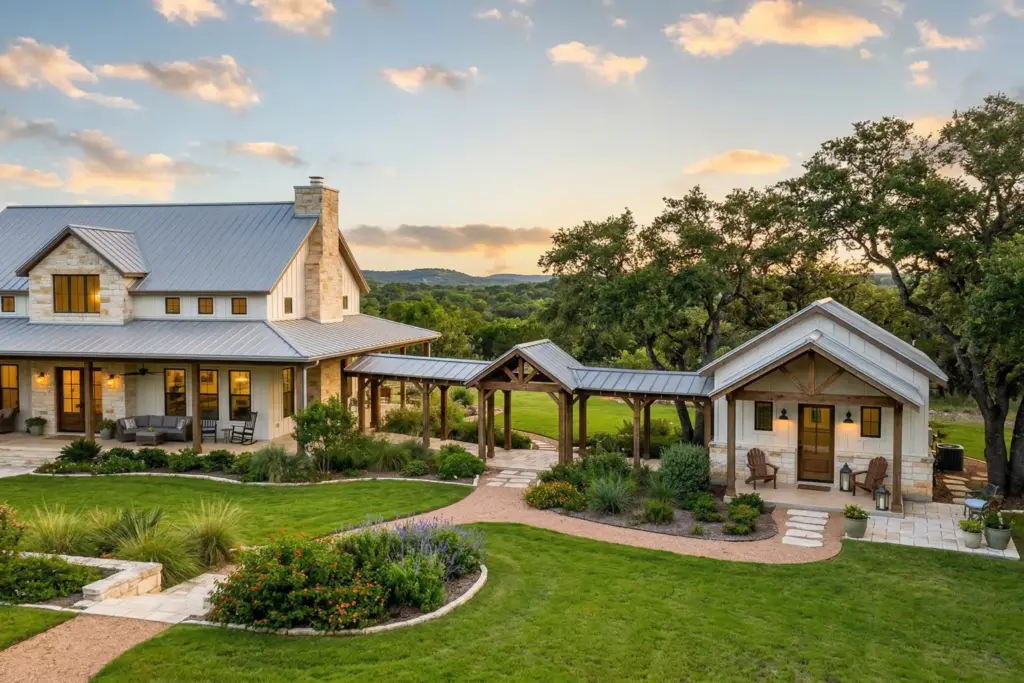
Seventeen percent of all homebuyers purchased a multigenerational home in the most recent NAR survey, up from 11% just three years earlier. That’s roughly 1 in 6 buyers walking into a closing where grandma, the kids, or both are part of the deal. And in Texas, where nearly 1 in 10 households already has multiple generations under one roof, the number tracks even higher.
So yeah, this isn’t some niche trend. According to the National Association of Realtors 2025 Generational Trends Report, 36% of multigenerational buyers say cost savings is the primary driver. That’s more than double the 15% who said the same thing in 2015. But here’s what the data doesn’t tell you: finding the right house for three generations is a completely different search than finding one for a nuclear family. The layout matters more than the granite countertops. And most houses on the market right now were not designed for this.
Lets talk about what actually works.
Why Multigenerational Living Is Surging in Austin
I get asked about this constantly. A couple in their 40s calls me and says hey Ed, my mom can’t really live alone anymore but she doesn’t want to go to a facility. Or a family relocating from California where their 24 year old is still at home because (spoiler alert) they can’t afford rent either. Sometimes it’s cultural. I work with buyers from South Asia, Latin America, the Middle East where three generations living together isn’t a trend, it’s just how life works.
But the biggest accelerator right now is pure math. The cost of living in West Austin and the Hill Country means combining households saves real money. Instead of paying two mortgages, two sets of property taxes, two electric bills in a Texas summer (and trust me those July bills will make you reconsider your relationship with air conditioning), you consolidate into one property. Gen X buyers lead the charge at 21% purchasing multigenerational homes. Makes sense right. They’re the sandwich generation, caught between aging parents and adult kids who aren’t launching as fast as previous generations did.
And then there’s the caregiving angle. A private room in an assisted living facility in Austin runs $4,500 to $6,000 a month. That’s $54,000 to $72,000 a year. For a lot of people, putting that money toward a bigger mortgage payment on a house with a proper in-law suite is just better math. Plus your mom gets to see her grandkids every day instead of watching cable in a facility hallway.
The Floor Plan Checklist: What Actually Matters
Ok so you’ve decided multigenerational is the move. Now the hard part. Most homes in Austin were built for the standard American family template. Four bedrooms, open concept, single primary suite. That works fine until grandpa needs to use the bathroom at 3 AM without walking through your living room.
Here’s what I tell my buyers to prioritize, roughly in order of importance:
First floor primary suite (or at minimum, first floor bedroom with full bath). This is non-negotiable if you have an aging parent. Stairs become a real issue faster than anyone expects. A first floor bedroom with a walk-in shower (not a tub) and a door wide enough for a walker is the baseline. I’ve seen buyers purchase a gorgeous two story home and then realize within two years that mom can’t get upstairs to the only full bathroom. Planning for 5 years out is smarter than planning for today.
Separate entrance. This is the big one that separates a multigenerational home from a house where someone is just camping in the spare room. A dedicated entrance (even if it’s a side door off a covered porch) gives the in-law suite occupant dignity and independence. They can come and go without walking through your kitchen while you’re making dinner. Sounds small but it changes everything about the dynamic.
Kitchenette or wet bar. A full second kitchen triggers zoning and permitting questions in some jurisdictions (more on that in a minute). But a kitchenette with a sink, mini fridge, and microwave? That gives your parent or adult child the ability to make coffee and heat up leftovers without invading the main kitchen at 6 AM. Benjamin Graham wrote about the concept of margin of safety in investing. The margin of safety in multigenerational living is giving everyone just enough space that nobody feels like a guest in their own home.
Sound separation. This gets overlooked constantly. Different generations keep different hours. A 22 year old gaming until 1 AM shares a wall with a 75 year old who wakes up at 5. If the walls are builder-grade drywall with zero insulation between rooms, everyone’s miserable. Look for solid core doors, insulated interior walls, or at least a layout where the in-law space has a buffer zone (hallway, closet, garage) between it and the main living areas.
Dual HVAC zones. Your parents probably keep their space at 76 degrees. You keep yours at 72. Without separate thermostats and zones, somebody is always uncomfortable. In Central Texas where AC runs 8 months a year, this isn’t a luxury. It’s a marriage (and family) saver.
Austin Builders Doing Multigenerational Right
The good news is builders have caught on. The days of multigenerational living being an afterthought are over. Several national and regional builders in the Austin area now offer dedicated multi-gen floor plans.
Lennar’s “Home Within a Home” is probably the most purpose-built option I’ve seen. Their Giallo II floor plan includes a third bedroom with its own bath, living room, kitchenette, and a separate exterior entrance. It literally functions as a small apartment attached to the main house. You’ll find these in several new construction communities around Austin.
Toll Brothers takes a different approach with their casita and multi-gen suite options. Think separate structures or semi-attached wings with private entrances, full bathrooms, and sometimes small kitchenettes. They also offer elevator-ready floor plans in some of their luxury communities, which is forward-thinking if you’re planning for aging in place.
Perry Homes has their Design 3525W with what they call a “living suite.” Bedroom, private living room, en suite bath. It doesn’t have a separate entrance or kitchenette by default, but the bones are there for a conversion.
Giddens Homes goes the farthest with a 681 square foot casita option that includes a bedroom, full bath with walk-in shower, sitting room, kitchenette, and covered patio. That’s basically a one bedroom apartment. And they offer it as an add-on to several of their standard floor plans.
Not every community has these options though. If multigenerational floor plans are a priority, Dripping Springs and the Georgetown area tend to have more inventory because the lots are bigger and builders have more room to work with. In tighter communities closer to downtown, the footprint usually doesn’t support a casita.
Converting Existing Space: The ADU Option
So what if you already own a home or you find the perfect property but it doesn’t have a multi-gen layout? This is where Austin’s ADU rules get interesting.
Austin passed its HOME Initiative in December 2023 and it was a game changer. Previously, accessory dwelling units (ADUs) were only allowed on SF-3 zoned lots. Now they’re permitted on SF-1, SF-2, and SF-3 lots. The minimum lot size dropped from 5,750 square feet to just 2,500 square feet. And here’s the kicker: you can build up to two ADUs on a single residential lot, meaning your property could have a primary residence plus two additional units.
The specs: max 1,100 square feet or 0.15 floor-to-area ratio (whichever is smaller), maximum two stories and 30 feet tall, and 5 foot rear setback if you’re adjacent to an alley. Oh and Austin eliminated all minimum parking requirements in November 2023, so you don’t need to add a parking pad.
For multigenerational purposes, the most common conversion I see is a detached garage apartment or a backyard cottage. Budget roughly $150 to $250 per square foot for a ground-up ADU build in Austin right now (so a 600 square foot unit runs $90,000 to $150,000). Garage conversions are cheaper, usually $50,000 to $80,000, but you lose your garage.
One thing to watch: adding a full second kitchen can trigger additional permitting requirements and may reclassify your property for tax purposes. A kitchenette (no range or oven, just sink and mini fridge) usually flies under the radar. But if you’re going full kitchen, talk to your builder about the permit implications and check with Travis County about how it affects your appraisal.
The Zoning and Legal Stuff You Need to Know
I know, zoning isn’t exactly riveting cocktail party conversation. But it matters here.
Inside Austin city limits, you’re in pretty good shape thanks to the HOME Initiative. But the ETJ (extraterritorial jurisdiction) and surrounding cities have their own rules. Dripping Springs has been more restrictive on ADUs historically. Bee Cave and Lakeway have their own zoning codes that may or may not allow detached living quarters. And HOA restrictions add another layer. I’ve seen HOAs that explicitly prohibit “secondary dwelling structures” even when the city would allow them.
Before you buy with an ADU conversion plan, verify three things: city zoning allows it, the HOA (if any) allows it, and the lot size and setbacks actually work for what you want to build. I’ve had buyers fall in love with a property assuming they could add a casita, only to find out the HOA covenants say no detached structures with plumbing. That’s an expensive surprise.
Also worth noting: if you’re outside Austin in unincorporated Travis County or Hays County, the rules are often more relaxed. Larger lots in areas like Dripping Springs with 1+ acres and no HOA give you the most flexibility.
Financing a Multigenerational Home
Here’s where it gets fun. There are actually some real advantages to financing a multigenerational setup.
FHA loans on 2-4 unit properties. If the property is structured as a duplex (main house plus legally separate in-law unit), you can buy it with an FHA loan at 3.5% down. And FHA lets you count up to 75% of the projected rental income from the second unit toward your qualifying income. So if the in-law suite could rent for $1,500 a month, you can add roughly $1,125 a month to your qualifying income. That’s a meaningful boost, especially for buyers stretching to get into a larger home. Even if you never actually rent it out because mom lives there, the income potential still helps at underwriting (though your lender will want to see an appraisal with a rent schedule).
Conventional loans with boarder income. Fannie Mae updated their guidelines to allow boarder income (someone living in your home and paying rent) to count toward qualification. The catch: it can’t exceed 30% of your total qualifying income, and you need 12 months of documented history of receiving that income. So this works better for refinancing than for the initial purchase.
The combined income play. If everyone in the household is on the mortgage (which isn’t always advisable for other reasons), you’re combining incomes. A household with two working adults and one retired parent receiving Social Security and a pension has more qualifying income than a single couple. I wrote about income requirements to buy in Austin and the multigenerational math changes the equation significantly.
Property Tax Reality Check
Lets talk taxes because I get this question a lot. Texas property taxes are… not gentle. And there’s a common misconception that multigenerational living comes with special tax breaks. It doesn’t, really.
Here’s the deal: you get one homestead exemption per property. That’s $140,000 off your school district assessed value right now, plus whatever your county and city offer on top. If your parent is over 65, they get an additional $60,000 school district exemption AND a tax ceiling (their school taxes freeze at the over-65 level). But that exemption follows the person, not the house. If grandma moves into YOUR house and gives up her own homestead, she loses her exemption on her old property and can’t transfer it to yours. You only get one homestead per property regardless of how many generations live there.
The exception: if you build a legally separate ADU with its own address and utility meters, it MIGHT be assessed as a separate property. Which means it could theoretically qualify for its own homestead if the occupant owns it. This gets complicated fast and you need to talk to your CPA and the county appraisal district. I’m not going to pretend to be a tax attorney here.
The silver lining? If the family member sells their own home to move in with you, those proceeds can go toward the down payment on a larger multigenerational property or fund the ADU construction. And you’re still saving the ongoing cost of maintaining two separate properties, two insurance policies, two sets of utilities.
Where to Look in Austin for Multigenerational Homes
Not every neighborhood works for multigenerational living. You need square footage, the right floor plans, and ideally some lot size to work with. Here’s where I’d start looking:
Dripping Springs is probably the strongest market for multigenerational right now. The new construction communities out here tend to have larger floor plans (2,500+ square feet is standard), bigger lots (many are half acre to full acre), and several builders offering casita or multi-gen options. The tradeoff is the commute. But if remote work is part of your household’s equation, Dripping Springs gives you the most house for your money in the Hill Country.
Georgetown and the north Austin corridor offer a lot of new construction in the $350,000 to $550,000 range with 4-5 bedroom floor plans. Some of the master-planned communities have specific multigenerational models. And Georgetown’s proximity to healthcare (Baylor Scott and White, St. David’s Georgetown) matters if you have an aging parent.
Pflugerville is the value play. Median prices are lower, lots in the outer communities are bigger, and you’re still within reasonable striking distance of Austin proper. If budget is the driving factor and you need 3,000+ square feet, Pflugerville delivers.
Bee Cave works if your budget is higher and you want Hill Country lifestyle with proximity to Westlake schools. The lot sizes in some communities accommodate ADU construction, and Bee Cave’s property tax rate is the lowest in the area. That matters when your property value is $700,000 or more.
Frequently Asked Questions
Lets Find the Right Layout for Your Household
Look, multigenerational living isn’t just a housing trend. For a lot of people it’s the smartest financial and emotional decision they’ll make. But the house has to work for everyone. The wrong layout turns a great idea into a stressful one. The right layout, where everyone has enough space and enough privacy, turns it into something that actually brings the family closer.
If you’re looking for a multigenerational home in the Austin area, whether that’s new construction with a built-in casita or an existing home with ADU potential, lets talk about it. I’ve helped buyers figure out the floor plan puzzle, the financing, and the zoning. And I know which communities and builders are actually delivering on the multi-gen promise versus just slapping “flexible space” on the brochure.
Reach out to Ed Neuhaus and lets find a home that works for your whole family. Be safe, be good, and be nice to people.


