 Ed Neuhaus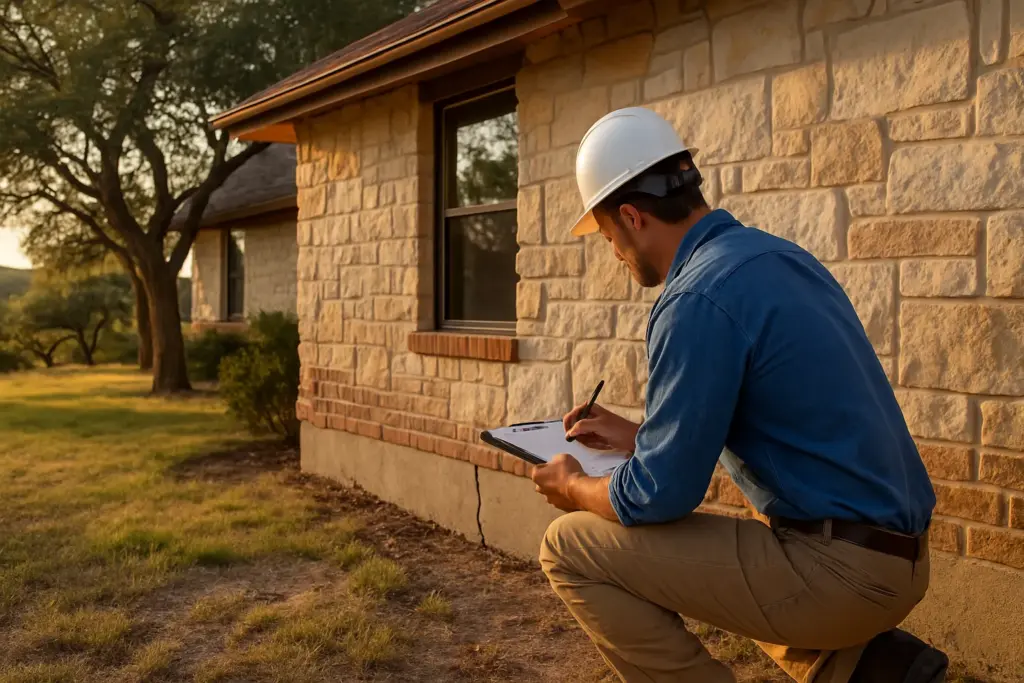
A client of mine almost bought a house in Bee Cave two years ago. Beautiful place. Hill Country views, mature live oaks, great school district. We were three days into the option period when the inspector flagged what he called “significant foundation movement.” Not minor settling. Significant movement.
She almost kept going anyway. The house was exactly what she had been looking for, and she had already mentally moved in. I told her lets pause and get a structural engineer out before we made any decisions. The engineer’s report came back a few days later. We’re talking $40,000 to $60,000 in repairs, with no guarantee the clay soil underneath would not cause the same problem again in ten years.
We walked.
That’s the whole purpose of a home inspection in Texas. Not to find a perfect house (there’s no such thing), but to know exactly what you’re buying before you’re legally obligated to buy it. And if you’re purchasing in Austin or anywhere in Central Texas, that job is more complicated than it would be in most of the country. The soil, the climate, the age of the housing stock, the history of winter storms — all of it creates a specific set of risks that you genuinely need to know about.
So here is what to watch for. And more importantly, here is what it means when an inspector finds it.
How Home Inspections Work in Texas
Before we get into the checklist, lets talk about the option period because this is the thing that makes Texas real estate different from almost everywhere else.
When you go under contract on a house in Texas, you negotiate an option period — typically somewhere between seven and ten days — during which you can terminate the contract for any reason and get your earnest money back. You pay the seller a non-refundable option fee for this right, but that fee is usually a few hundred dollars, not thousands. If you find something terrible during the inspection and decide to walk, you lose the option fee. Your earnest money stays with you.
That option period is your window. Use it. Get your inspection done as early as possible during those seven to ten days, because if the inspector finds something serious, you need time to bring in specialists, get repair estimates, and decide whether to negotiate or terminate. Agents who schedule inspections on day six of a seven-day option period are not doing their buyers any favors.
The standard Texas inspection covers the structure, foundation, roof, electrical, plumbing, HVAC, and more. What it does NOT include: well water testing, septic inspection, pool equipment, or foundation engineering. Those are add-on specialties. In many parts of the Hill Country, those add-ons are not optional — they’re essential. More on that later.
Foundation: The Big One in Austin
If there is one thing that sets Austin apart from basically every other real estate market in the country, it’s the soil. Central Texas sits on expansive clay — mostly a type called Taylor Black Clay in the eastern parts of the metro — and this stuff is alive in a way that most people don’t appreciate until it starts moving their house around.
Expansive clay absorbs water and swells during wet periods. During drought, it dries out and shrinks. In a bad drought year, Taylor Black Clay can shrink by 30% or more. The force it generates against a foundation can exceed 10,000 pounds per square foot. That’s not a typo. When you add in the fact that Austin has been cycling through intense wet/dry swings for decades, you get a situation where more than 40% of homes in the Austin area have some measurable foundation movement.
The question is never whether there’s been movement. The question is how much, what caused it, and whether it’s ongoing.
What the inspector will look for
Cracks in the slab, cracks in the brick or exterior walls (especially stair-step cracks in mortar joints), doors and windows that stick or don’t close properly, gaps between walls and ceilings. From the outside, sloping or separating areas of the slab. A good inspector will also use a level or a Zip Level Pro to document differential elevation across the floor — essentially measuring how much the foundation has moved in different directions.
When to bring in a structural engineer
The inspector’s job is to identify and document. A structural engineer’s job is to diagnose and recommend. If the inspector finds evidence of significant movement, get an engineer out during your option period. The engineer will recommend either monitoring (minor, stable movement) or repair (active movement that needs addressing). Foundation repairs in Austin run from a few thousand dollars for minor pier work up to $60,000 or more for major slab repairs. Get the engineer’s opinion in writing before you make any decisions.
One thing I always tell my buyers: a house with a fully repaired and warrantied foundation can actually be a better deal than one with no foundation history at all. The issue is having unknowns. Know what you’re buying.
HVAC: Texas Eats Air Conditioners
Austin summers are brutal. We routinely run 100-plus degree days for weeks straight, and when the temperature is 104 outside, an air conditioner isn’t resting. It’s running at maximum capacity for twelve to fourteen hours a day. That kind of workload wears out equipment fast.
The national average AC lifespan is often cited as 15-20 years. In Central Texas, I’d budget for 12-15, and that’s if the system was properly maintained and sized correctly for the home. I’ve seen units fail at 8 years because they were undersized for the square footage. An undersized AC running continuously in Texas heat is not long for this world.
What to ask the inspector
Age of each unit (homes often have multiple zones). Age of the air handler and the compressor separately — they don’t always age at the same rate. Evidence of refrigerant leaks. Condition of the coils and the drain lines. Whether the system is properly sized for the home’s square footage and insulation. Has it been serviced regularly?
If the AC is 12 or more years old, budget for replacement in the next few years. If it’s over 15, treat it as at end of life. A new HVAC system in Austin runs $7,000 to $15,000 depending on the home size and whether you’re doing one zone or multiple. That’s a real negotiating chip during your option period.
Plumbing: Two Generations of Problems
Austin’s housing stock spans decades, and depending on when a home was built, you may be looking at two completely different plumbing problems.
Pre-1980 homes: cast iron pipes
Homes built before roughly 1980 frequently have cast iron drain lines under the slab. Cast iron has a lifespan of 50-70 years. Do the math — a home built in 1970 has pipes that are now 55 years old. From the inside, cast iron corrodes, develops holes, and can eventually collapse. When it goes, you’re looking at a major repair: cutting through the slab or tunneling under the foundation to replace the lines. That’s $8,000 to $20,000 or more depending on the scope.
A standard home inspection cannot see inside those pipes. If you’re buying a pre-1980 home in Austin, pay for a sewer scope as an add-on. A plumber runs a camera through the drain lines and shows you exactly what’s going on. It’s usually $150 to $300 and worth every penny. I’ve had clients save themselves from six-figure problems because of a sewer scope.
1980s and 1990s homes: polybutylene pipes
Here’s a different problem. Homes built during the late 1970s through the mid-1990s often have polybutylene supply lines — a gray plastic pipe that was popular until it was discovered it tends to fail without warning. Chlorine in municipal water degrades the fittings over time, and when they go, they go fast. Insurance companies often will not cover homes with polybutylene, or they’ll charge significantly higher premiums.
Polybutylene pipes are gray or sometimes blue, often labeled PB. An inspector will identify them, but the repair estimate (replacing all supply lines in a home) typically runs $2,000 to $8,000 depending on size. If the listing price reflects it, it can still be a good deal. If nobody noticed and the price doesn’t reflect it, that’s your negotiating point.
Electrical Panels: Two Names to Know
Two electrical panel brands from the mid-20th century are still present in a meaningful number of older Austin homes, and both are serious safety concerns. If an inspector calls either one out, take it seriously.
Federal Pacific Electric (FPE) panels were installed from the 1950s through the 1980s. The problem is the breakers: they fail to trip as designed roughly 60% of the time. That means when there’s an overload, the breaker that’s supposed to cut the circuit and prevent a fire doesn’t. Insurance companies are increasingly refusing to write policies on homes with these panels, and some that do charge significantly higher premiums.
Zinsco panels from roughly the same era have a related problem. The breakers appear to work normally but can deteriorate internally in ways that aren’t visible from outside the panel. They’ll switch on and off as expected but may not actually protect against overload. The dangerous part is that everything looks fine right up until it isn’t.
Replacing either panel with a modern 200-amp panel runs $2,500 to $5,000 in most Austin areas. That’s absolutely a negotiating item during the option period — either a price reduction or seller credit to cover the cost.
Roof: Hail Country
Austin is solidly in hail country. Major hailstorms roll through the area every few years, and the damage isn’t always obvious from ground level. A home that looks fine from the street may have a roof full of impact damage that an insurance adjuster would pay to replace.
The inspector will check for missing or damaged shingles, soft spots, flashing issues around chimneys and vents, and granule loss (those granules are the UV protection layer, and once they’re gone, the shingles are aging fast). But for a definitive answer on hail damage, you may want an independent roofing contractor to take a look as well.
Age matters a lot here. An asphalt shingle roof in Central Texas realistically lasts 15-20 years. The Texas sun is punishing, and that accelerates aging compared to milder climates. A 15-year-old roof in Austin may look fine but have limited life left. Budget for it.
One thing worth knowing: if there has been hail damage, there may be an existing insurance claim on record. Ask the seller for their property insurance history (CLUE report). A recent successful hail claim means the roof may already have been repaired or replaced. No claim on an older roof during known hail events might mean damage was missed — or ignored.
Freeze Damage: Not Just a 2021 Problem
Winter Storm Uri in 2021 was catastrophic for Texas homeowners, but it wasn’t the first hard freeze the area has seen and it won’t be the last. Homes in Central Texas are not built for sustained freezing temperatures. Many don’t have adequately insulated exterior walls, pipes run through exterior walls and unprotected spaces, and irrigation systems are often left exposed.
During an inspection, the inspector should run all the faucets, check under sinks and in utility closets for signs of past pipe bursts, and look for water damage staining on ceilings and walls. But some freeze damage is subtle — a hairline crack in a pipe fitting that has dried out and sealed itself temporarily, ready to fail again next winter.
Irrigation systems deserve special attention. Backflow preventers, valve boxes, and the heads themselves can crack when frozen. A damaged irrigation system isn’t a structural issue, but repair costs add up, and a full replacement of a large system can run $3,000 or more. Make sure the inspector (or a separate irrigation specialist) runs the full system through all zones.
Roots and Trees: Beauty and Risk
The live oaks and cedar trees that make Central Texas neighborhoods beautiful are also, in some cases, trying to dismantle the houses underneath them. Tree root intrusion is one of those things that shows up in inspection reports with some regularity in older Austin neighborhoods.
Live oak roots are aggressive and go deep. Cedar roots are dense and spread wide. Both can work their way into cast iron or clay sewer lines (older material is more vulnerable), crack driveway and sidewalk concrete, and over many years, affect foundation moisture distribution. The same soil moisture issues that drive foundation movement are affected by where large trees are planted and how their roots alter drainage.
The sewer scope I mentioned earlier will catch root intrusion in the drain lines directly. For surface evidence, look at driveways, sidewalks, and hardscape for heaving or cracking near large trees. Patching driveway cracks is inexpensive. Dealing with roots that have grown under a foundation is not.
Termites and Pests
Texas has termites. Central Texas has subterranean termites specifically, which are among the most destructive species in North America. A standard home inspection does not include a termite inspection — that requires a separate licensed pest control company.
Get a termite inspection. Always. It’s $75 to $150 and can save you from missing thousands of dollars in damage. Subterranean termites build mud tubes from the soil to wood, and those tubes can run along foundation walls, inside walls, and under floors. An active infestation or evidence of prior damage needs to be disclosed and addressed.
Beyond termites, Central Texas also has issues with wasps, carpenter bees, and fire ants. Wasps and carpenter bees can damage wood siding and fascia boards over time. Fire ant colonies near the foundation can affect soil moisture distribution. None of these are deal-killers in isolation, but they’re worth noting in the inspection report.
Water Heater Age and Condition
This one is not dramatic, but it’s the kind of thing that catches people off guard two years after closing. Standard tank water heaters last 8-12 years. The age is printed on the serial number — a good inspector will read it for you. In the Austin Hill Country, where water has higher mineral content, scale buildup accelerates wear and reduces efficiency over time.
Signs of a water heater in poor condition: rust-colored water, sediment in the tank (you can hear it rumbling when the burner fires), moisture or corrosion around the base, and a pressure relief valve that looks like it’s been leaking. A new water heater runs $800 to $2,000 installed depending on size and whether you go tank or tankless. Not a major line item, but worth factoring into your post-close budget if the unit is 10-plus years old.
Hill Country Specifics: Well, Septic, and Retaining Walls
If you’re buying outside of city limits — in Dripping Springs, Wimberley, Spicewood, or the unincorporated parts of the Hill Country — the standard inspection is just the beginning. You have two additional systems to evaluate that urban buyers rarely think about.
Well water and septic
I wrote a full guide to well water and septic inspections in the Hill Country that goes deep on this topic. The short version: well flow rate testing (you want at least 1 GPM; 3-5 GPM for a family home), water quality testing for bacteria, nitrates, and hardness, and a full septic inspection including tank pump-out and field line inspection. These are not included in a standard home inspection. They are absolutely required for rural Hill Country properties.
A septic system failure is not a minor repair. Depending on the system type and scope of the problem, you’re looking at $5,000 to $30,000 or more. An aerobic system that hasn’t been maintained on its required service contract can fail inspections from TCEQ and require expensive remediation. Know what you’re getting into. Full details in the Hill Country well water and septic guide.
Retaining walls on sloped lots
Hill Country lots often have significant grade changes, and many homes are built on retaining walls to create level usable space. Retaining walls are not covered by a standard home inspection unless the inspector specifically notes structural concerns. A failing retaining wall can be thousands to tens of thousands of dollars to repair — and in some cases, affects the buildability and usability of the lot.
If the property has significant retaining walls, ask your inspector to comment on their condition. Concrete block walls that are leaning, cracked, or showing signs of water pressure behind them need engineering evaluation. A properly built, well-draining retaining wall should be stable for decades. One that wasn’t built right is a problem that compounds over time.
How to Pick a Good Inspector
In Texas, home inspectors are licensed through TREC — the Texas Real Estate Commission. That’s the floor, not the ceiling. A licensed inspector who passes the minimum requirements and a great inspector who has spent 15 years specifically in the Austin market are not the same thing.
What to look for: TREC license, yes, but also professional association membership (ASHI or InterNACHI indicates ongoing education and standards), experience in Central Texas specifically, and a sample report. Ask for a sample report before you hire anyone. A good inspector writes a clear, detailed, photographically documented report. If the sample is thin and vague, the actual report on your house will be too.
Red flags: an inspector who rushes a 2,500 square foot house in 90 minutes. An inspector who can’t answer basic questions about foundation types or electrical panels. An inspector who is reluctant to recommend specialist follow-up when something looks off. And — this one is important — an inspector who was recommended by an agent who really wants the deal to close. You want an inspector who reports what they find, not one who is calibrated to keep deals together.
Cost: $400 to $600 for a standard inspection in Austin depending on home size. Add $150-300 for a sewer scope, $300-600 for a foundation evaluation, $300-500 for a well flow test. Budget accordingly.
Walk Away vs. Negotiate: The Real Framework
Not every inspection finding is a reason to walk. Most are negotiating points. Here’s how I think about the difference.
Negotiate repairs or price reduction: HVAC replacement, water heater replacement, roof with remaining life but some wear, minor foundation settling that’s stable and has been stable, polybutylene pipes (priced appropriately), panel replacement. These are real costs, but they’re manageable and quantifiable.
Get more information before deciding: Significant foundation movement (bring an engineer), old cast iron pipes (get a sewer scope), any sign of prior water intrusion (understand the source), root intrusion in drain lines (get a scope and a quote). You need numbers before you can negotiate intelligently.
Walk away: When the engineer says the foundation movement is active and the repair cost is speculative. When multiple expensive systems are failing simultaneously and the seller isn’t willing to negotiate. When the seller’s disclosure doesn’t match what the inspection found and you’ve lost trust in what else they haven’t disclosed. When the soil conditions make recurring foundation problems almost inevitable regardless of repair.
The option period is specifically designed for this decision. Use it without guilt. A seller who takes a deal off the market for ten days and then has a buyer walk after inspection is frustrated, not harmed. You are not obligated to buy a house that doesn’t pencil out.
Frequently Asked Questions
Your Agent Should Know This Before the Inspector Shows Up
A home inspection is only as useful as the context around it. If your agent doesn’t know that the house is in a high-clay soil area, or that the neighborhood was built in 1978, or that the block had hail damage two years ago, they can’t help you interpret what the inspector finds.
I’ve been doing this for 16 years in Central Texas. I know which neighborhoods have the worst clay soil problems. I know which vintage of homes in which zip codes are likely to have cast iron pipes, polybutylene supply lines, or Federal Pacific panels. I know when a foundation report is telling you to negotiate and when it’s telling you to run. And I know how to structure a repair request that sellers actually agree to, because in a buyer’s market, the worst outcome is using a legitimate finding to blow up a deal that could have been renegotiated to your benefit.
If you’re buying in Austin, Bee Cave, Lakeway, Westlake, or anywhere in the Hill Country and you want an agent who knows what to watch for before the inspector even knocks on the door, reach out to Ed Neuhaus. Or if you’re just starting to look, browse homes for sale in Austin or check out the complete guide to moving to Austin for context on the full buying process.


