 Ed
Ed 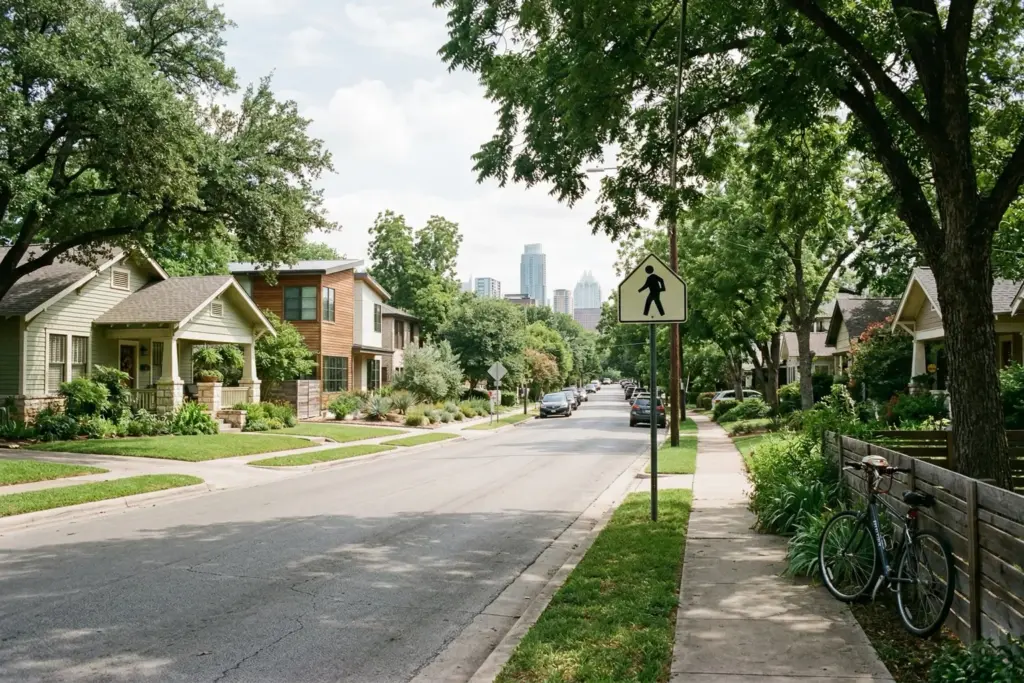
Two South Austin Schools, 17 Points Apart on TEA Scores
Baranoff Elementary received a B rating in the 2025 TEA accountability ratings. Menchaca Elementary received a D. Both campuses sit in south Austin and both are part of Austin ISD, but their feeder paths diverge after elementary. Baranoff feeds into Bailey Middle School and then Bowie High School. Menchaca feeds into Bailey or Paredes Middle School and then Akins Early College High School (per the AISD 2026-27 feeder pattern). So what accounts for the rating gap between two campuses that share a district and a corner of town?
That is the question I hear from buyers all the time in this part of town. And the honest answer is that TEA scores tell you a lot, but they do not tell you everything. Baranoff pulls from neighborhoods where the trailing 12-month median sale price runs around $605,000 in zones like Cherry Creek and Sendera (VOW MLS data). Menchaca draws from a broader cross section of 78748 and 78652 where the trailing 12-month median sits closer to $425,000. Those price differences shape the student population, and TEA metrics reflect that. But if you actually walk both campuses and talk to the teachers, you will find dedicated educators at both schools doing good work.
So lets dig into what the numbers actually say and what the neighborhoods look like, because if you are buying in south Austin right now, this comparison matters more than you think.
Baranoff vs Menchaca: Quick Comparison
| Baranoff Elementary | Menchaca Elementary | |
|---|---|---|
| TEA Rating (2025) | B | D |
| Enrollment | 808 students | 699 students |
| Grades | EE – 05 | EE – 05 |
| District | Austin ISD | Austin ISD |
| Median Sale Price (zone, trailing 12 mo) | ~$605,000 | ~$425,000 |
| Feeds Into | Bailey MS, Bowie HS | Bailey or Paredes MS, Akins ECHS |
TEA School Performance Comparison (2025)
The Texas Education Agency evaluates every public school annually across three accountability domains: Student Achievement, School Progress, and Closing the Gaps. Here is how both campuses performed in the 2025 accountability cycle.
| Performance Domain | Baranoff Elementary | Menchaca Elementary |
|---|---|---|
| Overall Rating | B | D |
| Student Achievement | B | D |
| School Progress | B | D |
| Closing the Gaps | B | C |
| Enrollment | 808 students (EE – 05) | 699 students (EE – 05) |
| Economically Disadvantaged | 14.2% | 44.9% |
Where Baranoff posts B grades across the board, Menchaca lands a D in Student Achievement and School Progress but pulls up to a C in Closing the Gaps. That tells me Menchaca is doing meaningful work closing performance gaps across student groups, which is worth paying attention to even if the headline rating is lower. For the full TEA breakdown on each campus, including rating history, visit the Texas Tribune Baranoff page or the Menchaca page.
Baranoff Elementary: The Quiet Overachiever of South Austin
Baranoff sits tucked into one of those south Austin neighborhoods where the homes are mostly from the late 1980s and 1990s, established trees line every street, and people tend to stay put for a long time. The school has historically been one of the stronger performers in Austin ISD’s south side. With 808 students, it is one of the larger elementary campuses in the district, and only 14.2% of students qualify as economically disadvantaged. That is unusually low for Austin ISD.
The neighborhoods feeding Baranoff include parts of Cherry Creek, Sendera, and surrounding subdivisions south of William Cannon. The trailing 12-month median sale price in those subdivisions sits around $605,000, which puts it on the higher end for south Austin elementary zones. Most of the housing stock is single story ranch style homes on decent sized lots. Not flashy, just solid. And the school reflects that energy.
I have shown homes in this zone more times than I can count over 17 years, and the thing buyers consistently tell me is that it just feels like a neighborhood where people care. The PTA is active, the pickup line is orderly (well, as orderly as any elementary pickup line ever is), and the vibe is calm. That stuff does not show up on a TEA scorecard but it matters.
Menchaca Elementary: Grit in a Growing Corridor
Menchaca serves a different slice of south Austin. The campus sits closer to Manchaca Road, and the neighborhoods here skew more diverse in both housing type and price point. You will find everything from older starter homes to newer townhome developments. The school’s 44.9% economically disadvantaged rate reflects a broader cross section of the community.
A D rating gets a lot of negative attention, and I understand why. But TEA ratings are heavily influenced by standardized test performance, and schools serving higher percentages of economically disadvantaged students face steeper climbs on those metrics. Menchaca’s C rating in Closing the Gaps suggests the staff is putting real effort into supporting all students, not just the ones who test well naturally.
The Neighborhoods
Both schools draw from south Austin neighborhoods along the Manchaca/Menchaca corridor, roughly between Slaughter Lane and William Cannon. Baranoff’s zone covers more established subdivisions to the west, while Menchaca’s zone stretches into more of the central south corridor where development has been evolving rapidly over the past decade.
If you are budget conscious and prioritizing location over test scores, the Menchaca zone gives you more house for the money. If TEA scores weigh heavily in your decision, the Baranoff zone delivers stronger numbers at a premium of roughly $180,000 on the median.
Browse all homes zoned to Baranoff Elementary or homes zoned to Menchaca Elementary.
Which School Fits You?
Here is the part most online comparisons miss. Baranoff and Menchaca do not share a long-term path. Baranoff students continue to Bailey Middle School and then Bowie High School. Menchaca students continue to Bailey or Paredes Middle School (depending on home address) and then Akins Early College High School. So the elementary decision also locks in the secondary trajectory, and that is a much bigger choice than the elementary years alone.
You might lean toward Baranoff if:
- TEA accountability scores are a top priority in your home search
- You want the Bailey MS to Bowie HS long-term path
- You prefer established neighborhoods with larger lots and mature landscaping
- A higher median price point fits comfortably in your budget
- You want a larger campus with over 750 students
You might lean toward Menchaca if:
- You want to maximize square footage and value in south Austin
- A median sale price closer to the mid-$400s better matches your budget
- The Akins ECHS early college pathway appeals to you for the long term
- You value being part of a campus that actively works on closing achievement gaps
Honestly, this is one of those comparisons where the elementary rating is only part of the picture. The middle school and high school paths diverge, and that matters as much as the elementary score does. Buyers who think five years ahead make better decisions than buyers who only think about kindergarten.
Frequently Asked Questions
Ready to Find Your Home?
If you are looking at homes in south Austin and the school zone question keeps coming up (and it always does), lets talk. I have been helping buyers navigate Austin ISD school zones for over 17 years, and I can walk you through exactly what each neighborhood looks like on the ground, not just on a spreadsheet. Every buyer’s priorities are a little different, and that is what makes this fun.
Be safe, be good, and be nice to people.


