 Ed Neuhaus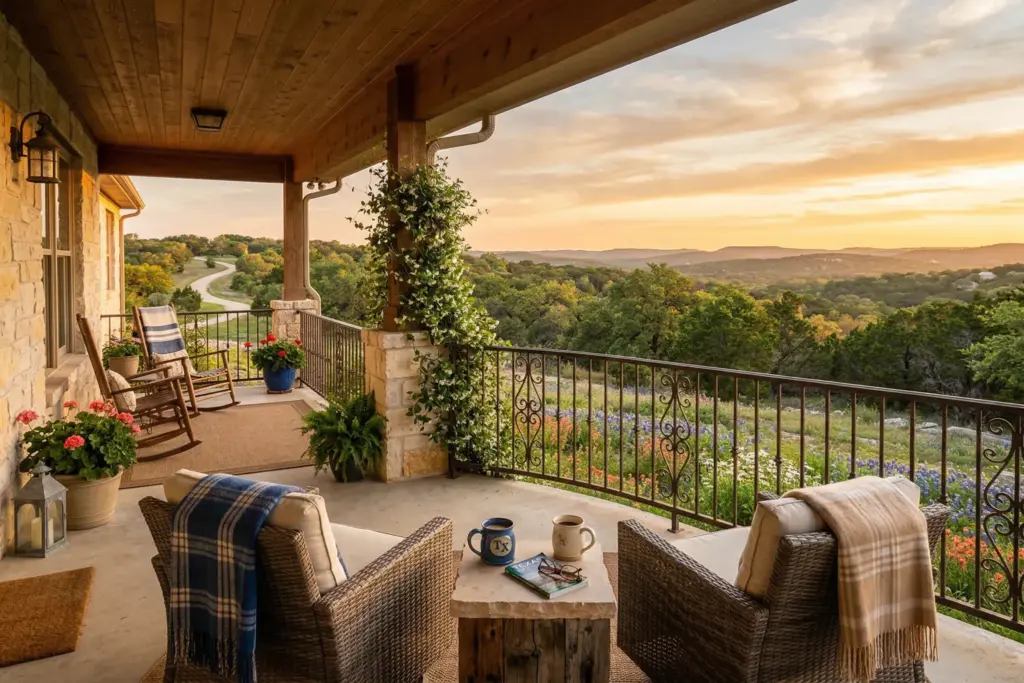
Seven suburbs. Prices from $390,000 to $925,000. And a property tax freeze that locks your school taxes the day you turn 65. That’s the retirement math in the Austin area right now, and honestly, it’s one of the best deals in the Sun Belt.
I get calls about this every week. Somebody in their late 50s or early 60s, usually still working but starting to plan, and they want to know where around Austin gives them the right mix of quiet mornings, things to do, and a hospital that’s not 45 minutes away. Fair question right. So lets break it down suburb by suburb with real numbers.
According to the Texas Comptroller, homeowners 65 and older get a $200,000 school district tax exemption in Texas (that’s the $140,000 standard homestead plus a $60,000 over-65 bonus, both increased by voters in 2025). And here’s the part most people miss: your school district taxes freeze the year you turn 65. Your home can double in value and your school taxes stay the same. Stack that on top of no state income tax and you start to see why retirees from California and the Northeast keep landing here.
But not every suburb works for every retiree. Some of y’all want a dedicated 55+ community with organized activities and a golf course out your back door. Others want a quiet Hill Country lot with a glass of wine on the porch. And some want to be five minutes from a hospital and a grocery store. Lets walk through seven options, starting with the most affordable.
Round Rock: The Affordable All-Rounder ($390K Median)
Round Rock ranked #62 on the list of best places to retire in the US for 2026, and the price is the main reason. At a $390,000 median, it’s roughly 29% below Austin’s $549,000 median. You get more house, bigger lots, and honestly a town that has its act together when it comes to infrastructure.
Healthcare access is a big deal for retirees and Round Rock nails it. St. David’s Round Rock Medical Center is right there. Baylor Scott & White has 8 hospitals in the Austin-Round Rock area. You’re not driving 30 minutes to see a specialist.
The tradeoff? Round Rock doesn’t have the Hill Country feel. It’s flat, suburban, and closer to the I-35 corridor than the rolling hills west of town. If your retirement dream involves a view of oak trees and limestone bluffs, this probably isn’t it. But if your retirement dream involves keeping your housing costs under $400K and being 10 minutes from literally everything (Dell, Apple, Amazon all have major campuses nearby for those doing part-time consulting), Round Rock is hard to beat.
For a deeper comparison of the area, check out our Georgetown vs Round Rock vs Cedar Park breakdown.
Sun City Georgetown: The Gold Standard for 55+ Living ($415K Median)
Sun City is the largest active adult community in Texas and it’s not close. Built by Del Webb, this is the community that every other 55+ development in the state measures itself against. Three golf courses. Three fitness centers. Resort-style pools. Miles of walking paths. If you want a built-in social life handed to you on day one, Sun City is hard to argue with.
The median home price sits around $415,000 with HOA fees of $1,200 per year (plus a one-time $650 working capital fee at closing). For what you get, that’s genuinely reasonable. I’ve seen country club communities charge $1,200 a month.
Here’s what I tell people about Sun City though. It’s in Georgetown, which means you’re about 30 miles north of downtown Austin. Georgetown is a charming town with a great square, good restaurants, and Southwestern University. But you’re not popping down to South Congress for dinner on a Tuesday. Some retirees love that distance (it keeps things quiet, the pace is slower). Others underestimate how much they’ll miss being closer to Austin’s cultural scene.
The healthcare situation is solid. St. David’s Georgetown Hospital is minutes away, and the larger Round Rock and Austin hospital systems are within 20-30 minutes.
Kissing Tree San Marcos: The New Kid with Serious Amenities (~$515K Average)
If Sun City is the established country club, Kissing Tree is the hip new resort that just opened. This 1,300-acre gated 55+ community in San Marcos is being built by Brookfield Residential with plans for 3,200 homes. It’s still growing which means you’re getting in during the build-out phase (that can be a good thing or an annoying thing depending on your tolerance for construction trucks).
The amenity campus they call “The Mix” is genuinely impressive. An 18-hole semi-private golf course, a 9-hole putting course, 8 pickleball courts (pickleball has basically become a retirement requirement at this point right), bocce ball, and 18 miles of trails. They have a full-time activities director running 100+ clubs. Sam’s Cafe on-site. A demonstration kitchen. Live music stage. This is not a community where you sit at home wondering what to do.
Homes average around $515,000 with listings ranging from the low $500s to over $1 million depending on size and lot. The location splits the difference between Austin and San Antonio, which is interesting. You’re about 35 minutes to downtown Austin and 45 to San Antonio. Not ideal if you need to be in either city daily, but perfect if you want access to both without being in either.
For context on the San Marcos area, take a look at our Kyle vs Buda vs San Marcos comparison.
Dripping Springs: Wine Country Retirement ($550K-$650K Median)
Dripping Springs is what happens when you take the Hill Country, add 40 wineries and breweries along the 290 corridor, and give it an excellent school district. Now I know you’re thinking “Ed, why do I care about schools, I’m retiring.” And that’s fair. But here’s the thing: great school districts protect your home value. Period. If you ever need to sell, buyers with families are fighting to get into Dripping Springs ISD. That’s your built-in equity protection.
The median runs $550,000 to $650,000 depending on whether you’re looking at existing homes or new construction (and there is a lot of new construction out here right now). You can find a nice single-story on an acre for under $600K which is basically impossible closer to Austin.
Moving to Dripping Springs means you’re buying into the vibe. Saturday mornings at the farmers market. Afternoon tastings at a vineyard. Dinner at one of the restaurants in town. It’s peaceful without being isolated.
The honest downside? Healthcare proximity. You’re 25-30 minutes from the major hospital systems in Austin. There are urgent care clinics closer, but if you’re at the stage where you need regular specialist visits, that drive adds up. I had a client last year, a couple in their early 70s, who loved everything about Dripping Springs but ultimately chose Bee Cave because they wanted to be closer to Baylor Scott & White. I get it.
For the full lifestyle picture, read Is Dripping Springs a Good Place to Live.
Lakeway: Lake Life and Golf Course Retirement ($725K Median)
Lakeway is where retirement meets lake life. The median home price is around $725,000, though the average gets pushed well above that by high-end waterfront properties (the February 2026 average was over $1 million, but medians tell a more honest story). The city property tax rate is $0.17 per $100, and the overall effective rate averages about 1.51% which is lower than most of Travis County.
What makes Lakeway special for retirees is the combination of things to do and the feeling that you’re on permanent vacation. Lake Travis is right there. Multiple golf courses. Marinas. The Lakeway Resort and Spa. Restaurants along Lohmans Crossing. And communities like Rough Hollow that have their own private marina with deep water access even during drought years (if you’ve been in Austin long enough, you know that matters).
Tuscan Village is a 55+ community within Lakeway for those who want the dedicated active-adult setup. But honestly, most retirees I work with in Lakeway just buy in a regular neighborhood. The whole town has that retirement energy without needing to be in a gated 55+ community.
Daniel Kahneman wrote about the difference between the experiencing self and the remembering self. Lakeway is the suburb that delivers for both. Your daily life is genuinely pleasant (experiencing self), and when friends visit from out of state and you take them out on the lake, those are memories that stick (remembering self). Not a bad combination for your money.
Social isolation? Not really a concern here. Between the Hill Country Galleria being 10 minutes away, lake activities, and golf communities, you’d have to actively try to be lonely in Lakeway.
Bee Cave: The Sweet Spot for Healthcare and Convenience ($850K-$925K)
I’m biased here because I live in this area, but Bee Cave is the suburb I recommend most often for retirees who prioritize healthcare access and day-to-day convenience without sacrificing the Hill Country experience. Here’s why.
Bee Cave has the lowest property tax rate in the area. That matters every single year, and it matters more as you age and shift to a fixed income. Stack that with the over-65 freeze and you’ve got predictable housing costs for the rest of your life.
Baylor Scott & White has a facility in Oak Hill, about 10 minutes away. St. David’s is accessible via 360/MoPac. Urgent care, pharmacies, specialists, dentists, they’re all clustered around the Hill Country Galleria and along Highway 71. Grocery stores. Restaurants. Shopping. It’s all right there without the density and traffic of central Austin.
The median price runs $850,000 to $925,000, so this is the premium option. But for retirees coming from California or the Northeast who just sold a $1.5 million house (and who might be paying zero capital gains tax on the sale under Section 121), Bee Cave often feels like a bargain. I hear that constantly.
The downside is that Bee Cave doesn’t have a dedicated 55+ community. You’re buying into a regular neighborhood, and many of your neighbors will be families with kids. If that bothers you, this isn’t your spot. If you like the energy of a mixed-age community (and grandkids who want to visit), Bee Cave works beautifully. Check out the best neighborhoods in Bee Cave for specifics.
Wimberley: The Artist’s Retirement ($560K-$695K)
Wimberley is for a very specific type of retiree. And I mean that as a compliment. If your ideal Tuesday involves a pottery class in the morning, lunch at a farm-to-table spot, browsing the galleries on the square, and watching the sunset over Cypress Creek, this is your town. Half the residents are 45 or older. The Wimberley Valley Art League has 190+ members and puts on juried shows, art walks, and studio tours throughout the year.
The median home price ranges from $560,000 to $695,000 depending on the data source, with a lot of variation based on acreage and whether you’re on the river. You can find a modest house in town or a sprawling Hill Country estate. The spread is wide.
But I have to be straight with you about the trade-offs. Wimberley is rural. The closest major hospital is 30+ minutes away in San Marcos or Kyle. There’s no H-E-B in town (the nearest full grocery store is a drive). If you lose your ability to drive, Wimberley becomes very difficult. There’s essentially no public transit, no rideshare to speak of, and your social life depends on either being part of the arts community or having neighbors who look out for each other.
I love Wimberley. I’ve shown properties there for years and the beauty of the place is undeniable. But I always tell retirees to think about the 75-year-old version of themselves, not just the 65-year-old version. Will this still work when your knees aren’t great and driving 30 minutes to a doctor feels like a bigger deal? Thats the honest question.
Aging in Place: Think About the House, Not Just the Suburb
Whichever suburb you choose, the house itself matters as much as the zip code for retirees. A few things I always tell my clients who are buying their “last house”:
Single-story living. This is non-negotiable for most retirees eventually. If you buy a two-story now because the master is downstairs, think about where you’ll do laundry, whether you can access the garage, and whether the guest bedrooms your kids use are upstairs.
Doorway widths and bathroom layout. I know nobody wants to think about walkers and wheelchairs at 62. But widening doorways and adding a curbless shower during a renovation is a fraction of the cost of doing it as an emergency retrofit. Ryan Holiday talks about the obstacle being the way. The obstacle here is your future self’s mobility, and the way is planning for it now.
Proximity to a pharmacy and grocery store. This sounds basic until you’re the person who needs a prescription filled at 7pm on a Thursday. In Wimberley, that’s a 25-minute drive. In Bee Cave, it’s 5 minutes. Small difference at 65. Big difference at 80.
Community connections. Social isolation is a genuine health risk for retirees, and it’s worse in spread-out suburban areas. The dedicated 55+ communities (Sun City, Kissing Tree) solve this by design. In suburbs like Lakeway or Bee Cave, you’ll need to build your own social infrastructure through churches, clubs, golf groups, or volunteer work. Some people are great at that. Others find it harder than they expected.
The Property Tax Advantage, One More Time
I keep coming back to this because it’s that significant. Lets say you buy a $500,000 home in one of these suburbs at age 63. You file your homestead exemption immediately (getting $140,000 knocked off your school tax valuation). Then at 65 you file the over-65 exemption, knocking off another $60,000. Your school taxes now calculate on $300,000 instead of $500,000. And that amount freezes. Forever.
Your home could be worth $800,000 ten years later and your school taxes are still based on $300,000. That’s a massive savings that compounds every year. And if you’re really on it, you protest your other tax categories annually to keep those in check too.
Compare that to states like California where Prop 13 protects everyone equally (great if you’ve been there 30 years, not great if you’re buying new) or states with income tax eating into your retirement distributions. Texas just does retirement taxes differently, and if you plan around it, the savings are real.
Frequently Asked Questions
Ready to Tour Some Communities?
Here’s what I’d suggest. Pick two or three suburbs from this list that match your budget and priorities. Then lets go see them in person, because no article (not even a long one) replaces the feeling of driving through a neighborhood at 8am on a Saturday and thinking “yeah, I could live here.”
I’ve been helping people find their retirement homes in the Austin Hill Country for 19 years. I know which streets are quiet, which HOAs are well-run, which communities have the social infrastructure that prevents the isolation thing I mentioned earlier. And I know what the numbers look like because I watch this market every single day.
Reach out to Ed Neuhaus and we’ll set up visits based on what matters most to you. No pressure, no 10-community bus tour. Just the ones that actually make sense for your situation. Be safe, be good, and be nice to people.


