 Ed
Ed 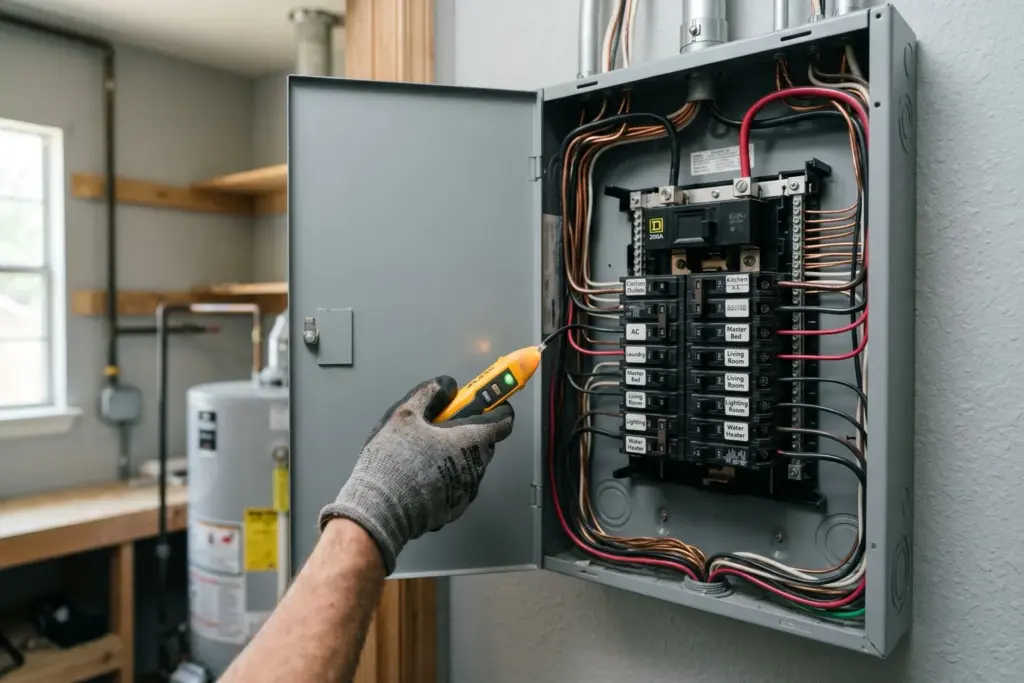
Most Austin homes built before the mid-1980s came with a 100-amp electrical panel, and that was plenty for a house running a couple of window units, a stove, and a TV. The problem is nobody lives like that anymore. Add an EV charger, a second fridge in the garage, a hot tub, and a heat pump, and that 100-amp service starts sweating. A modern household often wants 200 amps, and a lot of older Austin houses are still sitting on half of that (which is fine right up until the day it isn’t).
So I did the thing I keep doing for this series. I am a real estate broker, not an electrician. I have sold a lot of houses in Central Texas over the last 19 years, and I have stood in a lot of garages staring at a panel with a client asking me “is this enough?” But I do not pull permits or run wire. So I sat down with a licensed electrician who does this all day in Austin and asked him the questions my buyers actually ask me. What follows is his answer in plain English, with my real estate brain adding the part that matters for your house and your closing.
One thing up front, and I mean this. Everything below is general. Electrical work is the one area of home maintenance where “I watched a video” can genuinely burn your house down. Anything past flipping a breaker or changing a bulb goes to a licensed electrician, every time. This post is here so you know what to ask and what to look for, not so you go grab a screwdriver.
If you want the big-picture version of when every system in your house needs attention, this fits inside our year-round Austin home maintenance calendar. This post is just the electrical, because it is the system buyers understand the least and worry about the most.
100 amps vs 200 amps: what your panel can actually handle
Lets start with the number on the main breaker, because that is your house’s ceiling. The big number at the top of your panel (usually 100 or 200) is the total amount of power your home can pull at one time. Older Austin homes very often have 100-amp service. Newer construction and anything renovated in the last couple decades is usually 200.
The electrician’s point was simple. 100 amps is not “bad” or “unsafe” by itself. Plenty of houses run on it just fine. It becomes a problem when you start stacking big loads on top of it. Your AC is a big draw. Electric range, electric water heater, electric dryer, those are big draws. Now you want to add Level 2 EV charging, which is another big continuous draw, and suddenly the math does not work. The panel was never sized for the life you are trying to live in the house.
Here is how he framed it for me, and I thought it was the clearest way to think about it. Your panel is like the water main to your house. A 100-amp main is a smaller pipe. You can run the kitchen sink and a shower at the same time no problem, but try to run every faucet, two showers, the sprinklers, and fill the pool all at once and the pressure drops. Adding modern high-draw appliances is like opening more faucets. At some point you need a bigger pipe coming in.
Adding an EV charger is where this gets real
This is the upgrade that pushes more Austin homeowners into an electrical conversation than anything else right now, so let me give you the actual facts.
A Level 2 home charger runs on a dedicated 240-volt circuit, the same kind of voltage your dryer or range uses. A common setup is a NEMA 14-50 outlet on a 50-amp breaker. Here is the part people miss: the National Electrical Code treats EV charging as a continuous load, which means you can only use 80 percent of the breaker’s rating. So a 50-amp circuit actually delivers about 40 amps of charging, roughly 9.6 kilowatts, which adds somewhere around 25 to 30 miles of range per hour. That is plenty for almost everybody who charges overnight, no big deal right.
But that 40-amp continuous draw has to come from somewhere, and that somewhere is your panel. If you have 200-amp service with open breaker slots, adding a charger is usually a clean, reasonably priced job. If you are on a 100-amp panel that is already feeding a hungry house, the electrician may tell you the panel cannot safely take it without an upgrade first. That is not him upselling you. That is physics. The honest electrician will do a load calculation, which is exactly the math that tells you whether your existing service can handle the new load or not. If a guy quotes you a charger install without ever looking at your panel or asking what else is electric in the house, that is your red flag.
Dedicated circuits and why your kitchen keeps tripping
While we are here, lets talk about the thing that drives people nuts. You run the microwave and the toaster at the same time and a breaker trips. That is almost always a circuit doing too many jobs.
A dedicated circuit is a single breaker that feeds one big appliance and nothing else. Your range, your electric dryer, your AC, your EV charger, those all want their own dedicated circuit. Modern code requires dedicated circuits for a bunch of things older homes were never built with, which is why a 1972 kitchen with two outlets and one circuit struggles the second you plug in a modern countertop full of gadgets. The electrician’s rule of thumb was easy: if a specific outlet trips every time you run two normal things, you probably need a circuit added, not a bigger breaker jammed in (and please do not let anyone “fix” a tripping problem by just installing a larger breaker on wire that was not sized for it, that is how fires start).
The two things I want every older-home buyer to check
Here is where the real estate brain takes over, because two specific issues show up in older Austin homes constantly and they both matter at the negotiating table.
1. Aluminum branch wiring
Between roughly 1965 and the mid-1970s, a stretch when a lot of Austin neighborhoods were going up, around two million American homes were wired with aluminum branch wiring instead of copper. The U.S. Consumer Product Safety Commission found that homes with this aluminum wiring are about 55 times more likely to have connections reach a fire-hazard condition than homes wired with copper. The reason is that aluminum expands, contracts, and oxidizes differently than copper, so the connections at your outlets and switches loosen over the years.
Now here is the part nobody tells buyers. You usually do not rip all the wire out. The CPSC’s approved fixes include a full rewire or, more commonly, special connectors (the COPALUM crimp is the one they prefer, with AlumiConn as an alternative) installed at every connection point by a qualified electrician. The bigger headache is often insurance: a lot of carriers will not write a new policy on a home with un-remediated aluminum wiring, or they will give you a short window to get it fixed. So this is not just a safety issue, it is a “can you even insure the house” issue, which makes it very much a real estate issue. If you are buying a home from that era, this is something I want flagged before we are deep into a deal.
2. Ungrounded two-prong outlets
The other classic older-home find is two-prong outlets, the ones with no ground. You see them all over mid-century Austin homes. They are not automatically a crisis, but they mean that part of the house has no grounding path, which matters a lot for anything with sensitive electronics or for wet areas like kitchens and baths. The right fix is not slapping a three-prong outlet on ungrounded wiring (that just hides the problem and fools you into thinking you are protected). A licensed electrician handles it properly, often with GFCI protection or by running a ground. It is usually not a deal-killer, but it is a real cost and a real conversation.
What a buyer should actually check before closing
So you are under contract on a house and the option period clock is running. Here is the electrician’s and the broker’s combined checklist for what to look at, none of which replaces a real inspection by a pro:
- Find the main breaker number. 100 or 200 amps. If it is 100 and you have big plans (EV, hot tub, shop, addition), build a panel upgrade into your budget conversation now, not after you own it.
- Ask the age of the panel and look at the brand. A couple of older panel brands have known safety records and your inspector will call them out. Take that seriously.
- Note the home’s age. Built 1965 to mid-1970s? Specifically ask your inspector to check for aluminum branch wiring.
- Count the two-prong outlets. Lots of ungrounded outlets means a grounding project in your future.
- Open the panel cover question with your inspector. Double-tapped breakers, scorching, a rat’s nest of additions, those are all things a good inspector flags and a good electrician prices.
The whole point is to know what you are buying before the option period ends, when you still have leverage. An EV charger that looked like a weekend project can turn into a panel upgrade you did not budget for, and I would much rather you find that out on day five than after you have the keys. If you want the full rundown of everything to watch in a Central Texas home, our Austin home inspection checklist covers the rest of the house the same way this post covers the panel.
When you actually need an upgrade, and the rough money
Lets talk numbers, with the giant caveat that these are general ranges and your real estate guy is not your electrician. Get a real quote.
You generally need to think about a service upgrade when you are adding major load (EV charging, a heat pump conversion, a shop, an addition) to a 100-amp panel that is already busy, when your panel is full and there is no room for new circuits, or when the panel itself is an older problem brand or is showing damage. Upgrading from 100-amp to 200-amp service is a common job, and depending on the house, the run from the meter, and what the utility requires, it tends to land somewhere in the low thousands. Adding a dedicated circuit for an EV charger on a panel that can already handle it is much cheaper. Remediating aluminum wiring depends entirely on how many connection points are in the house.
I am keeping those ranges deliberately loose because the honest answer is “it depends on your specific house,” and any electrician who quotes you a firm number over the phone without seeing your panel is guessing. The move is to get a licensed electrician out for a load calculation and a real bid. That visit is cheap relative to the decision it informs.
And here is the real estate angle one more time, because it is the part I actually get paid to think about. If you are selling, an undersized or sketchy panel shows up at inspection and gets used against you, the same way an old roof or AC does. If you are buying, it is a number you want in your head before you waive your option period. Either way, knowing where your electrical stands is leverage, and leverage is the whole game.
Frequently Asked Questions
One last thing from the real estate side
Your electrical system is one of those things buyers and sellers both underestimate until an inspection report puts it in writing. If you are weighing a panel upgrade before you list, or trying to figure out whether a charming older home you love is going to need a rewire, that is exactly the kind of thing worth thinking through before you make a move. Our guide to buying a home with solar, a well, or septic covers the other systems people forget to check, and if you are dreaming about a powered garage shop, our companion post on whether a garage can actually run a table saw goes deeper on the workshop side.
If you missed the earlier posts in this series, the one I did with an honest look at which renovations actually add value pairs well with this one, because rewiring is a cost you absorb, not a cost you get back.
Want a straight answer about a specific house? Reach out through our contact page or call the office at (512) 366-3270 and we will talk it through. I help clients sort out exactly this kind of thing before they buy or sell, and at Neuhaus Realty Group it is the boring stuff like panels and grounding that quietly decides how a deal goes.
Until next time, be safe, be good, and please hire a licensed electrician. Your house is not the place to find out you were wrong.


