 Ed Neuhaus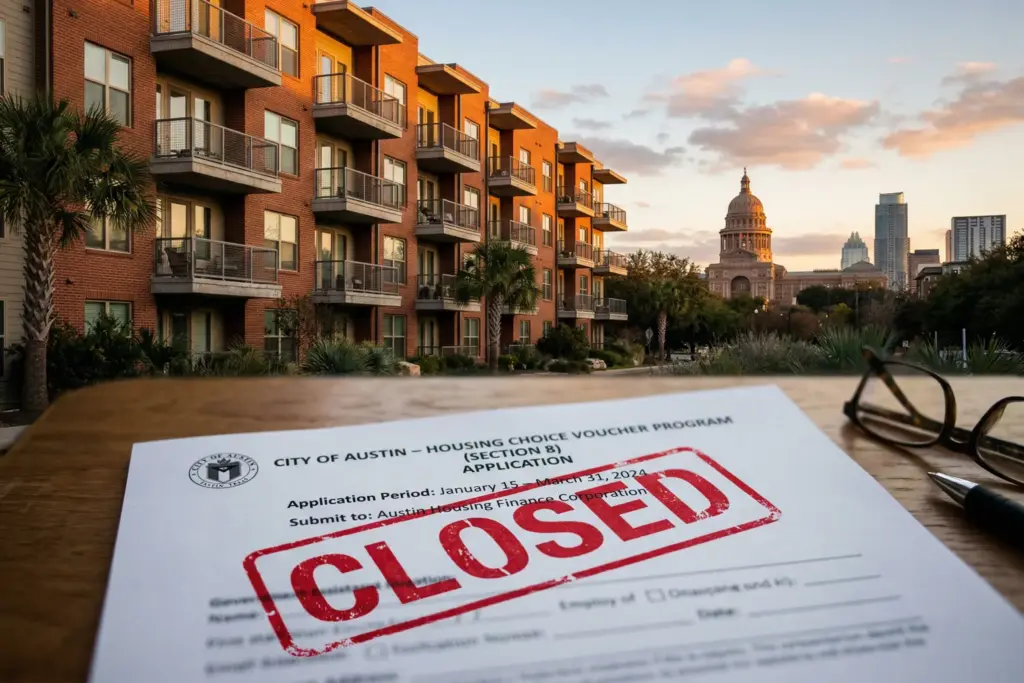
I got three calls last week from buyers asking the same question. “Ed, should I be worried about these DOGE cuts? Is my down payment assistance going away?”
So lets talk about it. Because what the headlines say and what’s actually happening are two pretty different things.
I’m not going to get political here (that’s not what I do and honestly it’s not useful for you right now). What I AM going to do is break down exactly what happened, what it means for people trying to buy or rent in Austin, and what your actual options look like today. Because the reality is, most of the programs Austin buyers and renters depend on are still here. Some of them are better funded than they were last year.
But the chaos itself is causing real problems. And that part we need to talk about.
What DOGE Actually Did to Housing Programs
Ok so lets start with the facts. Here’s what’s actually happened so far.
The big headline is that DOGE directed HUD to terminate the Green and Resilient Retrofit Program, a $1 billion program that Congress passed in 2022. This program funded energy-efficiency upgrades (think new HVAC systems, roofs, insulation, floodproofing) at affordable housing sites across 42 states. And here’s the part that matters: buildings that received these funds were required to stay affordable for up to 25 years.
So when you kill that program, you’re not just canceling some green energy initiative. You’re removing the financial incentive that keeps those units affordable long term. About 25,000 housing sites were set to benefit. Gone.
On top of that, DOGE proposed cutting HUD staffing by roughly half. And not evenly. The office that processes housing vouchers and public housing (the one that serves about 7 million people) would lose 50% of its workforce. The office that oversees project-based rental assistance for another 2 million people would lose 44%. The homelessness programs office? 84% reduction. Fair housing enforcement? 77%.
And then there was $3.6 billion in homelessness assistance that was awarded back in January and just… never delivered. Communities had budgeted for it. Hired staff. Signed leases. The money was approved and then it sat there.
I know, it sounds bad. And parts of it genuinely are. But here’s where the story gets more nuanced than the headlines suggest.
Congress Said No to Most of It
This is the part that didn’t make the news cycle.
The Trump administration’s FY2026 budget proposed a 44% cut to HUD. That would have been $26.72 billion stripped from rental assistance programs alone. The proposal would have eliminated the Community Development Block Grant program entirely (that’s the CDBG money Austin uses for affordable housing). It would have killed the HOME Investment Partnership program. It would have rolled all housing voucher programs into a single state block grant, which (if you’ve watched how block grants work historically) usually means less money reaching the people who need it.
But Congress rejected most of it. The final FY2026 spending bill actually provides $77.3 billion to HUD. That’s a $7.2 billion INCREASE from last year. Housing Choice Voucher renewals got $35 billion (up $2.8 billion). New tenant protection vouchers got $600 million. Homelessness grants, elderly housing, disability housing, all got increases.
So the programs that Austin families actually depend on? Congress kept them funded. In some cases, funded better than before.
Here’s the problem though. The money being appropriated and the money actually getting distributed are two different things right now. And that gap is where real people get hurt.
What This Means for Austin Renters
Lets get local. The Housing Authority of the City of Austin manages over 5,400 Section 8 vouchers. The waitlist has been closed since September 2018. That’s a long time to wait, right? If you needed housing assistance in Austin and you didn’t get on the list before fall 2018, you’ve been out of luck for almost eight years now.
And the waitlist situation is about to get worse, not better. Even though Congress funded the voucher program, HUD staffing cuts mean fewer people processing applications, slower turnaround on inspections, and longer waits for everything. When you cut 50% of the staff that administers vouchers for 7 million people, the math is pretty simple, right? It just takes longer to do everything.
There’s also a downstream effect that nobody’s talking about. When HUD payments get delayed (which is happening), some landlords stop accepting vouchers. They can’t afford the uncertainty. So even if you HAVE a voucher, your options for where to use it shrink.
Now the silver lining for Austin renters (and this IS a real silver lining): rents in Austin have dropped roughly 20% from the 2022 peak. Median rent in the city is somewhere around $1,355 to $1,628 depending on how you measure it. The building boom we went through actually helped. There’s inventory. Competition among landlords is real.
But and this is the catch, that improvement hasn’t reached everybody. If you’re making $35,000 a year, the difference between $1,800 rent and $1,400 rent is still the difference between making it and not making it, right? The people who need subsidized housing the most are the ones least helped by a cooling luxury apartment market.
The Austin Monitor reported that more than $15 million in federal housing funds could be at risk locally. Austin receives about $14 million annually in HUD block grants (CDBG, HOME, ESG, HOPWA). That money funds everything from affordable housing construction to homelessness prevention to fair housing enforcement. The city had approved $42 million for 11 new affordable housing developments that would create 1,429 units. Whether all of that survives the current chaos is genuinely unclear.
What This Means for Austin Homebuyers
Ok so if you’re trying to buy a home in Austin right now, here’s the honest assessment.
The federal programs that directly help Austin homebuyers are mostly state-administered, not HUD-administered. And that makes a huge difference right now because the state programs are largely insulated from the DOGE mess.
Here’s what’s still available and working:
City of Austin Down Payment Assistance: Up to $40,000 as a zero-interest deferred forgivable loan. You need to be a first-time buyer (haven’t owned in 3 years), income at or below 80% of area median, and the purchase price can’t exceed $579,025. Live in the home for 5 to 10 years and the loan is forgiven. This is city money, not federal. It’s still there.
TDHCA (Texas Department of Housing and Community Affairs): Offers a 30-year fixed rate mortgage with up to 5% of the loan amount for down payment assistance. This is a state-level program funded through mortgage revenue bonds. DOGE can’t touch it.
TSAHC (Texas State Affordable Housing Corporation): Similar program but you get to choose between a grant (free money, no repayment) or a forgivable second lien loan.
Travis County Hill Country Home DPA: 4% to 6% of your initial loan amount for down payment or closing costs.
And here’s the thing nobody realizes. You can stack these. Depending on your income and what you qualify for, you could combine $20,000 to $60,000 or more in total assistance. I wrote a complete breakdown of every program available to Austin first-time buyers that walks through all of this.
So no, your down payment assistance is not disappearing. The programs most Austin buyers use are state and local, not federal. The federal programs that ARE at risk (like the HOME program, which cities use to fund affordable housing development) affect the pipeline of affordable homes being built, not the money in your pocket at closing.
That distinction matters a lot right now. (I probably should have opened with that instead of scaring everybody for six paragraphs but here we are.)
The Real Damage Is the Uncertainty
Here’s what I think people are missing about this whole situation. And this is where I’ll give you my honest take.
The biggest damage from the DOGE housing cuts isn’t necessarily the dollar amounts. Congress restored most of the funding. The biggest damage is the uncertainty. And uncertainty in housing is expensive.
Nassim Taleb wrote about this in The Black Swan (great book if you haven’t read it). It’s not the crisis itself that destroys the most value. It’s the second-order effects. The ripple. The hesitation.
And here’s what most people miss about this moment. The federal government isn’t really the engine of housing in Texas. It never has been. Texas has always run its housing programs through the state, and that’s actually a massive structural advantage right now. States that depend heavily on HUD-administered programs are in real trouble. Texas? Less so. But you’d never know that from reading the headlines.
When affordable housing developers don’t know if their CDBG funding will arrive, they pause projects. When landlords don’t know if HUD payments will come on time, they stop accepting vouchers. When housing authorities don’t know if they’ll have staff next month, processing slows to a crawl. When first-time buyers read headlines about federal housing cuts, they freeze even when the programs they’d actually use are fully funded and waiting for them.
I’ve seen it in my own practice over the last few months. Buyers calling me nervous about programs that literally aren’t affected by any of this. The fear is doing more damage than the actual policy changes.
And for Austin specifically, the timing is terrible. We’re sitting in what might be the best buying window Austin has had in years. Inventory is up. Sellers are negotiating. Rates recently dipped below 6%. The down payment assistance programs are there. But the political noise is making people hesitate, and hesitation in this market means missing the window.
What’s Still Working (Your Cheat Sheet)
I want to make this stupid simple. Here’s what’s still working in Austin as of right now:
For Renters:
- Section 8/Housing Choice Vouchers (funded, but waitlist closed since 2018)
- ECHO (Ending Community Homelessness Coalition) referrals
- City of Austin housing programs through the Housing and Planning Department
- Austin Energy utility assistance programs
- Travis County emergency rental assistance
For First-Time Buyers:
- City of Austin DPA: up to $40,000 (forgivable)
- TDHCA: up to 5% of loan amount
- TSAHC: grant or forgivable loan (your choice)
- Travis County Hill Country Home DPA: 4-6% of loan
- FHA loans: 3.5% down (federal, still fully operational)
- VA loans: 0% down for eligible veterans
- USDA loans: 0% down for eligible rural areas (parts of Dripping Springs, Wimberley, areas outside city limits)
For the Housing Pipeline:
- Austin Housing Finance Corporation ($110M proposed budget)
- CDBG/HOME (Congress funded, but distribution uncertain)
- State housing tax credits (TDHCA administered, not affected by DOGE)
- Local bond money from Austin’s affordable housing bonds
The federal programs are funded. The state programs are independent. The city programs are running. The challenge is the administrative bottleneck at HUD and the uncertainty around when approved money actually flows.
What You Should Actually Do Right Now
Look, I’ve been doing this for 19 years in Austin. I’ve watched federal policy changes come and go. I watched the government shutdown in late 2025 freeze FHA closings for 43 days. I’ve seen how political noise creates hesitation and how hesitation costs people real money.
Here’s my prediction, and I’ll put this on the record so you can come back and check me on it. Six months from now, the people who bought during this window of political noise are going to look very smart. Not because the market is going to skyrocket (it’s not), but because they locked in prices while everyone else was paralyzed by headlines that didn’t actually affect the programs they were using. I’ve seen this pattern play out three times in 19 years, and it works the same way every time. Fear creates opportunity for people who can separate signal from noise.
So here’s what I’d tell you if we were grabbing coffee right now.
If you’re a renter on housing assistance, stay on it. Don’t give up your voucher no matter how frustrating the delays get. The program is funded. It’s going to be slow, but the money is there. Document everything. Keep copies of every communication with your housing authority. That’s not paranoia, that’s just smart right now.
If you’re a first-time buyer waiting on the sidelines because of the headlines, stop. The programs you’re going to use are not affected by DOGE. Not even a little bit. The math on buying vs. renting in Austin right now is the best it’s been in years. Inventory is up, sellers are flexible, and those down payment assistance programs are sitting there waiting for you. I’m not saying rush into anything, but I am saying don’t let political headlines make your housing decision for you.
If you’re watching the Austin market from the investment side, pay attention to the affordable housing pipeline. The uncertainty around federal funding means some projects will stall. That creates specific opportunities in certain Austin submarkets but it also means the affordable housing shortage (which was already severe) is probably going to get worse before it gets better.
And for everybody (including me, because I catch myself doom-scrolling the policy news when I should be running comps), separate the political noise from the market fundamentals. Policy matters at the margins, but supply, demand, rates, and local economics drive 95% of what you experience when you’re actually buying or selling a house in Bee Cave or Lakeway or anywhere else in the Hill Country.
Frequently Asked Questions
Lets Talk About Your Situation
Every buyer’s situation is different, and the way these policy changes affect you depends entirely on your income, your timeline, and what programs you qualify for. If you’re confused about what you’re eligible for or whether any of this affects your plans, lets have a conversation. No pressure, just information.
I spend most of my time at Neuhaus Realty Group answering exactly these kinds of questions. That’s literally what I’m here for.
Reach out to me directly and lets figure out your next move. Be safe, be good, and be nice to people.


