 Ed
Ed 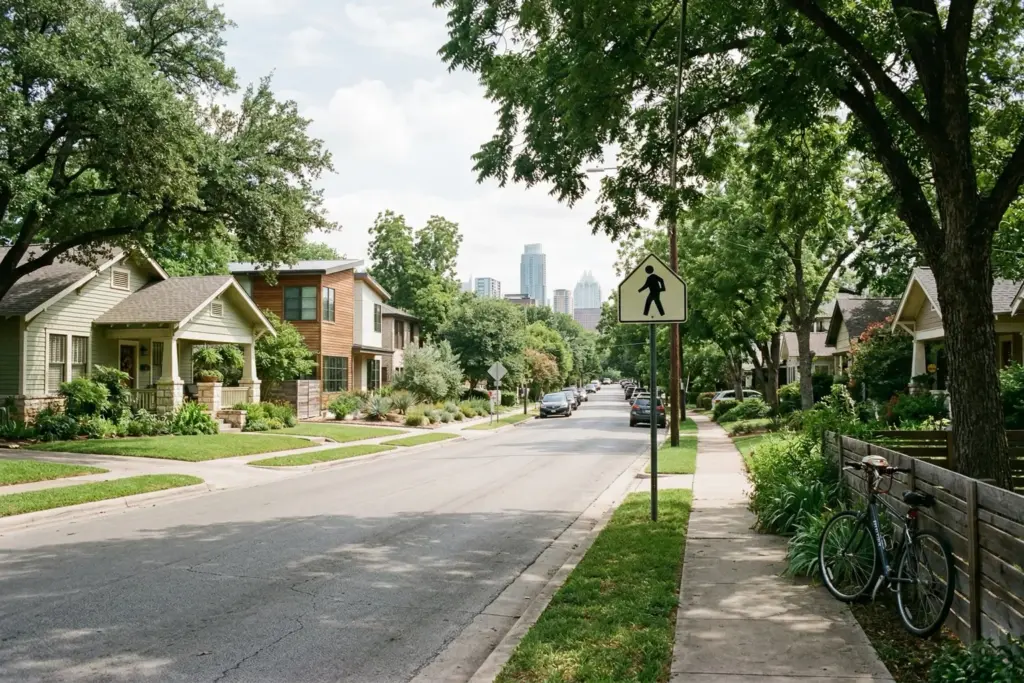
Two A and B-Rated AISD Middle Schools, and a Real Price Difference People Miss
Lamar Middle came in at an A (90/100) and Murchison Middle came in at a B (88/100) in the 2025 TEA accountability cycle, which is about as close as two solid Austin ISD middle schools get on paper. The price tags on the homes around them, on the other hand, are not nearly that close. The Lamar zone is the more expensive of the two right now, not the cheaper one, and that surprises a lot of buyers who assumed northwest Austin would cost more than central.
I get the Lamar vs Murchison question on house tours all the time, usually from buyers trying to decide between a central Austin bungalow near Allandale or Mueller and a roomier home tucked into Anderson Mill or Balcones Woods. Both zones sit inside Austin ISD, both deliver well-known feeder paths, and both have devoted parent communities. So the choice usually comes down to neighborhood feel, lot size, and what you actually want your kid’s middle school years to look like.
Lets walk through what the data actually says, where the gaps are, and how I’d think about the trade-off if I were buying today.
Lamar vs Murchison Middle: Quick Comparison
| Lamar Middle | Murchison Middle | |
|---|---|---|
| TEA Rating | A (90/100) | B (88/100) |
| Enrollment | 1,109 students | 1,209 students |
| Grades | 6 to 8 | 6 to 8 |
| District | Austin ISD | Austin ISD |
| Median Home Price (12mo) | $800,500 | $648,000 |
| Feeds Into | McCallum HS (primary), with splits | Anderson HS |
The headline most buyers walk away with: Lamar is about $152,500 more expensive at the median than Murchison on closed residential sales. That is a real number, not a feeling, and it should be on the table from day one of any home search.
TEA School Performance Comparison (2025)
The Texas Education Agency evaluates every public school annually. For 2025, TEA uses three primary accountability domains: Student Achievement, School Progress, and Closing the Gaps. Academic Growth is reported as a component of School Progress (Part A) rather than as its own standalone domain. Here is how both campuses performed across those measures.
| Performance Metric | Lamar Middle | Murchison Middle |
|---|---|---|
| Overall Rating | A (90/100) | B (88/100) |
| Student Achievement | A (92/100) | B (89/100) |
| School Progress | B (87/100) | B (84/100) |
| Closing the Gaps | B (85/100) | B (85/100) |
| Enrollment | 1,109 students (grades 6-8) | 1,209 students (grades 6-8) |
| Economically Disadvantaged | 22.2% | 26.8% |
| English Learners | 10.6% | 15.9% |
| TEA Distinctions | 4 of 7 earned | 0 of 7 earned |
A quick note on the distinctions line: middle schools are eligible for all 7 distinction designations under the TEA 2025 accountability manual, including Postsecondary Readiness (which is available to MS campuses, not just high schools). The full list is ELA/Reading, Mathematics, Science, Social Studies, Academic Growth, Closing the Gaps, and Postsecondary Readiness. In 2025, Lamar earned 4 of the 7 available distinctions while Murchison earned none (Texas Education Agency, 2025 Accountability Ratings).
Where they diverge is Student Achievement. Lamar’s 92 is meaningfully higher than Murchison’s 89, and that is the single biggest reason for the gap in overall rating. Both schools land at 85 on Closing the Gaps (the lens TEA uses to look at how well a school serves its different student groups), which is a genuine point of overlap that buyers should not overlook. For the full TEA breakdown on each campus, including rating history back to 2019 and full distinction details, visit the Lamar Middle school page or the Murchison Middle school page.
Lamar Middle: Central Austin, Arts and Academics, Wide Feeder Base
Lamar sits in central Austin, just off Lamar Boulevard, and the campus has earned a long-running reputation for serious academics and a strong arts identity. The 2025 jump from a B to an A is not a fluke. The school’s rating has climbed steadily since 2019 (B at 87, then 88, 89, 89, and now 90), and the 92 in Student Achievement reflects what teachers and parents in the zone have been saying for years. The kids are getting the work done.
One of Lamar’s defining features is the size of its elementary feeder network. Eighteen Austin ISD elementary campuses send students to Lamar, including Bryker Woods, Casis, Brentwood, Maplewood, and Ridgetop, along with a long list of other neighborhood campuses spanning central and north Austin. That breadth shows up in the student body. Kids who arrive at Lamar in 6th grade are meeting peers from across a much wider slice of the city than most middle schoolers experience, and that is one of the most underrated things about the school.
After 8th grade, the path forks. McCallum High is the primary feeder, and it is the option most Lamar parents have in mind when they sign the contract on a house in this zone. McCallum’s Fine Arts Academy is one of AISD’s signature programs, and the through-line from Lamar’s strong arts culture to McCallum is real. But Lamar is also a split zone for high school, with some addresses feeding into Anderson, Austin High, LBJ, or the early college high schools. So if McCallum specifically is what you want, you absolutely need to confirm the high school assignment for the exact street and side of the street before you make an offer. AISD changes these zones, and the wrong side of one block can take you somewhere completely different.
Murchison Middle: Northwest Austin, Anderson Feeder, Bigger Campus
Murchison runs a little larger than Lamar at 1,209 students, and the campus has a different feel because it draws from a tighter geography. The school’s fine arts programs are the headline (the band, orchestra, choir, and theater programs at Murchison are well-known for producing kids who lead ensembles at Anderson), and the Gifted and Talented program is a real strength as well.
The 2025 rating of B (88/100) is the highest Murchison has posted since 2019, and the jump from 81 in 2024 to 88 in 2025 is genuinely impressive. So the trend line is moving up.
The Neighborhoods
The Lamar zone covers some of central Austin’s most established communities, including Allandale, Mueller, Crestview Station, Ridgetop, and Northfield. Lots are smaller, mature trees do a lot of the heavy lifting on curb appeal, and walkability is real. The trade-off is price. The 12-month closed median for the zone is $800,500 (VOW MLS, closed sales, trailing 18mo).
The Murchison zone reaches into Anderson Mill, Balcones Woods, Balcones Village, Jollyville, and Great Hills. Lots tend to be bigger here, and the natural cedar-and-oak landscape gives the area a different character than central Austin. Over the last 12 months, residential properties closed in the Murchison zone at a median of $648,000 (VOW MLS, closed sales, trailing 18mo).
That is the real price story. Lamar is about $152,500 more expensive at the median, which is the opposite of what a lot of buyers assume going in. The premium is the central location, the smaller and walkable footprint, and the demand on a more limited housing supply. The Murchison zone gives you more house and more land for the dollar, with the trade-off being a longer drive to downtown and a more suburban feel.
Browse all homes zoned to Lamar Middle or homes zoned to Murchison Middle.
Which School Fits You?
Both schools are strong. Picking between them is about lifestyle and budget more than it is about academics. Here is how I’d think about it.
You might lean toward Lamar if:
- The slightly higher A rating and 92 in Student Achievement matter to you on paper
- You want to be in central Austin, near North Loop, Mueller, and Crestview
- Walking and biking to school, shops, and parks is part of the daily routine you want
- The path to McCallum’s Fine Arts Academy is the high school outcome you’re aiming for (and you’ve confirmed your specific address feeds there)
You might lean toward Murchison if:
- You want more square footage, a bigger lot, or a newer build than central Austin can usually offer at the price
- The clean Anderson High feeder path is what you want (no high school split-zone guessing)
- Northwest Austin’s tech-corridor commute and proximity to the Domain fit your life better than downtown access
If I had to take a position: if budget is tight and you’d otherwise be stretching to make a Lamar zone home work, Murchison is the better value, full stop. The schools are too close on TEA performance to justify spending an extra $152.5K just to be on the Lamar side of the city, unless you have specific reasons (Mueller, McCallum, Allandale neighborhood roots) that the central location is the actual draw. If those reasons exist, Lamar is worth every dollar. But it is not the cheaper choice anymore. Not even close.
Frequently Asked Questions
Ready to Find Your Home?
School zone decisions in Austin ISD have real money attached to them, and a $152.5K median price gap between two strong middle schools is not a small thing. After 17+ years in this market and 2,000+ Austin properties under my belt, I’ve helped a lot of buyers think through exactly this kind of trade-off. Lets grab coffee and talk through what fits your budget, your commute, and the high school path you actually want.
Be safe, be good, and be nice to people.


