 Ed Neuhaus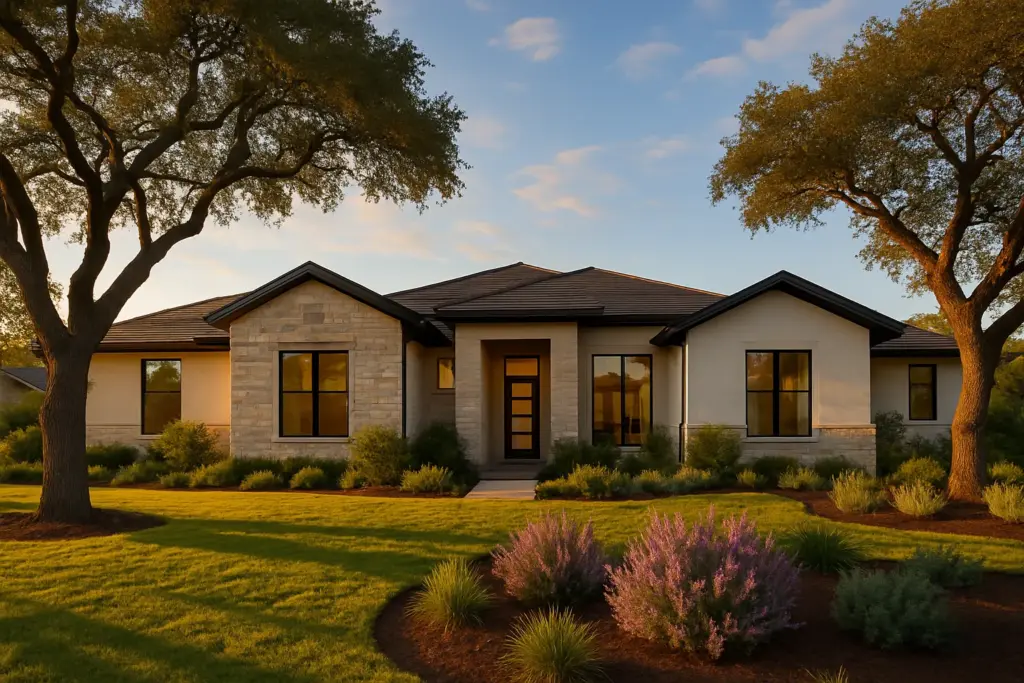
I have had this conversation so many times I could have it in my sleep.
Someone flies in from the Bay Area, or San Diego, or LA. They have a budget that felt completely reasonable back home. They spend a weekend touring homes in West Austin, and somewhere around the third property they get very quiet. Not a bad quiet. More like the quiet you get when you realize the math is going to work out way better than you thought.
Then they go home. And three months later they are back, with a U-Haul booked and a bunch of questions nobody warned them about.
This article is for that person. The one who is serious about the move but wants the honest version, not the sales pitch. I am going to walk you through what your California budget actually gets you here, the real tax math, the neighborhoods that tend to click for people coming from the coast, and the things that reliably catch Californians off guard. Some of it will surprise you. Some of it will not. Either way, you will be better prepared than most.
The Tax Math (And Why It Is More Complicated Than You Think)
Texas has no state income tax. California has the highest state income tax rates in the country, topping out at 13.3% for incomes above a million dollars. If you earn $200,000 a year in California, you are sending somewhere between $14,000 and $18,000 of that to Sacramento every year, depending on your filing status and deductions. In Texas, that number is zero.
Over ten years? That is a lot of money. A $200K earner could be looking at $150,000 or more in cumulative state income tax savings just by crossing the state line.
But before you start counting that money, there is a counterweight you need to know about: property taxes. Texas does not tax your income, but it does tax your property aggressively. The average effective property tax rate in Austin and the surrounding Hill Country runs around 1.7% to 2.2% per year. California’s is about 0.73%.
So on a $700,000 home in Lakeway, you might be paying $12,000 to $15,000 per year in property taxes. On a comparable home in Palo Alto that number would be closer to $7,000. The income tax savings still wins for most people who are working, but this is the number that surprises everyone, so I want you to see it clearly before we go further.
There is also a fix for the property tax bite, and most Californians do not know about it when they arrive: the Texas homestead exemption. As of 2026, if this is your primary residence you get $140,000 knocked off your home’s taxable value for school district taxes alone. If you are over 65, add another $60,000. File it. Do not forget to file it. And then read our guide on how to protest your property taxes, because in Texas you can challenge your appraisal every year and you should be doing exactly that.
The bottom line on taxes: for most working Californians who are not retired and sitting on a $2M home, Texas is meaningfully cheaper. The income tax savings outpaces the property tax premium for most incomes above $150,000. Below that it is closer. Either way, the math is worth doing with your actual numbers before you decide.
What Your California Budget Actually Gets You Here
This is where things get interesting. Lets use some real numbers.
In Los Angeles, the median home price right now is north of $900,000 and climbing. In San Jose and the South Bay it is over $1.4 million. San Francisco proper is even higher. For most California buyers in the $800K to $1.2M range, your options are: a modest house in a decent neighborhood, a condo in a good neighborhood, or a commute you will hate.
In Austin’s western suburbs — Bee Cave, Lakeway, Dripping Springs — that same budget looks completely different.
At $800,000 you are looking at newer construction homes, four bedrooms, two-car garage, HOA amenities, in neighborhoods with top-tier schools. At $1 million you start getting into larger lots, custom finishes, and communities like Rough Hollow in Lakeway where the amenity center has a yacht club and a lazy river. I know. I know how that sounds.
The Austin metro median price right now is around $435,000 to $522,000, down from the pandemic peak and still softening slightly. Inventory has improved dramatically — we went from near zero homes on the market in 2022 to over 10,000 active listings today. Buyers have options and they have negotiating power. If you are coming from a California market where you have been outbid on every offer for two years, the Austin market right now is going to feel surreal.
I wrote a full breakdown of current market conditions in our 2026 Austin housing market forecast if you want the data. Short version: it is a buyer’s market. The window where buyers have this much leverage does not stay open forever.
A Real Example
A client of mine relocated from the Peninsula last year — she had been renting in Menlo Park and watching home prices stay completely out of reach on her tech salary. She came to Austin looking in the $650,000 to $750,000 range, which felt like a stretch to her. We found her a four-bedroom home in Bee Cave, 2,600 square feet, built in 2019, with a pool, in a neighborhood feeding into Lake Travis ISD. Her mortgage payment is lower than her rent was in California.
That is not a cherry-picked story. That is what this market looks like right now for California buyers with genuine buying power.
The Neighborhoods California Transplants Tend to Love
Austin is a sprawling city and choosing the wrong area is one of the most common mistakes people make when relocating from out of state. The traffic patterns, the school district lines, and the community character vary enormously depending on which part of town you land in.
Most California transplants — especially those coming for tech jobs — end up gravitating toward West Austin and the Hill Country suburbs. Here is why.
Westlake Hills and West Austin Proper
This is the closest equivalent to the coastal premium experience. Homes here run from $1.2M on the low end into multiple millions. You are inside Loop 360, close to downtown Austin, and in the Eanes ISD — which is one of the best school districts in Texas and ranks nationally. The lifestyle is polished without being ostentatious. A lot of executives and senior tech professionals end up here. If you are coming from Atherton or Brentwood, this is where you will feel most at home architecturally.
Bee Cave
I live in Bee Cave. So take this with whatever grain of salt you need, but I am not the only person who thinks it hits a particular sweet spot. You have the Hill Country Galleria as the town center — real restaurants, not just chains — you are 20 to 25 minutes from downtown on a non-peak day, and you are in the Lake Travis ISD. My daughter goes to Lake Travis High School. The community has a younger, more dynamic energy than some of the more established suburbs. New construction is still happening. You can browse what is available at Bee Cave homes for sale to get a sense of the price ranges and what is on market right now.
Lakeway and Rough Hollow
Lakeway is the more established sibling to Bee Cave — slightly older housing stock, a bit more settled, and home to Rough Hollow, which is one of the nicest master-planned communities in the entire Austin area. Yacht club, multiple pools, a lazy river, walking trails along Lake Travis. The median price in Lakeway runs around $725,000, which makes it a natural landing spot for buyers with California equity to deploy. Check out Lakeway homes for sale — we have the full MLS inventory there.
Dripping Springs
If you want more land, more quiet, and a more genuinely rural feel without actually being remote, Dripping Springs is worth a serious look. It is 30 to 40 minutes from downtown Austin and sits in the Dripping Springs ISD, which is excellent. The Hill Country landscape out here is stunning in a way that photos do not fully capture. A lot of California buyers who were looking for space — actual space, not just a bigger yard — find what they are looking for in Dripping Springs. Properties on 1 to 5 acres in the $600K to $900K range are not unusual here.
The Job Market: Who Is Hiring and Where
The narrative that Austin is a tech boomtown got a lot more complicated after 2022 and 2023, when several major employers did layoffs and some high-profile California companies that had relocated here got quieter. It is worth being honest about that.
But the Austin tech sector remains large and genuinely growing. Tesla’s Gigafactory in Southeast Austin is one of the biggest employers in the region. Apple has a campus in North Austin that has been expanding. Google, Oracle, Dell, Samsung, IBM, Meta — they all have meaningful Austin presences. The broader Austin-Round Rock metro added nearly 44% more residents since 2010 and the employment base has diversified significantly.
If you are coming from a Bay Area tech company that is remote-friendly, the conversation is usually simpler: you are keeping your job, you are just moving your body to a place with better cost of living math. For people in that situation, Austin is an obvious destination. The tech culture here feels like a younger version of San Jose circa 2012 — which is either exciting or terrifying depending on your perspective.
Healthcare, construction, education, and government are all big employers here too. Austin is not a one-industry town, which is part of what has made the growth feel more sustainable than Las Vegas or Phoenix.
What Will Actually Surprise You
This is the section where I am going to say some things that are less flattering and more honest. Because the people who have the hardest adjustments are usually the ones who read the brochure and skipped the fine print.
The Heat Is Not Like California Heat
I cannot stress this enough. Southern California heat is manageable. Desert heat in Palm Springs is dry and clean. Texas summer heat is its own thing. Austin averages 29 days above 100 degrees, the air is thick with humidity, and it starts in May and does not fully let go until October. If you have never spent a Texas summer outdoors, do yourself a favor and visit in August before you commit. I mean it. Come in August. The December you are imagining will not prepare you.
The flip side: Texas winters are genuinely mild. January highs in the mid-50s, rarely freezing for more than a few days at a time. If you are coming from the Bay Area you will be fine. If you are coming from Sacramento or LA you will wonder why you ever complained about anything weather-related.
Property Taxes. Again.
I mentioned this in the tax section and I am mentioning it again because I have had clients who read our homestead exemption article, nodded along, and then fell off their chair when they received their first appraisal notice. Budget for it. File your homestead exemption the day you close. Set a calendar reminder for February when protest season starts. This is not optional — it is part of owning a home in Texas.
Traffic Is Real
Austin traffic is not Bay Area traffic. But it is not what it was five years ago either. MoPac (Loop 1) and I-35 during rush hour are slow. The western suburbs generally have it better than the urban core, which is one reason the Hill Country suburbs trend well with families who do not want to be on I-35 twice a day. Plan where you are going to work before you decide where you are going to live. That sounds obvious. It is amazing how many people skip this step.
Groceries Are Not Cheaper
Housing is dramatically cheaper. Income tax is gone. But groceries in Austin are basically the same as California, and in some categories slightly higher. H-E-B is the dominant grocery chain here and it is genuinely excellent — better than most of what you are used to — but do not move here expecting dramatic savings at the checkout line. The overall cost of living advantage is real, it just comes from housing and taxes, not groceries or dining out.
The Culture Is Different. That Is Not a Bug.
Texas political culture is nothing like California. Social dynamics are different. The pace is different. Austin itself is a liberal city inside a conservative state, which creates an interesting tension that longtime residents navigate with varying degrees of grace. If you are coming from a California bubble where you rarely interacted with people who disagreed with you politically, you will have more of those interactions here, sometimes unexpectedly. Some people find that energizing. Some find it jarring. It is worth being honest with yourself about which one you are.
The food is better than you expect. The hospitality is genuine. The outdoor recreation — hiking, kayaking, swimming holes, Lake Travis on a weekend — is legitimately excellent and is one of the underrated reasons people stay once they get here.
The Practical Checklist: What You Actually Need to Do
Once you have closed on a home, you have a 30-day window to complete your Texas residency paperwork. Here is the order of operations.
- Get Texas auto insurance first. You need Texas insurance to get a Texas driver’s license and to register your vehicle. Get the insurance before you walk into the DMV.
- Get your Texas driver’s license at TxDPS. Book an appointment online at the Texas Department of Public Safety — walk-ins are slow. Bring your California license, proof of residency (lease or closing documents), and Social Security card or certified birth certificate.
- Register your vehicles at TxDMV. Through the Texas DMV. Travis County is an emissions-testing county, so you will need an emissions inspection before registering — but as of 2025, non-commercial vehicles no longer need a safety inspection in Travis County. One less step than it used to be.
- File your homestead exemption. Do this as soon as you have closed and have a deed. The Travis County Appraisal District handles it for properties in the Austin proper area. The deadline to file for the current tax year is April 30th, but you can file anytime and it kicks in for the following year if you miss the window.
- Update your California DMV. You have 10 days after establishing Texas residency to notify the California DMV of your address change. Easy to forget. Do not forget it.
Is 2026 the Right Year to Make the Move?
From a pure real estate math perspective, yes. Austin inventory is at multi-year highs, sellers are negotiating, and buyer competition is lower than it has been since before the pandemic. The people who bought at the peak in 2022 are sitting on homes worth 15 to 20 percent less than what they paid, which is painful for them but creates legitimate opportunity for new buyers.
If you have been watching Austin from California, telling yourself you will move when the market settles — it has settled. This is what settled looks like. We wrote a whole piece on whether 2026 is a good time to buy if you want the full data picture.
The rate environment is what it is. Nobody is getting 3% mortgages again in the near future. But the terms you can negotiate today — seller concessions, price reductions, inspection contingencies that actually get honored — those more than compensate for the rate environment when you compare them to the chaos of 2021 and 2022.
Frequently Asked Questions
Ready to See What Your Budget Gets You?
If you are seriously considering the move, the best thing you can do right now is get a real picture of what the market looks like at your price point. At Neuhaus Realty Group, we work almost exclusively in West Austin and the Hill Country, which means we know these neighborhoods in a level of detail that matters when you are making a decision this big from 1,500 miles away.
I have helped a lot of California buyers make this transition. The questions people have are remarkably consistent, and most of them do not get answered by Zillow browsing. Reach out to me directly and we can have an honest conversation about whether this market is the right fit for where you are financially and what you are looking for. No pressure, no sales pitch, just the real numbers.
Also worth reading: our overview page for California relocators, which has quick reference data for the most common questions.


