 Ed Neuhaus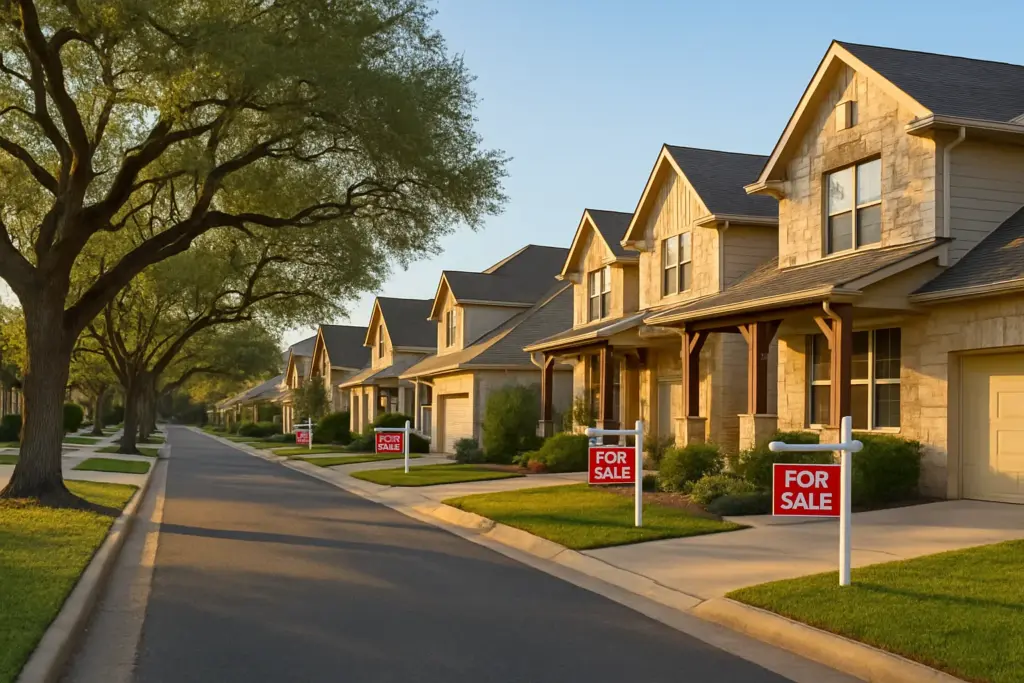
Ok so Redfin just dropped a report, and I want to talk about it because it’s actually kind of a big deal for anybody sitting on the fence right now thinking about buying in Austin.
Here’s the headline: Austin is officially the slowest housing market in America. Dead last among the 50 most populous metro areas. The typical home that went under contract in December spent 106 days on the market. The national average was 60. And that 106 number? That’s the slowest December on record going back to 2012.
Now I know what you’re thinking. That sounds bad. And look, if you already own a home here and you’re trying to sell it right now, yeah, it’s a tougher environment than it was three years ago. I’m not going to pretend otherwise.
But if you’re a buyer? This report is basically a green light. Let me walk you through why.
What “Slowest Market” Actually Means in Real Life
When Redfin says Austin is the slowest market, what they’re really saying is that buyers have options. A lot of them. And sellers know it.
106 days on market means the average home sat for about three and a half months before going under contract. Think about what that does to a seller’s psychology. They listed in the fall, they’ve had a couple of showings a week, they’ve watched other listings in their neighborhood cut their price, and now it’s winter and they still haven’t sold. That seller is motivated. That seller is willing to talk.
The inventory picture makes this even clearer. Austin had 128% more sellers than buyers in December. That’s the largest imbalance of any major metro in the country. San Antonio and Fort Lauderdale were tied for second place at 99 days, and they weren’t even close to Austin’s level of oversupply.
So what you have right now is a market where sellers are competing for buyers, not the other way around. That’s the exact opposite of what this market looked like in 2021 and 2022, and it’s also the exact opposite of what most markets in the country still look like today.
What This Actually Gets You at the Negotiating Table
I’m going to get specific here because specific is useful.
In this market, as a buyer, you can realistically ask for and expect to get things that would have been laughed out of the room three years ago. Seller-paid closing costs. A rate buydown. A home warranty. A price reduction on top of all of that. I’ve seen buyers get all four on the same deal.
Seller-paid closing costs of 2-3% on a $550,000 home is $11,000 to $16,500 in actual cash that stays in your pocket. A 1-point rate buydown on a $450,000 loan is roughly $4,500 upfront that permanently lowers your monthly payment by around $250 to $300 a month. You run that out over seven years (about how long most people keep a loan before they refinance or sell) and that’s over $25,000 in interest savings.
That’s real money. That’s a new AC unit plus a vacation plus a nice chunk of cash in your emergency fund. And right now, in this market, you can actually negotiate for it.
I’m not saying every seller is going to roll over. Some sellers are still anchored to what their neighbor got in 2022 and they’d rather hold than drop the price. Those deals aren’t going to work out and that’s fine. But there are a LOT of motivated sellers in this market right now, and when you find one of those, the negotiating leverage is real.
The Fear vs. the Actual Risk
Here’s what I notice whenever the media publishes one of these “Austin is the slowest market” stories. People read it and they think: maybe I should wait. Maybe things are going to get worse. Maybe I should hold off until the market “settles.”
Daniel Kahneman spent most of his career studying exactly this kind of thinking. His whole point in “Thinking, Fast and Slow” was that we’re wired to weight losses more heavily than equivalent gains. Which means the same person who would happily drive across town to save $20 on a purchase will also let the fear of buying at the wrong time paralyze them for years, even when the math clearly says buying is better than waiting.
So lets look at the actual risk here, not the emotional version of it.
Austin home prices are down about 4% year over year. On a $600,000 home, that’s $24,000 off the peak. Is it possible prices go down another 4% from here? Sure. But you know what I keep seeing in the data? Austin’s fundamentals have not changed. At all.
The economy here grew 36.4% between 2019 and 2024. That’s the highest GDP growth of any major metro in the country. In 2025, Austin attracted $7.94 billion in venture capital funding, which was 116% more than the year before. Apple has a billion-dollar campus here. Samsung is building a $17 billion semiconductor plant in Taylor, 30 miles north. The unemployment rate is 3.2%, which is better than the state average and better than the national average.
This isn’t a market that’s slow because the underlying economy is collapsing. It’s slow because it got wildly overbuilt during the pandemic boom and is now going through what some call the great housing resetThere’s a big difference. The population is still growing. The jobs are still here. The reasons people want to live in Austin haven’t gone anywhere.
The Thing Nobody Is Talking About
I want to talk about something that gets less attention than it should: what happens to this market when interest rates come down meaningfully.
Right now, a lot of would-be Austin buyers are sitting on the sidelines because of rates. They’re in apartments or in homes they want to leave, waiting for rates to drop before they make a move. That’s a real phenomenon and it’s one of the reasons inventory has piled up. There are sellers ready to sell AND buyers ready to buy, but neither side is moving because rates made the math uncomfortable.
The moment rates drop another half point or full point, some of those sidelined buyers are going to come rushing back into this market. And when they do, the 128% seller surplus is going to shrink fast. Days on market will drop. Multiple offers will come back. The concessions you can negotiate today will go away.
The window of leverage doesn’t stay open forever. That’s just how markets work. Austin has been in buyer’s market territory for a couple of years now and the longest I’ve ever seen a buyer’s market persist in a market with Austin’s fundamentals is about three to four years before it flips back. We’re in year two.
I’ve been doing this for 19 years in Austin, and I’ll tell you honestly: I’ve seen maybe three or four windows in that time where buyers had this kind of leverage. This is one of them. The other three were 2008-2010, 2012-2013, and briefly in 2019. People who bought in those windows did very well. People who waited for a more comfortable-feeling market paid a lot more.
What I’d Actually Tell a Friend Right Now
If a friend called me today and said “Ed, I’m thinking about buying in Austin, what do you think?” Here’s what I’d tell them.
The time to buy was always going to be the time when you had the most leverage and the least competition. That time is right now. Not because prices have bottomed (I don’t know if they have, and anyone who tells you they do is guessing), but because the terms you can negotiate today are genuinely better than anything you’ll see once buyer demand comes back.
Find a house that makes sense for your life, get a pre-approval, and go make an offer with real terms attached to it. Ask for closing costs. Ask for a rate buydown. Ask for a home warranty. Come in a little below asking on the price and see what they say. In this market, more often than not, you’re going to be surprised at what sellers will agree to.
Could prices drop another 3-5%? Maybe. But if you negotiate $15,000 in seller concessions today and prices drop another $18,000 over the next year, you’re basically even anyway. And you’ve been living in a house that whole time instead of paying rent. The math usually works out for the buyer who moves when they have leverage.
That’s not a guarantee. Nothing in real estate ever is. But it’s where I’d put my money right now, and I say that as someone who owns nine properties and has worked through a lot of different market conditions with buyers over the past 19 years in this city.
Frequently Asked Questions
Ready to Make a Move While the Leverage Is There?
If you’ve been watching the Austin market and waiting for the right moment, I’d argue that moment is now. Not because everything is perfect, but because the terms you can get today are genuinely better than what you’ll be able to get when competition comes back.
Reach out and lets talk through your situation. I’ve been in this market for 19 years and I can tell you exactly what’s realistic in the neighborhood you’re looking at and what you should be asking for. No pitch, just the straight story.
At Neuhaus Realty Group, this is what we do. We work in this market every day and we know where the motivated sellers are and what kind of deals are actually getting done right now.
Sources
- Redfin Housing Market Data — Metro Market Speed Report, December 2025
- Austin Board of Realtors (ABoR) / ACTRIS MLS Monthly Housing Reports
- National Association of Realtors (NAR) — Existing Home Sales Data


