 Ed
Ed 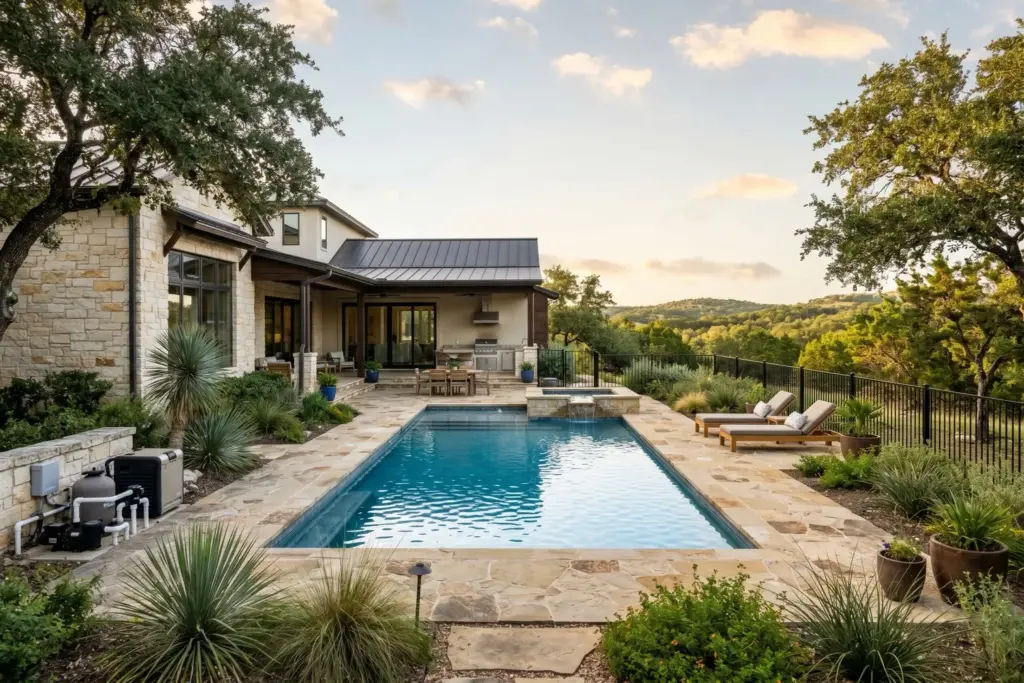
The pool equipment is what eats your wallet, not the water. A pool pump runs eight to twelve hours a day for seven-plus months in Central Texas, and a worn-out single-speed pump can quietly add $40 to $150 a month to your electric bill all summer (sounds like a lot right). So before you buy an Austin home with a pool, the smartest thing you can do is spend an hour with somebody who fixes these for a living. That is exactly what I did.
I am not a pool guy. I sell houses. But I have walked enough backyards with buyers staring lovingly at a sparkling pool while I am staring at the equipment pad wondering how old that heater is, and I got tired of guessing. So I asked an actual pool service tech, the kind who shows up in a truck full of test strips and replacement cells, what he checks before he tells a buyer “this one is fine” or “run.” This is the I Asked a Pool Guy edition of our maintenance series, and it pairs with our full Complete Guide to Pool Ownership in Austin if you want the deep dive on building and owning one.
Here is the thing I kept hearing from him, and it stuck with me. The water is the easy part. Anybody can balance water. The expensive surprises live in the stuff you cannot see from the patio.
Start at the Equipment Pad, Not the Water
When a buyer falls in love with a pool, they look at the water. My pool guy looks at the gray boxes sitting off to the side. That is where the money is.
The big four are the pump, the filter, the heater, and (if it has one) the salt cell or chlorinator. Pumps and filters are not crazy expensive to replace, but a pool heater can run a few thousand dollars installed, and that is the kind of number you want to know about before closing, not the first cold morning you want to use the spa. Ask how old each piece is. Most equipment has a manufacture date stamped right on it, and a decent service tech can read it in about thirty seconds.
The single biggest electricity question is the pump. If it is an old single-speed pump, that is your $100-plus-a-month summer villain. A variable speed pump can drop that to under $20 a month because it runs slow and quiet most of the day instead of full blast. Variable speed pumps are not cheap upfront, $800 to $1,500 versus a few hundred for the old kind, but they usually pay for themselves in a year or two of Texas summers. So if the seller already put one in, that is a real plus. If they did not, lets just say you now know what your first upgrade is going to be.
The Plaster and Surface: This Is the Big One
Ok here is the section nobody wants to hear about. The surface of the pool, the plaster or the pebble finish, does not last forever, and resurfacing is the single most expensive thing that can happen to a pool short of the shell cracking.
Standard white plaster typically lasts somewhere in the 7 to 10 year range, sometimes a little more if it was well maintained. Quartz finishes can push toward 20 years, and pebble or aggregate finishes can go 25 years or more if the chemistry was kept honest. So when my pool guy runs his hand along the steps and the walls, he is feeling for rough spots, flaking, hollow areas, and staining. A surface that feels like sandpaper or shows the gray underneath is telling you it is near the end.
Why do you care so much? Because a full resurface is a serious bill, not a weekend project. If the finish is on its last legs and nobody mentioned it, that is a number you want to factor into your offer or at least your savings plan. This is not a reason to walk away from a great house. It is a reason to go in with your eyes open (Daniel Kahneman’s whole thing is that we anchor on the first shiny thing we see and stop looking, and a sparkling pool is about as shiny as it gets).
Leaks: The Quiet Money Pit
A leak is the sneakiest problem on this whole list because a pool that loses water slowly looks completely normal. The water is still blue. The pump still runs. But every gallon that leaks out is water you are paying for, chemicals you are re-adding, and sometimes soil moving around under your decking and foundation, which in this expansive clay we have around Austin is not a thing you want.
Some evaporation is normal in a Texas summer, we lose a surprising amount of water to the heat. But if the auto-fill is running constantly or the level keeps dropping past about a quarter inch a day, my pool guy gets suspicious. A real leak detection is its own service, and if the seller has been topping off the pool every other day “because Texas,” I would want to know whether it is the sun or a crack before I owned it.
Decking, Coping, and the Stuff Around the Pool
The deck matters more than people think. Cracked or heaving decking around an Austin pool is sometimes just cosmetic, and sometimes it is the clay soil moving and pulling on things it should not be pulling on. Coping (the cap around the edge of the pool) that is loose or separating can let water get where it should not. None of this is automatically a dealbreaker, but it is worth having someone who knows the difference between “cosmetic crack” and “the ground is moving” take a look.
This is also where our normal home stuff overlaps. If you are already reading our Austin home inspection checklist, just know that a standard home inspector usually does a light once-over on the pool and almost always recommends a dedicated pool inspection. Take them up on it. A separate pool inspection is a cheap insurance policy against an expensive surprise.
The Fence and Safety Code (Do Not Skip This)
This one is not optional, it is the law. Texas Health and Safety Code Chapter 757 sets the baseline rules for residential pool barriers, and the short version is a barrier at least 48 inches tall with no gaps a small child could squeeze through, plus gates that are self-closing and self-latching and swing away from the pool. And here is the local twist that trips people up: the City of Austin requires a taller barrier, 60 inches, for new residential pool fences. So the state minimum is not always your minimum.
Why does a buyer care about this? Two reasons. First, a child can drown in the time it takes you to answer the door, so this is genuinely about safety, not paperwork. Second, if the existing fence or gate does not meet code, that can become your problem and your cost after you close, and it can affect insurance too. So when you are walking the property, actually push on the gate. Does it close and latch by itself? Can a kid reach over and pop it? My pool guy says the self-latching gate is the single most-ignored safety item he sees, and it is also one of the cheapest to fix, so there is no excuse.
Salt vs Chlorine: The Question Everybody Asks
So which is better, salt or chlorine? I asked, because every buyer asks me this. The honest answer is they are more similar than the marketing makes it sound. A “salt water pool” is still a chlorine pool. It just makes its own chlorine from salt using a piece of equipment called a salt cell, instead of you dumping in tablets.
People love salt pools because the water feels softer, there is no chlorine smell, and you are not handling jugs of chemicals every week. The catch is the salt cell. It is a wear part. A salt chlorine generator cell typically lasts about 3 to 7 years and runs a few hundred to over a thousand dollars to replace. So if you are buying a salt pool, ask how old the cell is, the same way you would ask about the pump. One more honest note my pool guy made: salt can be a little harder on plaster over time, so on an older plaster surface it is one more thing to keep an eye on.
Chlorine pools are cheaper to get into and simpler equipment-wise, you are just doing more of the hands-on chemical work yourself. Either way is fine. There is no wrong answer here, just a tradeoff between convenience now and a replacement part later.
So Does a Pool Add or Subtract Value?
This is the question that actually matters to me as your agent, and the answer is the most “it depends” answer in this whole post, so I saved it for the end where it belongs. The reality is a pool is a lifestyle feature, not a guaranteed return. It does not add dollar-for-dollar what it costs to build, almost nothing in a house does.
But here is what I see in our market. In the Hill Country and the western Austin suburbs, around Lakeway, Bee Cave, Dripping Springs, where summers are long and lots are bigger, a well-maintained pool is closer to expected than optional in the higher price tiers. A nice pool on the right house in the right neighborhood absolutely helps it sell, and helps it sell faster. A neglected pool with tired equipment and a rough surface does the opposite, it becomes the thing buyers nitpick and discount. If you are on the selling side of this someday, our post on selling a home with a pool, acreage, or unique features in the Hill Country goes deeper on positioning it right.
The short version: a pool you maintain is an asset and a lifestyle. A pool you ignore is a liability with a diving board. The buying decision is really about going in informed, which is the whole point of this post.
Put It on the Calendar
Owning a pool is not hard, it is just a thing you have to actually keep up with, like everything else on a house. Once you own it, it becomes another line item in the rhythm of the year, which is exactly why we built the Austin homeowner’s year-round maintenance calendar. Pool care slots right in next to your AC service, your foundation watering, and the rest of the stuff that keeps an Austin home from nickel-and-diming you to death.
Frequently Asked Questions
Buying a Home With a Pool? Lets Look at It Together
Buying a house with a pool is not scary, you just want somebody in your corner who is looking at the equipment pad while you are looking at the water. I have walked a lot of Austin and Hill Country backyards, and I am happy to tell you straight whether a pool is an asset or a project before you sign anything. Reach out to me, Ed Neuhaus, or get in touch with our team and lets find you the right house, pool and all.
Until next time, be safe, be good, and be nice to people.


