 Ed
Ed 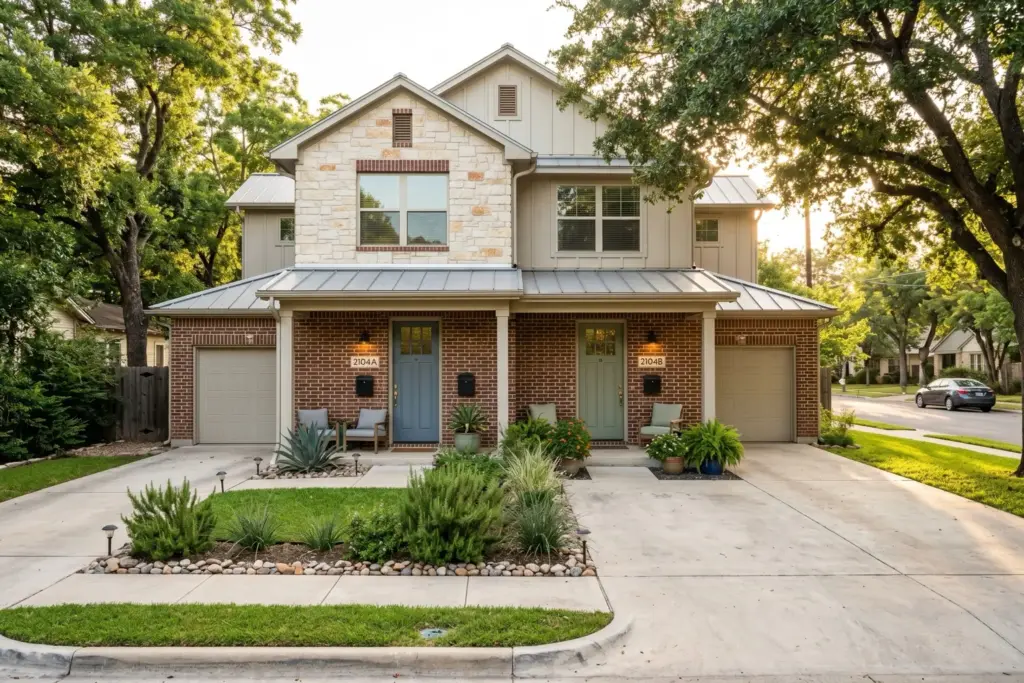
A duplex is the single best first investment property you can buy. I say that after 19 years in this business and owning rental property myself. You can put as little as 3.5% down with an FHA loan if you live in one unit, collect rent from the other side to cover most (or all) of your mortgage, and build equity while someone else pays the bill. According to FHA guidelines for 2026, the loan limit on a duplex is $693,050 in most markets (FHA 2026 limits), which means you can get into a serious property without draining your savings.
Sounds almost too simple right. But that’s kind of the point. Duplexes sit in this sweet spot where the barrier to entry is low, the risk is manageable, and the upside is real. Gary Keller talks about this in The Millionaire Real Estate Investor, the idea that your first deal doesn’t need to be a home run. It needs to be a base hit that teaches you the game. A duplex is that base hit.
So lets break down everything you need to know about duplex investing, from financing to analysis to the stuff nobody tells you about managing tenants who share a wall.
Why a Duplex Is the Best First Investment
There are a few reasons I keep coming back to duplexes as a first investment, and they’re all practical.
Built-in diversification. If your single-family rental goes vacant, you’re at zero income. With a duplex, losing one tenant still leaves you with 50% of your rental income. That’s not nothing. It won’t cover all your expenses but it keeps the lights on and the mortgage current while you find a new tenant.
The house hack option. This is the one that gets people excited, and honestly it should. Live in one unit, rent the other. Your tenant’s rent payment offsets your housing cost. In some markets (and I’ve seen this in Austin), the rental income covers 70-80% of the total PITI. So you’re living essentially for free while building equity. Try doing that with a single-family home.
Simpler than you think. A 2-unit property is still classified as residential. That means residential financing, residential inspections, residential insurance. You don’t need to jump into commercial lending or deal with commercial appraisal standards. It’s the complexity level of a house with the income profile of a small apartment building.
And here’s the thing most people overlook. Owning a duplex teaches you everything you need to know about being a landlord. Tenant screening, maintenance budgeting, lease management, dealing with the 2am call about a water heater. But with only two units the learning curve is survivable. You make your mistakes on a small scale before scaling up.
How to Finance a Duplex
Financing is where duplexes really shine compared to other investment properties. You have more options, better rates, and lower down payments than almost any other rental property type.
FHA Loan (Owner-Occupied)
This is the gold standard for first-time duplex investors. 3.5% down with a credit score of 580 or higher. The catch is you have to live in one of the units as your primary residence for at least 12 months.
But here’s what makes FHA particularly powerful for duplexes. The lender can count 75% of the projected rental income from the other unit toward your qualifying income. So if the other side would rent for $1,800 a month, the lender adds $1,350 to your income for qualification purposes. That can be the difference between getting approved and getting denied.
One thing to watch. FHA loans come with mortgage insurance (MIP) for the life of the loan. It’s not cheap. But when you’re putting 3.5% down on an income-producing property, it’s a cost worth paying. You can always refinance into a conventional loan once you’ve built 20% equity.
Conventional Loan
If you’re owner-occupying, conventional loans let you in at 5-10% down with a 620+ credit score. If you’re buying as a pure investment (not living there), expect 15-25% down and a credit score of 680 or higher.
Conventional rates are typically better than FHA once you factor in the MIP savings, and the qualification process is straightforward. Most of the investors I work with end up on conventional financing once they’ve got their first deal under their belt.
DSCR Loans
If you already own your primary residence and want to add a duplex to your investment portfolio, a DSCR loan is worth exploring. DSCR stands for Debt Service Coverage Ratio, and these loans qualify you based on the property’s income rather than your personal income.
The math is simple. If the property generates enough rent to cover its debt payments (typically a ratio of 1.0 or higher, with 1.25+ getting the best terms), you qualify. Down payments run 20-25%, and rates in 2026 are sitting around 6.5-8.5% depending on your credit and the property’s numbers.
I wrote a whole deep dive on DSCR loan requirements if you want the full picture. The short version is that they’re excellent for investors who have complex tax returns that make conventional underwriting a headache.
VA Loan
Eligible veterans can finance a duplex with zero down payment through a VA loan, as long as they live in one unit. This is honestly one of the most powerful wealth-building tools available to veterans and it’s massively underutilized. Zero down on an income-producing property. That’s hard to beat.
Portfolio Loans
Smaller community banks and credit unions offer portfolio loans that stay on their books instead of being sold to Fannie Mae or Freddie Mac. The terms are flexible, the guidelines are more forgiving, and they’re great for investors who already have several financed properties. The tradeoff is usually a slightly higher rate and a shorter term (15-20 years vs 30).
How to Analyze a Duplex Deal
This is where most first-time investors get tripped up. They look at the purchase price, look at the rent, and if the numbers seem “close” they jump in. That’s how you end up owning a property that costs you $500 a month instead of making you $500 a month.
Lets walk through the real math.
Gross Rental Income
Start with both units. What does each side actually rent for? Not what the seller tells you. Not what the listing says “projected.” Actual market rent based on comparable rentals in the area. Pull comps from Apartments.com, check Craigslist, talk to a property manager. Get real numbers.
In Austin right now, a 2-bedroom unit in a decent area rents for roughly $1,400 to $1,800 a month depending on location and condition. So a duplex with two 2-bed units might gross $2,800 to $3,600 a month.
Operating Expenses
Here’s where people get bitten. Your expenses on a duplex are more than just the mortgage.
Property taxes. In Texas, there’s no state income tax, but we make up for it with property taxes (and yeah, you’ll feel it). Budget 2-2.5% of assessed value annually for Travis County and surrounding areas.
Insurance. A landlord policy on a duplex runs roughly $1,500 to $3,000 a year depending on the property’s age, location, and coverage limits. If you’re owner-occupying, you’ll need a standard homeowner’s policy with a rental endorsement for the other unit. Either way, get an umbrella policy too. We’re talking about a few hundred bucks a year to protect a multi-hundred-thousand-dollar asset.
Maintenance. Budget 8-12% of gross rental income. If the property is older (built before 1990), push that to 15%. Things break. Constantly. (If the AC quits in August, you’re not going to tell your tenant to wait until October.)
Capital expenditure reserves. Budget 1% of property value annually. Roofs, HVAC systems, water heaters, foundations. These aren’t if expenses, they’re when expenses.
Property management. Even if you self-manage, budget 8-10% for PM in your analysis. Why? Because someday you might not want to handle that midnight toilet call yourself. And if the deal only works with you as the free labor, it’s not a good deal.
Vacancy. Budget 5-8% of gross rent. Even in a hot rental market, you’ll have turnover and transition periods between tenants.
The Cash Flow Calculation
Gross Rent minus All Expenses minus Debt Service equals Cash Flow.
If that number is positive, you have a deal worth considering. I tell my clients to target at least $200 per unit per month in positive cash flow. So for a duplex, that’s $400 a month minimum. Anything less and you’re taking on landlord headaches for what amounts to a part-time job that pays worse than minimum wage.
Benjamin Graham’s whole thing was the “margin of safety.” Buy assets where there’s enough cushion that even if things go sideways (vacancy, repairs, rate increases) you still come out ok. That applies to stocks and it absolutely applies to duplexes.
What to Look for in a Duplex
Not all duplexes are created equal. Here’s what separates a good investment from a money pit.
Separate Utilities (This Is Critical)
I cannot stress this enough. Separate electric meters, separate water meters, separate gas meters. If the utilities are shared on a single meter, you’re either paying the tenant’s utilities or you’re trying to implement a RUBS allocation system (Ratio Utility Billing) which creates endless arguments.
Separate meters mean each tenant pays their own utilities. Clean. Simple. No disputes. If a duplex doesn’t have separate meters, factor the cost of splitting them into your renovation budget, because it can run $3,000 to $8,000 depending on the utility company and the existing setup.
Separate Entrances and Parking
This seems obvious but I’ve seen duplexes where both tenants share a front door and a hallway. That works fine until one tenant is a night owl and the other gets up at 5am. Look for units with independent exterior entrances and dedicated parking. Your tenants will be happier, your vacancy rate will be lower, and you’ll have fewer complaints to deal with.
Unit Layout and Condition
The ideal duplex has mirrored floor plans, two units that are roughly equal in size and layout. This simplifies everything from pricing rent to managing maintenance expectations.
Walk through both units during inspection. Check for deferred maintenance. Older duplexes often have one unit that the owner lived in (well maintained) and one unit that was rented out (neglected). Budget accordingly.
Location
This one’s universal but it matters even more for duplexes. You want a property in an area where people actually want to rent. Near employment centers, near public transit, near schools. In Austin, areas like East Austin, parts of Bee Cave, and the suburbs south of downtown have strong rental demand.
And think about your tenant pool. A duplex near a university attracts students (higher turnover, more wear and tear). A duplex in a family-friendly neighborhood attracts long-term renters who stay for years. Both can work, but they’re different business models.
Management: Live-In vs Remote
How you manage a duplex depends entirely on whether you’re living in it.
Owner-Occupied (House Hacking)
Living next door to your tenant is a double-edged sword. On one hand, you can spot maintenance issues immediately, keep an eye on the property, and avoid paying a PM fee. On the other hand, your tenant knows exactly where to find you. At all hours. For everything.
Set boundaries early. Have a written lease (more on that below). Communicate through text or email so there’s a paper trail. And resist the urge to be “the cool landlord” who lets things slide. Being friendly is fine. Being a pushover costs money.
Remote Management
If you’re not living in the duplex, you have two choices. Self-manage remotely or hire a property manager. For a single duplex, most investors self-manage for the first year or two to learn the business. But once you scale to 3-4 properties, the math starts favoring a PM company.
Good property managers charge 8-10% of collected rent. They handle tenant placement, maintenance coordination, rent collection, and evictions. Worth every penny when your time is better spent finding your next deal.
Insurance Considerations
Insurance on a duplex is straightforward but it’s different depending on your situation.
Owner-occupied duplex. You’ll carry a standard homeowner’s policy with a rental dwelling endorsement for the tenant-occupied unit. This covers the structure, your personal property in your unit, and liability. Make sure the rental endorsement covers loss of rental income in case the unit becomes uninhabitable.
Investment duplex (non-owner-occupied). You need a landlord insurance policy (also called a dwelling fire policy). This covers the structure and liability but does NOT cover personal property inside the units. Your tenants should carry their own renters insurance, and you should make that a lease requirement.
Either way, add an umbrella policy. A $1M umbrella runs $200 to $400 a year and protects you if someone slips on the stairs and decides your life savings look better in their pocket.
Legal Structure and Leases
One Lease Per Unit
Every unit gets its own lease. Period. Don’t try to put both tenants on a single master lease. Each tenant should have their own agreement with clear terms about rent, security deposit, maintenance responsibility, and move-out procedures.
Shared Areas
The lease should address who is responsible for shared spaces. Yard maintenance, driveway snow removal (not a huge concern in Austin, but if you’re reading this from somewhere else), shared laundry facilities, trash cans. Spell it out. Ambiguity creates conflict.
LLC or Personal Name?
This is a question I get constantly. For a single duplex, especially owner-occupied, most investors hold it in their personal name and rely on insurance for liability protection. An umbrella policy gives you $1M+ in coverage for a fraction of the cost of maintaining an LLC.
If you’re building a larger portfolio, an LLC makes more sense. But for your first duplex, don’t let the LLC question delay you from actually buying the property.
The Austin Duplex Market
Austin has a unique duplex market. Most of the traditional duplexes are concentrated in older neighborhoods east of I-35 and in central Austin. You’ll find everything from 1960s brick duplexes in the $400,000 range to renovated modern duplexes north of $800,000.
Rental demand in Austin remains strong despite the recent apartment construction boom. Why? Because renters who can afford $1,500 to $1,800 for a 2-bedroom prefer the privacy and yard space of a duplex unit over an apartment complex. That’s your competitive advantage as a duplex owner. You’re offering a different product than the big apartment developers.
Typical rents for a decent 2BR duplex unit in Austin range from $1,400 to $1,800 depending on the area and condition. So a duplex grossing $3,000 to $3,600 per month is realistic. Run that through the expense analysis above and you can see whether a specific property pencils out.
And if you’re looking at the Austin market more broadly for investment opportunities, I put together a comprehensive guide to real estate investing that covers the full landscape.
Common Duplex Problems (And How to Avoid Them)
Noise Between Units
This is the number one complaint in any duplex. Shared walls mean shared sound. During your inspection, check the wall construction between units. Concrete block or double-stud framing with insulation is great. Single-stud drywall on both sides is a problem.
If the soundproofing is thin, factor in the cost of adding insulation or a second layer of drywall. It’s a few thousand dollars that pays for itself in reduced tenant turnover and fewer angry phone calls.
One Unit Subsidizing the Other
I see this a lot with owner-occupied duplexes. The owner keeps their unit pristine but lets the rental unit slide. Or the rental unit needs a $15,000 roof repair and the owner drags their feet because “it’s just the rental.” Both units are your asset. Maintain them equally.
Shared Wall Maintenance
When a pipe bursts inside a shared wall, whose responsibility is it? Yours. Always. The tenants don’t own the walls. Have a good plumber and a good general contractor on speed dial, and don’t wait for small issues to become big ones.
When to Sell vs Hold
My general advice with duplexes is hold. Time is the greatest creator of wealth in real estate. The longer you hold, the more equity you build, the more rent you collect, and the more depreciation you claim on your taxes.
But there are reasons to sell. If the property requires a capital expenditure that exceeds the expected return over the next 5 years, it might be time. If you can do a 1031 exchange into a larger multifamily property, that’s a strategic upgrade. Or if the neighborhood has appreciated so much that the cap rate no longer makes sense as a rental, selling and redeploying that capital somewhere else could be the smarter play.
Just understand that when you sell, depreciation recapture is real. You’ll owe taxes on all the depreciation you claimed. Plan for it.
Scaling From Duplex to Portfolio
Here’s where it gets fun. Your first duplex teaches you the fundamentals. Your second property is where you start building a system. And by the time you own three or four properties, you’re not just a landlord anymore. You’re running a small business.
The progression most of my clients follow looks something like this. Buy a duplex, live in one unit for a year, refinance or save up, buy another property, move into the new one (or stay put and rent both units of the duplex). Rinse and repeat.
It’s not fast. It’s not flashy. But it works. I’ve seen people build six-figure net worths in under a decade following exactly this playbook. No big deal right. Just slow, methodical, boring wealth creation. The tortoise wins every time.
Frequently Asked Questions
Ready to Find Your First Duplex?
If you’re thinking about duplex investing in the Austin area, lets talk. I’ve been doing this for 19 years and I own rental property myself, so I can walk you through the numbers on any specific deal and tell you what’s realistic and what’s not. No fluff, just honest math.
Reach out to Ed Neuhaus and lets figure out if a duplex is the right next move for you.


