 Ed
Ed 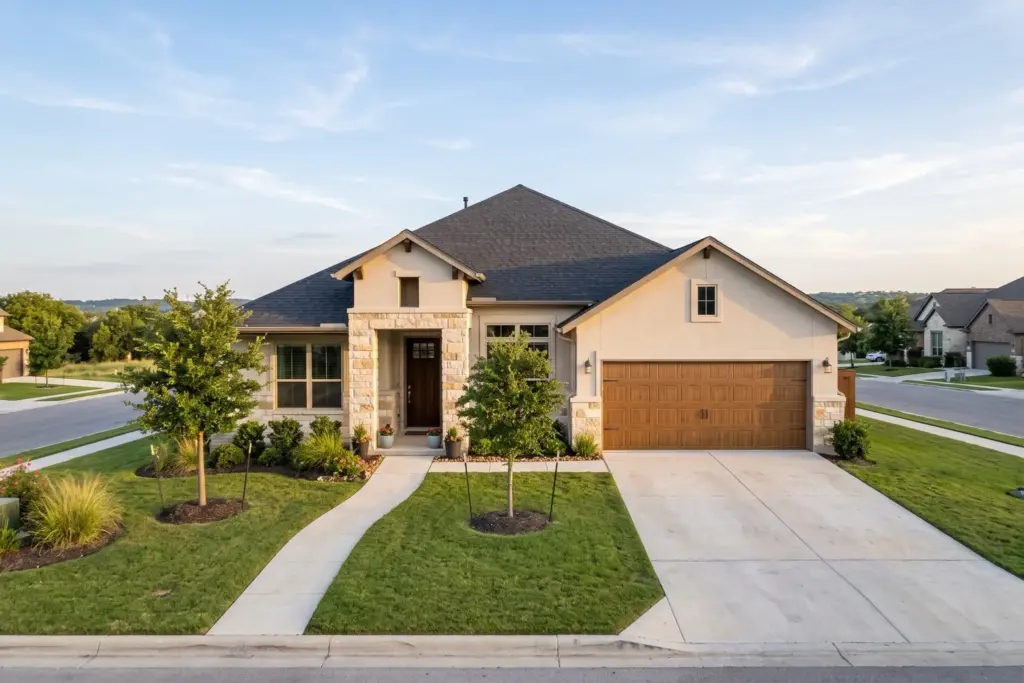
A good cash-on-cash return is 8% to 12%. That’s the benchmark most investors use, and it’s the honest answer to the question. But here is the part nobody wants to put in the headline: a median-priced Austin-area rental, bought today with 20% down at current investment-property rates, pencils out to roughly negative 12%. Not 8%. Negative.
Sounds rough right. Blame the rates. Freddie Mac had the 30-year fixed at 6.58% the week of July 23, 2026, and investment loans price even higher than that. And I’m not saying this to scare you off, I own rental property here myself, so I’ve got skin in this. I’d rather show you the real math than sell you a pro forma from some YouTube guru who forgot vacancy exists. So lets run an actual Austin deal, line by line, and see where the number really lands.
Quick note before we start. If you want the full mechanics of the formula, the mistakes people make, and how cash-on-cash stacks up against cap rate and IRR, I wrote a whole piece on how to calculate cash-on-cash return. This post is the Austin-specific version. Real prices, real rates, real listing math.
What Cash-on-Cash Return Actually Is (The One-Line Version)
Cash-on-Cash Return = Annual Pre-Tax Cash Flow / Total Cash Invested.
That’s the whole thing. The cash the property drops in your account every year, divided by the cash you put in to get it (down payment, closing costs, any rehab). It’s a snapshot of what your dollars are earning right now, this year, after the mortgage is paid.
And here’s what it is NOT. It is not your total return. Cash-on-cash ignores appreciation (the property going up in value) and it ignores principal paydown (your tenant chipping away at your loan balance every month). Both of those are real money. They just don’t show up in this number. Cash-on-cash also isn’t cap rate. Cap rate is the return if you paid all cash, no loan in the picture. Cash-on-cash cares about your loan, because your loan is the single biggest lever on the whole thing (more on that in a minute).
So when I say a deal is “negative 12% cash-on-cash,” I’m not saying it’s a bad investment. I’m saying it costs you money every month to hold it, and you’re betting on appreciation and paydown to make it worth it. That’s a real strategy in Austin. It’s just a different strategy than “this rental pays me.”
The Real Austin Math: A $310,000 Deal
Lets buy something. I’m going to use Kyle because it’s one of the more affordable entry points in the metro and it’s where a lot of my investor clients actually shop. The median Kyle home sold for $306,500 in June 2026, per our own MLS data. So a $310,000 listing is right in the fairway.
The Property:
- Purchase price: $310,000
- Down payment (20%): $62,000
- Closing costs: $8,000
- Total cash invested: $70,000
The Loan:
- Loan amount: $248,000
- Interest rate: 7.25% (30-year fixed)
- Monthly principal and interest: $1,692
Quick word on that rate. As I mentioned, the owner-occupied 30-year was 6.58% the week of July 23, 2026. But this is an investment property, and investment loans price roughly half a point to three-quarters of a point higher because of the loan-level pricing adjustments Fannie and Freddie tack on. So I’m using 7.25% here, which is a fair assumption for a non-owner-occupied 30-year right now. Your actual quote will vary, get a real one.
Monthly Income:
- Gross rent: $2,150 (this is my assumption for a 3/2 in Kyle, and you should pull real rental comps before you trust it)
Monthly Operating Expenses (before the mortgage):
- Property taxes: $517 (roughly 2% of value, and no homestead cap on a rental)
- Insurance: $150
- Property management (8% of rent): $172
- Maintenance and repairs (5%): $108
- Vacancy reserve (5%): $108
- CapEx reserve for the big-ticket stuff (5%): $108
- Total operating expenses: $1,163
Now the math:
- Monthly net operating income: $2,150 – $1,163 = $987
- Monthly cash flow (after the mortgage): $987 – $1,692 = -$705
- Annual cash flow: -$8,460
- Cash-on-cash return: -$8,460 / $70,000 = -12.1%
There it is. Negative $705 a month out of your pocket to own this thing. And that cap rate, the all-cash version? Net operating income of $11,844 a year on $318,000 all-in is 3.7%. So even with zero mortgage, you’d be earning less than a Treasury bill pays right now.
I know that’s not the number you wanted. But every investor who’s actually shopped Austin in 2026 already knows this in their gut. The reality is the rent-to-price ratio here is brutal. A $310,000 house renting for $2,150 is a 0.7% monthly ratio, and cash flow lives and dies by that ratio. This is a low-yield, high-appreciation market. It always has been.
The Levers: What Actually Moves the Number
Ok, so the base deal bleeds. Lets see what we can do about it, because this is where you either fix a deal or walk away from it. Same house, same rent, one lever at a time.
Lever 1: Negotiate the price down to $290,000. You put in $66,000, your payment drops to $1,583, and your cash-on-cash improves to -10.2%. Better. Still negative. Price helps but it’s not a magic wand at these rents.
Lever 2: Buy the rate down to 6.5%. Your payment falls to $1,567 and cash-on-cash lands at -9.9% (before the cost of the points you paid to get there, which you have to factor in). The rate is the biggest lever, which is exactly why I watch it more than anything else. I’ve seen the same property swing from cash-flowing to bleeding on a 200 basis point move.
Lever 3: Put more money down, 25% instead of 20%. Now you’re in for $85,500, your payment drops to $1,586, and cash-on-cash “improves” to -8.4%. And I put improves in quotes on purpose. Because all you really did was bury an extra $15,500 in a low-yielding asset to make a ratio look prettier. Your monthly bleed shrank, sure, but you didn’t make the property better, you just fed it more cash up front. That’s the thing about cash-on-cash, you can game the denominator. Don’t fool yourself into thinking a bigger down payment is free performance.
Daniel Kahneman has this whole idea about the planning fallacy, how we consistently believe our own best-case projections even when we know better. Real estate pro formas are the planning fallacy in a spreadsheet. Every optimistic assumption (higher rent, lower vacancy, no CapEx this year) stacks on the last one until the deal looks great on paper and loses money in real life. Run your worst-case numbers first. Better than safe.
What About Short-Term Rental?
Fair question, and it’s the one I get most. Instead of renting that Kyle house for $2,150 a month long-term, what if you ran it as an Airbnb? The gross revenue can be a lot higher, which can flip a negative long-term deal into a positive cash-flow short-term one. That’s real.
But so are the higher costs, the furnishing bill, the cleaning fees, the management cut (which runs way more than 8%), the platform fees, and the regulatory risk if the city or the HOA changes the rules on you. I own four short-term rentals, and I’ll tell you the good ones are great and the mediocre ones are a part-time job that pays minimum wage. The math is completely different from a long-term rental, so you can’t eyeball it.
If you’re seriously weighing STR versus long-term on a specific property, run it through the StaySTRA analyzer (that’s our tool, so I’m biased, but it models real revenue off actual comparable listings instead of a guess). And read our Austin short-term rental investing guide before you commit to that path, because the operating reality is not what the revenue projection tells you.
So When Does a Low or Negative Cash-on-Cash Deal Still Make Sense?
Here’s the honest framework, because “negative return, run away” is too simple.
A low cash-on-cash deal makes sense when the other three sources of return are doing the heavy lifting. Austin appreciation over the long haul has been strong. Your tenant pays down your loan every month whether the property cash flows or not, that’s forced savings you don’t feel. And the tax side is real, depreciation on a rental can shelter a chunk of income, and that’s before we get into whether you qualify for the bigger deductions (talk to your CPA, not me, that’s a whole different post).
I’ve helped investors buy in Bee Cave and Lakeway where the cash-on-cash was 3% or worse, and the five-year total return once you added appreciation and paydown was much stronger. The cash-on-cash number alone would have told you to pass. That would have been a mistake.
But it’s a trap when you’re betting entirely on appreciation you can’t afford to wait for. If a negative-cash-flow rental means you’re one broken HVAC away from a crisis (well, unless the AC quits on you in August, and in Texas it always seems to pick August), you bought too much property. The investors who get hurt in a market like this aren’t the ones with thin margins, they’re the ones with thin margins AND no reserves. Cash flow is a cushion. When you buy negative, you’re buying without a cushion, so your bank account has to be the cushion instead.
For the full picture on financing, entity setup, and how to actually build a rental portfolio here, our complete guide to investment property in Austin is the deep dive. And if you don’t have a pile of cash sitting around, the Austin house hacking guide shows how people get into their first rental with a fraction of the down payment.
How Much Equity Do You Have?
Home values have shifted. Find out where you stand with a free, data-driven estimate based on recent sales near you.
Frequently Asked Questions
Run Your Numbers Before You Write the Check
Cash-on-cash return is the most honest number in real estate because it doesn’t care about your feelings or your spreadsheet. It just tells you what a property is doing with your money right now. In Austin that number is often negative, and that’s fine as long as you go in with your eyes open and your reserves stacked.
I run this exact math with investor clients all the time, on real listings, before anybody makes an offer. If you’ve got a property you’re looking at and you want the real cash-on-cash instead of the fantasy version, reach out to me and we’ll run it together. I’d rather talk you out of a bad deal than watch you learn the math the expensive way.


