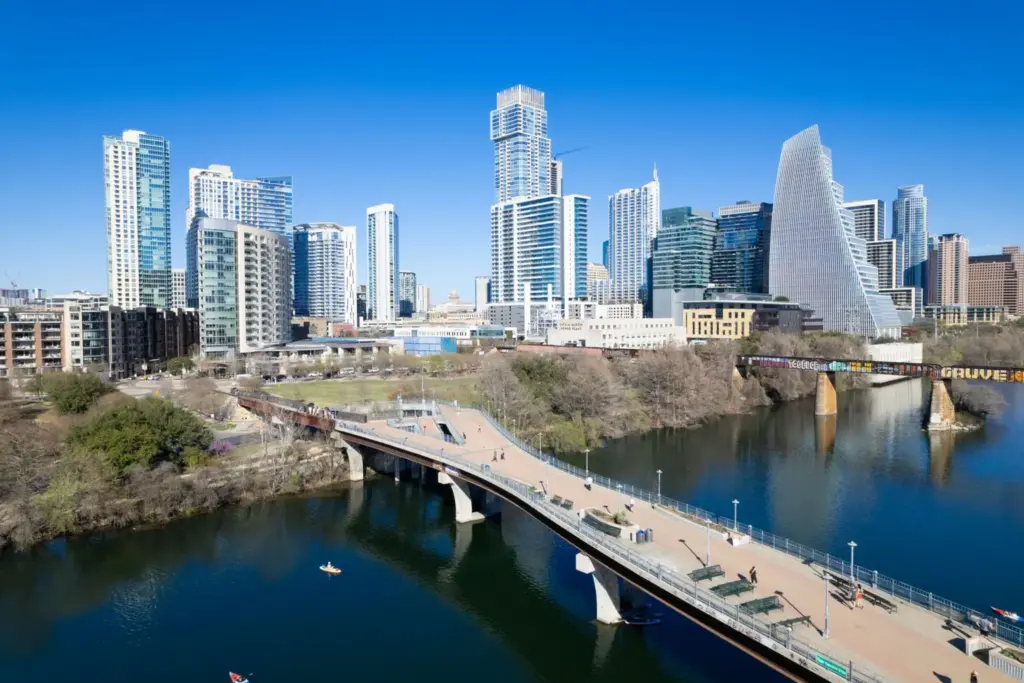
What Your Chicago Dollar Actually Buys in Austin
Austin’s median home price sits at $440,000 as of April 2026, down 1.9% year over year, while Chicago’s median has climbed to $409,200, up 7.7% in the same period. According to the Austin Board of Realtors, buyers in the Austin metro have 4.7 months of housing inventory to choose from, and more than half of all active listings have taken at least one price reduction. Chicago? Inventory dropped 28.8% year over year, with 41.68% of homes selling above asking price.
That gap tells the whole story of why this move makes financial sense right now. Austin is a buyer’s market. Chicago is not. And if you’re sitting on equity in a Chicago home or condo, your purchasing power stretches further in Austin than it has in years.
The income tax savings alone change the math. Illinois charges a flat 4.95% state income tax on all earned income. Texas charges zero. On a household income of $150,000, that’s $7,425 back in your pocket every single year. Over a 10-year period, that’s $74,250 in cumulative savings before accounting for investment returns or raises. According to the Tax Foundation, Illinois ranks 36th nationally for business tax climate, while Texas ranks 14th.
For Chicagoans weighing a move to Central Texas, working with a broker who understands both markets makes the transition smoother. Ed Neuhaus, broker of Neuhaus Realty Group, has helped dozens of Chicago transplants find the right neighborhood: “People coming from Chicago are usually surprised by how much house they get for their money here, and they love that they can actually use their backyard 10 months out of the year.”
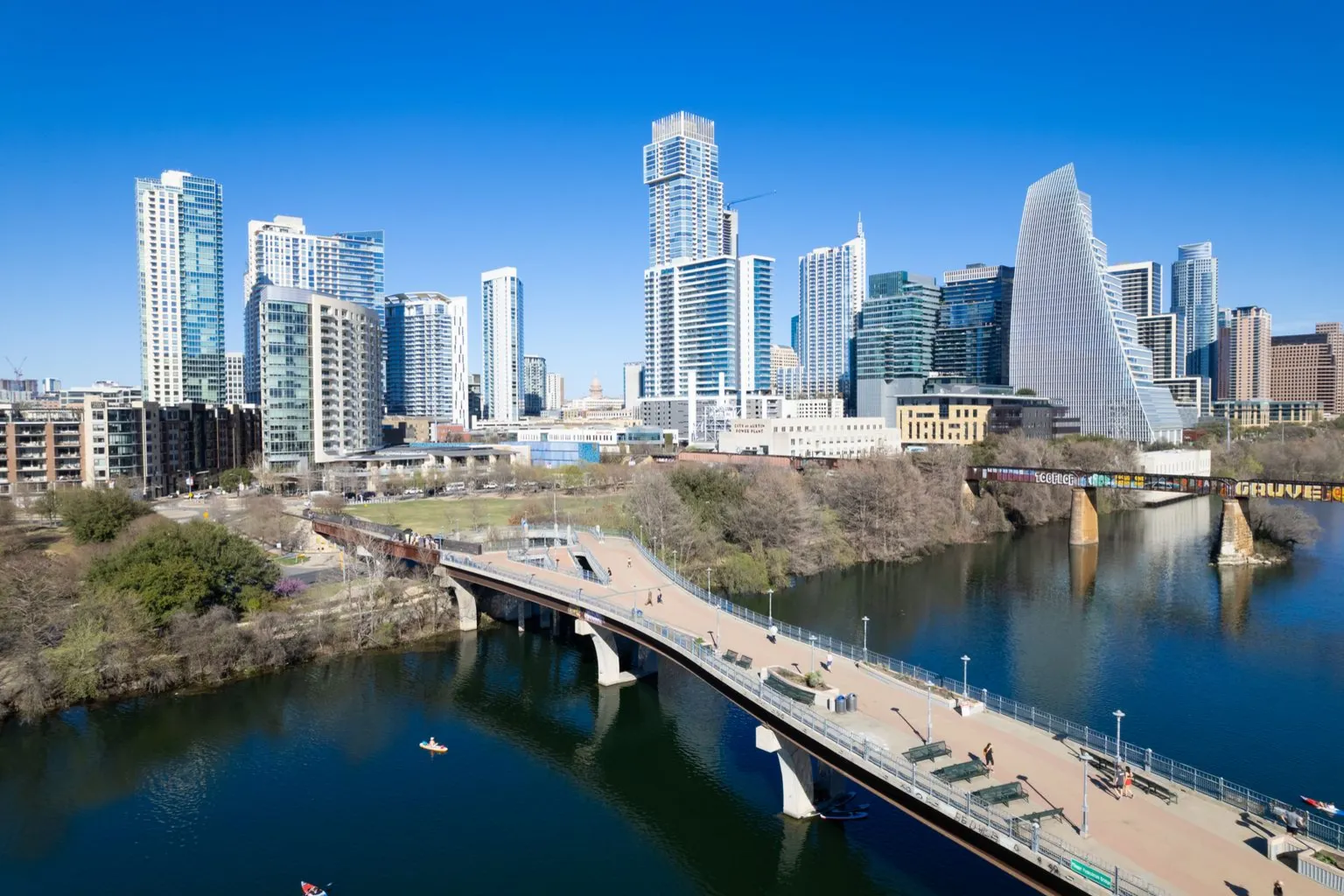
Cost of Living: Chicago vs. Austin in 2026
The overall cost of living in Austin runs approximately 13% lower than Chicago, according to Numbeo’s March 2026 data. That said, the savings are not evenly distributed across categories. Some expenses drop significantly. Others stay flat or even increase.
| Category | Chicago | Austin | Difference |
|---|---|---|---|
| Monthly rent (1BR, city center) | $2,050 | $1,650 | Austin 20% less |
| Monthly rent (1BR, outside center) | $1,450 | $1,250 | Austin 14% less |
| Median home price | $409,200 | $440,000 | Austin 8% more |
| Groceries (monthly, 2 adults) | $680 | $620 | Austin 9% less |
| Utilities (electric, water, gas) | $185 | $210 | Austin 14% more |
| Gasoline (per gallon) | $3.85 | $2.95 | Austin 23% less |
| Restaurant meal (mid-range, 2 people) | $90 | $75 | Austin 17% less |
| Monthly transit pass | $75 (CTA) | $41.25 (Cap Metro) | Austin 45% less |
| State income tax rate | 4.95% | 0% | Austin saves 100% |
A few things stand out. Austin’s utilities run higher because summer electricity bills can spike to $250 or more when you’re running air conditioning from May through September. Chicago winters are expensive for heating, but Austin summers hit the electric bill harder. ERCOT, the state’s independent power grid, has stabilized considerably since the 2021 Winter Storm Uri, but budget $200 to $250 per month for electricity during peak summer.
Groceries are notably cheaper in Austin, largely thanks to H-E-B, the Texas-based grocery chain that Chicagoans will quickly grow to love. H-E-B consistently undercuts national chains on staples, produce, and meat, and the store brand (Hill Country Fare and H-E-B Organics) is genuinely good. If you’re used to Mariano’s or Whole Foods pricing, your grocery bill will drop.
The Income Tax Math (It’s Not Close)
This is the single biggest financial advantage of the move. Illinois’s 4.95% flat income tax applies to all earned income with limited deductions. Texas has no state income tax at all. The savings compound every year you live in Texas.
| Household Income | Illinois Tax (4.95%) | Texas Tax (0%) | Annual Savings | 10-Year Savings |
|---|---|---|---|---|
| $75,000 | $3,713 | $0 | $3,713 | $37,125 |
| $100,000 | $4,950 | $0 | $4,950 | $49,500 |
| $150,000 | $7,425 | $0 | $7,425 | $74,250 |
| $200,000 | $9,900 | $0 | $9,900 | $99,000 |
| $300,000 | $14,850 | $0 | $14,850 | $148,500 |
One important caveat: if you work remotely for a Chicago-based employer, Illinois may still try to tax you under its “convenience of the employer” rule. Texas does not have this rule, and most tax professionals advise that once you establish Texas residency and work physically from Texas, you owe Illinois nothing. But check with a CPA before assuming. The rules around remote work taxation are still evolving.
Property Taxes: Both Cities Hit Hard
Here’s something Chicago transplants don’t expect: Texas property taxes are high. Really high. You’re not escaping property taxes by leaving Cook County.
Travis County’s combined effective property tax rate runs approximately 2.07% of assessed value. On a $440,000 home, that’s roughly $9,108 per year, or $759 per month added to your mortgage payment. Cook County’s effective rate ranges from 1.8% to 2.2%, but Chicago’s lower median home values mean the absolute dollar amount is often lower.
The key difference is the Texas homestead exemption. Once you file (it’s free, and you can do it the day you close), you get $100,000 off your school district taxable value, plus additional exemptions from the city, county, and any special districts. If you’re over 65, your school district taxes freeze at the amount you paid the year you turned 65, and they never increase. For a comprehensive look at how this works, read the Complete Guide to Property Taxes in Austin.
Watch for MUD and PID districts. Many newer Austin-area neighborhoods sit inside Municipal Utility Districts or Public Improvement Districts that add 0.25% to 1.5% to your total tax rate. A $500,000 home in a heavy-MUD community can carry a total tax rate of 3.0% or more. Always ask about the total tax rate, not just the county rate. The Complete Guide to MUDs, PIDs, and Special Taxing Districts breaks this down in detail.
What Your Chicago Equity Buys in Austin
If you’re selling a Chicago home or condo to buy in Austin, here’s what that equity translates to in practice.
| Chicago Property | Typical Sale Price | Net After Costs | What It Buys in Austin |
|---|---|---|---|
| 1BR condo (Lincoln Park) | $310,000 | $280,000 | Condo in East Austin or townhome in Round Rock |
| 2BR condo (Lakeview) | $425,000 | $385,000 | 3BR home in Cedar Park or Pflugerville |
| 3BR home (Roscoe Village) | $575,000 | $525,000 | 4BR home in Bee Cave or Lakeway |
| 4BR home (Naperville) | $550,000 | $500,000 | 4BR home in Dripping Springs or Leander |
| 4BR home (North Shore) | $850,000 | $780,000 | Luxury home in Westlake or Spanish Oaks |
The key advantage: Austin’s market is in buyers’ favor right now. With 4.7 months of inventory and 52% of listings showing price reductions, you have negotiating leverage that simply doesn’t exist in Chicago’s tight market. Properties in the Austin metro average 74 days on market, giving you time to compare, negotiate, and make informed decisions rather than rushing into bidding wars.
If you’re selling a Chicago condo, note that Illinois doesn’t have the same option period structure that Texas uses. In Texas, you pay a small option fee (typically $100 to $500) that gives you an unrestricted right to terminate during the option period (usually 7 to 14 days). This is your inspection, investigation, and “get out of jail free” window. It’s one of the best buyer protections in the country.
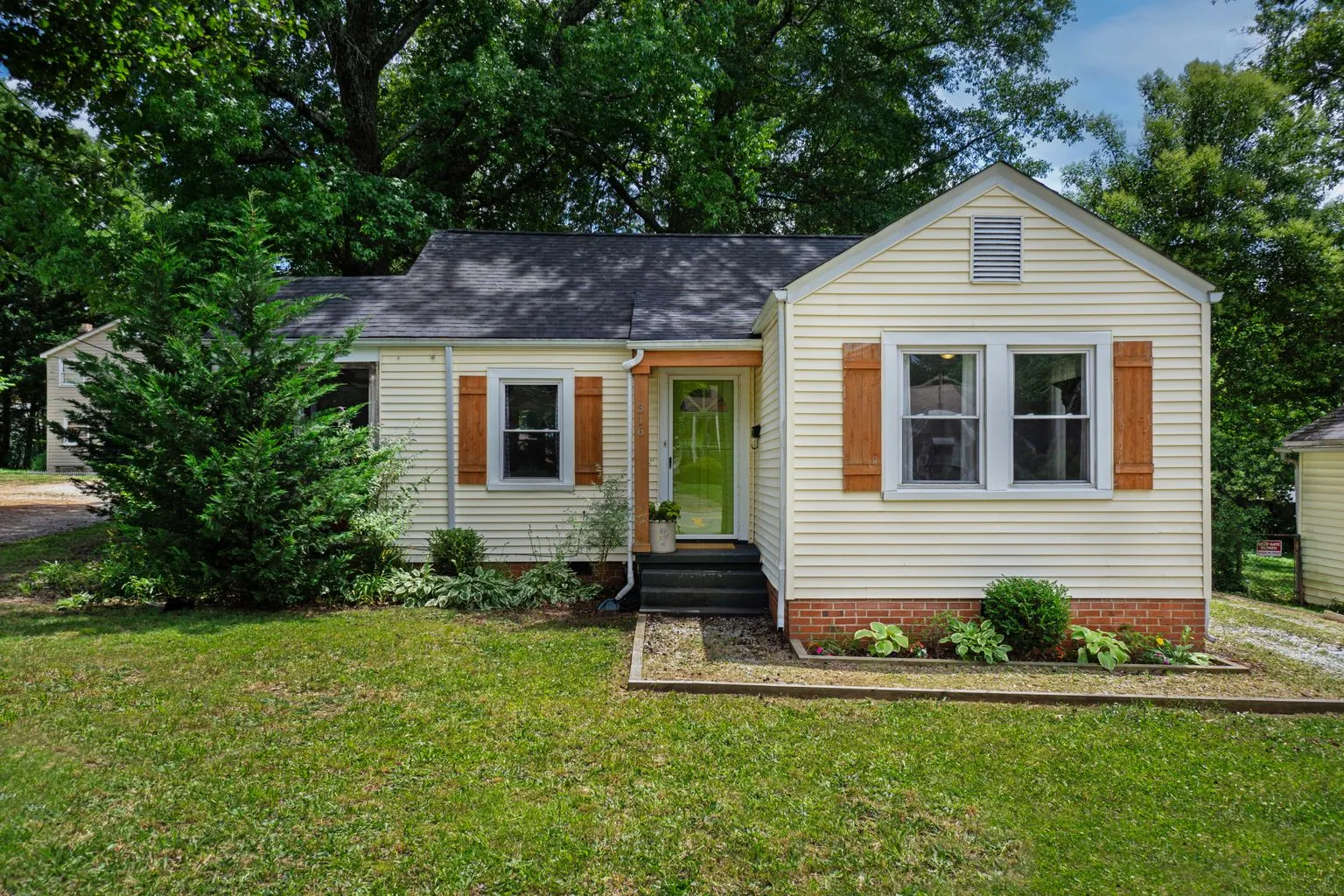
Neighborhoods: Where Chicago Transplants Actually Land
Every Chicagoan who moves to Austin asks the same question: “What’s the Austin equivalent of my neighborhood?” The truth is no neighborhood maps perfectly. Austin is a different city with a different layout. But here are the closest cultural and lifestyle analogs.
| Chicago Neighborhood | Austin Equivalent | Why It Feels Similar | Median Home Price |
|---|---|---|---|
| Lincoln Park / Lakeview | Zilker / Barton Hills | Tree-lined streets, parks, walkable dining, young professionals and young residents | $750,000 to $1.2M |
| Wicker Park / Bucktown | East Austin | Trendy, food trucks, craft cocktails, murals, eclectic energy, rapidly gentrifying | $500,000 to $800,000 |
| River North / Gold Coast | Downtown / Rainey Street | High-rise condos, upscale dining, nightlife, walkable urban core | $400,000 to $900,000 (condos) |
| Logan Square | South Congress / South First | Local shops, street art, independent restaurants, artsy vibe | $600,000 to $900,000 |
| Hyde Park (Chicago) | Hyde Park (Austin) | University-adjacent, intellectual vibe, historic homes, walkable to campus | $500,000 to $800,000 |
| North Shore suburbs (Evanston, Wilmette) | Westlake / Bee Cave | Top-rated schools, affluent, family-oriented, close to city core | $650,000 to $2.5M |
| Naperville / Schaumburg | Cedar Park / Round Rock | Suburban, good schools, tech corridor employers, new construction available | $380,000 to $550,000 |
| Oak Park | Mueller | Planned community feel, diverse, walkable, parks, close to downtown | $500,000 to $700,000 |
A few notes that Chicago transplants consistently report:
You’ll miss walkability. Even Austin’s most walkable neighborhoods (downtown, Mueller, The Domain) don’t match the density and transit access of Chicago’s core. Austin is a car city. Budget for a car if you don’t already have one, and expect to drive everywhere. The Complete Guide to Austin Commutes and Transportation covers this in detail.
The suburbs are where the value is. Cedar Park, Round Rock, Georgetown, and Pflugerville offer brand-new construction at prices that would seem impossible by Chicago suburban standards. A 2,500-square-foot new-build in Cedar Park runs $425,000 to $500,000. Try finding that within 30 minutes of downtown Chicago.
Westlake and Eanes ISD are the “North Shore” equivalent. If your kids are in a top-tier suburban school district in Chicagoland and you want the equivalent in Austin, Eanes ISD (serving Westlake and parts of Bee Cave) and Dripping Springs ISD are where you want to look. Both consistently rank among the top districts in Texas.
The Weather Adjustment (Goodbye Polar Vortex, Hello Triple Digits)
Let’s be honest: the weather is probably half the reason you’re considering this move. And it will deliver. Austin averages 228 sunny days per year compared to Chicago’s 189. You will never shovel snow, scrape ice off a windshield at 6 a.m., or lose feeling in your fingers waiting for the Brown Line.
But Austin’s heat is real, and if you’re not prepared for it, your first summer will be rough.
May through September is effectively summer. Temperatures routinely hit 100 to 105 degrees Fahrenheit from mid-June through early September. The heat is dry at first (June) and increasingly humid as the Gulf pushes moisture inland (August, September). Plan outdoor activities for early morning or evening. Midday is for air-conditioned spaces.
October through April is genuinely beautiful. Highs in the 60s and 70s, cool mornings, and clear skies. This is when Austin’s outdoor lifestyle really shines. You’ll eat on patios, hike the Greenbelt, and paddle Lady Bird Lake. Chicagoans who time their move for October usually have the smoothest adjustment because they get the best of Austin before their first Texas summer.
Cedar fever is Austin’s version of Chicago’s January misery. From December through February, mountain cedar trees release massive amounts of pollen. If you’re allergic (and about 30% of newcomers develop cedar allergies within 2 to 3 years), expect sinus congestion, itchy eyes, and fatigue. Start an allergy regimen before cedar season, not during it. The Complete Guide to Austin Weather and Climate covers seasonal patterns in depth.
Winter storms are rare but disruptive. Austin gets freezing weather maybe 5 to 10 days per year, and when it does, the city largely shuts down. There is no salt truck fleet. There are no snow plows. If you see ice on the road, stay home. Winter Storm Uri in February 2021 was a once-in-a-generation event, but it exposed real infrastructure vulnerabilities. ERCOT has made substantial grid improvements since then, but Chicagoans should keep a basic emergency kit (water, flashlights, blankets) for the rare hard freeze.
Jobs: Austin’s Tech Economy vs. Chicago’s Diversified Base
Austin’s total nonfarm employment reached 1,428,000 in February 2026, up 2.5% year over year, according to the Bureau of Labor Statistics. The unemployment rate sits at 3.4%, below the national average of 4.1%.
The tech sector employs approximately 197,400 workers and is adding roughly 8,300 net new jobs in 2026. Major employers include Dell Technologies, Apple (with approximately 15,000 employees at its North Austin campus), IBM, Google (expanding its 35-story downtown tower), Samsung, Oracle, and Tesla’s Gigafactory in southeast Travis County.
But Austin’s economy is no longer tech-monoculture. Healthcare (Ascension Seton, St. David’s, Baylor Scott & White), government (state capital, UT Austin), construction, and professional services all provide significant employment. If you’re in tech, the transition is straightforward. If you’re not in tech, Austin still has strong demand across healthcare, education, government, construction, and professional services.
Remote work note: approximately 40% of Austin’s workforce operates on hybrid or fully remote schedules, according to Indeed’s 2026 survey. If you’re making this move to work remotely, Austin offers strong internet infrastructure (AT&T Fiber, Google Fiber, and Spectrum all serve most neighborhoods), co-working spaces (WeWork, Industrious, Capital Factory), and plenty of coffee shops with reliable Wi-Fi. See the Complete Guide to Working from Home in Austin for internet speeds by neighborhood.
Salary adjustment: despite Austin’s lower cost of living, tech salaries in Austin are close to Chicago levels. According to Built In Austin, median software engineer compensation in Austin runs $135,000 to $165,000, comparable to Chicago’s $130,000 to $160,000. The elimination of state income tax means your take-home pay actually increases by 4.95% on the same gross salary.
Food and Culture: What You’ll Gain, What You’ll Miss
Let’s start with what you’ll miss, because every Chicago transplant has the same list:
Deep-dish pizza. Austin has a few Chicago-style pizza spots (Via 313 does a Detroit-style that gets close, and Jet’s Pizza has locations), but nothing replicates Lou Malnati’s or Giordano’s. Ship it frozen. Lou’s delivers nationwide.
Italian beef. This is the one food item that truly does not exist in Austin. Some food trucks have tried. None have succeeded. If you’re serious about it, learn to make it yourself. Giardiniera is available at H-E-B, at least.
The L train at 2 a.m. Austin’s nightlife is exceptional, but you’re driving or taking a rideshare home. There is no subway. Cap Metro’s bus system is functional but limited compared to the CTA.
Lake Michigan. Lady Bird Lake, Lake Travis, and Lake Austin are beautiful, but they’re not the same as standing on the shore of an inland sea. You’ll adjust. Lake Travis offers boating, swimming, and waterfront dining that Chicago’s lakefront can’t match for sheer accessibility. Read the Complete Guide to Lake Living in the Austin Area for the full rundown.
Now, what you’ll gain:
Barbecue as a way of life. Franklin Barbecue, la Barbecue, Micklethwait, Interstellar BBQ, LeRoy & Lewis, Stiles Switch. Austin’s BBQ scene is world-class and constantly evolving. The wait at Franklin is real (3 to 4 hours on weekends), but most spots are walk-up-friendly on weekdays. Central Texas barbecue (brisket, ribs, sausage, smoked turkey) is a fundamentally different food tradition than anything in Chicago, and it will ruin you for every other barbecue you’ve ever had.
Tex-Mex and breakfast tacos. This is Austin’s equivalent of Chicago’s hot dog stands: everywhere, cheap, and essential to daily life. Breakfast tacos are a morning ritual. Torchy’s, Veracruz All Natural, Valentina’s (which also does barbecue), and dozens of food trucks serve them. You will develop opinions about tortillas.
Live music, everywhere. Austin didn’t earn the “Live Music Capital of the World” title by accident. On any given night, you can hear live music at 50 or more venues across the city. The Continental Club, Mohawk, Stubb’s, Saxon Pub, and ACL Live at The Moody Theater are just the headliners. Sixth Street has the density, but East Austin, South Congress, and Red River Cultural District have the quality. For a full overview, see the Complete Guide to Arts, Music, and Culture in Austin.
Outdoor living, year-round. Barton Creek Greenbelt, McKinney Falls State Park, Zilker Park, the Ann and Roy Butler Hike-and-Bike Trail, Barton Springs Pool (a spring-fed, 68-degree pool open year-round). The Complete Guide to Outdoor Recreation in Austin covers more than 50 spots. Chicago has beautiful lakefront parks, but Austin’s outdoor access is year-round, diverse, and deeply integrated into daily life.
Sports Culture: A Real Adjustment
This might be the hardest part of the move for some Chicagoans. Austin does not have a major professional sports franchise. No NFL, no MLB, no NHL. The closest NFL teams are the Dallas Cowboys (3 hours north) and the Houston Texans (2.5 hours east).
What Austin does have:
University of Texas Longhorns. UT football is the de facto professional team. Darrell K Royal-Texas Memorial Stadium seats 100,119 and sells out regularly. The Longhorns joined the SEC in 2024, so you get SEC-caliber football every fall Saturday. Basketball, baseball, and track are also nationally competitive.
Austin FC. The city’s MLS team plays at Q2 Stadium, a 20,500-seat soccer-specific stadium in North Austin. The atmosphere is electric, and the supporters’ group (Los Verdes) brings genuine European-style energy.
Formula 1. Circuit of the Americas hosts the United States Grand Prix every October. It’s a bucket-list event that happens in your backyard.
Minor league and niche sports. Round Rock Express (AAA baseball), Austin Spurs (NBA G League), and the ATX Dream (WNBA expansion, arriving 2027).
You’ll still be able to follow the Bears, Cubs, White Sox, Bulls, and Blackhawks on streaming, and Austin has plenty of Chicago sports bars for game days. The Hidden Tap & Barrel on South Lamar is a known Chicago expat hangout.
Schools: What Chicago Transplants Need to Know
If you’re moving with school-age children, the school district will likely drive your neighborhood choice. Here’s a quick comparison of how Austin-area districts stack up against what you’re used to in the Chicagoland area.
Austin Independent School District (AISD) is the city’s largest district. Like Chicago Public Schools, it’s a large urban district with significant variation by campus. Some AISD schools are outstanding (particularly the magnet and specialty programs). Others face the same challenges as any large urban school system.
The suburban districts are where most Chicago transplants with children land:
Eanes ISD (Westlake, parts of Bee Cave): Consistently rated among the top 5 districts in Texas. The “New Trier” of Austin. Median home price in Eanes ISD: $1.1M to $1.5M.
Lake Travis ISD (Lakeway, Bee Cave, Spicewood): Excellent schools, strong athletics, Hill Country setting. Median: $550,000 to $750,000.
Dripping Springs ISD (Dripping Springs, Belterra): Rapidly growing, highly rated, newer facilities. Median: $475,000 to $650,000.
Round Rock ISD (Round Rock, parts of Cedar Park): Large, well-funded, strong STEM programs. The “Naperville equivalent.” Median: $380,000 to $500,000.
Leander ISD (Leander, Cedar Park, Liberty Hill): Fast-growing, good ratings, affordable. Median: $375,000 to $475,000.
The Complete Guide to Austin School Districts profiles each district in detail with ratings, test scores, and home price impact.
The Real Estate Process: Key Differences from Illinois
The Texas real estate transaction looks different from Illinois in several important ways. If you’ve only bought or sold in Illinois, you’ll want to understand these before making an offer.
Option period (Texas-specific). Instead of Illinois’s attorney review period, Texas uses an option period. You pay a negotiable option fee ($100 to $500) for 7 to 14 days of unrestricted right to terminate. During this window, you do your inspection, negotiate repairs, and decide whether to proceed. If you walk away for any reason, you lose the option fee but keep your earnest money. The Complete Guide to Earnest Money and Option Periods explains this in detail.
No attorney required. Unlike Illinois, Texas real estate closings don’t require an attorney. Title companies handle the closing, escrow, and deed transfer. You can still hire a real estate attorney for contract review ($500 to $1,500 flat fee), and many Chicago transplants do for their first Texas purchase.
Seller disclosure. Texas requires a detailed seller disclosure form (similar to Illinois), but the Texas form is more granular on issues like foundation, flooding history, and MUD/PID membership. Read it carefully.
Title insurance rates are state-regulated. Unlike Illinois, where title insurance is negotiable, Texas sets uniform rates through the Texas Department of Insurance. Every title company charges the same base premium. The TDI ordered a 6.2% reduction effective March 1, 2026, so rates are at their lowest in years. The Complete Guide to Title Insurance in Texas covers what you’re paying for.
Homestead exemption. File immediately after closing. Texas’s homestead exemption provides $100,000 off school district taxable value plus additional exemptions from cities, counties, and special districts. Unlike Illinois’s homestead exemption (which is limited and varies by county), the Texas exemption is substantial and available to every owner-occupied primary residence. There’s no deadline to file retroactively for the current tax year, but filing as soon as you close locks in the exemption for the first tax cycle.
Moving Logistics: Chicago to Austin
The drive is 1,120 miles, roughly 16 to 17 hours nonstop (don’t do it nonstop). The most common route is I-55 South through Springfield and St. Louis, then I-44 to Oklahoma City, and I-35 South through Dallas into Austin. Budget two days of driving with an overnight stop in Oklahoma City or Dallas.
| Moving Method | Cost Range (2-3 BR) | Timeline | Best For |
|---|---|---|---|
| Full-service movers | $2,560 to $9,808 | 5 to 10 days | Full household, no hassle |
| Freight/container (PODS, ABF) | $1,399 to $4,063 | 7 to 14 days | Flexible timeline, lower cost |
| Rental truck (U-Haul, Penske) | $843 to $1,740 | 2 to 3 days | Budget move, light load |
| DIY truck rental | $752 to $1,017 | 2 to 3 days | Minimal belongings |
| Car shipping (separate) | $900 to $1,400 | 5 to 10 days | Second vehicle or flying down |
Timing tip: moving rates are lowest from October through February, which also happens to be Austin’s best weather. If you can time your move for the fall or early winter, you’ll save money on movers and arrive to perfect Austin weather. Avoid June through August for both the heat and peak moving rates.
Temporary housing: if your Austin home isn’t ready when you arrive, furnished short-term rentals in the Austin metro run $2,000 to $4,000 per month depending on location and size. Corporate housing companies like Landing and Blueground operate in Austin. Extended-stay hotels (Residence Inn, Home2 Suites) are another option at $100 to $150 per night.
Your First 30 Days in Austin: The Checklist
Week 1:
- Set up utilities: Austin Energy (electric), City of Austin Water, Atmos Energy (natural gas in some areas), internet (AT&T Fiber, Google Fiber, or Spectrum)
- Get a Texas driver’s license within 30 days of establishing residency (DPS office, bring Illinois license, proof of Texas address, SSN, passport or birth certificate)
- Register your vehicle at the Travis County Tax Office within 30 days ($90 to $150 depending on vehicle value)
- File your homestead exemption with the county appraisal district
Week 2:
- Register to vote at your new address (Texas voter registration, county elections office)
- Find a primary care doctor, dentist, and pediatrician. Major hospital systems: Ascension Seton, St. David’s, Baylor Scott & White. See the Complete Guide to Healthcare in Austin
- Set up a local bank account if needed (UFCU and Amplify Credit Union are popular local options with good rates)
- Enroll children in school (contact the district directly; enrollment is open year-round)
Week 3:
- Explore your neighborhood on foot. Walk to the nearest park, grocery store, and restaurant
- Find your H-E-B. Seriously. This is Austin’s community center
- Try a breakfast taco. Then try another one at a different place. Keep going until you find your spot
- Drive the major routes during rush hour so you know what to expect (MoPac/Loop 1, I-35, 183, 290)
Week 4:
- Join a local group or activity. Austin Sports and Social Club, trail running groups, neighborhood Facebook/Nextdoor groups, church communities, co-working spaces
- Go see live music. Walk down Sixth Street or hit a show at the Continental Club
- Drive out to the Hill Country for a day trip. Dripping Springs, Wimberley, or Fredericksburg are all within 45 to 90 minutes
- Schedule a property tax consultation to understand your upcoming tax bill
Seven Common Mistakes Chicago Transplants Make
1. Underestimating the heat. Chicago’s coldest day is about -10°F. Austin’s hottest day is about 110°F. Both extremes are miserable, but Austin’s lasts longer (4+ months of consistent heat). Don’t schedule your move for July. Don’t plan outdoor housewarming parties in August.
2. Not filing the homestead exemption. Every year, new Texas homeowners leave thousands of dollars on the table by not filing. It’s free, takes 10 minutes online, and saves you real money. File the day you close.
3. Buying in a heavy MUD without understanding the tax impact. That $450,000 home in a master-planned community might have a 3.2% total tax rate instead of 2.0%. That’s an extra $5,400 per year. Ask for the full tax rate before making an offer.
4. Expecting Chicago-level public transit. It doesn’t exist. Austin’s Project Connect light rail is under construction (expected to begin service around 2033), but for now, you need a car. Budget accordingly.
5. Ignoring foundation issues. Austin sits on expansive clay soil that swells when wet and shrinks when dry. Foundation movement is common. Always get a thorough home inspection, and don’t skip the foundation check. If the inspector flags concerns, hire a structural engineer ($350 to $800). Foundation repairs run $5,000 to $30,000 or more. The Complete Guide to Foundation Issues in Texas covers what to watch for.
6. Not working with a local agent. Chicago’s real estate process is different from Texas’s. TREC contracts, option periods, earnest money rules, title company selection, and closing timelines all work differently here. Neuhaus Realty Group specializes in helping relocating buyers navigate these differences, particularly in the Bee Cave, Lakeway, and Dripping Springs areas.
7. Comparing Austin to Chicago instead of experiencing Austin as Austin. Austin is not trying to be Chicago. It’s a different city with a different rhythm, different strengths, and different trade-offs. The Chicagoans who thrive here are the ones who embrace the differences rather than cataloging what’s missing.
Frequently Asked Questions
Making the Move: Next Steps
Moving from Chicago to Austin is one of the most popular interstate relocations in the country, and for good reason. The combination of no state income tax, a buyer-friendly housing market, strong job growth, and year-round outdoor living makes a compelling case for Chicagoans at nearly every life stage.
The best time to start planning is now. Austin’s current buyer’s market won’t last forever. Inventory is high, prices have softened from pandemic peaks, and sellers are negotiating. If you’re sitting on Chicago equity in a tight seller’s market, you’re in the ideal position to sell high and buy into value.
Start by exploring Austin neighborhoods that match your lifestyle. Browse current listings to get a sense of pricing by area. Read the Complete Guide to First-Time Homebuying in Austin if this is your first purchase outside Illinois, or the Complete Guide to Closing on a Home in Texas to understand how the process differs.
And when you’re ready to talk specifics, reach out to Neuhaus Realty Group. Whether you’re three months or three days from your move, having a local broker who understands what Chicago transplants need makes all the difference.