Austin Outdoor Recreation by the Numbers
Austin manages 330 parks across more than 20,000 acres of public land, with 200 miles of maintained trails winding through greenbelts, preserves, and urban corridors. That is not a typo. According to the City of Austin Parks and Recreation Department, 10% of the city’s total land area is dedicated to parks and recreation, and 76% of residents live within a 10-minute walk of a park. The Trust for Public Land ranks Austin’s median park size at 6.7 acres, well above the national ParkScore average of 5.4 acres.
The outdoor infrastructure goes beyond trails. The city maintains 52 public pool facilities, 15 nature preserves, 39 greenbelts, six public golf courses, 20 recreation centers, and three senior activity centers. Add in the Highland Lakes chain, 485 miles of mountain biking trails tracked on Trailforks, 30 disc golf courses (making Austin the top-ranked disc golf city in America), and proximity to some of the best state parks in Texas, and you start to understand why outdoor access consistently ranks among the top reasons people relocate here.
For anyone evaluating Austin as a place to live, work, or invest in real estate, the outdoor recreation infrastructure is not just a lifestyle perk. Properties near greenbelt access, hike-and-bike trails, and parks command measurable price premiums. A 2024 National Association of Realtors survey found that proximity to parks and trails ranked among the top five neighborhood features buyers prioritize. In Austin, that data plays out in real-time pricing across neighborhoods like Barton Hills, Zilker, and the Greenbelt corridor.
Hiking Trails: From Urban Greenbelts to Hill Country Overlooks
Austin’s trail system ranges from paved urban loops to rugged Hill Country scrambles. AllTrails catalogs 126 walking trails, 122 hiking trails, and 115 running trails within the Austin metro. Here are the ones that matter most.
Barton Creek Greenbelt
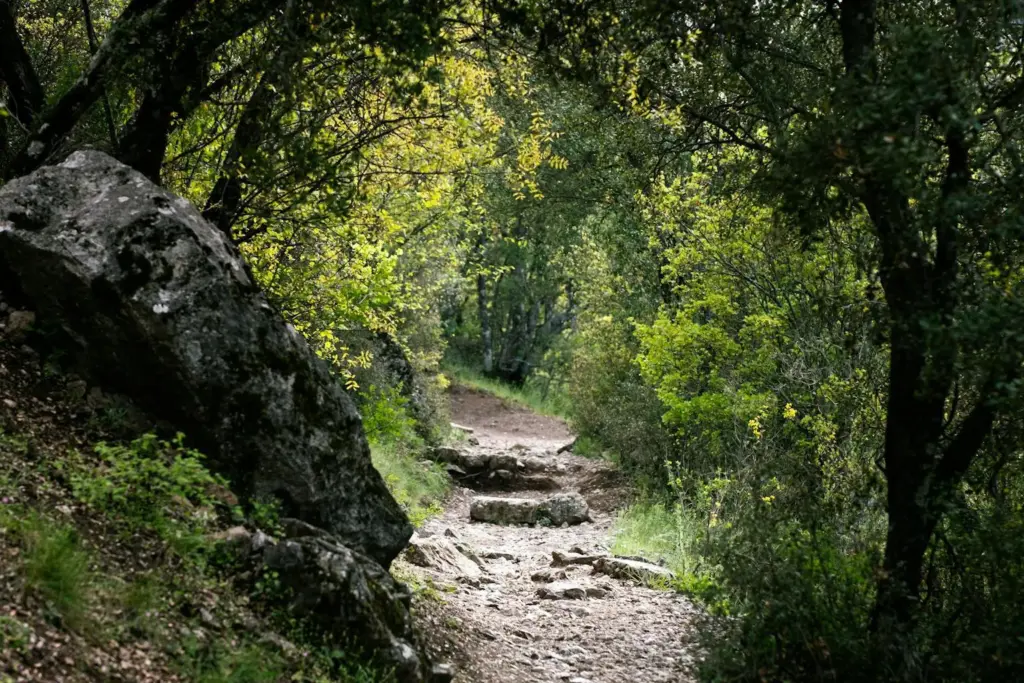
The Greenbelt is Austin’s outdoor backbone. Stretching over 12 miles through South Austin, the trail system follows Barton Creek through limestone canyons, past swimming holes like Sculpture Falls and Twin Falls, and through dense cedar and oak canopy. Multiple trailheads (Spyglass, Gus Fruh, Trail of Lights parking area, Scottish Woods, and Loop 360) give access to different sections. The terrain is rocky and uneven in most spots, so proper footwear matters. Dogs are welcome but must be leashed.
The Greenbelt sees heavy use on weekends, especially in spring and fall. Weekday mornings are the sweet spot for a quieter experience. During drought conditions, the creek dries up in sections, but the trail itself remains open year-round.
Ann and Roy Butler Hike-and-Bike Trail at Lady Bird Lake
This 10-mile paved loop circles Lady Bird Lake through the heart of downtown Austin, crossing over boardwalks, past Zilker Park, along South First Street, and under I-35. It is the most-used trail in the city by a wide margin. Runners, walkers, cyclists, and dog walkers share the path from sunrise to well past sunset. The Pfluger Pedestrian Bridge and Lamar Boulevard Bridge offer skyline views that have become iconic Austin photography spots.
The Butler Trail connects to dozens of restaurants, coffee shops, and parks along its route, making it easy to combine a morning run with breakfast at a South Congress cafe. The trail is fully ADA-accessible and well-lit in most sections.
Mount Bonnell
At 775 feet, Mount Bonnell is the highest point within Austin city limits. The climb is short (106 stone steps from the parking lot) but steep. The reward is a panoramic view of Lake Austin, the Hill Country, and the western skyline. It is one of the most visited spots in the city and can feel crowded at sunset. Go early on a weekday for solitude.
Violet Crown Trail
The Violet Crown Trail runs 13 miles from Zilker Park south through Barton Creek Wilderness Park, past the Veloway, and to the Lady Bird Johnson Wildflower Center. When fully completed, the trail will extend 30 miles into Hays County. The northern sections are well-maintained and moderately challenging. The southern sections get wilder and less trafficked. This trail is a favorite among distance runners and mountain bikers.
Wild Basin Wilderness Preserve
Tucked into the hills off Loop 360, Wild Basin offers 2.5 miles of trails through protected habitat. The trails are quieter than the Greenbelt and better maintained, with interpretive signage about local ecology. A nature education center makes it a solid option for those with younger children. Admission is free.
Swimming Holes: Austin’s Most Iconic Outdoor Tradition
Swimming outdoors is not optional in Austin. It is a core part of the culture. When temperatures push past 100 degrees for weeks at a time between June and September, spring-fed pools and natural swimming holes become the social and recreational center of the city.
Barton Springs Pool
Barton Springs is Austin’s signature outdoor experience. This three-acre, spring-fed pool sits inside Zilker Metropolitan Park and holds a constant 68 to 70 degrees year-round, fed by underground springs from the Edwards Aquifer. The pool is open daily from 5:00 AM to 10:00 PM, with lifeguards on duty during peak hours. Swimming is free from 5:00 to 8:00 AM daily and from 9:00 to 10:00 PM on Tuesday, Friday, Saturday, and Sunday. During staffed hours, admission runs $5 for adults ($3 for juniors and seniors, free for children under 11). The pool closes Thursdays from 9:00 AM to 7:00 PM for cleaning.
Barton Springs is home to the Barton Springs salamander, a federally endangered species found nowhere else on Earth. The salamander’s presence has driven conservation efforts for the Edwards Aquifer recharge zone, which in turn shapes land-use policy across Southwest Austin.
Deep Eddy Pool
The oldest swimming pool in Texas, Deep Eddy dates to 1915 and sits along the north shore of Lady Bird Lake in West Austin. Like Barton Springs, it is spring-fed and stays cool year-round, though it is heated slightly during winter months. The pool is smaller and less crowded than Barton Springs, with a dedicated lap swim section. Admission is $5 for adults and $3 for juniors and seniors.
Hamilton Pool Preserve
Located about 30 miles west of Austin near the Pedernales River, Hamilton Pool is a collapsed grotto with a 50-foot waterfall spilling into a jade-green pool surrounded by limestone walls and ferns. It is the most visually dramatic natural swimming hole near Austin. Reservations are required every day of the week, and swimming access is seasonal and weather-dependent. The earliest date swimming might be allowed in 2026 is May 8. Entry is $15 per vehicle plus $5 to $10 per swimmer. The 0.25-mile trail from the parking area to the pool is steep and can be slippery.
Krause Springs
Thirty miles west of Austin in Spicewood, Krause Springs sits on private land with 32 natural springs feeding both natural and constructed pools. The property also offers tent camping. Day admission is $8 per adult. The atmosphere is more rustic and relaxed than Barton Springs, with rope swings and shaded picnic areas under old cypress trees. This is a favorite among Spicewood and Lakeway residents.
Jacob’s Well Natural Area
Jacob’s Well in Wimberley is a 140-foot-deep spring-fed cavern where water from the Trinity Aquifer rises to the surface at a constant 68 degrees. Swimming requires a reservation for a specific two-hour slot. Admission is $9 per adult ($5 for Hays County residents). The well itself is a popular (and historically dangerous) diving destination, though recreational diving is prohibited. The surrounding natural area includes hiking trails and scenic Cypress Creek access.
Blue Hole Regional Park
About 45 minutes south of Austin in Wimberley, Blue Hole is a spring-fed swimming area along Cypress Creek with crystal-clear water, shaded banks, and a rope swing. The park also has hiking trails, a playground, and picnic areas. Reservations are recommended during summer weekends.
Sculpture Falls
Hidden along the Barton Creek Greenbelt, Sculpture Falls requires a 1.5-mile hike from the Scottish Woods trailhead. The payoff is a series of cascading limestone ledges that create natural pools when the creek is flowing. It is free, unmonitored, and best visited after recent rain. Water levels vary dramatically with drought conditions.
Lakes: Boating, Fishing, Kayaking, and Waterfront Living
The Highland Lakes chain, created by a series of dams on the Colorado River, gives Austin and the Hill Country more freshwater lake access than any other metro in Texas. Each lake has a distinct character.
Lake Travis
Lake Travis is the recreation flagship. Spanning 63 miles and covering 18,929 acres at full pool, Travis offers everything from wakeboarding and sailing to cliff jumping at Pace Bend Park. Devil’s Cove is the most popular party cove, while the Hurst Creek Arm near Lakeway provides calm water for kayaking and paddleboarding. Boat ramp access is available at Mansfield Dam, Tom Hughes Park, and Cypress Creek Park, all of which charge entry or parking fees.
Lake Travis water levels fluctuate significantly with rainfall and drought cycles. The Lower Colorado River Authority (LCRA) manages water levels, and conditions can change from full pool to well below conservation level within a single season. Check LCRA’s real-time lake level data before planning any lake outing.
Kayak and SUP rentals run $25 to $60 per hour depending on the outfitter. Pontoon and ski boat rentals start around $300 for a half day. Several marinas along the lake offer rentals, fuel, and boat storage.
Lady Bird Lake (Town Lake)
Lady Bird Lake is Austin’s urban waterway, stretching through downtown between Tom Miller Dam and Longhorn Dam. Motorized boats are prohibited, which keeps the water calm for kayaking, stand-up paddleboarding, rowing, and canoeing. Multiple rental outfitters operate along the shoreline, with hourly kayak rentals typically running $15 to $30. The lake is also a popular spot for recreational fishing (largemouth bass, carp, catfish), though catch-and-release is recommended due to historical water quality concerns.
The Congress Avenue Bridge, which spans Lady Bird Lake, is home to the largest urban bat colony in North America. From March through October, 1.5 million Mexican free-tailed bats emerge at dusk, creating one of Austin’s most distinctive wildlife spectacles.
Lake Austin
Lake Austin is a run-of-river reservoir, meaning its water level stays relatively constant compared to Lake Travis. The narrower, more residential lake is popular for kayaking, paddleboarding, and waterfront dining. Public access is more limited than Lake Travis, but several parks (including Emma Long Metropolitan Park) provide boat ramps and swimming areas. Waterfront homes on Lake Austin are among the most expensive real estate in the metro.
Lake Buchanan and Canyon Lake
Lake Buchanan, the largest of the Highland Lakes, sits about 75 miles northwest of Austin. It offers excellent fishing (striped bass, white bass, catfish), waterfalls on the Colorado River arm, and a quieter atmosphere. Canyon Lake, about 60 miles south near New Braunfels, is the gateway to Guadalupe River tubing, one of the most popular warm-weather activities in Central Texas.
Biking: Road, Gravel, and Mountain
Austin’s biking infrastructure covers the full spectrum, from protected urban bike lanes to technical single-track deep in the Hill Country. The city approved a $460 million active transportation bond (Proposition B) in 2020 to build out a 400-plus-mile network of protected bike lanes and multi-use paths. As of 2026, the city has 230-plus miles of bike lanes, with 50-plus miles of those protected.
Mountain Biking
Trailforks tracks 485 miles of mountain biking trails in the Austin area. The major systems include:
| Trail System | Miles | Difficulty | Notable Features |
|---|---|---|---|
| South Austin Trail Network (SATN) | 100+ | Intermediate | Interconnected suburban greenbelts, primarily cross-country |
| Barton Creek Greenbelt | 12+ | Moderate to Advanced | Rocky, technical, creek crossings |
| Walnut Creek Metro Park | 14 | Beginner to Intermediate | Flowy single-track, well-maintained |
| Emma Long Metro Park | 10 | Intermediate to Advanced | Rocky, steep, Lake Austin views |
| Pace Bend Park | 6 | Intermediate | Lake Travis access, cliff views |
The Austin Rattler MTB event features a 20-mile technical loop with 2,000 feet of elevation gain per lap. Riders can choose one loop (20 miles), two (40), or three (60).
Road and Gravel Cycling
The Veloway is a 3.1-mile paved loop in South Austin reserved exclusively for cyclists and inline skaters (no pedestrians). It is one of the only dedicated cycling-only facilities in the country. For road cyclists, popular routes head west into the Hill Country along Hamilton Pool Road, Fitzhugh Road, and Lime Creek Road, where low traffic and rolling terrain provide solid training rides of 30 to 60 miles.
The Lance Armstrong Bikeway connects downtown to East Austin, and the Southern Walnut Creek Trail provides 8.7 miles of paved off-street riding on the east side. Gravel riding has exploded in popularity, with routes through the ranch roads west of Dripping Springs and south of Wimberley attracting riders from across the state.
Rock Climbing and Bouldering
Austin has a surprisingly robust climbing scene, with both indoor and outdoor options year-round.
Indoor Climbing
| Gym | Climbing Surface | Features | Day Pass |
|---|---|---|---|
| Austin Bouldering Project | 50,000+ sqft | Bouldering, top-rope, fitness center, yoga | $20-$25 |
| Crux Climbing Center | 22,000+ sqft | Bouldering, top-rope, lead climbing, classes | $18-$22 |
| North Austin Rock Gym | 10,000+ sqft | Top-rope, lead, bouldering, kid-friendly | $16-$20 |
| Mesa Rim (South Austin) | 30,000+ sqft | Bouldering, rope climbing, fitness, yoga | $22-$28 |
Outdoor Climbing
Reimers Ranch Park, about 30 minutes west of Austin off Hamilton Pool Road, is the premier outdoor climbing destination with over 300 sport climbing routes across limestone bluffs. Routes range from 5.5 (beginner) to 5.14 (expert). Entry is $10 per vehicle. The park also has hiking and mountain biking trails.
Along the Barton Creek Greenbelt, Seismic Wall, Gus Fruh, and Bull Creek offer hundreds of bouldering problems and some top-rope routes on limestone. McKinney Falls State Park, just 20 minutes from downtown, has bouldering routes near the falls. Entry is $6 per person (13 and older).
Disc Golf: America’s Top-Ranked City
Austin ranks as the number one disc golf city in the United States, according to UDisc, with 30 courses across the metro. The Austin Parks and Recreation Department operates seven courses, and private and semi-private courses fill out the rest. Notable courses include:
Bartholomew Park (East Austin) is the oldest disc golf course in Texas still in operation. It is a short, technical course in a neighborhood park setting.
Roy G. Guerrero Disc Golf Course, along the Colorado River in Southeast Austin, offers a championship-level layout with wooded fairways and water hazards.
Circle C Metropolitan Park (Southwest Austin) features a heavily wooded, technical course that rewards accuracy over distance.
Cat Hollow Disc Golf Course in Round Rock, designed by renowned course architect John Houck, is one of the most challenging courses in the metro.
Zilker Park has a beginner-friendly course that is a good introduction to the sport, though it can be crowded on weekends.
Austin hosts a stop on the Disc Golf Pro Tour (DGPT), bringing professional players to the metro each year. Equipment is minimal (discs start at $10 to $15 each), and nearly all public courses are free to play, making disc golf one of the most accessible outdoor sports in the city.
Golf Courses: Municipal to Resort-Quality
Austin’s golf scene ranges from affordable municipal courses to resort properties that have hosted PGA-level events. Ed Neuhaus, broker of Neuhaus Realty Group, notes that proximity to quality golf courses is one of the top five factors driving luxury home purchases in the Hill Country market.
Public and Municipal Courses
The City of Austin operates six public golf courses. Morris Williams Golf Club in East Austin offers a well-regarded layout with downtown skyline views. Roy Kizer and Jimmy Clay share a single South Austin property, making them popular for 36-hole days. Grey Rock in Southwest Austin works for all skill levels with wide fairways lined by oak trees.
Resort and Semi-Private Courses
| Course | Location | Holes | Green Fees | Notable |
|---|---|---|---|---|
| Omni Barton Creek (Fazio Canyons) | West Austin | 18 | $150-$250 | Former Golf Digest Top 100 Public |
| Omni Barton Creek (Fazio Foothills) | West Austin | 18 | $150-$250 | Updated 2017, Hill Country terrain |
| Wolfdancer at Hyatt Lost Pines | Bastrop | 18 | $75-$100 | Among toughest in Texas |
| Kissing Tree Golf Club | San Marcos | 18 | $65-$95 | 48th in Texas, semi-private |
| Falconhead Golf Club | Bee Cave | 18 | $60-$90 | Hill Country views, residential community |
For a deeper look at the Barton Creek and Spanish Oaks golf communities, this comparison breaks down pricing, membership, and lifestyle for both.
State Parks and Nature Preserves Within Day-Trip Distance
Several of Texas’s best state parks sit within a 30- to 90-minute drive from Austin.
Enchanted Rock State Natural Area
About 90 minutes west of Austin near Fredericksburg, Enchanted Rock is a massive pink granite dome that rises 425 feet above the surrounding Hill Country. The park spans 1,644 acres with more than 11 miles of hiking trails, ranging from the steep Summit Trail to longer loop routes through grassland and oak woodland. Enchanted Rock is also an International Dark Sky Park, making it one of the best stargazing locations within driving distance of Austin. Camping is available (primitive and walk-in sites). Reservations are required on weekends and holidays, and the park frequently reaches capacity by mid-morning in spring and fall.
Pedernales Falls State Park
Thirty miles west of Austin near Johnson City, Pedernales Falls offers waterfalls, swimming (in designated areas only), hiking, mountain biking, birding, camping, and stargazing across 5,212 acres. The falls themselves, a series of stepped limestone ledges along the Pedernales River, are the main attraction. Flash flooding is a serious risk here. Obey all posted warnings and never swim near the falls during or after rain.
McKinney Falls State Park
Just 20 minutes from downtown Austin off US 183, McKinney Falls is the most accessible state park for city residents. Upper and Lower McKinney Falls are gentle cascades where Onion Creek flows over exposed rock. The park has 3.4 miles of hiking and biking trails, tent and RV camping, and easy access to bouldering. Day entry is $6 per person (ages 13 and up). The proximity to the city makes it a legitimate after-work destination for a quick swim or trail run.
Colorado Bend State Park
About two hours northwest of Austin, Colorado Bend is worth the drive for Gorman Falls, a 65-foot spring-fed waterfall draped in moss and ferns. The park also offers wild cave tours, fishing, and extensive backcountry hiking. This is a more remote, less-developed park that feels genuinely wild.
Water Sports: Kayaking, Paddleboarding, and Tubing
Water recreation in Austin centers on two very different experiences: calm urban paddling on Lady Bird Lake and open-water boating on Lake Travis.
Kayaking and Stand-Up Paddleboarding
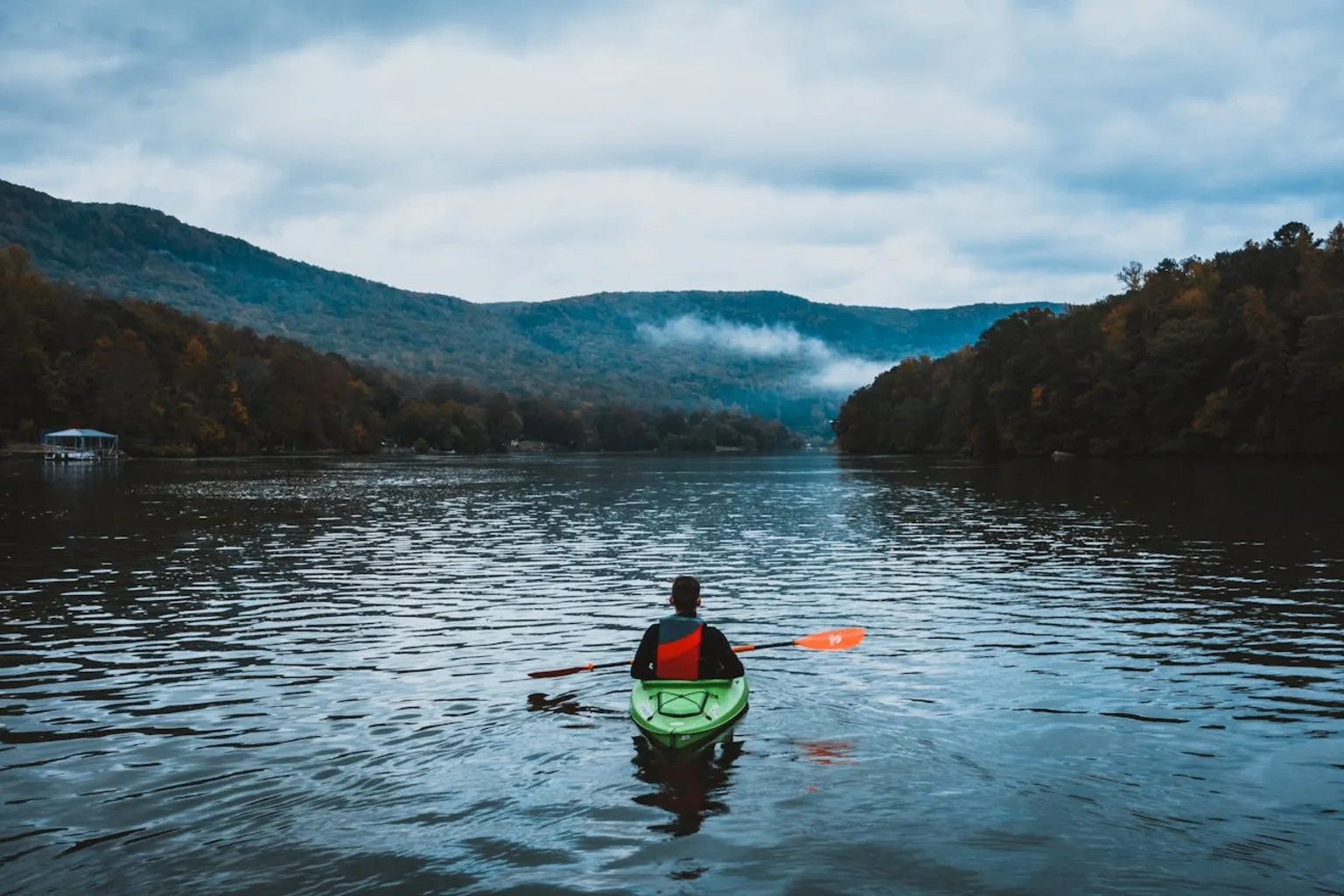
Lady Bird Lake is the go-to for flat-water paddling. No motorized boats are allowed, so conditions stay calm. Multiple outfitters along the shoreline rent kayaks ($15 to $30/hour), SUPs ($20 to $35/hour), and canoes. The Congress Avenue Bridge bat viewing from the water is a popular sunset paddle from March through October.
On Lake Travis, paddling options expand to open water. Austin Pedal Kayaks on the Hurst Creek Arm near Lakeway offers single, tandem, and pedal kayak rentals in a no-wake zone. Pace Bend Park on the south shore provides cove exploration along limestone cliffs. The best times for lake paddling are early morning (calm water, cooler temps) and late afternoon for sunset views.
Tubing
Guadalupe River tubing in New Braunfels and Canyon Lake (about 60 miles south of Austin) is a summer rite of passage in Central Texas. Outfitters in the Gruene and Canyon Lake areas rent tubes for $15 to $25 and provide shuttle service. The float takes two to four hours depending on flow rate. San Marcos River tubing, originating near the Texas State University campus, is a shorter and slightly less crowded alternative.
Stargazing and Dark Sky Access
Austin sits at the eastern edge of the Texas Hill Country, where light pollution drops off rapidly as you head west. Within 60 to 90 minutes of downtown, Bortle scale readings can reach 2 or even 1 on clear, moonless nights.
Enchanted Rock State Natural Area holds an International Dark Sky Park designation. Dripping Springs and Wimberley are both certified dark sky communities, with local ordinances limiting light pollution. The best viewing season runs from March through October, with the Milky Way most visible in June and July during new moon phases.
For casual stargazing closer to the city, the Lady Bird Johnson Wildflower Center and several parks in the Barton Creek area offer meaningfully darker skies than central Austin. The Austin Astronomical Society hosts regular public star parties at various locations around the metro.
Camping: Urban Proximity to True Wilderness
| Campground | Distance from Downtown | Sites | Access | Cost/Night |
|---|---|---|---|---|
| McKinney Falls State Park | 15 miles | Tent and RV | Easy road access | $15-$25 |
| Emma Long Metropolitan Park | 15 miles | Tent and RV | Lake Austin waterfront | $10-$15 |
| Pace Bend Park | 35 miles | Primitive | Lake Travis cliffs | $10-$20 |
| Pedernales Falls State Park | 30 miles | Tent and RV | River and trails | $15-$30 |
| Enchanted Rock SNA | 90 miles | Primitive/Walk-in | Dark sky hiking | $15-$25 |
| Krause Springs | 30 miles | Tent only | Spring-fed swimming | $12-$15 |
Emma Long Metropolitan Park deserves special mention. It is one of the few city-owned campgrounds in a major metro that provides direct waterfront access (Lake Austin), hiking, and swimming, all within 15 miles of downtown. Reserve early, especially for weekend stays from April through October.
For anyone considering a more regular camping habit, the Texas State Parks Annual Pass ($70) eliminates day-use fees across all 89 state parks. If you visit McKinney Falls, Pedernales Falls, and Enchanted Rock even twice each in a year, the pass pays for itself. Camping reservations at Texas state parks can be made up to five months in advance through the Texas Parks and Wildlife reservation system, and popular parks like Enchanted Rock sell out quickly for spring and fall weekends.
Fishing in the Austin Area
Central Texas offers solid freshwater fishing across multiple bodies of water and species. You do not need a boat to get started, though having one opens up substantially more options on the larger lakes.
Lake Travis is the premier fishing lake near Austin, with largemouth bass, white bass, striped bass, and catfish all present. White bass runs in late winter (February through March) draw anglers from across the state, with thousands of fish moving upstream through the Colorado River arms. Striped bass fishing is best in deeper water during summer months, where structure and thermoclines concentrate fish. Several guide services operate on the lake year-round, with half-day trips typically running $300 to $500 for one to two anglers.
Lady Bird Lake supports largemouth bass, carp, sunfish, and catfish, and is a surprisingly productive urban fishery. Bank fishing access is available along much of the Butler Trail, and kayak fishing has become increasingly popular since motorized boats are prohibited. The best bass fishing on Lady Bird Lake is typically in spring (March through May) around submerged structure and bridge pilings. A Texas freshwater fishing license is required for anyone 17 and older ($30 for residents, $58 for non-residents). Licenses can be purchased online through the Texas Parks and Wildlife Department website or at most sporting goods stores and Walmart locations.
The Guadalupe River below Canyon Lake Dam is one of the few trout fisheries in Texas. Texas Parks and Wildlife stocks rainbow trout from late November through early March, creating a seasonal cold-water fishery in an otherwise warm-water state. The stocked stretch runs about five miles below the dam, with public access at several road crossings and parks. Fly fishing has a dedicated following in this stretch, and local outfitters in New Braunfels offer guided trips and equipment rental.
Lake Buchanan, about 75 miles northwest, is the sleeper fishing destination of the Highland Lakes chain. Striped bass, white bass, largemouth bass, and channel catfish all thrive in its deeper, less-pressured waters. The lake’s size and remoteness keep boat traffic low compared to Lake Travis.
Birding and Wildlife Viewing
Austin sits along the Central Flyway, one of four major bird migration routes in North America, and at the ecological intersection of the Edwards Plateau, Blackland Prairie, and Post Oak Savannah. The result is remarkable bird diversity. Travis Audubon Society records regularly exceed 300 species observed in Travis County.
The Hornsby Bend Biosolids Management Plant (yes, a wastewater facility) is one of the best birding spots in Central Texas, attracting shorebirds, waterfowl, and raptors. Commons Ford Ranch Metropolitan Park on Lake Austin offers riparian habitat. Balcones Canyonlands National Wildlife Refuge, about 40 minutes northwest, protects habitat for the endangered golden-cheeked warbler and black-capped vireo.
The Congress Avenue Bridge bat colony (1.5 million Mexican free-tailed bats, March through October) is the most-watched wildlife spectacle in Austin, visible for free every evening at dusk from the bridge, the shoreline, or by kayak on Lady Bird Lake. Peak emergence is typically in August, when pup season swells the colony to its largest size.
Wild Basin Wilderness Preserve, Bright Leaf Preserve, and the Barton Creek Greenbelt are all productive birding and wildlife corridors within city limits. White-tailed deer, armadillos, coyotes, and the occasional gray fox are common sightings on Hill Country trails, particularly during dawn and dusk hours. During spring migration (March through May), warblers, tanagers, buntings, and flycatchers pass through in waves.
Seasonal Calendar: What to Do and When
Outdoor recreation in Austin follows a distinct seasonal rhythm driven by heat, rainfall, and wildlife patterns.
| Season | Best Activities | Conditions | Tips |
|---|---|---|---|
| Spring (Mar-May) | Hiking, biking, wildflowers, birding, fishing | 70s-80s, occasional rain, bluebonnets peak late March | Best overall season for outdoor activity. Enchanted Rock and Hamilton Pool require reservations. |
| Summer (Jun-Sep) | Swimming, lake sports, dawn hiking, stargazing | 95-105°F, dry, UV extreme | Shift outdoor activity to before 10 AM or after 6 PM. Hydration critical. Lake levels may drop. |
| Fall (Oct-Nov) | Hiking, mountain biking, golf, camping | 60s-80s, low humidity, clear skies | Second-best hiking season. Fall colors subtle but present (cypress, sumac). |
| Winter (Dec-Feb) | Trail running, golf, birding, trout fishing | 40s-60s, occasional freeze, cedar fever Dec-Feb | Cedar pollen peaks in January (8,000+ grains/m3). Guadalupe trout stocking Nov-Mar. |
Summer requires a shift in strategy. Experienced Austin outdoors people schedule hiking and biking before 10:00 AM, shift to water activities midday, and return to trails after 6:00 PM. Barton Springs and Deep Eddy become essential infrastructure rather than recreation, and dawn paddles on Lady Bird Lake replace midday runs. According to Neuhaus Realty Group‘s analysis of relocation client feedback, the summer heat adjustment is the single biggest lifestyle surprise for buyers moving from northern climates.
Best Neighborhoods for Outdoor Access
Where you live in Austin determines which outdoor activities are at your doorstep. Here is a quick breakdown by activity type.
| Activity | Best Neighborhoods | Why |
|---|---|---|
| Greenbelt hiking | Barton Hills, Zilker, South Lamar, Travis Heights | Direct trailhead access to Barton Creek Greenbelt |
| Lake access | Lakeway, Steiner Ranch, Hudson Bend, Volente | Waterfront or water-access neighborhoods on Lake Travis/Austin |
| Urban trail running/biking | Downtown, Bouldin Creek, East Austin, Mueller | Butler Trail, Southern Walnut Creek Trail, Lance Armstrong Bikeway |
| Mountain biking | Circle C, Shady Hollow, Oak Hill | SATN trail system, Greenbelt south access |
| Golf | Bee Cave, Barton Creek, Steiner Ranch, Avery Ranch | On-site or adjacent courses |
| Hill Country trails/nature | Dripping Springs, Wimberley, Spicewood | State parks, dark skies, swimming holes within 15 min |
For a comprehensive neighborhood comparison organized by lifestyle priorities, see the Complete Guide to Austin Neighborhoods by Lifestyle.
Outdoor Recreation Costs: What to Budget
Most outdoor recreation in Austin is free or very low cost. Here is what the main activities actually cost.
| Activity | Cost | Notes |
|---|---|---|
| Barton Creek Greenbelt | Free | Parking can be limited; some lots charge $5-$10 |
| Barton Springs Pool | $0-$5/visit | Free early morning and late evening |
| State park entry | $6-$8/person | Annual pass $70 (unlimited entry to all TX state parks) |
| Kayak rental (Lady Bird Lake) | $15-$30/hour | Multi-hour discounts common |
| SUP rental | $20-$35/hour | Lessons available $50-$75 |
| Boat rental (Lake Travis) | $300-$600/half day | Pontoon, ski boat, or wake boat |
| Disc golf | Free (public courses) | Starter disc set $25-$40 |
| Climbing gym day pass | $16-$28 | Monthly memberships $60-$90 |
| Public golf (municipal) | $25-$55/round | Twilight rates significantly lower |
| Guadalupe River tubing | $15-$25/person | Includes shuttle; bring cash |
| Texas fishing license | $30 resident/$58 non-resident | Required for ages 17+ |
The Texas State Parks Annual Pass ($70) is one of the best recreation values available. It covers unlimited day entry for the pass holder and all passengers in a single vehicle at all 89 Texas state parks, including Enchanted Rock, Pedernales Falls, McKinney Falls, and Colorado Bend.
Frequently Asked Questions
The Bottom Line for Homebuyers
Austin’s outdoor recreation infrastructure is not just a quality-of-life factor. It is a real estate consideration. Neighborhoods with greenbelt access, trail connectivity, and lake proximity consistently command price premiums, and that trend shows no signs of slowing as the metro continues to grow. Whether you prioritize dawn trail runs, weekend lake days, or year-round golf, the outdoor options here are as varied and accessible as any metro in the Sun Belt.
For buyers evaluating neighborhoods with outdoor access in mind, the Complete Guide to Moving to Austin covers neighborhood profiles, school districts, and cost of living alongside recreation access. The Retiring in Austin and the Hill Country guide is worth a read for anyone prioritizing golf communities, lake living, or Hill Country trail access.
For personalized neighborhood recommendations based on outdoor priorities, reach out to the team at Neuhaus Realty Group.