
Austin’s metro area spans more than 4,200 square miles, and the median home price ranges from $304,000 in Kyle to $2.6 million in Westlake. That spread matters because the “best” neighborhood depends entirely on how you want to live. A 28-year-old software engineer optimizing for walkability and nightlife has no use for a golf-course lot in Georgetown, and a couple looking for top-rated schools and a quiet cul-de-sac will not thrive in a downtown high-rise.
According to the Austin Board of Realtors, the metro-wide median sale price reached $426,220 in March 2026, down 3% year over year, with 5.5 months of inventory giving buyers more leverage than they have had since 2019 (Source). Travis County posted 6.6 months of supply and a 14.4% increase in pending sales. The market is cooler, inventory is deeper, and that creates an opening to be selective about where you land.
This guide profiles more than 20 neighborhoods and suburbs, organized by lifestyle priority. Each section includes median home prices, school ratings, commute context, and the specific qualities that make each area a fit for a particular way of living. Use it as a starting point, then dig into the neighborhood-level data that matters most to you.
How to Use This Guide
Every neighborhood in Austin involves tradeoffs. Shorter commutes cost more. Better schools usually mean higher property taxes. Walkability often comes with smaller lots. This guide groups neighborhoods by the lifestyle priority that defines them, but most areas fit more than one category.
If you see a neighborhood listed under “Outdoor Enthusiasts” but you also care about schools, check the school district notes in that section. If an affordable suburb interests you, scan the commute data before committing. The Complete Guide to Cost of Living in Austin covers the full financial picture, and the Complete Guide to Property Taxes in Austin breaks down the tax rates that vary dramatically by location.
A note on pricing: all median home prices cited in this guide reflect Q1 2026 closed-sale data from the Austin Board of Realtors and Austin-area MLS unless otherwise noted. Prices shift quarterly, and individual neighborhoods can move faster than the metro average.
Quick-Reference Neighborhood Comparison
Before the deep dives, here is a snapshot of 20 neighborhoods sorted by median price. Refer back to this table as you read each lifestyle section.
| Neighborhood/Suburb | Median Price (2026) | Walk Score | Top School District | Best For |
|---|---|---|---|---|
| Kyle | $304,000 | 22 | Hays CISD | Affordability, investment |
| Del Valle | $320,000 | 15 | Del Valle ISD | Affordability, acreage |
| Manor | $333,000 | 18 | Manor ISD | Affordability, new builds |
| Pflugerville | $391,000 | 25 | Pflugerville ISD | Affordability, schools |
| Georgetown | $430,000 | 30 | Georgetown ISD | Retirees, Sun City |
| Round Rock | $390,000 | 28 | Round Rock ISD | Schools, tech corridor |
| Cedar Park | $491,000 | 26 | Leander ISD | Young buyers, schools |
| Dripping Springs | $550,000 | 12 | Dripping Springs ISD | Hill Country, land, schools |
| East Austin | $645,000 | 75 | Austin ISD | Culture, food, nightlife |
| Bee Cave | $650,000 | 20 | Lake Travis ISD | Schools, Hill Country feel |
| South Congress (SoCo) | $675,000 | 85 | Austin ISD | Walkability, nightlife |
| Hyde Park | $700,000 | 80 | Austin ISD | Charm, walkability, UT |
| Lakeway | $725,000 | 15 | Lake Travis ISD | Lake, golf, retirees |
| Zilker | $850,000 | 72 | Austin ISD | Outdoor, parks, lifestyle |
| Mueller | $885,000 | 68 | Austin ISD | Walkability, urban village |
| Clarksville | $1,100,000 | 93 | Austin ISD | Walkability, charm |
| Tarrytown | $1,500,000 | 65 | Austin ISD | Established, central luxury |
| Downtown Austin | $575,000 (condo) | 94 | Austin ISD | Walkability, nightlife |
| Barton Creek | $2,330,000 | 10 | Eanes ISD | Luxury, golf, privacy |
| Westlake | $2,600,000 | 15 | Eanes ISD | Luxury, top schools |
Best Austin Neighborhoods for Young Professionals
Young professionals moving to Austin tend to prioritize three things: a short commute (or no commute for remote workers), walkable access to restaurants and bars, and a social scene that makes it easy to build a network. These five neighborhoods deliver on all three, at price points ranging from downtown condos to more affordable east-side options.
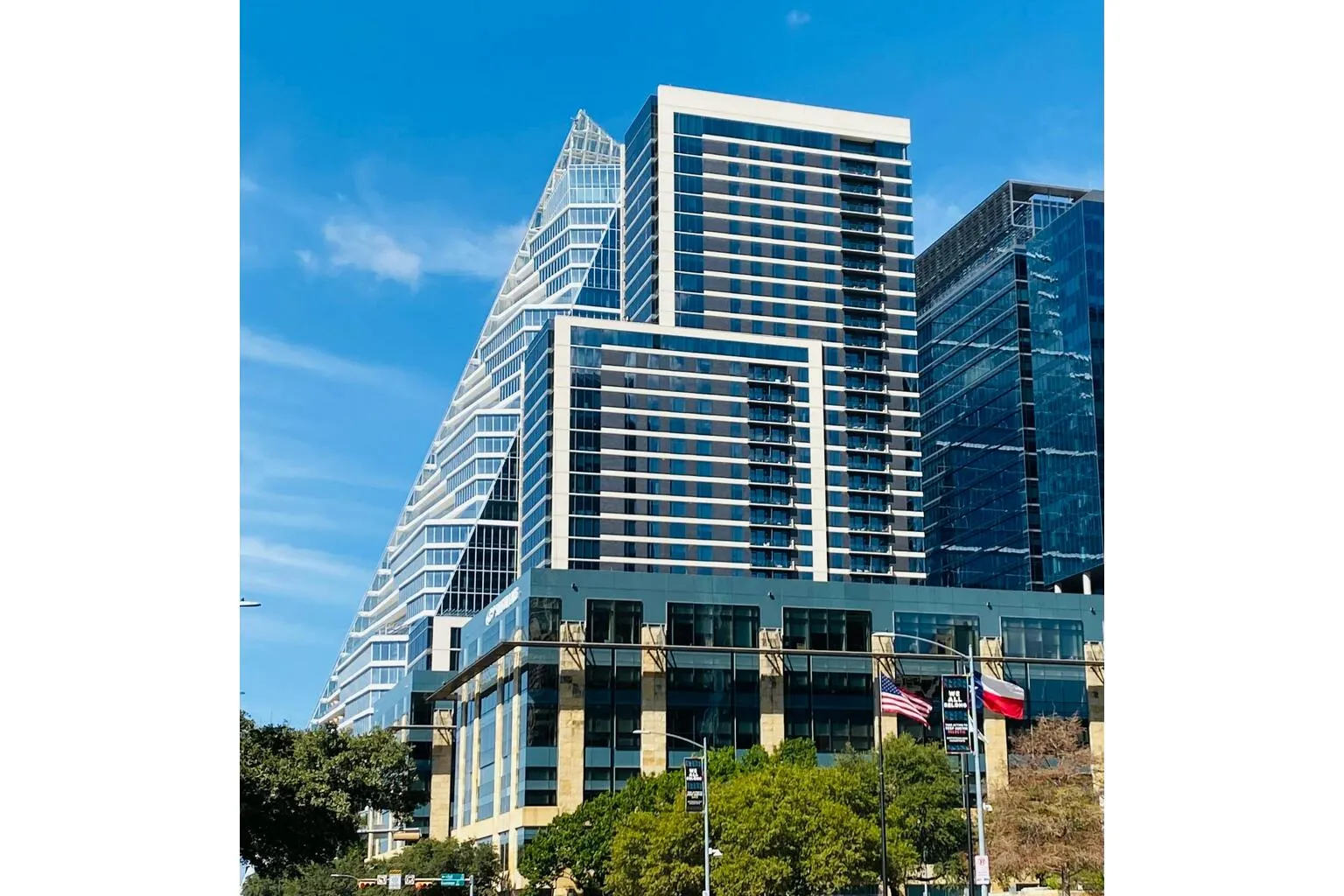
Downtown Austin
Walk Score: 94. The median condo price downtown sits around $575,000 in early 2026, though studios and one-bedrooms start closer to $350,000. Sixth Street, Rainey Street, and the Warehouse District put hundreds of bars, restaurants, and live music venues within a 10-minute walk. Cap Metro’s MetroRail connects to the Domain tech corridor in about 15 minutes from the Downtown Station, and the city’s Project Connect light rail system will eventually run north-south through downtown. For renters testing the market first, average one-bedroom rents run about $2,635 per month.
East Austin
The median home price in East Austin reached approximately $645,000 in Q1 2026, up 4.7% year over year according to Austin Board of Realtors data. East 6th Street and the blocks surrounding Cesar Chavez host some of the city’s best cocktail bars, taquerias, and live music venues. The cultural blend of long-established Hispanic and Black communities with newer creative and tech arrivals gives East Austin an energy that is distinct from any other part of the metro. Walk Score hovers around 75 depending on the specific block. Buyers should know that gentrification has reshaped pricing dramatically; this area’s median has more than tripled since 2000.
South Congress (SoCo)
South Congress Avenue is one of Austin’s most recognizable streets, lined with boutiques, food trucks, and the iconic Continental Club. The median home price in the broader South Congress area runs about $675,000, though bungalows on the east side of the corridor can still be found in the $500,000 range. Walk Score sits near 85. The commute to downtown is 10 minutes or less, and Barton Springs Pool and Zilker Park are within biking distance. For young professionals who want a blend of nightlife and outdoor access, SoCo is hard to beat.
The Domain (North Austin)
The Domain functions as Austin’s second downtown, a mixed-use district with offices, apartments, restaurants, and retail clustered around a walkable core. Median rents run about $1,761 per month for a one-bedroom. The area is purpose-built for tech workers: Apple, Amazon, Meta, Indeed, and dozens of other companies have offices within a 10-minute drive. Round Rock and Cedar Park lie just north, and the MetroRail stops at Kramer Station, making car-free commuting to downtown possible in about 15 minutes. The Domain skews younger, and for professionals whose jobs anchor them north of the river, this area eliminates the worst of Austin’s traffic.
Cherrywood and Brentwood
These two neighborhoods offer the best value for young professionals who want a central location without central-Austin pricing. Brentwood, in north-central Austin, averages about $1,620 per month for a one-bedroom rental, and homes for purchase range from $450,000 to $700,000 depending on lot size and condition. Cherrywood, east of I-35 near the University of Texas, has a similar price band. Both neighborhoods have strong coffee-shop and breakfast-taco cultures, dog-friendly parks, and an easy commute to downtown or the Domain. These are neighborhoods where you can own a home on a single tech salary without stretching into the $800,000 range.
Best Austin Neighborhoods for Outdoor Enthusiasts
Austin’s outdoor identity is real, not just a branding exercise. The city maintains more than 300 parks and 80 miles of trails, and the surrounding Hill Country adds hundreds more miles of hiking, mountain biking, and paddling. These neighborhoods put outdoor recreation at your doorstep.
Zilker
Zilker Park covers 350 acres at the south end of Lady Bird Lake, with direct access to the Barton Creek Greenbelt’s 12.7 miles of trails. Barton Springs Pool, the spring-fed swimming hole that stays 68 to 70 degrees year-round, sits inside the park. Homes in the Zilker neighborhood carry a median price around $850,000, reflecting both the central location and the park access. The Ann and Roy Butler Hike-and-Bike Trail, which draws more than 2.6 million visits per year, runs along the lake and is reachable by bike from most Zilker streets.
Lakeway
For lake-focused outdoor living, Lakeway is the anchor. Situated on the south shore of Lake Travis, Lakeway offers private marina access, public boat ramps, and swim beaches. The median home price sits around $725,000. Lakeway’s city park system includes 20+ miles of hiking and biking trails, and communities like Rough Hollow have their own yacht club and marina. The tradeoff is the commute: downtown Austin is 30 to 45 minutes depending on traffic along Highway 71 and the Bee Cave corridor. Lake Travis ISD serves the area with a TEA “A” rating.
Spicewood and Lago Vista
For buyers who want lake access at a lower price point, Spicewood (median around $500,000) and Lago Vista (around $400,000) sit on the north shore of Lake Travis. Both communities offer a more rural feel with larger lots and direct access to the water. Spicewood is home to Krause Springs, a privately owned swimming hole that draws visitors from across the state. Lago Vista has the Rusty Allen Airport for pilots and a network of community trails. Neither area is walkable, and the commute to central Austin runs 45 to 60 minutes, so these work best for remote workers or retirees.
Dripping Springs
Dripping Springs sits at the gateway to the Hill Country, about 25 miles west of downtown Austin along Highway 290. The median home price is approximately $550,000, and properties range from half-acre lots in master-planned communities to 10-acre Hill Country spreads. Hamilton Pool Preserve, Reimers Ranch (with 18 miles of mountain biking trails), and Pedernales Falls State Park are all within a 20-minute drive. The town has also become a destination for wineries and craft distilleries, with more than a dozen tasting rooms along the 290 corridor. Dripping Springs ISD carries a TEA “B” rating (89/100) with a 96.3% graduation rate.
Best Austin Neighborhoods for Top-Rated Schools
In Texas, school district boundaries often dictate where buyers look first. Property values and school quality are tightly linked, and the price difference between adjacent neighborhoods in different districts can be $200,000 or more for similar homes. According to the Texas Education Agency’s 2025 accountability ratings, three districts west of Austin consistently rank among the best in the state.
Westlake (Eanes ISD)
Eanes ISD ranks #1 in Texas and #7 nationally according to Niche’s 2026 rankings. Westlake High School is rated 19th among all public high schools in the country, with a 97.8% graduation rate and 74% of students enrolled in AP courses (92% score 3 or higher). The cost of entry is steep: the median home price in Westlake runs about $2.6 million. However, pockets of the district including Lost Creek and parts of the Barton Creek area can be found in the $800,000 to $1.2 million range. Ed Neuhaus, broker of Neuhaus Realty Group, notes that buyers relocating from coastal markets often target Eanes ISD specifically because the school quality rivals elite private schools at a fraction of the tuition cost.
Bee Cave and Lakeway (Lake Travis ISD)
Lake Travis ISD earned a TEA “A” rating in 2025, with strong campuses from elementary through high school. Bee Cave (median around $650,000) and Lakeway (median $725,000) are the two primary cities within the district. Communities like Lake Pointe, Sweetwater, and Serene Hills are built around the school system. The district has added campuses to keep pace with growth, and class sizes remain manageable compared to larger suburban districts. The Hill Country Galleria in Bee Cave provides a town-center feel with restaurants, shops, and entertainment.
Dripping Springs (Dripping Springs ISD)
Dripping Springs ISD carries a TEA “B” rating at 89/100, just one point below Lake Travis ISD’s “A.” The graduation rate is 96.3%, and the district has been adding programs in STEM and career readiness. At a median home price of $550,000, Dripping Springs represents a significant savings over Eanes ISD and Lake Travis ISD while still delivering strong academic outcomes. The school district comparison between these three systems is one of the most common questions from relocating buyers.
Round Rock (Round Rock ISD)
Round Rock ISD is one of the largest school districts in the Austin metro, serving more than 46,000 students across 55 campuses (Source). The district holds a TEA “A” rating and operates several specialty programs, including the STEM Academy at Round Rock High School. The median home price in Round Rock sits around $390,000, making it the most affordable option among the top-performing districts. For buyers coming from high-cost markets who need strong schools without the $700,000+ entry point, Round Rock is the default recommendation.
Best Luxury Neighborhoods in Austin
Austin’s luxury market (homes $1 million and above) accounted for roughly 12% of all closed sales in Q1 2026. Inventory in the luxury segment has expanded, giving buyers at the high end more options and negotiating room than they had during the 2021 to 2022 frenzy. Five neighborhoods anchor the luxury tier.
Westlake Hills and Rollingwood
These two incorporated cities within Eanes ISD are the center of Austin’s luxury market. Westlake Hills homes sit on elevated lots with Hill Country views, and Rollingwood offers a slightly more compact, established feel. Expect to pay $2.5 million and up for move-in-ready properties, with price per square foot running $450 to $700+. The proximity to downtown (15 minutes outside rush hour) and the Eanes ISD school system create sustained demand that insulates values even during market downturns.
Barton Creek
The median sale price in Barton Creek hit $2,330,000 over the last 12 months, down 3% from the prior year. This gated community west of MoPac features four golf courses (the Fazio Canyons course is one of the top-rated in Texas), a resort-style country club, and lots that range from half an acre to multiple acres. The community is set within the Barton Creek greenbelt, offering trail access from many properties. Barton Creek delivers the most complete “luxury compound” experience in the Austin area, combining golf, privacy, and Hill Country terrain in a single community. The comparison between Barton Creek and Spanish Oaks is worth reviewing for luxury golf-community buyers.
Tarrytown
Tarrytown is central Austin’s most established luxury neighborhood, with tree-lined streets, large lots, and mid-century homes alongside new construction. The median home price runs about $1.5 million. Tarrytown’s advantage is location: it sits just west of MoPac and north of Lake Austin, putting downtown Austin within a 10-minute drive and Whole Foods, restaurants, and boutiques within walking distance. Homes here trade on lot size and location rather than gated amenities.
Spanish Oaks
Spanish Oaks, south of Bee Cave, is a 1,200-acre gated community built around a Bobby Weed-designed golf course. Home prices range from $1.5 million to well over $5 million. Lots are typically one to three acres, and the community enforces strict architectural guidelines that maintain a consistent Hill Country aesthetic. With only about 400 homesites, Spanish Oaks is one of the most exclusive communities in the Austin metro.
Rob Roy
Rob Roy and Rob Roy on the Creek, in West Austin off 2222, offer large lots (typically half-acre to two acres) with Hill Country views. The median price runs $1.8 million to $2.5 million depending on the specific section. Rob Roy is not gated, which differentiates it from Barton Creek and Spanish Oaks, but the lots are large enough and the terrain steep enough that privacy is built into the topography. The neighborhood feeds into Eanes ISD.
Most Affordable Austin Neighborhoods
For buyers with a budget under $400,000, the most viable options are the suburbs ringing the metro’s outer edges. These communities have expanded rapidly since 2018, adding new construction inventory that has pushed prices down from their 2022 peaks.
| Suburb | Median Price (Q1 2026) | YoY Change | Avg. Commute to Downtown | Notable Feature |
|---|---|---|---|---|
| Kyle | $304,000 | -5.2% | 35-50 min | Strongest cash-flow market for investors |
| Del Valle | $320,000 | -3.8% | 20-30 min | Closest affordable suburb to downtown |
| Manor | $333,000 | -4.1% | 25-35 min | Heavy new construction inventory |
| Pflugerville | $391,000 | -7.0% | 20-30 min | Strong schools, established suburban feel |
| Georgetown | $430,000 | -2.5% | 40-55 min | Historic square, Sun City 55+ |
| Round Rock | $390,000 | -3.1% | 25-35 min | Best schools in this price range |
| Cedar Park | $491,000 | -5.6% | 25-35 min | Leander ISD, suburban amenities |
Pflugerville stands out for buyers who want the lowest entry point with the least compromise on commute time and schools. Pflugerville ISD is solid (TEA “C”), the suburb sits just 15 miles northeast of downtown, and the median price of $391,000 is down 7% year over year, representing one of the sharpest discounts in the metro (Source). For more detail on what each dollar buys, the Complete Guide to Cost of Living in Austin breaks down housing, taxes, and monthly budgets by area.
One important note about affordability: property taxes in Texas replace the income tax, and rates vary by taxing district. A $340,000 home in Pflugerville with a combined tax rate of $2.20 per $100 of assessed value will carry a different monthly payment than a $340,000 home in a MUD-heavy area of Manor where the effective rate could hit $2.80 or more. Always calculate the full monthly cost, not just the mortgage. The Complete Guide to MUDs, PIDs, and Special Taxing Districts explains how these districts affect your bottom line.
Most Walkable Neighborhoods in Austin
Austin is, broadly, a car-dependent city. The metro-wide Walk Score is 39. But pockets of genuine walkability exist, and for buyers who grew up in cities like New York, Chicago, or San Francisco, these neighborhoods can feel surprisingly livable without a car.
| Neighborhood | Walk Score | Transit Score | Median Price | Character |
|---|---|---|---|---|
| Downtown | 94 | 58 | $575,000 (condo) | High-rises, nightlife, office core |
| Clarksville | 93 | 45 | $1,100,000 | Village feel, historic homes, dining |
| West University | 89 | 52 | $425,000 (condo) | UT campus adjacent, most affordable walkable entry |
| South Congress | 85 | 42 | $675,000 | Boutiques, bars, iconic Austin strip |
| Holly | 82 | 38 | $620,000 | East side, Lady Bird Lake access |
| Hyde Park | 80 | 40 | $700,000 | Tree-lined streets, coffee shops, character homes |
| Mueller | 68 | 30 | $885,000 | Master-planned urban village, H-E-B, trails |
Clarksville deserves special mention. Tucked between MoPac and downtown, this neighborhood of about 800 homes has a Walk Score of 93, making it one of the most walkable residential areas in all of Texas. Clarksville was founded in 1871 by freed slaves, and its tree-canopied streets now feature local restaurants, an independent bookshop, and Jeffrey’s, one of Austin’s longest-running fine-dining establishments. The median price of $1.1 million reflects the premium for this level of walkability in a city where most neighborhoods require a car.
Mueller, on the other hand, was built to be walkable from the ground up. The 700-acre former airport site was redeveloped into a master-planned community with 140 acres of parks, 12 miles of internal trails, an H-E-B grocery store, and a mix of local and national retailers. The Walk Score of 68 is lower than the urban-core neighborhoods, but the experience of daily life is genuinely walkable within the community’s boundaries. Mueller sits just 3 miles from downtown, and the median home price of $885,000 reflects both the design quality and the central location.
Best Austin Neighborhoods for Retirees
Texas’s lack of state income tax, combined with the over-65 property tax freeze and substantial homestead exemptions, makes the Austin area appealing for retirees from high-tax states. Three areas stand out, each offering a different version of retirement living.
Georgetown (Sun City)
Sun City Georgetown is the largest active-adult community in Texas, built by Del Webb. The community includes three golf courses, five activity centers with pools and dance studios, 14 miles of hiking trails, and more than 50 official clubs and interest groups. The median home price sits around $415,000, with HOA fees of $1,200 per year. Georgetown itself has a charming historic square with restaurants, galleries, and Southwestern University. The tradeoff is distance: Georgetown is about 30 miles north of downtown Austin, making it a 40 to 55 minute drive in traffic. For retirees whose social life will center on the community itself, that distance rarely matters. For an in-depth look at the best Austin suburbs for retirees, the neighborhood-level data is worth reviewing.
Kissing Tree (San Marcos)
Kissing Tree, in San Marcos, is a dedicated 55+ community with an average home price around $515,000. The community features an 18-hole golf course, 8 pickleball courts, a resort-style pool complex, and more than 100 clubs and organized activities. San Marcos sits about 30 miles south of Austin along the I-35 corridor, with access to the San Marcos River (one of the best tubing and kayaking spots in Texas). The slightly higher price point compared to Sun City reflects newer construction and a more resort-oriented amenity package.
Lakeway
Lakeway attracts retirees who want lake access, golf, and proximity to Hill Country recreation without the full 55+ community format. The median home price of $725,000 is higher, but Lakeway offers a broader range of housing types, from lock-and-leave condos to lakefront estates. The Lakeway Resort and Spa, multiple golf courses, and the city’s 20+ miles of trails make it a year-round recreation hub. Lake Travis ISD serves the area, which matters for retirees buying homes they may eventually sell to younger buyers. For the full guide to downsizing in Austin, including bridge-loan strategies and timing, review the dedicated guide.
Best Austin Neighborhoods for Lake Living
The Highland Lakes chain, a series of reservoirs along the Colorado River, defines lake living in the Austin area. Lake Travis is the largest and most popular, but Lake Austin, Lake LBJ, and Canyon Lake each offer distinct experiences.
Waterfront homes on Lake Travis range from $800,000 for water-access lots (shared dock, community boat ramp) to $5 million or more for deep-water lakefront with a private dock. The Lower Colorado River Authority (LCRA) manages dock permits, and the permitting process can take 6 to 12 months. Water levels fluctuate based on rainfall and drought conditions, so understanding the difference between “flood pool” and “conservation pool” is essential before buying waterfront.
Lakeway (median $725,000) and Spicewood (median $500,000) are the two primary lake communities on Lake Travis. Lago Vista (median $400,000) sits on the north shore and offers the most affordable lake-access entry point. For buyers who want lake proximity without lakefront pricing, communities like Rough Hollow in Lakeway include a yacht club and marina access as part of the HOA amenity package.
Lake Austin, which runs through central Austin, is the most exclusive lake address. Homes on Lake Austin start around $2 million and can exceed $10 million. The lake is smaller, calmer, and more private than Lake Travis, with wake restrictions in most areas. For a deep dive into waterfront buying, including dock permits, flood pool risks, and financing, see the Complete Guide to Buying Waterfront on Lake Travis.
Best Austin Neighborhoods for Real Estate Investment
Austin’s metro-wide cap rate averaged 3.23% in early 2025, below the 5% to 7% range most single-property investors target. But cap rates vary enormously by zip code, and several areas offer meaningfully better returns.
Kyle remains the strongest cash-flow market in the Austin metro. The median closed price of $325,000 combined with rents of $1,400 to $1,600 per month produces gross yields that clear 5%. The 78725 zip code (southeast Austin, Del Valle area) posted the highest cap rate in the metro at 6.45% as of early 2025. East Austin, Windsor Park, and Cedar Park offer both rental demand and long-term appreciation driven by infrastructure upgrades and walkability improvements.
For investors weighing cash flow against appreciation, the Complete Guide to Investment Property in Austin covers cap rate analysis, DSCR financing, entity structuring, and neighborhood-level rental data. One-bedroom units in the Austin metro average $1,725 per month, with two-bedroom rents near $2,140, supporting gross rental yields between 5% and 6.5% depending on location and property condition.
Short-term rental investors should note that Austin regulates STRs by type. Type 1 licenses (owner-occupied) are available across the city, but Type 2 (non-owner-occupied in residential zones) are no longer being issued in most areas. The rules matter before you commit capital. Lakeway, Dripping Springs, and unincorporated Travis County have different STR frameworks, making them worth evaluating as alternatives.
Best Austin Neighborhoods for Remote Workers
Remote work has reshuffled Austin’s neighborhood hierarchy. When a daily commute disappears, buyers can optimize for home office space, internet reliability, and quality of life rather than proximity to an employment center. Several neighborhoods and suburbs have emerged as remote-work favorites.
Dripping Springs, with its Hill Country setting, quiet streets, and expanding fiber internet coverage, has attracted a wave of remote workers since 2020. The median price of $550,000 buys significantly more space than the same budget in central Austin, and many newer subdivisions include dedicated home-office floor plans. The 290 corridor’s wineries and restaurants provide social outlets without the 30-mile drive into the city.
Mueller’s urban-village design makes it appealing for remote workers who want to walk to a coffee shop for a change of scenery. The H-E-B, Thinkery children’s museum, and park system are all within walking distance, and the 3-mile commute to downtown means access to co-working spaces and networking events without a long drive.
The Domain area and North Austin offer fast internet (AT&T Fiber and Google Fiber cover most of the corridor), co-working spaces, and a restaurant scene that provides the kind of midday variety remote workers crave. Cedar Park and Leander, just north, pair affordable housing with reliable fiber coverage.
For internet-dependent workers, coverage varies block by block. AT&T Fiber and Google Fiber are available in most of central Austin, Round Rock, Cedar Park, and Pflugerville, but rural areas like Spicewood and parts of Dripping Springs may be limited to fixed wireless or satellite. Verify fiber availability at a specific address before committing to a purchase.
Best Austin Neighborhoods for Nightlife and Entertainment
Austin’s “Live Music Capital of the World” identity is anchored in a handful of neighborhoods where the density of venues, bars, and restaurants creates a walkable entertainment district. For buyers who want nightlife within walking or biking distance of home, these areas deliver.
Downtown / Sixth Street Corridor: The stretch of 6th Street between Congress Avenue and I-35, plus the adjacent Rainey Street district, is the densest concentration of bars and music venues in Texas. ACL Live at the Moody Theater, Stubb’s BBQ, and the Paramount Theatre are all here. Living downtown means walking home from a show, not calling a rideshare.
East Sixth Street: The east side of 6th Street (east of I-35) has become the preferred nightlife corridor for locals, with cocktail bars, dive bars, and taquerias replacing the college-bar atmosphere of West 6th. Venues like Whisler’s, Nickel City, and Hotel Vegas anchor the scene.
South Congress: The Continental Club, C-Boy’s Heart and Soul, and a rotating cast of food trucks make SoCo the best option for buyers who want live music in a neighborhood setting rather than a dense bar district. The strip is walkable and well-lit, with a more relaxed energy than 6th Street.
North Loop: This small commercial strip along North Loop Boulevard in north-central Austin has emerged as a low-key alternative for vinyl shops, craft cocktail bars, and independent restaurants. Home prices in the surrounding area run $500,000 to $700,000, and the neighborhood draws a slightly older, more settled crowd than East 6th or Rainey.
Best Hill Country Neighborhoods Near Austin
The Texas Hill Country begins at Austin’s western edge and extends southwest toward Fredericksburg, Kerrville, and the Guadalupe River. For buyers who want land, views, wildlife, and a slower pace without fully disconnecting from the city, several communities sit in the overlap zone between suburban convenience and rural Hill Country living.
Dripping Springs (median $550,000) is the most accessible Hill Country town from Austin, with a 25-minute commute to the Y at Oak Hill. Bee Cave (median $650,000) and Lakeway (median $725,000) offer more suburban infrastructure. Wimberley (median around $475,000), about 40 miles southwest, provides a more artistic, small-town Hill Country experience with galleries, the Wimberley Market Days, and Blue Hole swimming.
For buyers seeking acreage, the areas between Dripping Springs and Johnson City along Highway 290 offer 5 to 50-acre tracts with Hill Country views, often with agricultural exemptions that keep property taxes low. Well water and septic systems are standard outside city limits. The Complete Guide to Well Water and Septic Systems in the Hill Country covers what every buyer should know before purchasing a rural property, and the Complete Guide to Buying Land in the Texas Hill Country addresses financing, water rights, and mineral rights.
Breakaway Park in Cedar Park represents a unique niche: the only fly-in neighborhood in the Austin suburbs, combining a private airstrip with residential lots for buyers whose lifestyle includes general aviation.
How Property Taxes Vary by Neighborhood
Texas has no state income tax, but property taxes fund local government, school districts, and infrastructure. The effective rate varies from about $1.60 per $100 of assessed value in some unincorporated areas to $2.80 or more in Municipal Utility Districts (MUDs). That difference is significant: on a $400,000 home, the annual tax bill swings from $6,400 to $11,200 depending on location.
Key variables include:
- School district rate: Eanes ISD has a lower M&O rate than Austin ISD, but homes cost 3 to 4 times more. Round Rock ISD and Leander ISD rates fall in the middle.
- MUD/PID assessments: Many newer subdivisions in Manor, Pflugerville, and Kyle sit in special taxing districts that add $0.40 to $1.00+ per $100 to the base rate. Always check whether a property is in a MUD before making an offer.
- Homestead exemption: The general homestead exemption now includes a $140,000 school district exemption (increased to $140,000 under SB 4 and Proposition 13, approved November 2025) (Source). Over-65 homeowners get an additional freeze on the school district portion of their taxes. The Complete Guide to Homestead Exemption in Texas walks through every exemption type and filing deadline.
- City vs. ETJ vs. unincorporated: Homes inside Austin city limits pay the city tax rate (about $0.44 per $100). Homes in the ETJ (extraterritorial jurisdiction) do not. Some Hill Country properties benefit from being in a strong school district but outside any city limits, reducing the total rate substantially.
For a full breakdown by taxing entity, see the Complete Guide to Property Taxes in Austin.
How to Match Your Lifestyle to the Right Neighborhood
The data in this guide covers pricing, schools, walkability, and recreation, but the right neighborhood ultimately comes down to how you spend your weekdays and weekends. Here is a framework for narrowing the list:
- Define your commute tolerance. If you work downtown, every neighborhood within 20 minutes (Zilker, SoCo, East Austin, Hyde Park, Mueller) stays on the table. If you work at the Domain or Apple campus, flip the map north to Cedar Park, Round Rock, and Pflugerville. Remote workers can optimize for space and setting instead.
- Rank your top three priorities. Schools, walkability, price, lot size, outdoor access, nightlife, investment return. Be honest about what you will actually use daily versus what sounds appealing in theory.
- Set a monthly budget, not just a purchase price. A $350,000 home in a MUD with a 2.8% tax rate and $300/month HOA has the same monthly cost as a $420,000 home in an area with a 1.9% rate and no HOA. Always run the full payment calculation including property taxes, insurance, and any HOA or MUD assessments.
- Visit at different times. A neighborhood that feels quiet on a Tuesday afternoon may have a bar noise problem at midnight on Saturday. A commute that takes 15 minutes at 10 a.m. could take 45 minutes at 5:30 p.m. Drive the route during rush hour before you commit.
- Check what is being built nearby. Austin’s growth means new development can change a neighborhood’s character in 2 to 3 years. A quiet street next to a vacant lot may soon face a 300-unit apartment complex. The City of Austin’s permitting portal shows active and pending projects.
For buyers working with Neuhaus Realty Group, neighborhood-level pricing data, school boundary verification, and tax-rate analysis are part of the standard buyer consultation. Ed Neuhaus covers the Hill Country corridor from Bee Cave to Dripping Springs and the northern suburbs from Cedar Park to Georgetown, providing pricing context that goes beyond metro-wide averages.
Austin Neighborhoods by Employment Center
Where you work (or where your office is on hybrid days) should shape your neighborhood shortlist. Here are the major employment centers and the neighborhoods that pair best with each.
Downtown Austin (State Capitol, UT Austin, financial district): Zilker, SoCo, Clarksville, East Austin, Hyde Park, Travis Heights. All within 15 minutes or accessible by bus/bike.
Domain / North Burnet (Apple, Meta, Amazon, Indeed): Cedar Park, Round Rock, Pflugerville, The Domain, North Austin, Wells Branch. Most within 15 to 25 minutes.
Tesla Gigafactory (Southeast Travis County): Del Valle, Kyle, Buda, East Austin. The Gigafactory sits at the intersection of 130 and 71. Del Valle is 15 minutes away, Kyle is 25 minutes via 130 toll road.
Samsung / Tech Ridge (Northeast Austin): Pflugerville, Round Rock, Manor. Samsung’s fab sits near Parmer Lane and I-35, making Pflugerville and Round Rock the shortest commutes at 10 to 20 minutes.
Hill Country employers (remote, healthcare, education): Bee Cave, Lakeway, Dripping Springs, Spicewood. The Bee Cave corridor has added medical offices, retail, and service employers that support a local workforce without requiring a commute into the city.
Frequently Asked Questions
Finding Your Austin Neighborhood
Austin’s neighborhood diversity is one of its greatest strengths as a real estate market. A $304,000 starter home in Kyle and a $2.6 million estate in Westlake exist within the same metro, connected by a 40-minute drive on I-35. The neighborhoods in between cover every point on the spectrum: walkable urban villages, lake communities, Hill Country acreage, top-rated school zones, and affordable suburbs with strong rental yields.
The data in this guide reflects Q1 2026 market conditions, and prices in individual neighborhoods can shift 5% to 10% in either direction over the course of a year. Use this as a starting framework, then get neighborhood-specific pricing from an agent who tracks the micro-markets.
For deeper exploration of any topic covered here, the full Neuhaus Realty Group guide library includes dedicated guides on first-time homebuying, getting a mortgage, home inspections, HOAs, and more. Each guide is updated with current data and designed to answer the questions that buyers, sellers, and investors ask most often.