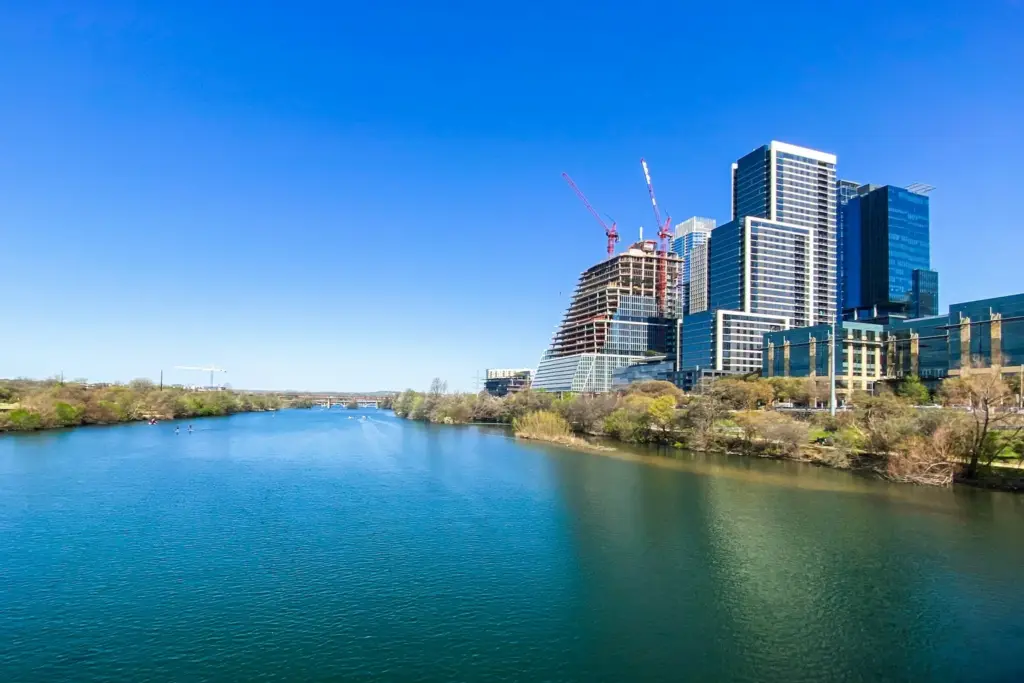
Austin’s median home price sits at $440,000 in early 2026, and a single adult needs roughly $98,550 per year to live comfortably in the metro. Those two numbers tell you more about Austin’s cost of living than any index score ever could. The city is no longer the scrappy, affordable alternative to coastal metros that it was a decade ago, but it still delivers significant savings compared to San Francisco, Los Angeles, and New York.
According to the Bureau of Labor Statistics and multiple regional cost indices, Austin’s overall cost of living runs approximately 4% below the national average. That figure surprises people who assume Texas is dirt cheap across the board. The reality is more nuanced: Austin’s housing costs track close to the national median, groceries run 3-4% below average, and the absence of state income tax saves the average household thousands each year. But property taxes hit harder than most newcomers expect, and childcare costs rival those of much larger cities.
The Austin-Round Rock-Georgetown metro area has added more than 500,000 residents since 2010, and that growth reshaped every cost category. Corporate relocations from Tesla, Apple, Google, Meta, Oracle, and Samsung brought high-paying jobs and pushed housing prices upward. At the same time, a construction boom that delivered tens of thousands of new apartments has cooled rents from their 2022 peak. The result is a cost profile that looks dramatically different depending on whether you rent or own, where you live within the metro, and how you structure your daily spending.
This guide breaks down every major expense category with actual 2026 numbers, compares Austin to other cities people commonly relocate from, and builds realistic monthly budgets for different household types. Whether you are evaluating a job offer, planning a move, or just trying to figure out if your salary stretches far enough, the data here will give you a clear picture.
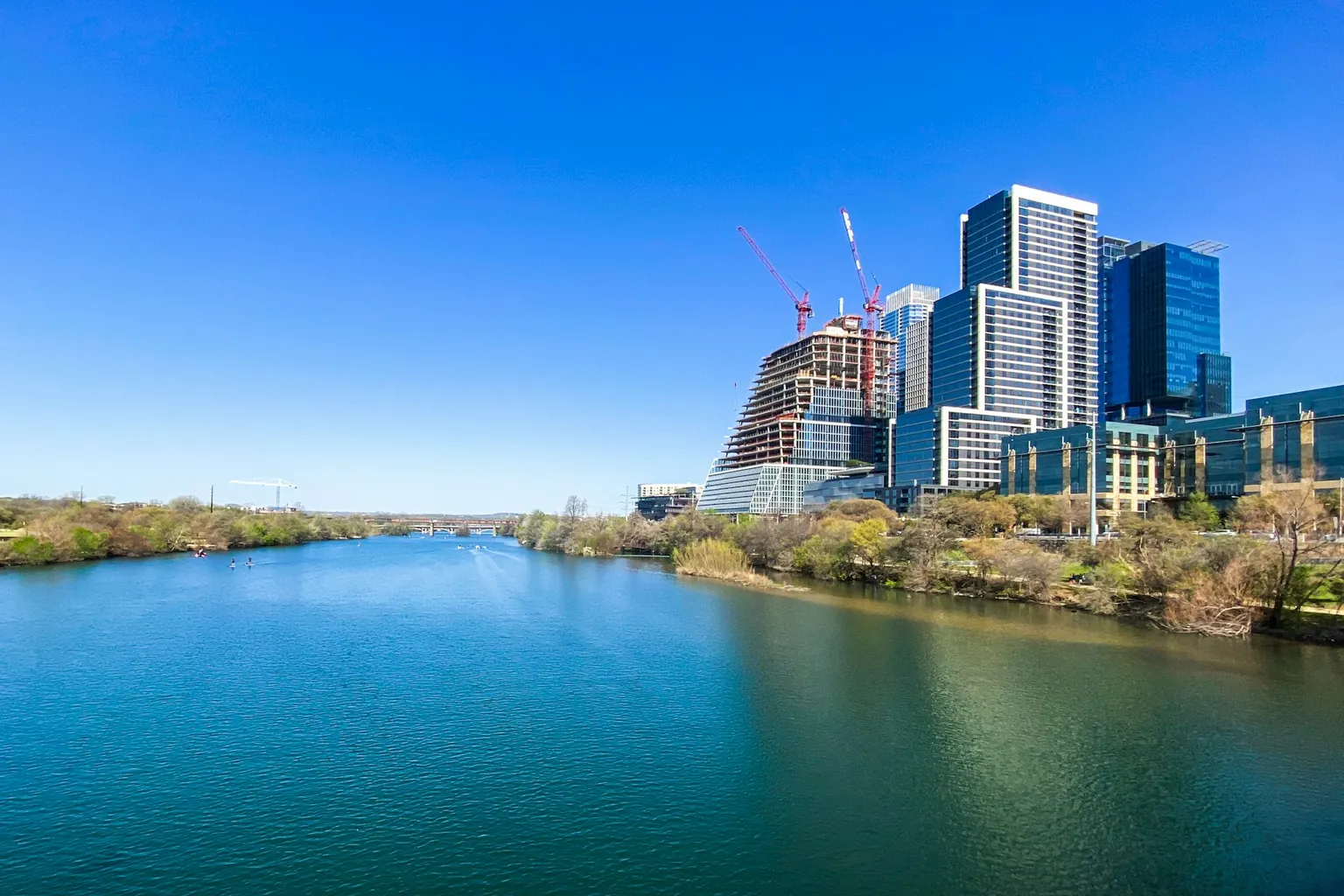
Housing Costs: Buying a Home in Austin in 2026
Housing is the single largest expense for Austin residents, and prices vary enormously by location. The metro-wide median home price of $440,000 obscures a range that runs from $380,000 in Georgetown to $2.6 million in Westlake. Where you buy determines your total housing cost more than any other factor.
| Area | Median Home Price (2026) | Monthly Payment (20% Down, 6.5%) | Monthly Payment (5% Down, 6.8%) |
|---|---|---|---|
| Georgetown | $380,000 | $1,922 | $2,812 |
| Round Rock | $400,000 | $2,023 | $2,960 |
| Cedar Park | $425,000 | $2,150 | $3,145 |
| Pflugerville | $400,000 | $2,023 | $2,960 |
| Dripping Springs | $550,000 | $2,782 | $4,070 |
| Bee Cave | $650,000 | $3,288 | $4,811 |
| Lakeway | $725,000 | $3,668 | $5,367 |
| Westlake | $2,600,000 | $13,156 | $19,245 |
These monthly payment estimates include principal, interest, property taxes (estimated at 2.0% effective rate), and homeowners insurance ($2,400/year average). They do not include HOA fees, which run $0-$300/month depending on the community, or mortgage insurance for buyers putting less than 20% down.
The Austin housing market corrected significantly from its 2022 peak, when median prices briefly touched $550,000. The current $440,000 metro median represents roughly a 20% decline from that peak, though prices have stabilized through early 2026. Inventory levels remain elevated compared to the pandemic years, giving buyers more negotiating leverage than they have had since 2019. For a deeper look at what income you need to buy, see how much you need to earn to buy a home in Austin.
Housing Costs: Renting in Austin in 2026
Austin’s rental market has softened considerably from the 2022 highs. The average one-bedroom apartment rents for $1,398-$1,612 per month, depending on the source and exact area. Two-bedroom units average $1,798-$2,129. Rents have dropped roughly $200 per month from their peak, driven by a wave of new apartment construction that added thousands of units to the market.
| Neighborhood/Area | Average 1BR Rent | Average 2BR Rent |
|---|---|---|
| Downtown Austin | $2,883 | $4,225 |
| 2nd Street District | $3,198 | $4,500+ |
| Bouldin Creek / South Congress | $2,482 | $3,100 |
| East Austin | $1,600 | $2,100 |
| North Austin / The Domain | $1,450 | $1,850 |
| Cedar Park / Leander | $1,350 | $1,650 |
| Round Rock / Pflugerville | $1,300 | $1,600 |
| Kyle / Buda / San Marcos | $1,200 | $1,450 |
Renters in Austin should budget for additional costs beyond the monthly rent: renter’s insurance ($15-$30/month), parking ($75-$200/month in downtown areas, often included in suburban complexes), pet fees ($25-$75/month per pet plus deposits), and utilities (covered below). Most apartment complexes also charge administrative fees, trash/valet trash fees ($25-$50/month), and amenity fees.
For a detailed comparison of whether renting or buying makes more financial sense at current rates, see Rent vs. Buy in Austin 2026: The Real Math.
Property Taxes: The Hidden Cost That Catches Newcomers
Texas has no state income tax. That is the headline every relocator sees first. The part they discover later is that Texas funds local services almost entirely through property taxes, and the combined rates in the Austin metro are among the highest in the country.
A homeowner inside Austin city limits (Austin ISD) pays a combined rate of approximately $2.07 per $100 of assessed value. On a $500,000 home with a $140,000 school district homestead exemption and a $100,000 general homestead exemption (where applicable), the annual tax bill runs roughly $7,500-$9,500 depending on exact exemptions and district overlaps.
| Taxing Entity | Rate per $100 (2026) |
|---|---|
| Austin ISD | $0.9252 |
| City of Austin | $0.5240 |
| Travis County | $0.3758 |
| Austin Community College | $0.1279 |
| Central Health | $0.1180 |
| Total (typical, inside city) | $2.0709 |
If your home is in a Municipal Utility District (MUD), add another $0.25-$1.00 per $100. That can push effective rates above 2.5%. Many newer subdivisions in the Austin suburbs sit within MUDs, and buyers who do not account for this end up with monthly payments $200-$500 higher than expected.
Filing a homestead exemption is not optional if you want to keep costs manageable. The school district homestead exemption alone ($140,000 as of January 1, 2026, following Proposition 4) saves roughly $1,300 per year on a home inside Austin ISD. Over-65 and disabled veteran exemptions provide additional relief. For a complete breakdown, see our Complete Guide to Property Taxes in Austin.
The No-Income-Tax Advantage (and Its Limits)
Texas is one of nine states with no personal income tax. For a household earning $150,000 per year, this saves approximately $7,500-$12,000 annually compared to California (which taxes that income at roughly 6-8% after deductions) or New York (5-7%). The savings are real and significant, especially for high earners.
But the math is not as simple as “no income tax equals lower taxes overall.” Texas makes up the difference through property taxes and sales tax. The combined state and local sales tax rate in Austin is 8.25% (6.25% state plus 2% local). That rate applies to most goods (groceries are exempt in Texas, which is a meaningful benefit).
For a household earning $150,000 and buying a $500,000 home, the total state and local tax burden in Austin is roughly comparable to a city like Denver or Nashville. It is substantially lower than San Francisco, New York, or Chicago. The real tax advantage kicks in at higher incomes, where the absence of a state income tax bracket produces progressively larger savings.
Utilities: Electricity, Water, and Internet
Austin Energy, the city-owned electric utility, charges residential customers an average of approximately 12 cents per kilowatt-hour. That rate is roughly 30% below the national average, partly because Austin Energy generates a significant portion of its power from wind and solar. Unlike most of Texas, Austin is not on a deregulated retail electricity market. You do not choose your provider. Austin Energy is it.
| Utility | Average Monthly Cost | Notes |
|---|---|---|
| Electricity | $150-$225 | Higher in summer (AC); Austin Energy tiered rates |
| Water / Wastewater | $85-$110 | Austin Water; rates increase with usage tiers |
| Natural Gas | $30-$50 | Texas Gas Service; minimal in summer |
| Internet | $50-$80 | AT&T Fiber, Google Fiber, Spectrum available |
| Cell Phone | $50-$90 | National carriers; same rates as anywhere |
| Trash / Recycling | $0-$30 | Included in Austin city bill; varies in ETJ |
| Total Utilities | $365-$585 | Varies by home size and season |
Summer electricity bills deserve special attention. Austin averages 105 days per year above 90 degrees, and July-August temperatures routinely exceed 100 degrees for stretches at a time. Running air conditioning in a 2,000-square-foot home during peak summer can push monthly electric bills to $300-$400. Austin Energy uses tiered pricing that charges more per kWh as consumption rises, which amplifies the summer spike.
Water costs are rising. Austin Water has implemented rate increases in recent years to fund infrastructure improvements and account for drought conditions. Watering your lawn during summer drought restrictions (odd/even schedules, twice-weekly limits) is a constant consideration for homeowners. Properties in the Hill Country on well water avoid city water costs but face their own expenses for well maintenance and treatment systems.
Internet service in Austin is better than most Texas cities. Google Fiber and AT&T Fiber both offer gigabit service in many neighborhoods, typically for $70-$80 per month. Spectrum provides cable internet as a lower-cost alternative. Coverage varies by neighborhood, so checking availability at a specific address before signing a lease or buying a home is worth doing.
One utility cost that trips up Hill Country homeowners: well water and septic. Properties outside city limits often rely on private wells and septic systems instead of municipal water and sewer. While this eliminates monthly water utility bills, the tradeoff is well pump maintenance ($200-$500 per year), water treatment systems ($1,000-$3,000 to install, $200-$400 per year to maintain), and septic pumping ($300-$500 every 3-5 years). Properties on the Edwards Aquifer face additional monitoring requirements.
Groceries and Food Costs
Groceries in Austin run 3-4% below the national average, thanks largely to H-E-B. The Texas-based grocery chain dominates the market and consistently prices below Walmart, Kroger, and national chains. A Consumer Reports analysis found H-E-B’s average prices slightly lower than Walmart’s, which is notable given H-E-B’s reputation for high-quality store brands.
A single adult should budget $350-$450 per month for groceries. A household of four spends $800-$1,100 per month on average, depending on dietary preferences and how often they shop at H-E-B versus Whole Foods or specialty stores. The USDA’s moderate-cost food plan estimates $328-$388 per month for a single adult nationally; Austin tracks close to or slightly below that figure.
| Household Size | Monthly Grocery Budget (Moderate) | Monthly Grocery Budget (Liberal) |
|---|---|---|
| Single adult | $350 | $500 |
| Couple, no children | $600 | $850 |
| Household of 3 | $750 | $1,000 |
| Household of 4 | $900 | $1,200 |
Dining out is a different story. Austin’s restaurant scene is extensive and ranges from $3 breakfast tacos at food trucks to $200-per-person fine dining. A realistic dining-out budget for someone who eats lunch out twice a week and dinner out once a week runs $400-$600 per month. Austin’s food truck culture provides genuinely affordable options that do not exist in most cities at this price level.
Transportation: Car-Dependent but Improving
Austin is a car-dependent city. That is the blunt truth, and it shapes your transportation budget significantly. Public transit exists through Capital Metro (buses and the MetroRail commuter line), but the system covers a fraction of the metro area and does not serve most suburban communities.
| Transportation Expense | Monthly Cost | Annual Cost |
|---|---|---|
| Car payment (average new) | $700-$750 | $8,400-$9,000 |
| Car insurance (full coverage) | $218 | $2,619 |
| Gas (avg. 12,000 mi/yr, 25 mpg) | $100-$155 | $1,200-$1,860 |
| Toll roads (regular commuter) | $100-$300 | $1,200-$3,600 |
| Maintenance / repairs | $100-$150 | $1,200-$1,800 |
| Registration / inspection | $7 | $80 |
| Total (with car payment) | $1,225-$1,580 | $14,700-$18,960 |
| Total (car paid off) | $525-$830 | $6,300-$9,960 |
Car insurance in Austin averages $218 per month for full coverage, or $2,619 per year. That is $12 below the Texas state average but $106 above the national average. Texas requires minimum liability coverage of 30/60/25, but most financial advisors recommend significantly higher limits given Austin’s traffic density.
Toll roads are a significant cost that relocators often underestimate. The Central Texas Regional Mobility Authority (CTRMA) operates several toll roads, including 183A, 290 Toll, 45SW, and the MoPac Express Lane. Rates increased 3.01% on January 1, 2026. A commuter using toll roads daily from Cedar Park to downtown Austin can easily spend $200-$300 per month. Drivers without a TxTag or TollTag pay 50% more at each tolling point. Gas prices in Central Texas have been volatile in 2026, ranging from lows around $2.50 per gallon to spikes above $3.80 in April.
Project Connect, Austin’s voter-approved transit expansion, will bring light rail to the city, but the first lines are not expected to open until the early 2030s. Until then, owning a car is essentially a requirement for most residents.
One workaround: some remote workers and downtown employees go car-light by living in walkable neighborhoods like Mueller, South Congress, or The Domain. These areas have grocery stores, restaurants, and entertainment within walking distance, and Cap Metro bus service provides reasonable connections to downtown. Going from two cars to one saves a household $500-$800 per month. Going fully car-free is possible but limiting; most residents who try it eventually concede that Austin’s layout demands at least one vehicle for errands, weekend trips, and accessing the Hill Country.
Healthcare Costs
Healthcare in Austin costs roughly what it costs in other major Texas metros, which is to say it is not cheap. The average monthly premium for an individual health insurance plan on the ACA marketplace in Texas is $826 in 2026, up approximately 35% from 2025 due to the expiration of enhanced premium tax credits. After subsidies, a 40-year-old earning $50,000 per year pays closer to $124-$300 per month depending on the plan selected.
Employer-sponsored insurance, which covers the majority of Austin’s workforce, typically costs employees $150-$400 per month for individual coverage and $400-$1,200 per month for a plan covering dependents. These are the employee’s share after the employer contribution.
Austin has strong healthcare infrastructure. Major hospital systems include Ascension Seton, St. David’s HealthCare, Baylor Scott & White, and Dell Medical School at UT Austin. Access to specialists is generally good, though wait times for certain specialties can run 4-8 weeks.
Out-of-pocket costs for common healthcare services in Austin:
| Service | Typical Cost (with insurance) | Typical Cost (without insurance) |
|---|---|---|
| Primary care visit | $25-$50 copay | $150-$250 |
| Specialist visit | $40-$75 copay | $250-$500 |
| Urgent care visit | $50-$100 copay | $200-$400 |
| ER visit | $150-$500 copay | $1,500-$5,000+ |
| Generic prescription | $5-$30 | $10-$50 |
| Dental cleaning | $0-$50 | $100-$200 |
Childcare and Education Costs
Childcare is one of the largest expenses for Austin residents with young children, often exceeding the cost of housing on a per-child basis. Full-time daycare for an infant in Austin averages $1,240 per month, with a range from $720 at family-operated centers to $1,825 at premium facilities. Toddler care runs slightly less at $1,168 per month average, and preschool programs average $1,138 per month.
| Childcare Type | Monthly Cost Range | Annual Cost Range |
|---|---|---|
| Infant daycare (center-based) | $720-$1,825 | $8,640-$21,900 |
| Toddler daycare (center-based) | $640-$1,947 | $7,680-$23,364 |
| Preschool (3-5 years) | $750-$1,904 | $9,000-$22,848 |
| Nanny (full-time, 40 hrs/wk) | $2,800-$4,000 | $33,600-$48,000 |
| Au pair program | $1,500-$2,000 | $18,000-$24,000 |
| After-school care (K-5) | $400-$800 | $4,800-$9,600 |
Public schools in Austin are free, but the quality varies significantly by district. Eanes ISD and Lake Travis ISD rank among the top districts in the state, which is why homes in Westlake, Bee Cave, and Lakeway command premium prices. Round Rock ISD and Leander ISD offer strong academics at more affordable price points. For a detailed comparison, see our Best School Districts in West Austin post.
Private school tuition in Austin ranges from $10,000-$15,000 per year for parochial schools to $25,000-$35,000 per year for elite independent schools like St. Stephen’s Episcopal and St. Andrew’s Episcopal.
An often-overlooked education cost: extracurricular activities. Youth sports leagues in Austin run $100-$300 per season per child. Competitive travel sports (club soccer, club baseball, competitive swimming) cost $2,000-$5,000 per year when you factor in league fees, equipment, travel, and tournament entry. Music lessons average $150-$250 per month. Tutoring services, increasingly common in competitive school districts like Eanes ISD, run $50-$100 per hour. A household with two school-age children active in sports and one extracurricular each should budget $400-$800 per month beyond basic schooling costs.
Entertainment, Recreation, and Lifestyle
Austin’s entertainment costs are moderate compared to other metros of its size, partly because so much of what makes Austin great is free or cheap. The Barton Creek Greenbelt, Zilker Park, Lady Bird Lake trail, and dozens of neighborhood parks cost nothing. Barton Springs Pool charges $5-$9 for entry. Live music at many venues is free or under $20.
A monthly gym membership runs $30-$80 at standard gyms (Planet Fitness, Gold’s Gym) and $150-$300 at boutique studios (Orangetheory, CrossFit, yoga studios). Movie tickets are $12-$18. Austin’s Alamo Drafthouse theaters charge $14-$20 but include food service during the film.
Streaming services, a modern “utility” for most households, run $50-$100 per month for a typical bundle (Netflix, Hulu, Disney+, Spotify, etc.).
Where entertainment costs add up is in Austin’s dining and nightlife scene. A night out for a couple (dinner and drinks at a mid-range restaurant on South Congress or Rainey Street) easily runs $100-$200. Brunch at a popular spot is $30-$50 per person. ACL Music Festival passes cost $300-$500 for general admission, and SXSW badges run $1,000+ (though locals often attend free showcases).
Monthly Budget Scenarios: What Austin Actually Costs
Numbers in isolation do not tell the full story. Here are three realistic monthly budgets for different household types living in Austin in 2026. These use median costs and assume a moderate lifestyle.
Scenario 1: Single Professional Renting in North Austin
| Category | Monthly Cost |
|---|---|
| Rent (1BR, North Austin) | $1,450 |
| Renter’s insurance | $20 |
| Utilities (electric, water, internet) | $180 |
| Groceries | $400 |
| Dining out / coffee | $350 |
| Car payment | $450 |
| Car insurance | $180 |
| Gas | $120 |
| Health insurance (employer plan) | $200 |
| Cell phone | $70 |
| Streaming / subscriptions | $60 |
| Gym | $50 |
| Entertainment / personal | $300 |
| Savings / retirement | $500 |
| Total | $4,330 |
Required pre-tax income: approximately $65,000-$75,000/year (depending on 401k contribution and federal tax bracket).
Scenario 2: Couple Buying a Home in Cedar Park
| Category | Monthly Cost |
|---|---|
| Mortgage (PITI, $425K home, 10% down) | $3,100 |
| HOA | $75 |
| Utilities (electric, water, gas, internet) | $350 |
| Home maintenance (1% rule / 12) | $355 |
| Groceries | $650 |
| Dining out | $500 |
| Two car payments | $900 |
| Car insurance (two vehicles) | $350 |
| Gas (two vehicles) | $200 |
| Health insurance (employer plans) | $400 |
| Cell phones (2 lines) | $120 |
| Streaming / subscriptions | $80 |
| Entertainment / personal | $500 |
| Savings / retirement | $1,000 |
| Total | $8,580 |
Required combined pre-tax income: approximately $130,000-$150,000/year.
Scenario 3: Household of Four in Dripping Springs (Homeowner)
| Category | Monthly Cost |
|---|---|
| Mortgage (PITI, $550K home, 20% down) | $3,400 |
| HOA | $100 |
| Utilities (electric, water, gas, internet, lawn) | $475 |
| Home maintenance | $460 |
| Groceries | $1,000 |
| Dining out | $600 |
| Two car payments | $1,000 |
| Car insurance (two vehicles) | $400 |
| Gas (two vehicles, longer commute) | $280 |
| Toll roads | $200 |
| Health insurance (employer, dependents) | $800 |
| Childcare (2 children, preschool-age) | $2,200 |
| Cell phones (2 lines) | $120 |
| Streaming / subscriptions | $100 |
| Children’s activities / sports | $300 |
| Entertainment / personal | $400 |
| Savings / retirement / 529 | $1,500 |
| Total | $13,335 |
Required combined pre-tax income: approximately $200,000-$230,000/year. Once childcare costs phase out (around age 5 when public school begins), this drops significantly. For a closer look at Hill Country-specific costs, see The True Cost of Living in Bee Cave, Lakeway, and Dripping Springs.
How Austin Compares to Other Major Cities
The most common comparison Austin newcomers make is against the city they are leaving. Here is how Austin stacks up against the metros that send the most relocators.
| Category | Austin | San Francisco | Los Angeles | New York City | Denver | Dallas |
|---|---|---|---|---|---|---|
| Median home price | $440K | $1.3M | $950K | $750K+ | $575K | $380K |
| Avg 1BR rent | $1,500 | $3,200 | $2,600 | $3,500 | $1,700 | $1,350 |
| State income tax | 0% | 9.3-13.3% | 9.3-13.3% | 4-10.9% | 4.4% | 0% |
| Property tax (eff. rate) | ~2.0% | ~0.7% | ~0.7% | ~0.9% | ~0.5% | ~2.0% |
| Overall COL index | 96 | 150+ | 145 | 130+ | 108 | 92 |
The math works out clearly for anyone moving from California or the Northeast. A household earning $200,000 in San Francisco, paying $3,500/month in rent and 9-10% in state income tax, can move to Austin, buy a $500,000 home with a $3,200 monthly payment, and save $20,000-$40,000 per year. That gap is why Austin added so many California and New York transplants over the past five years.
The comparison with Dallas and Houston is less flattering for Austin. Both cities offer lower housing costs (Dallas median: $380,000; Houston: $340,000), lower rents, and similar tax structures. Austin’s advantages over other Texas cities are job market concentration (especially tech), lifestyle and culture, outdoor recreation, and school district quality in the western suburbs. But on pure cost of living, Dallas, Houston, and San Antonio are all cheaper.
Where the Real Savings Are (and Where They Aren’t)
Ed Neuhaus, broker of Neuhaus Realty Group, notes that newcomers to Austin consistently underestimate two costs and overestimate two others. “People coming from California are shocked by property tax bills. On a $600,000 home, you might pay $12,000-$14,000 a year in property taxes here. In California on the same value home, it could be $7,000. And then they underestimate how much toll roads cost if they commute from the suburbs.” On the flip side, “Grocery costs and dining out are genuinely cheaper than coastal cities, and the no-income-tax savings compound fast for dual-income households earning above $150,000.”
Where Austin Is Cheaper Than You Expect
- Groceries. H-E-B alone saves the average household $1,000-$2,000 per year compared to shopping at coastal grocery chains.
- State income tax. A household earning $200,000 saves $10,000-$20,000 per year versus California, New York, or New Jersey.
- Electricity. Austin Energy’s 12¢/kWh rate is roughly 30% below the national average and far below California rates (25-30¢/kWh).
- Internet. Google Fiber and AT&T Fiber provide gigabit service for $70-$80/month, cheaper and faster than many coastal markets.
- Outdoor recreation. Greenbelt, Lady Bird Lake, parks, swimming holes. Most are free.
Where Austin Is More Expensive Than You Expect
- Property taxes. Effective rates of 2.0-2.5% are 2-3x higher than California, New York, or Colorado.
- Toll roads. $150-$300/month for suburban commuters. This is not optional if you live in Cedar Park, Leander, or other northern suburbs and work downtown.
- Car insurance. Texas rates are above the national average, and Austin’s I-35 corridor has one of the highest accident rates in the state.
- Summer electricity. While the base rate is low, summer AC bills of $300-$400 surprise people who have never experienced 100-degree heat for weeks on end.
- Childcare. $1,200-$1,800/month per child puts Austin above most non-coastal metros.
Cost of Living by Area: Where Your Dollar Goes Furthest
The Austin metro is not one market. It is a collection of cities and communities with dramatically different price points. Here is a quick guide to what your dollar buys in each area.
Most affordable (median home under $425K): Round Rock, Pflugerville, Hutto, Georgetown, Kyle, Buda, San Marcos. These areas offer solid school districts (Round Rock ISD and Leander ISD in particular), newer construction, and family-oriented communities. The tradeoff is longer commutes to central Austin (30-45 minutes without traffic, 45-75 minutes during rush hour).
Mid-range ($425K-$650K): Cedar Park, Leander, Bee Cave, Dripping Springs, East Austin, South Austin. These areas balance cost with quality of life. Cedar Park and Leander have excellent schools and access to the Domain employment corridor. Bee Cave and Dripping Springs offer Hill Country living with top-tier Eanes ISD and Dripping Springs ISD schools.
Premium ($650K-$1M+): Lakeway, Westlake, Tarrytown, Zilker, Barton Creek, Travis Heights. These are Austin’s established premium neighborhoods. Lakeway offers Lake Travis access and Lake Travis ISD schools. Westlake and Tarrytown provide proximity to downtown with Eanes ISD (ranked among the top 20 districts in Texas).
Ultra-luxury ($1M-$5M+): Westlake Hills, Rob Roy, Spanish Oaks, Lake Austin waterfront. These areas cater to high-net-worth buyers and offer the largest lots, best views, and most exclusive communities in the metro. For a deeper dive, see What It Actually Costs to Live in West Austin and the Hill Country.
Hidden Costs New Residents Overlook
Beyond the obvious budget categories, several costs catch Austin newcomers off guard.
Homeowners insurance. Texas homeowners insurance averages $2,400-$3,600 per year, driven by hail, wind, and storm risks. That is 2-3x what homeowners pay in many other states. Flood insurance adds $500-$2,000 per year if your property sits in a FEMA flood zone. See our Complete Guide to Homeowners Insurance in Austin.
Vehicle registration and inspection. Annual vehicle registration in Texas costs $50.75 for most passenger vehicles, plus county fees that bring the total to roughly $75-$90. Annual vehicle inspections run $7-$25.50. Not expensive individually, but another line item to account for.
Lawn and landscape maintenance. Austin’s climate demands year-round lawn care. Professional mowing runs $40-$80 per visit (weekly in growing season, biweekly in winter). Full-service landscape maintenance (mowing, edging, leaf removal, seasonal plantings) costs $200-$400 per month. Many Hill Country properties have extensive native landscaping that requires specialized care.
Pest control. Termites, fire ants, scorpions, and various other Texas creatures require ongoing pest control. Most homeowners pay $150-$300 per quarter for routine treatment.
Pool maintenance. If your home has a pool (common in the Austin suburbs), budget $150-$300 per month for maintenance, plus $1,000-$2,000 per year for equipment repairs and seasonal opening/closing.
How to Lower Your Cost of Living in Austin
Strategic choices in a few key categories can save thousands per year.
Buy in a non-MUD area. Municipal Utility Districts add $0.25-$1.00 per $100 of assessed value to your property tax bill. On a $500,000 home, that is $1,250-$5,000 per year in additional taxes. Not all suburbs have MUDs, and the difference is meaningful.
File your homestead exemption immediately. This single action saves $1,300+ per year on a median-priced home. File within 30 days of closing if possible. You can file retroactively for up to two years if you missed the deadline. See our Complete Guide to Homestead Exemption in Texas.
Protest your property taxes annually. Travis County homeowners who protest save an average of 5-15% on their assessed value. Even hiring a protest firm (most charge flat fees of $250-$400 or contingency fees of 25-40% of savings) typically pays for itself. See our Complete Guide to Property Tax Protests in Austin.
Get a TxTag for toll roads. Without a toll tag, you pay 50% more at every tolling point. The tag is free to obtain. If you commute on toll roads, this saves $50-$150 per month.
Shop at H-E-B. Not groundbreaking advice, but consistently shopping at H-E-B versus Whole Foods or specialty stores saves a household $200-$400 per month. H-E-B’s store-brand products (Hill Country Fare, H-E-B brand) are consistently rated among the best private-label products in the country.
Time your electricity usage. Austin Energy’s tiered rates mean that reducing peak consumption (running dishwashers and laundry at night, setting the thermostat to 78-80 during summer days) can meaningfully lower summer electric bills.
Frequently Asked Questions
The Bottom Line on Austin’s Cost of Living
Austin is not the bargain it was in 2015, but it remains significantly more affordable than the coastal metros that send it the most new residents. The cost of living runs approximately 4% below the national average overall, with meaningful savings in groceries, electricity, and state income taxes, offset by high property taxes, car dependency, and rising childcare costs.
According to Neuhaus Realty Group‘s analysis of 2026 market data, the sweet spot for value in the Austin metro lies in the $400,000-$550,000 price range in communities like Cedar Park, Round Rock, Pflugerville, and the outer edges of Dripping Springs. These areas deliver strong school districts, reasonable commute times, and monthly costs that a household earning $130,000-$180,000 can sustain comfortably.
The key to making Austin affordable is planning for the costs that do not show up in index comparisons: property taxes, toll roads, summer electricity, homeowners insurance, and (if applicable) childcare. Budget for those, file your homestead exemption, protest your taxes annually, and you will find that Austin’s combination of job market, lifestyle, and overall cost structure still compares favorably to most metros its size.
For personalized guidance on where your budget goes furthest in the Austin market, reach out to Neuhaus Realty Group. We help buyers, sellers, and relocators across the Austin metro and Hill Country every day.