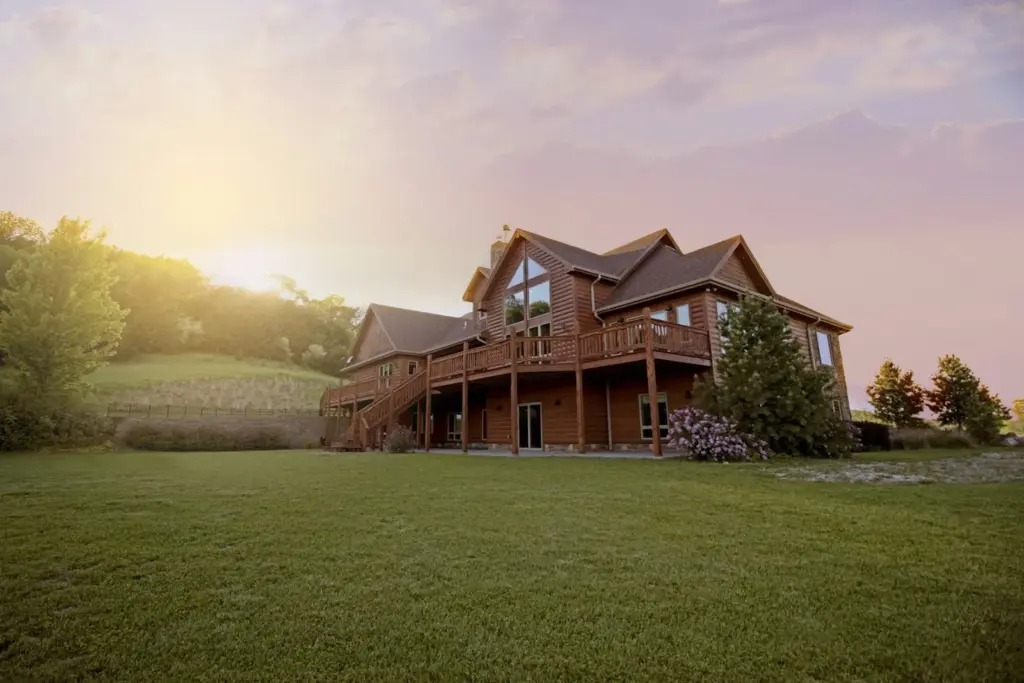
The average homeowners insurance premium in Texas hit $4,142 per year in 2025, making Texas one of the most expensive states in the nation for home insurance. In the Austin metro, rates vary dramatically by location: a home in a Bee Cave subdivision might cost $2,800 to insure annually, while the same coverage for a property in a Hill Country flood zone could run $6,000 or more before adding flood insurance. For a home at Travis County’s current $500,000 median price, buyers should budget $3,200 to $5,500 per year for comprehensive coverage.
Texas’s high insurance costs stem from a unique combination of natural hazards: severe hailstorms that cause billions in damage annually, tornadoes concentrated in the I-35 corridor, hurricane-force winds along the coast that affect reinsurance rates statewide, flash flooding from intense thunderstorms, and an increasing wildfire risk in the Hill Country. Add in Texas’s relatively litigation-friendly environment for insurance claims, and the premium picture makes sense, even if it hurts.
This guide covers everything Austin-area homeowners and buyers need to know about homeowners insurance in 2026: policy types, what is covered, what is excluded, how to save money, Texas-specific risks, flood insurance requirements, and how to file a claim when disaster strikes.
Understanding Your Homeowners Insurance Policy (HO-3)
The standard homeowners insurance policy in Texas is the HO-3, also called a “special form” policy. This is what most Texas homeowners carry. The HO-3 provides:
- Dwelling coverage (Coverage A): Protects the structure of your home against covered perils. This should equal the cost to rebuild your home (not the market value or purchase price)
- Other structures (Coverage B): Covers detached structures like garages, fences, sheds, and pools. Typically 10% of dwelling coverage
- Personal property (Coverage C): Covers your belongings (furniture, electronics, clothing, etc.) against covered perils. Typically 50% to 70% of dwelling coverage
- Loss of use (Coverage D): Pays for additional living expenses if your home is uninhabitable due to a covered loss. Typically 20% of dwelling coverage
- Personal liability (Coverage E): Protects you against lawsuits for bodily injury or property damage. Standard is $100,000, but $300,000 to $500,000 is recommended
- Medical payments (Coverage F): Pays medical expenses for guests injured on your property, regardless of fault. Standard is $1,000 to $5,000
Open Perils vs. Named Perils
The HO-3 policy uses a split coverage approach that confuses many homeowners:
- Dwelling (your home’s structure): Covered on an “open perils” basis, meaning everything is covered UNLESS specifically excluded. This is broader protection
- Personal property (your stuff): Covered on a “named perils” basis, meaning only the 16 listed perils are covered. If the cause of damage is not on the list, it is not covered
The 16 named perils for personal property coverage include fire, lightning, windstorm, hail, explosion, riot, aircraft damage, vehicle damage, smoke, vandalism, theft, volcanic eruption, falling objects, weight of ice/snow/sleet, accidental discharge of water, and sudden electrical damage.
What Homeowners Insurance Does NOT Cover in Texas
These exclusions catch Texas homeowners off guard every year:
| Excluded Peril | Separate Coverage Available? | Estimated Annual Cost |
|---|---|---|
| Flooding (from rain, rivers, storm surge) | Yes (NFIP or private flood) | $500 to $5,000+ |
| Earthquake/earth movement | Yes (endorsement or separate policy) | $100 to $300 |
| Foundation movement/settling | Limited (some endorsements available) | $200 to $500 |
| Sewer/drain backup | Yes (endorsement) | $50 to $200 |
| Mold (beyond initial covered event) | Limited coverage via endorsement | $200 to $500 |
| Termites and pest damage | No (maintenance issue) | N/A |
| Normal wear and tear | No | N/A |
| Intentional damage | No | N/A |
| Government action | No | N/A |
| Nuclear hazard | No | N/A |
The flood exclusion is the most consequential for Austin-area homeowners. Standard homeowners insurance does not cover flood damage under any circumstances. If your home floods from rising water (rain, creek overflow, flash flooding), you need a separate flood policy. Period. More on this below.
Texas-Specific Weather Risks and How They Affect Your Policy
Hail Damage
Texas leads the nation in hail damage claims. The Texas Department of Insurance reports that hail and windstorm claims account for more than 60% of all homeowners insurance claims in the state. Austin sits in an active hail corridor, with major hailstorms causing widespread damage roughly every 2 to 3 years.

Key hail-related policy details:
- Wind/hail deductible: Most Texas policies have a separate, higher deductible for wind and hail damage, typically 1% to 2% of the dwelling coverage. On a $400,000 policy, a 2% deductible means you pay the first $8,000 out of pocket
- Roof coverage: Some insurers offer “actual cash value” (depreciated) roof coverage for roofs older than 10 to 15 years, rather than “replacement cost” coverage. This means you get less for an older roof claim. Always verify your roof coverage type
- Cosmetic damage exclusions: Some policies exclude cosmetic hail damage to metal roofs, siding, or gutters. “Cosmetic” means the damage affects appearance but not function
Wind and Tornado
The Austin metro sits along the I-35 corridor, which experiences tornado activity primarily in spring. While not as severe as the Dallas or Oklahoma City areas, tornado and straight-line wind events do occur. Wind damage is covered under the standard HO-3 policy, subject to the wind/hail deductible.
Flash Flooding
Central Texas is one of the most flash-flood-prone regions in the country, earning the nickname “Flash Flood Alley.” The geography of the Hill Country (thin soil over limestone, steep terrain, narrow creek beds) creates rapid runoff that can turn dry creek beds into raging torrents in minutes. The Memorial Day floods of 2015, which devastated areas along the Blanco River and Onion Creek, demonstrated the catastrophic potential of Hill Country flooding.
Flash flood damage is NOT covered by homeowners insurance. You must purchase separate flood insurance.
Wildfire
The 2011 Bastrop Complex Fire destroyed more than 1,600 homes, and wildfire risk in the Hill Country has increased due to drought conditions and expanding development into previously wild areas. Homes in Dripping Springs, Spicewood, Jonestown, and other Hill Country communities face elevated wildfire risk.
Wildfire damage IS covered under standard homeowners insurance. However, insurers may charge higher premiums or decline coverage for properties in high-risk wildfire zones, particularly those with poor defensible space, wood roofs, or limited emergency access.
Winter Storms
The February 2021 winter storm (Uri) caused an estimated $10 to $20 billion in Texas property damage, primarily from burst pipes and interior water damage. Standard homeowners insurance covers burst pipe damage, but the 2021 event strained insurance capacity and contributed to premium increases across the state. Ice dam damage, while rare in Austin, is also covered.
Flood Insurance: A Separate (And Essential) Discussion
Flood insurance in Texas is provided through two channels:
National Flood Insurance Program (NFIP)
The federal program administered by FEMA. Available to anyone in a community that participates in the NFIP (virtually all Texas cities and counties qualify). Key features:
- Maximum coverage: $250,000 for the dwelling, $100,000 for contents
- 30-day waiting period from purchase before coverage begins
- Premiums based on FEMA’s Risk Rating 2.0 methodology (implemented 2021), which uses individual property risk factors rather than just flood zone maps
- Average NFIP premium in Texas: $850 per year (but ranges from $400 to $5,000+ based on risk)
Private Flood Insurance
Private flood insurers have expanded significantly in Texas, offering an alternative to NFIP policies. Advantages include:
- Higher coverage limits (above NFIP’s $250K cap)
- No waiting period in some cases (for new purchases)
- Potentially lower premiums for lower-risk properties
- Additional coverages (loss of use, pool/patio, landscaping)
- More flexible underwriting
Properties in FEMA-designated Special Flood Hazard Areas (SFHA) with federally backed mortgages are REQUIRED to carry flood insurance. But even if your home is not in a mapped flood zone, flood insurance is still worth considering in Austin. According to FEMA, more than 25% of all flood claims come from properties outside high-risk flood zones.
How Deductibles Work in Texas Homeowners Insurance
Texas homeowners insurance policies typically have two types of deductibles:
Standard Deductible (All Other Perils)
A flat dollar amount ($1,000, $2,500, or $5,000) that applies to non-wind/hail claims like fire, theft, water damage, and liability. A higher deductible lowers your premium.
Wind/Hail Deductible (Percentage-Based)
A percentage of your dwelling coverage amount, typically 1% or 2%. This separate deductible applies only to wind and hail damage claims. On a home insured for $400,000:
- 1% deductible = $4,000 out of pocket before insurance pays
- 2% deductible = $8,000 out of pocket before insurance pays
Some insurers offer a flat dollar wind/hail deductible instead of a percentage, but this is becoming less common in Texas. When comparing insurance quotes, pay close attention to the wind/hail deductible, as this is where the largest out-of-pocket exposure exists for most Texas homeowners.
Replacement Cost vs. Actual Cash Value
This distinction affects how much you receive when you file a claim:
- Replacement cost: The insurer pays to replace the damaged item or repair the damage at current prices, without deducting for depreciation. This is the better coverage
- Actual cash value (ACV): The insurer pays the replacement cost MINUS depreciation. A 15-year-old roof that costs $18,000 to replace might only pay $6,000 to $8,000 under ACV coverage
Always choose replacement cost coverage for both your dwelling and personal property. The premium difference is typically 10% to 15% more than ACV, but the payout difference on a major claim can be tens of thousands of dollars.
Average Homeowners Insurance Costs by Austin Area
| Area | Typical Home Value | Estimated Annual Premium | Key Risk Factors |
|---|---|---|---|
| Downtown Austin | $500,000 to $800,000 | $3,200 to $5,000 | Older construction, flood risk near creeks |
| Cedar Park/Leander | $350,000 to $500,000 | $2,500 to $3,800 | Hail exposure, newer construction (lower rates) |
| Round Rock | $350,000 to $475,000 | $2,400 to $3,600 | Hail corridor, mix of older/newer homes |
| Bee Cave | $500,000 to $800,000 | $3,000 to $4,800 | Hill Country terrain, some wildfire risk |
| Lakeway | $600,000 to $1,000,000 | $3,500 to $6,000 | Lake proximity, Hill Country, higher values |
| Dripping Springs | $450,000 to $700,000 | $3,000 to $5,000 | Wildfire risk, rural response times |
| Westlake Hills | $1,500,000+ | $6,000 to $12,000+ | High values, custom homes, replacement cost |
| Georgetown | $350,000 to $500,000 | $2,400 to $3,600 | Hail, Sun City (age-restricted community) |
Ed Neuhaus, broker of Neuhaus Realty Group, recommends getting insurance quotes during the option period so you know the true cost of ownership before removing contingencies. In some cases, particularly for properties in flood zones or high-wildfire-risk areas, insurance costs can significantly impact your monthly payment and overall affordability calculation.

How to Lower Your Homeowners Insurance Premium
Texas homeowners can reduce their premiums through several strategies:
- Increase your deductible: Moving from a $1,000 to a $2,500 all-perils deductible can save 10% to 15% on premiums
- Bundle with auto insurance: Multi-policy discounts typically save 5% to 15%
- Install protective devices: Security systems, smoke detectors, water leak sensors, and storm shutters qualify for discounts of 2% to 10%
- Upgrade your roof: Impact-resistant (Class 4) roofing materials can reduce premiums by 10% to 35% in Texas. This is one of the most significant discounts available
- Maintain good credit: Texas insurers use credit-based insurance scores. A higher score means lower premiums
- Shop around every 2 to 3 years: Insurance markets shift, and the cheapest carrier three years ago may not be competitive today. Get at least three quotes
- Ask about wind mitigation discounts: Homes with hurricane straps, reinforced garage doors, and impact-resistant windows may qualify
- Consider a higher wind/hail deductible: Moving from 1% to 2% wind/hail deductible can save 10% to 20%
- Review coverage annually: Make sure you are not over-insured (dwelling coverage should equal rebuild cost, not market value)
HOA Insurance vs. Personal Homeowners Insurance
If you are buying a condo, townhome, or home in an HOA community, understanding the relationship between the HOA’s master policy and your personal policy is essential:
Condos (HO-6 Policy)
The HOA’s master policy covers the building’s exterior and common areas. Your HO-6 “walls in” policy covers your unit’s interior, personal property, liability, and any improvements you’ve made. Review the HOA’s master policy to understand exactly where their coverage ends and yours begins. For more details, see our guide to buying a condo in Austin.
Single-Family in HOA
Your standard HO-3 policy covers your home. The HOA’s insurance covers only common areas (pool, clubhouse, streets, etc.). You are responsible for your own home and lot, though the HOA may have requirements about minimum coverage amounts.
Umbrella Insurance: Extra Protection Worth Considering
An umbrella policy provides additional liability coverage beyond your homeowners and auto insurance limits. In Texas, where the median jury award in personal injury cases has increased significantly, umbrella coverage provides critical protection:
- Coverage amount: Typically $1 million to $5 million
- Cost: $200 to $500 per year for $1 million in coverage
- What it covers: Lawsuits for bodily injury, property damage, personal injury (libel, slander), and some claims not covered by underlying policies
- Who needs it: Homeowners with pools, trampolines, or large dogs; landlords; anyone with significant assets to protect
Filing a Homeowners Insurance Claim in Texas
When damage occurs, how you handle the claim process matters as much as having the right policy:
Step 1: Document Everything Immediately
- Photograph and video all damage before making any temporary repairs
- Document the date, time, and cause of damage
- Save receipts for any emergency repairs or temporary living expenses
- Do not throw away damaged items until the adjuster has seen them
Step 2: Contact Your Insurance Company Promptly
Texas law requires you to report claims within a reasonable time. Most policies specify 30 to 60 days for non-catastrophe claims. After a major weather event (hailstorm, tornado), insurers expect higher claim volumes and typically extend deadlines, but filing sooner puts you earlier in the queue for adjuster visits.
Step 3: The Adjuster Visit
The insurance company sends an adjuster to inspect the damage and estimate repair costs. You have the right to be present during the inspection. Consider having a contractor provide an independent estimate for comparison. If the adjuster’s estimate seems low, you can negotiate or request a re-inspection.
Step 4: Claim Payment
For replacement cost policies, the insurer typically pays in two stages: an initial payment based on actual cash value, then a supplemental payment after you complete repairs and submit receipts proving the repair cost. You must actually complete the repairs to receive the replacement cost difference.
Texas Insurance Claim Timelines
Texas law (Insurance Code Chapter 542) sets specific deadlines for insurers:
- Acknowledgment: Insurer must acknowledge your claim within 15 calendar days
- Investigation: Must begin investigation within 15 days of receiving the claim
- Accept or deny: Must accept or deny within 15 business days of receiving all information needed
- Payment: Must pay within 5 business days of accepting the claim
- Penalties for delay: If the insurer violates these timelines, they owe 18% annual interest on the claim amount plus attorney fees
After major catastrophes, the Texas Department of Insurance may extend some of these deadlines, but the penalties still apply if insurers fail to act in good faith.
When to Hire a Public Adjuster
If you believe your claim was underpaid or wrongfully denied, you can hire a public adjuster to represent your interests. Public adjusters work for you (not the insurance company) and typically charge 10% to 15% of the claim settlement. They are most valuable for large, complex claims ($10,000+) where the insurer’s estimate seems significantly below the actual damage. In Texas, public adjusters must be licensed by the TDI.
Shopping for Homeowners Insurance in Texas: A Step-by-Step Guide
The Texas homeowners insurance market is competitive, with dozens of carriers offering coverage. Here is how to find the best policy for your situation:
- Start early: Begin shopping during the option period, not two days before closing
- Get at least three quotes: Contact both independent agents (who represent multiple carriers) and direct-write companies. Major carriers in Texas include State Farm, Allstate, USAA (military members), Amica, Texas Farm Bureau, Farmers, and numerous regional carriers
- Compare apples to apples: Ensure all quotes use the same dwelling coverage amount, deductible structure, and coverage limits. A cheap quote with a $10,000 deductible is not comparable to a slightly more expensive quote with a $2,500 deductible
- Ask about discounts: Every carrier has a different discount structure. The ones you qualify for can make a less-competitive base rate actually cheaper after discounts
- Check the carrier’s financial strength: Use AM Best ratings. Look for carriers rated A or higher. An insurer that cannot pay claims is worthless regardless of price
- Read reviews for claims handling: The cheapest premium means nothing if the company fights every claim. The Texas Department of Insurance publishes complaint ratios that show how carriers compare on customer complaints relative to their market share
- Review the policy details: Pay attention to wind/hail deductible, roof coverage type (replacement cost vs ACV), personal property coverage, and exclusions
Home Inventory: Protecting Your Personal Property Claim
If you ever need to file a personal property claim (theft, fire, water damage), you will need to prove what you owned and what it was worth. Without documentation, you are relying on memory and the insurance adjuster’s interpretation.
Best practices for a home inventory:
- Walk-through video: Record a video walking through every room, opening closets and drawers, narrating high-value items. Takes 15 to 30 minutes. Do this annually
- Photograph high-value items: Electronics, jewelry, artwork, musical instruments, firearms, and collections
- Keep receipts: For major purchases, save receipts in cloud storage (not just on the device in the house)
- Use a home inventory app: Apps like Sortly, Encircle, or your insurer’s own app help catalog items with photos and estimated values
- Store documentation off-site: Cloud storage, a safety deposit box, or at a relative’s home. If a fire destroys your home, it may destroy your documentation too
Items that often exceed standard personal property sub-limits and may need scheduled coverage (a floater or endorsement):
- Jewelry: typically limited to $1,500 to $2,500 per item without scheduling
- Firearms: typically limited to $2,500 total without scheduling
- Art and collectibles: typically limited to $2,500 total without scheduling
- Musical instruments: may need separate coverage for professional-grade instruments
- Home office equipment: standard policy may limit business property coverage to $2,500
Insurance Considerations When Buying a Home in Austin
Smart buyers evaluate insurance costs as part of their home search, not as an afterthought. Here is what to look for:
- Roof age and material: A 20-year-old composition roof will cost significantly more to insure than a 5-year-old impact-resistant roof. Ask the seller for the roof installation date
- FEMA flood zone: Check the FEMA flood map before making an offer. Properties in Zone A or AE require flood insurance with a federally backed mortgage. Properties in Zone X (moderate/minimal risk) do not require it but should still consider it
- Wildfire risk: The Texas A&M Forest Service provides wildfire risk assessments. Properties in the Wildland-Urban Interface (WUI) may face higher premiums or carrier restrictions
- Claims history: Request a CLUE (Comprehensive Loss Underwriting Exchange) report for the property. This shows insurance claims filed on the property in the past 7 years. A property with multiple claims may be harder or more expensive to insure
- Electrical, plumbing, and HVAC: Homes with updated systems (copper or PEX plumbing, updated electrical panels, modern HVAC) are cheaper to insure than homes with galvanized pipes, aluminum wiring, or outdated systems
- Distance from fire hydrant and fire station: Properties more than 5 miles from a fire station or without hydrant access face higher premiums. This is common in rural Hill Country areas like Spicewood, Wimberley, and outer Dripping Springs
For first-time buyers in Austin, insurance is often the overlooked cost that pushes a monthly payment above budget. A $500,000 home with a 7% interest rate, property taxes at 1.8%, and insurance at $4,000 per year has a total monthly PITI payment of approximately $4,100, of which $333 is insurance alone. Factoring this into your budget from the start prevents surprises.
Pool, Trampoline, and Dog Liability in Texas
Certain property features significantly affect your insurance coverage and premiums:
Swimming Pools
Pools increase liability risk and premiums by $50 to $200 per year. Your policy will require a fence or barrier meeting local code requirements. Diving boards add additional risk and some insurers will not cover them. Trampolines face similar treatment.
Dog Breeds
Some Texas insurers maintain breed restriction lists. Breeds commonly excluded or surcharged include pit bulls, Rottweilers, German Shepherds, Doberman Pinschers, and Akitas. If your insurer excludes your breed, your liability coverage may not cover dog bite claims. Texas has a “one bite” modified rule, but homeowner liability for dog bites is complex and varies by circumstance. If you have a restricted breed, find an insurer that covers all breeds or purchase a separate animal liability policy.
Austin-Specific Weather Patterns and Insurance Impact
Austin’s weather creates a unique insurance risk profile compared to other major Texas metros:
- Hail season: March through May is peak hail season, with April typically being the most active month. Large hail (golf ball size or larger) strikes the Austin metro approximately once every 2 to 3 years. The April 2021 hailstorm caused over $1 billion in damage across the metro
- Flash flood season: May through October, with peak risk in May and June. The Hill Country’s geography amplifies rainfall into flash flooding faster than almost any region in the country. Onion Creek, Shoal Creek, and Barton Creek have all produced devastating floods in recent decades
- Tornado risk: Spring (March through May) brings the highest tornado risk, primarily along the I-35 corridor from San Antonio through Austin to Waco. While Austin’s tornado frequency is lower than the Dallas area, significant events do occur
- Wildfire season: July through September, when drought conditions, high temperatures, and dry vegetation create elevated fire risk. The Hill Country west of Austin, including Bee Cave, Dripping Springs, Spicewood, and Jonestown, faces the highest wildfire risk in the metro
- Winter storm risk: Rare but catastrophic when it occurs. The February 2021 freeze demonstrated that Austin’s infrastructure and housing stock are not designed for sustained freezing temperatures, leading to widespread pipe bursts and property damage
Understanding these seasonal patterns helps you make informed decisions about coverage levels, deductibles, and whether to add optional coverages like flood insurance and foundation endorsements.
Insurance for Older Homes vs. New Construction in Austin
The age and construction type of your home significantly impacts insurance availability and cost:
Older Homes (Pre-1980)
Homes built before 1980 often have features that increase insurance risk and premiums:
- Galvanized or cast iron plumbing (prone to leaks and breaks)
- Original electrical panels (Federal Pacific, Zinsco, or fuse boxes)
- Original roof (asphalt shingles typically last 20 to 25 years in Texas)
- Possible lead paint (pre-1978) and asbestos (pre-1980)
- Some insurers will not write policies on homes with original systems beyond certain ages
Updated systems are the key to insuring older homes affordably. A home built in 1970 with a new roof, updated plumbing, and a modern electrical panel will insure at rates comparable to newer construction.
New Construction (Post-2015)
Newer homes benefit from updated building codes, modern materials, and builder warranties. Insurance advantages include:
- Impact-resistant roofing (increasingly standard in new Texas construction) qualifies for 10% to 35% premium discounts
- Modern plumbing (PEX or copper) reduces water damage risk
- Updated electrical systems meet current code requirements
- Builder’s structural warranty (typically 10 years) provides additional protection during the early years
- Smart home features (leak detectors, fire/smoke sensors, security systems) qualify for additional discounts
For buyers evaluating new construction, see our guide to new construction homes in Austin for details on builder warranties and what to inspect.
Frequently Asked Questions
The Bottom Line on Homeowners Insurance in Austin
Homeowners insurance in Texas costs more than most states because the risks are real: hail, wind, flooding, and wildfire all threaten Austin-area properties in ways that most other markets do not experience. The right insurance strategy involves understanding your specific risks, choosing appropriate coverage levels and deductibles, adding flood insurance when appropriate, and reviewing your policy regularly as your home’s value and the insurance market evolve.
Do not wait until closing week to think about insurance. Get quotes during the option period so you understand the true cost of ownership. Ask your agent about the specific risks for your neighborhood and property type. And review the property tax implications alongside insurance to get a complete picture of ownership costs beyond the mortgage payment.
For guidance on understanding ownership costs in the Austin and Hill Country market, reach out to Neuhaus Realty Group. We help buyers evaluate the full financial picture, including insurance, taxes, and HOA costs, so there are no surprises after closing.


