

The Bottom Line Up Front: Austin’s Rent vs. Buy Math in 2026
Austin homeowners pay a median $2,768 per month in total housing costs, while renters pay a median $1,764 for comparable space. That $1,004 monthly gap is the starting point for every rent vs. buy calculation in the Austin metro, but it tells less than half the story. The real question is whether the equity you build, the tax benefits you capture, and the appreciation you earn over time make up for the higher upfront and ongoing costs of ownership.
According to the Federal Reserve’s Survey of Consumer Finances, the median net worth of U.S. homeowners reached $396,200 in 2022, compared to just $10,400 for renters. That 38-to-1 wealth gap is the single most cited statistic in the rent vs. buy debate. But correlation is not causation. Homeowners tend to have higher incomes, more stable employment, and longer time horizons. The question for you is whether buying in Austin, at today’s prices and rates, builds wealth faster than renting and investing the difference.
Austin’s housing market sits in a unique position in 2026. Home prices have corrected roughly 17% from the May 2022 peak of $550,000 to a median around $500,000. Mortgage rates hover near 6.85% for a 30-year fixed loan. Meanwhile, the rental market is experiencing historic oversupply, with vacancy rates above 10% and rents down 6.3% year over year. Landlords are offering 6 to 12 weeks of free rent on new leases. This combination of falling prices and soft rents creates a genuine inflection point where the math favors neither side overwhelmingly.
This guide walks through every variable in the rent vs. buy equation using real Austin numbers. No hedging, no “it depends” without the actual math behind it.
What It Actually Costs to Own a Home in Austin in 2026
Mortgage calculators show you principal and interest. They leave out the other costs that push monthly ownership expenses well above the advertised payment. Here is the full picture for a $500,000 home in Austin with 10% down and a 6.85% 30-year fixed rate.
| Cost Component | Monthly Amount | Annual Amount | Notes |
|---|---|---|---|
| Principal & interest | $2,957 | $35,484 | $450,000 loan at 6.85% |
| Property taxes | $863 | $10,350 | ~2.07% effective rate inside Austin city limits |
| Homeowners insurance | $133 | $1,598 | Average Austin premium |
| PMI | $169 | $2,025 | ~0.45% on 90% LTV, drops at 80% LTV |
| Maintenance & repairs | $417 | $5,000 | 1% of home value annually |
| HOA (if applicable) | $0-$350 | $0-$4,200 | Varies widely; many Austin SFH have none |
| Total (no HOA) | $4,539 | $54,457 | |
| Total (with avg HOA) | $4,689 | $56,268 |
The $50,000 down payment is not included in the monthly figure, but it represents a major upfront cost, along with closing costs that typically run 2% to 4% of the purchase price ($10,000 to $20,000 for a $500,000 home).
Compare that to the median Austin rent of $1,623 for a comparable property. The monthly gap is roughly $2,900. That gap is where the entire rent vs. buy debate lives.
What It Actually Costs to Rent in Austin in 2026
Austin’s rental market in 2026 is the softest it has been in over a decade. A construction boom that added tens of thousands of apartment units between 2022 and 2025 pushed vacancy rates above 10%, the highest among major U.S. metros. The result: rents have dropped 6.3% year over year, and landlords are offering aggressive concessions to fill units.
| Unit Type | Average Rent (2026) | Year-over-Year Change |
|---|---|---|
| Studio | $1,150 | -5.8% |
| 1-Bedroom | $1,099 | -6.1% |
| 2-Bedroom | $1,364 | -6.5% |
| 3-Bedroom | $1,850 | -4.9% |
| Single-family rental | $2,200-$2,800 | -3.2% |
Effective rents are even lower than advertised rates. Communities across Austin are offering 6 to 12 weeks of free rent on new leases, which can reduce the annualized cost by $1,000 to $3,500. A $1,400 one-bedroom with two months free effectively costs $1,167 per month over a 12-month lease.
Renter costs beyond rent itself are minimal: renter’s insurance runs $15 to $30 per month, and utilities in Austin average $150 to $250 per month depending on summer cooling costs. No property taxes. No maintenance bills. No insurance deductibles when hail hits.
The 5% Rule: A Quick Way to Compare
The 5% rule gives you a fast approximation. Multiply the home’s value by 5% and divide by 12. If your rent is below that number, renting is likely cheaper. If your rent is above it, buying starts to make sense financially.
For a $500,000 Austin home: $500,000 x 5% = $25,000 / 12 = $2,083 per month.
If you can rent a comparable property for less than $2,083, renting is probably the better financial move in the short to medium term. In Austin’s current market, the median rent of $1,623 falls well below that threshold, which suggests renting holds a financial edge for many buyers today.
The 5% rule accounts for three “unrecoverable” costs of ownership: property taxes (~1% of home value), maintenance (~1%), and the cost of capital (~3%, which blends mortgage interest and the opportunity cost of your down payment). These are dollars that leave your pocket and never come back, regardless of home appreciation.
The rule has limitations. It does not account for the forced savings aspect of mortgage payments, the emotional value of ownership, tax deductions, or the specific appreciation trajectory of your market. But as a first filter, it works.
The Break-Even Timeline: How Long Before Buying Wins
The single most important variable in the rent vs. buy decision is how long you plan to stay. Every analysis, regardless of assumptions, reaches the same conclusion: buying becomes more favorable the longer you hold the property.
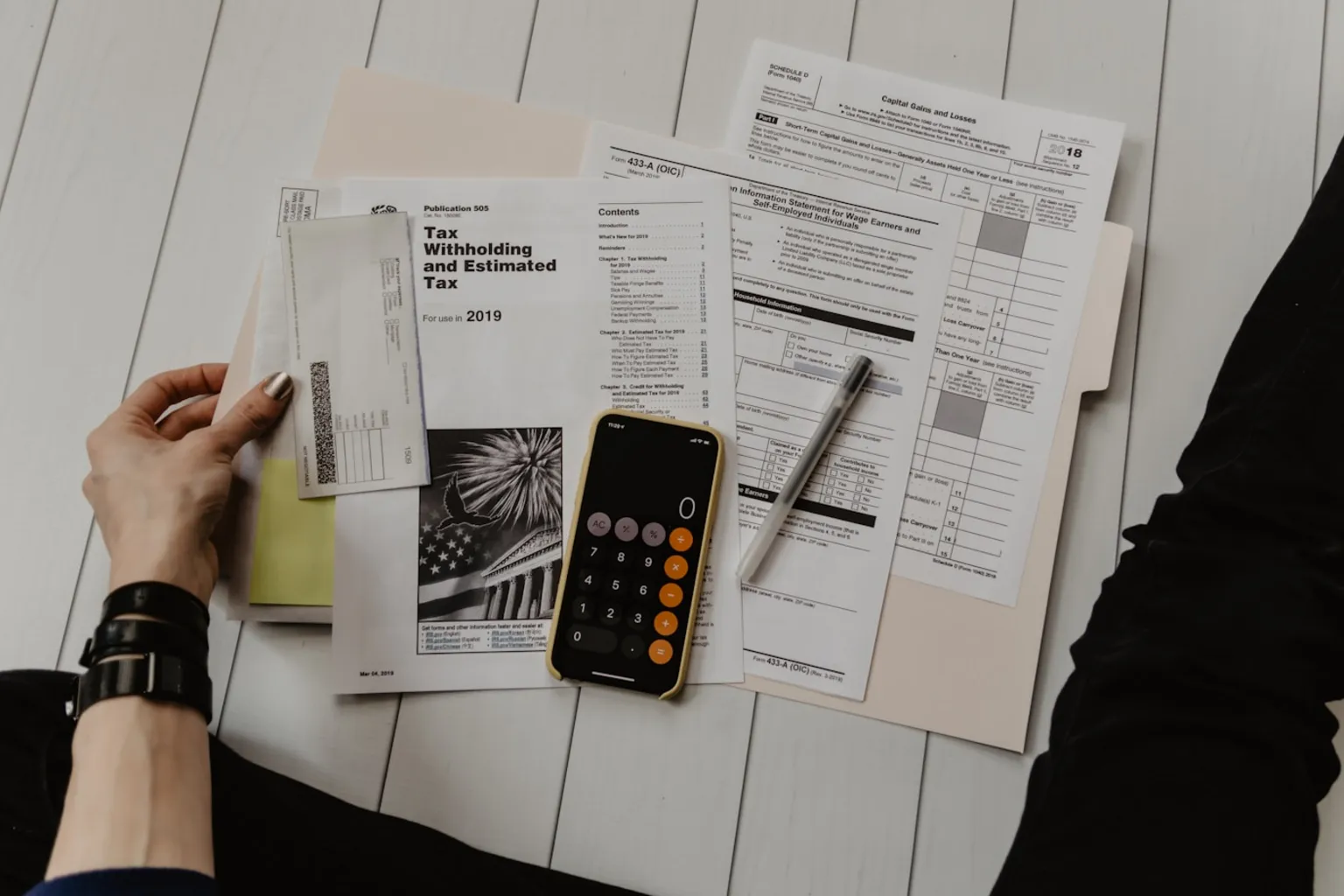
Here is the break-even analysis for Austin in 2026, assuming a $500,000 home with 10% down, 6.85% rate, 3% annual appreciation (conservative for Austin’s long-term trend), and $1,700 in rent for a comparable property growing at 3% per year.
| Years Held | Total Cost of Buying | Total Cost of Renting | Equity Built | Net Advantage |
|---|---|---|---|---|
| 1 year | $69,457 | $21,600 | $6,800 | Rent wins by $41,057 |
| 3 years | $178,371 | $66,734 | $66,500 | Rent wins by $45,137 |
| 5 years | $287,285 | $114,887 | $133,800 | Rent wins by $19,598 |
| 7 years | $396,199 | $166,268 | $210,500 | Buy wins by $16,569 |
| 10 years | $559,570 | $246,913 | $330,200 | Buy wins by $17,717 |
| 15 years | $831,855 | $400,122 | $571,400 | Buy wins by $139,423 |
The break-even point falls at roughly 6 to 7 years in Austin’s 2026 market. Before that point, the transaction costs of buying (closing costs, agent commissions, transfer preparation) and the high early years of mortgage interest make renting the better financial choice. After that point, equity accumulation and appreciation tilt the math toward ownership.
If mortgage rates drop to 5.5% (possible if the Fed continues cutting), the break-even shortens to about 5 years. If rates climb back above 7.5%, it stretches to 8 or 9 years.
Price-to-Rent Ratios Across Austin: Where Buying Makes the Most Sense
The price-to-rent ratio divides a home’s price by the annual rent for a comparable property. A ratio below 15 favors buying, 15 to 20 is a toss-up, and above 20 favors renting. Austin’s metro-wide ratio sits around 20 to 22 in 2026, but it varies dramatically by area.
| Area | Median Home Price | Median Monthly Rent | Price-to-Rent Ratio | Verdict |
|---|---|---|---|---|
| Round Rock | $400,000 | $1,850 | 18.0 | Neutral (slight buy) |
| Cedar Park | $425,000 | $1,900 | 18.6 | Neutral |
| Georgetown | $380,000 | $1,750 | 18.1 | Neutral (slight buy) |
| Pflugerville | $375,000 | $1,800 | 17.4 | Slight buy advantage |
| Hutto/Taylor | $320,000 | $1,650 | 16.2 | Buy advantage |
| Dripping Springs | $550,000 | $2,300 | 19.9 | Neutral |
| Bee Cave | $650,000 | $2,600 | 20.8 | Slight rent advantage |
| Lakeway | $725,000 | $2,800 | 21.6 | Rent advantage |
| Westlake | $2,600,000 | $6,500 | 33.3 | Strong rent advantage |
| Downtown Austin (condo) | $450,000 | $2,100 | 17.9 | Neutral |
| East Austin | $475,000 | $1,900 | 20.8 | Slight rent advantage |
| South Austin | $500,000 | $2,000 | 20.8 | Slight rent advantage |
The pattern is clear: the further from Austin’s urban core you go, the more buying makes sense. Suburban and exurban areas like Pflugerville, Hutto, and Round Rock have price-to-rent ratios that favor ownership. Premium areas like Westlake and Lakeway have ratios that strongly favor renting, unless you plan to hold for a decade or more.
Pflugerville and Round Rock offer some of the strongest buy-side math in the metro. Bee Cave and Lakeway offer premium lifestyles where renting can be a smart short-term strategy while you evaluate neighborhoods.
The Opportunity Cost of Your Down Payment
A $50,000 down payment on a $500,000 home is money that cannot be invested elsewhere. If you invested that $50,000 in a diversified stock index fund earning a historical average of 10% per year, it would grow to approximately $80,525 in five years and $129,687 in ten years.
But here is where leverage changes the equation. That same $50,000 controls a $500,000 asset. If the home appreciates 3% annually (Austin’s conservative long-term rate), the home gains $15,000 in value the first year. That is a 30% return on your $50,000 investment. Leverage magnifies both gains and losses, which is why buying in a declining market can be painful and buying in a recovering market can be transformative.
| Scenario | $50K in Stocks (10%/yr) | $50K as Down Payment (3% home appreciation) | $50K as Down Payment (5% home appreciation) |
|---|---|---|---|
| After 5 years | $80,525 | $79,600 equity | $121,700 equity |
| After 10 years | $129,687 | $188,400 equity | $291,000 equity |
| After 15 years | $208,862 | $337,100 equity | $527,600 equity |
At 3% appreciation (conservative), stocks and home equity produce similar results over a 5-year horizon. Beyond 10 years, the combination of leverage, principal paydown, and appreciation makes homeownership the stronger wealth-building vehicle for most people. At 5% appreciation (closer to Austin’s long-term average before the 2020 bubble), homeownership wins decisively at every time horizon.
The caveat: these calculations assume you actually invest the difference. Research from the Bureau of Economic Analysis consistently shows that most renters do not invest their housing savings systematically. The “invest the difference” strategy requires discipline that most people do not maintain over a decade.
How Property Taxes Change the Math in Texas
Texas has no state income tax, which saves high earners $10,000 to $20,000 or more per year compared to states like California or New York. But the state funds services primarily through property taxes that rank among the highest in the nation. The effective rate inside Austin city limits runs about 2.07% of assessed value.
On a $500,000 home, that is $10,350 per year, or $863 per month, in property taxes alone. That cost is pure expense. It builds no equity. It earns no return. And it increases over time as assessed values rise (unless you qualify for the over-65 homestead tax freeze).
The general homestead exemption reduces school district taxes by $140,000 of assessed value (following Proposition 4 in 2023 and Proposition 13 in 2025), saving roughly $1,500 to $1,800 per year. But even with the exemption, property taxes are the single largest non-mortgage cost of ownership in Texas.
For renters, property taxes are still embedded in your rent. Landlords pass through the cost. But the direct impact is diluted: a landlord who owns a $400,000 rental paying $8,000 in taxes spreads that across 12 months of rent, adding roughly $667 to your monthly payment. You pay it either way, but as a renter, you are not directly liable for assessment increases, and you can move to a lower-cost unit without selling a home.
Mortgage Rates and How They Shift the Decision
Mortgage rates are the single most powerful lever in the rent vs. buy calculation. The difference between a 5.5% rate and a 7.5% rate on a $450,000 loan is $627 per month, or $7,524 per year. That is enough to shift the break-even point by two to three years.
| Rate | Monthly P&I ($450K loan) | Total Interest (30 years) | Break-Even vs. $1,700 Rent |
|---|---|---|---|
| 5.50% | $2,555 | $469,706 | ~4-5 years |
| 6.00% | $2,698 | $521,086 | ~5-6 years |
| 6.85% | $2,957 | $614,433 | ~6-7 years |
| 7.50% | $3,147 | $683,067 | ~8-9 years |
In early 2026, 30-year fixed rates sit near 6.85%. The Federal Reserve has signaled potential rate cuts later in the year if inflation continues to moderate. If rates drop to the 5.5% to 6.0% range, the buy-side math improves significantly. You can read more about how rate changes affect Austin buyers.
One strategy gaining traction: buy at today’s prices (which have corrected 17% from peak) and refinance when rates drop. The saying “marry the house, date the rate” is overused, but the logic holds when you are buying into a corrected market. Ed Neuhaus, broker of Neuhaus Realty Group, notes that buyers who purchased during Austin’s last price correction in 2009 and 2010 saw their homes appreciate 80% to 120% over the following decade, regardless of their initial mortgage rate.
Tax Benefits of Homeownership in 2026
The Tax Cuts and Jobs Act of 2017 (extended and made permanent through subsequent legislation) reduced the mortgage interest deduction to loans up to $750,000 and capped the state and local tax (SALT) deduction at $10,000. These limits reduced the tax advantage of homeownership for many buyers, but the benefits are still meaningful, especially in Texas.
For a buyer with a $450,000 mortgage at 6.85%, first-year mortgage interest totals approximately $30,600. Combined with property taxes of $10,350, the total deductible amount is $40,950. But you only benefit if your itemized deductions exceed the standard deduction ($16,100 for single filers, $32,200 for married filing jointly in 2026).
For a married couple, the math works like this: $30,600 interest + $10,000 SALT cap = $40,600 in itemized deductions, which exceeds the $32,200 standard deduction by $8,400. At a 24% marginal tax rate, that saves $2,016 per year in federal taxes. That is $168 per month in effective savings.
Single filers benefit more proportionally: $40,600 in itemized deductions minus the $16,100 standard deduction = $24,500 in additional deductions. At 24%, that is $5,880 in tax savings, or $490 per month.
Renters receive no comparable federal tax benefit for housing expenses.
The Wealth Gap: What Homeownership Does Over Decades
The Federal Reserve’s Survey of Consumer Finances reports that homeowners have a median net worth of $396,200, compared to $10,400 for renters. That 38-to-1 gap is the widest on record, and it continues to grow.
Three mechanisms drive this gap:
Forced savings. Every mortgage payment includes a principal reduction component. Even if your home does not appreciate one dollar, you are building equity with each payment. In the first year of a $450,000 loan at 6.85%, roughly $5,400 goes to principal. By year 10, that figure rises to $9,800 per year. Over 30 years, you pay down the entire $450,000 balance. This happens automatically. Renters must actively choose to invest their savings, and most do not.
Appreciation. Austin’s 25-year compound annual appreciation rate is 4.458% per year. A $500,000 home appreciating at that rate becomes $725,000 in 10 years and $1,050,000 in 20 years. Even after the 2022 correction, long-term Austin appreciation has outpaced the national average of 3.5%.
Inflation hedge. A fixed-rate mortgage locks in your largest monthly expense. In year one, you pay $2,957. In year 15, you still pay $2,957. Meanwhile, rents rise with inflation. Austin rents increased an average of 4.2% annually from 2010 to 2022 (the long-term trend, excluding the pandemic spike and subsequent correction). A $1,700 rent growing at 3% annually becomes $2,285 in 10 years and $3,070 in 20 years. At some point, the renter’s payment exceeds the buyer’s locked-in mortgage.
When Renting Is the Smarter Financial Move
Renting is not “throwing money away.” In several common scenarios, renting is the clearly superior financial choice.
You plan to stay fewer than 5 years. Transaction costs eat your equity. Between closing costs on purchase (2% to 4%), agent commissions on sale (5% to 6%), and preparation costs (staging, repairs, photography), you will spend $35,000 to $55,000 on a $500,000 home just to get in and out. You need 5+ years of appreciation to offset those costs.
You are new to Austin and exploring neighborhoods. Austin’s neighborhoods vary dramatically in character, commute times, and price. Renting in your target area for 6 to 12 months lets you learn the traffic patterns, try the restaurants, meet the neighbors, and figure out whether Dripping Springs or Cedar Park is the right fit. Making a $500,000 mistake because you chose the wrong zip code is expensive. Understanding the full buying process before committing helps you make a more informed decision.
Your job situation is unstable or you might relocate. If there is a reasonable chance you will move within three years (corporate relocation, career change, relationship shift), renting preserves your flexibility. Selling a home in a flat or declining market on a forced timeline often means accepting a loss.
You are aggressively paying off debt. If you carry high-interest debt (credit cards, personal loans, student loans above 7%), the guaranteed return of paying down that debt typically exceeds the uncertain return of home equity.
You lack sufficient savings beyond the down payment. Buying a home with zero reserves is dangerous. The AC unit dies ($6,000 to $12,000). The foundation needs piers ($8,000 to $25,000). The roof takes hail damage ($8,000 to $15,000). Without 3 to 6 months of expenses in an emergency fund after closing, homeownership becomes a financial tightrope.
You can take advantage of Austin’s current rental market. With vacancy above 10% and concessions of 6 to 12 weeks free, 2026 is one of the best renter’s markets Austin has seen in a decade. Locking in a below-market lease for 12 to 18 months while prices continue to stabilize could position you to buy at an even better price later.
When Buying Is the Smarter Financial Move
Buying makes financial sense when the conditions favor long-term ownership and you have the financial foundation to support it.
You plan to stay 7+ years. The break-even math works reliably in your favor once you pass the 7-year mark in Austin’s current market. At that point, equity accumulation, appreciation, and the inflation hedge on your fixed payment outweigh the premium you pay versus renting.
You qualify for down payment assistance. Austin has some of the most generous down payment assistance programs in Texas. The City of Austin offers up to $40,000 in forgivable assistance for buyers earning 80% or less of area median income (approximately $55,400 for a single person). The Travis County Hill Country Program provides 4% to 6% of the loan as a forgivable second mortgage for buyers earning up to 140% of AMI ($138,460). TSAHC offers up to 5% of the loan amount statewide. These programs dramatically reduce the upfront cost barrier and improve the rent vs. buy math.
You want to lock in today’s corrected prices. Austin home prices are down roughly 17% from the May 2022 peak. Most forecasters project stabilization in late 2026 and modest 2% to 4% annual appreciation starting in 2027. Buying after a significant correction, even at elevated rates, has historically been a wealth-building strategy. You can always refinance when rates drop; you cannot renegotiate the purchase price after the market recovers.
You are a high earner taking advantage of Texas’s tax structure. If you earn $200,000 or more and relocated from a high-income-tax state, you are already saving $15,000 to $20,000 per year in state taxes. Using some of that savings to build home equity accelerates wealth creation. The mortgage interest deduction adds another $2,000 to $6,000 in federal tax savings.
You want housing cost stability. A 30-year fixed mortgage at 6.85% means your principal and interest payment never changes. Property taxes and insurance will increase over time, but at a much slower rate than rent increases. Over a 10- to 15-year period, a homeowner’s total housing cost grows more slowly than a renter’s, and the crossover point (where the renter pays more than the buyer) typically arrives within 8 to 12 years.
How to Run the Rent vs. Buy Calculation Yourself
The most accurate way to evaluate your personal situation is to build a side-by-side comparison using your actual numbers. Here is the framework.
Step 1: Calculate your total monthly cost of buying.
- Principal and interest (use an online mortgage calculator with your loan amount and rate)
- Property taxes (look up the rate for your target area at the county appraisal district website; Travis CAD, Williamson CAD, or Hays CAD)
- Homeowners insurance (get a quote or estimate $130 to $250 per month in Austin)
- PMI if applicable (0.3% to 0.7% of loan amount annually, divided by 12)
- HOA if applicable
- Maintenance reserve (1% of home value divided by 12)
Step 2: Calculate your total monthly cost of renting.
- Monthly rent for a comparable property (same size, same area, same quality)
- Renter’s insurance ($15 to $30)
- Any additional costs the landlord does not cover
Step 3: Calculate the monthly difference.
Subtract renting cost from buying cost. This is your “premium for ownership.”
Step 4: Calculate wealth building from buying.
- Monthly principal paydown (increases each month as amortization shifts from interest to principal)
- Estimated appreciation (use 3% for conservative, 4.5% for Austin’s historical average)
- Tax savings from mortgage interest and property tax deductions
Step 5: Calculate wealth building from renting and investing.
- Invest the down payment amount at your expected return (7% to 10%)
- Invest the monthly premium (buying cost minus renting cost) at the same rate
Step 6: Compare net wealth at your target time horizon.
At 5 years, 10 years, and 15 years, which scenario leaves you with more total wealth?
Hybrid Strategies: You Do Not Have to Choose One or the Other
Several approaches blend the benefits of renting and buying, and they are increasingly popular in Austin’s 2026 market.
House hacking. Buy a duplex, triplex, or a home with an ADU and live in one unit while renting the other(s). Austin’s ADU-friendly regulations make this viable in many neighborhoods. FHA loans allow as little as 3.5% down on owner-occupied multifamily properties up to four units. The rental income offsets your mortgage, effectively reducing your housing cost below what you would pay as a renter. Our investment property guide covers this strategy in detail.
Rent now, buy the dip. If you believe Austin prices will soften further in 2026 (a reasonable expectation given current inventory levels), renting for 6 to 12 months while monitoring the market lets you pounce when the right property appears at the right price. Set up automated searches, attend open houses, and build a relationship with an agent so you are ready to act when your target price point arrives.
Buy an investment property, rent where you live. If you want to live in an expensive neighborhood like Westlake or Tarrytown but the price-to-rent ratio makes buying irrational, consider buying a rental property in a better-valued area (Pflugerville, Hutto, Georgetown) while continuing to rent your residence. You capture the tax benefits and appreciation of ownership without overpaying for your primary residence.
Austin’s Rental Market in 2026: A Historic Opportunity for Renters
The numbers tell a dramatic story. Austin’s apartment construction boom of 2022 to 2025 delivered over 50,000 new units to a metro that was already seeing demand moderate as remote-work relocations slowed. The result is a renter’s market unlike anything the city has experienced since before the tech boom.
Key stats for the Austin rental market in 2026:
- Vacancy rate: 10.2%, the highest among major U.S. metros
- Year-over-year rent decline: 6.3% (January 2026, the largest drop nationally)
- Average concession: 6 to 12 weeks free on new leases
- Rents projected to stabilize mid-to-late 2026 as new construction deliveries slow
- Projected return to balanced vacancy (6% to 7%) by 2027 or 2028
This window of soft rents will not last indefinitely. As construction permits have plummeted from their 2022 peak, the supply pipeline is drying up. Population growth in the Austin metro continues at roughly 50,000 new residents per year. When the current inventory is absorbed, rents will resume their upward trajectory. The question is whether you want to lock in ownership before that happens or take advantage of the current renter’s discount while it exists.
How the Current Housing Market Correction Affects the Decision
Austin home prices peaked at a median of approximately $550,000 in May 2022 and have since corrected to around $500,000 (with some metrics showing medians closer to $415,000 to $475,000 depending on the data source and geographic boundaries used). This 10% to 25% correction, depending on the measure, has reset valuations closer to long-term trend lines.
For buyers, the correction means two things. First, you are not buying at the top. Second, the risk of further significant decline is limited (though not zero). Most forecasters project modest price softening of 1% to 3% in the first half of 2026, followed by stabilization.
Austin’s 25-year compound annual growth rate of 4.458% suggests the market will recover, though the timeline is uncertain. Team Price Real Estate’s analysis estimates roughly 80 months to full recovery from the 2022 peak, which would place the recovery around 2029. Buying before full recovery means purchasing at a discount to the eventual equilibrium price.
For renters, the correction reduces urgency. In 2021, when prices were rising 2% to 3% per month, waiting three months could cost $15,000 to $25,000 in higher prices. In 2026, prices are flat to slightly declining. There is no FOMO premium. You can take your time, compare properties carefully, and negotiate aggressively.
Lifestyle Factors Beyond the Spreadsheet
The rent vs. buy decision is not purely financial. Several lifestyle considerations matter enormously and no calculator can quantify them.
Customization and control. Homeowners can paint walls, renovate kitchens, tear down walls, plant gardens, and build decks. Renters live within the landlord’s rules. If personalizing your living space matters to your quality of life, ownership delivers something renting cannot.
Stability and roots. Homeownership provides residential stability. You cannot be evicted because the landlord wants to sell. Your children stay in the same school. Your commute does not change because a lease ended. In Austin, where school district quality varies significantly (Eanes ISD and Lake Travis ISD rank among the state’s best), locking in a school zone has tangible value for parents.
Flexibility and mobility. Renting provides the freedom to relocate quickly. If your career demands mobility, if you are exploring a new city, or if your life circumstances are likely to change significantly in the next few years, the liquidity of renting (60 days’ notice vs. months of selling a home) is a genuine advantage.
Maintenance burden. When the water heater breaks at 2 a.m., homeowners call a plumber and write a check. Renters call the landlord. The time, stress, and decision fatigue of maintaining a home are real costs that do not appear in any spreadsheet. The true cost of homeownership extends well beyond what the mortgage payment suggests.
Pride of ownership. For many people, owning a home is a core life goal, independent of the financial math. That is a valid factor in the decision. Just be honest about whether the emotional pull is leading you to buy before you are financially ready.
Common Mistakes in the Rent vs. Buy Analysis
Both renters and buyers make predictable errors when evaluating this decision.
Comparing rent to mortgage payment only. The mortgage is typically 55% to 65% of total homeownership costs. Property taxes, insurance, maintenance, and PMI add $1,500 or more per month in Austin. Always compare rent to total ownership cost.
Assuming you will invest the difference. The “rent and invest” strategy works beautifully in a spreadsheet. In practice, very few renters consistently invest the monthly savings from lower housing costs. If you know yourself to be a disciplined investor, factor it in. If you are not, the forced savings of a mortgage may actually serve you better.
Ignoring transaction costs. Buying and selling a home in Texas costs roughly 8% to 10% of the home’s value between closing costs, commissions, and preparation expenses. On a $500,000 home, that is $40,000 to $50,000. This cost must be recovered through appreciation before buying “wins.”
Using national averages instead of Austin numbers. National median home prices, appreciation rates, and property tax rates are irrelevant to your Austin-specific decision. Austin’s property taxes are nearly double the national average. Austin’s appreciation rate has historically exceeded the national average. Use local data.
Ignoring the rental market cycle. Austin’s current rental market is unusually soft. Rents will not stay at their 2026 levels permanently. When building your long-term projection, assume rents return to their normal growth trajectory of 3% to 4% annually within 2 to 3 years.
Timing the bottom. Trying to buy at the absolute bottom of the market is like trying to catch a falling knife. Markets do not ring a bell at the bottom. If the math works for your financial situation and your time horizon, the current price is a good price.
What First-Time Buyers Should Know
If this is your first potential home purchase, the rent vs. buy decision comes with additional considerations.
Your credit score matters enormously. A 760 credit score versus a 660 credit score can mean a 0.5% to 1.0% difference in mortgage rate, which translates to $150 to $300 per month on a typical Austin mortgage. If your credit score is below 700, spending 6 to 12 months renting while improving your score could save you tens of thousands over the life of the loan.
Down payment assistance is real money. Austin’s DPA programs can provide $15,000 to $40,000 in forgivable assistance. If you qualify, these programs fundamentally change the rent vs. buy calculation by reducing your upfront costs and eliminating the opportunity cost of the down payment. The first-time homebuyer guide walks through every available program.
Pre-approval is not a commitment to buy. Getting pre-approved for a mortgage costs nothing and tells you exactly what you can afford. That information makes the rent vs. buy comparison concrete rather than hypothetical. You can get pre-approved today and continue renting for months or years while you decide.
According to Neuhaus Realty Group‘s analysis of Austin MLS data, first-time buyers who rented in their target neighborhoods for at least three months before purchasing reported higher satisfaction with their home choice and were 40% less likely to list the home for resale within five years.
The Austin-Specific Variables That Change Everything
Several factors make Austin’s rent vs. buy equation different from other cities.
No state income tax. This makes homeownership relatively more attractive for high earners relocating from income-tax states. The tax savings create additional cash flow that can be directed toward a mortgage payment. A household earning $200,000 saves approximately $18,300 per year compared to California. That is $1,525 per month that could go toward housing.
High property taxes. Austin’s effective property tax rate of approximately 2.07% is the biggest headwind for buyers. On a $500,000 home, property taxes are $10,350 per year, or $863 per month. This is a pure cost with no equity return, and it grows annually. The property tax guide explains how to protest your assessment and reduce this burden.
MUD and PID taxes. Many newer Austin-area developments sit within Municipal Utility Districts or Public Improvement Districts that add 0.3% to 1.5% to the effective tax rate. A home in a high-MUD area could carry a total tax rate of 3.0% or more. Always check the total tax rate before comparing ownership costs to rent. The true cost of living in Bee Cave, Lakeway, and Dripping Springs covers these additional costs.
Extreme heat and energy costs. Austin summers routinely push electricity bills to $300 to $500 per month for a 2,000-square-foot home. Homeowners bear this cost directly. Renters in apartments often pay less due to smaller square footage and newer, more efficient HVAC systems. Factor this into your total cost comparison. The cost of living guide provides detailed utility breakdowns.
The tech economy. Austin’s economy is heavily tied to the technology sector. If your income depends on tech employment, consider that layoffs and hiring freezes disproportionately affect Austin. Owning a home you cannot afford if your income drops is riskier than maintaining a rental you can downsize from.
Frequently Asked Questions
Making Your Decision: A Checklist
Use this checklist to clarify where you stand. The more “yes” answers in the buy column, the stronger the case for purchasing.
| Buy Indicators | Your Answer | Rent Indicators | Your Answer |
|---|---|---|---|
| Plan to stay 7+ years | Might move within 3 years | ||
| Stable income and employment | Job uncertainty or career change | ||
| Emergency fund covers 6 months | Savings barely cover down payment | ||
| Credit score above 700 | Credit needs improvement (below 680) | ||
| Qualify for DPA programs | High-interest debt to pay down | ||
| Want housing cost stability | Value flexibility and mobility | ||
| Ready for maintenance responsibility | Prefer landlord handles repairs | ||
| Target area has low price-to-rent ratio | Target area has high price-to-rent ratio | ||
| Relocating from high-tax state | New to Austin, still exploring |
There is no universal right answer. The best choice depends on your financial position, your time horizon, your career trajectory, and your personal preferences. What matters is running the real numbers for your specific situation rather than relying on rules of thumb or emotional impulses.
If you are leaning toward buying, the next step is getting pre-approved for a mortgage so you know exactly what you can afford. If you are leaning toward renting, lock in a lease while concessions are still generous and revisit the decision in 12 months when the market picture may look different.
Either way, Austin remains one of the strongest long-term real estate markets in the country. The question is not whether homeownership builds wealth here. It does. The question is whether now is the right time for you.