 Ed
Ed 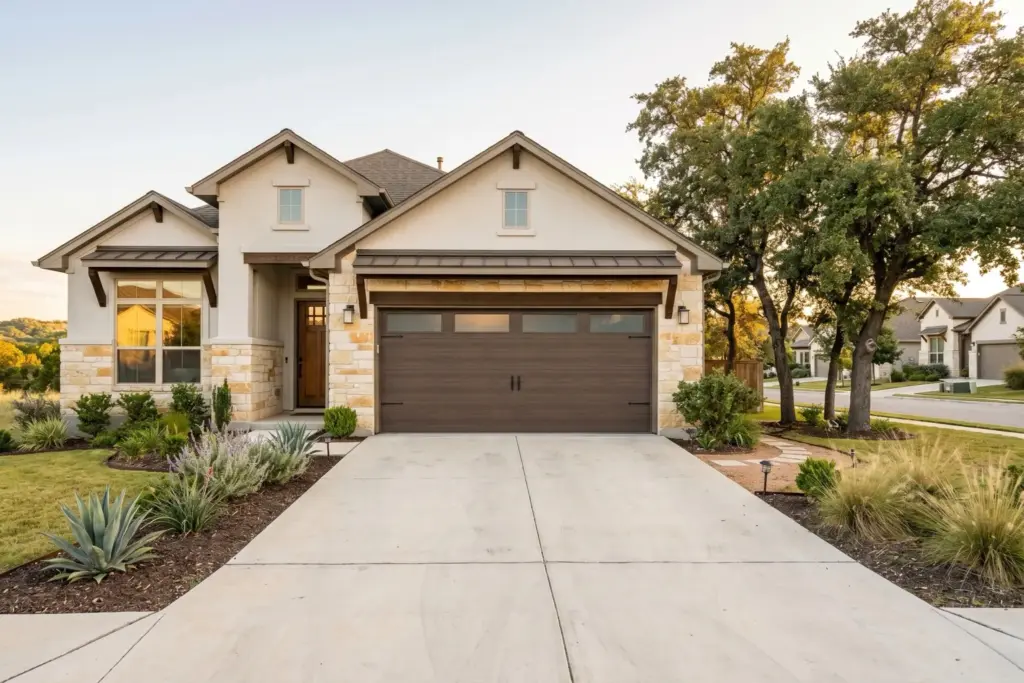
A new garage door is the single highest return-on-investment project in the 2025 Cost vs. Value Report, recouping right around 268% of what you spend when you sell. Read that again. Not a kitchen. Not a bathroom. A garage door. (And yeah, I had the same reaction you just did.) The national numbers in that report run about $4,700 to put one in and about $12,500 added back at resale, which is the kind of math that almost never works in remodeling, where you usually eat a chunk of every dollar you spend. So when a garage door guy I trust told me it was the best bang-for-buck upgrade on the whole house, I figured I should actually ask him why.
I’m Ed Neuhaus. I’m a broker here, I’ve been selling Austin homes for 19 years, and I’ve stood in front of a lot of houses watching a buyer’s face the second the car pulls up. The garage door is usually a third of what they’re looking at, sometimes more. So I called a garage door pro I’ve sent clients to, the kind of guy who has been hanging doors in this heat for twenty-some years, and I asked him the questions I actually get asked by sellers and by people who just bought a house with a workshop in mind. This is what he told me, filtered through what I see from the resale side.
Why a Garage Door Is the Best ROI Upgrade Nobody Brags About
Here’s the thing about curb appeal. People think it’s the front door and the landscaping, and those matter, but on most Austin houses the garage door is the biggest single surface facing the street. It’s a giant rectangle, sometimes two of them, and if it’s faded, dented, or wearing that sad builder-beige from 2006, that’s the first thing a buyer’s brain registers. Not consciously. They just pull up and the house feels tired before they’ve even put the car in park.
The 2025 Cost vs. Value Report, which the folks at Remodeling magazine put out every year, has had garage door replacement at or near the top of the ROI list for a while now. Eight of the top ten projects in that report are exterior replacements, which tells you everything. Buyers pay for what they can see from the curb. My pest guy and my plumber both know their trade cold, and I’ve written up what I learned from them, but the garage door guy made a point that stuck with me: “Nobody walks a buyer to the garage and says look how good the door insulates.” They just feel like the house was taken care of. That feeling is worth real money.
Now let me put my honest hat on, because the report is a national average and I don’t want to oversell it. A 268% recoup does not mean you write a $4,700 check and a buyer hands you $12,500 at closing. It means that, on average, across the country, a new door does more to move the needle on perceived value than almost anything else you can buy for that money. In Austin specifically, where so much of our inventory is newer and curb appeal sells, I’d argue it holds up just fine. But it’s a tendency, not a guarantee. If your door already looks great, replacing it does nothing for resale. The win is real when the door is the thing dragging the house down.
The Texas Garage Is a Workshop, a Gym, and an Oven
This is where it gets personal for a lot of buyers, and it’s a big reason this whole garage thing has been on my mind. A growing number of people I work with want the garage to be more than a place to park. They want a shop. A home gym. A spot to brew beer or build furniture or just escape. (I’ve got buyers who care more about the garage than the primary bath, no joke.) And in Texas, the enemy of all of that is heat.
An uninsulated garage in an Austin August is basically an oven with a roll-up door. I asked the pro about insulated doors and his answer was blunt: if you’re going to spend any real time out there, you want one. An insulated door, the kind with a higher R-value, won’t air-condition the space by itself, but it knocks down the temperature swings and gives your mini-split or your portable AC a fighting chance instead of asking it to cool the surface of the sun. It also protects whatever you’ve got out there. Wood glue, finishes, spray cans, batteries, your nice tools, none of that loves 115 degrees.
If you’re buying a house specifically to turn the garage into a real workspace, the door is one piece of a bigger checklist. I went deep on the rest of it with some woodworkers, and if that’s you, read garage vs detached shop, what Austin woodworkers should weigh before buying and the companion piece on the shop specs that matter more than the kitchen. The door insulation is the easy part. Ceiling height and the slab are the parts you can’t change.
The Opener and the Tech Buyers Actually Notice
So the opener. Most people don’t think about it until it dies, but a good one does change how the house feels day to day. The big shift over the last few years is the quiet belt-drive openers with battery backup and phone control. The belt drive matters more than you’d think if the garage shares a wall with a bedroom, which in a lot of Austin floor plans it does. A chain-drive opener grinding away at 6am under your kid’s room is a real thing people complain about.
The battery backup is the one I’d actually push for in Texas, and here’s why. We lose power. We lost it bad in Uri, we lose it in summer storms, and the worst version of that is being stuck in your driveway in the heat because the only way out of the garage is the door you can no longer lift over your head (those insulated doors are heavy). A backup battery means the door still opens when the grid is down. That’s not a luxury feature here, that’s a stranded-in-100-degrees feature.
The phone-control stuff is nice, you can check if you left it open from the office, let a delivery in, all that. My wife would tell you I booby-trap the house with this kind of stuff. But I’ll be straight with you, the camera-and-app features are a convenience, not a value driver. A buyer notices a quiet, smooth door. They don’t pay extra because it has an app. Spend the money on the door and the drive system first, treat the smart features as a bonus.
Spring Safety: The Part You Do Not DIY
Ok, this is the one I want to be loud about. The springs on your garage door are under an enormous amount of tension, and they are not a Saturday project. The pro put it plainly: every year people get seriously hurt trying to swap a torsion spring with a YouTube video and a pair of pliers, and it goes wrong in a hurry. When one of those lets go with your face near it, that’s an emergency room story, not a DIY story.
Here’s the maintenance reality. Most residential torsion springs are rated for about 10,000 cycles, where one cycle is the door going up and coming back down once. For a normal family that’s roughly 7 to 10 years. But in our climate, with the heat and a heavy insulated door, that lifespan can run shorter, because heat fatigues the metal and a heavier door asks more of the spring every single cycle. So if you bought a house and the door is original and squealing, get ahead of it. A spring that breaks always breaks at the worst time, usually with your car trapped inside on a morning you cannot be late.
What you CAN do yourself is the easy maintenance that makes everything last longer. Lubricate the rollers and hinges a couple times a year. Keep an eye on the cables for fraying. Listen for new noises. And once a month, do the photo-eye safety test, put something in the door’s path and make sure it reverses, because if it doesn’t reverse it’s a genuine hazard around kids and pets. That’s the kind of seasonal stuff I bundle into the bigger picture in the Austin homeowner’s year-round home maintenance calendar, which is the post I’d start with if you just bought a place and want the whole rhythm of keeping a Texas house from falling apart on you.
What Buyers Actually Notice (From the Resale Side)
Let me flip to my chair for a second, because this is the part I can speak to better than the pro can. When I walk a buyer up to a house, the garage door does a quiet job. A clean, modern door says the owner cared. A beat-up one makes the buyer start hunting for what else got neglected, and now I’m playing defense on the whole showing.
The style matters more than it used to. A lot of the newer doors with the clean horizontal lines or the faux-wood look genuinely lift a house, and on the right elevation it’s the difference between “fine” and “oh, this one’s nice.” But I’ll give you the honest counterweight, because I’m not here to sell you a door. If you’re selling and your door is in decent shape, just clean and functional, you do not need to replace it. A good wash, maybe fresh paint on the trim, new weather stripping at the bottom, and you’ve captured most of the benefit for a tiny fraction of the cost. The 268% number is for the door that needed replacing. Don’t replace a perfectly good door to chase a statistic.
Where I’d actually spend the money is the door that’s dragging the house down, the dented one, the four-different-shades-of-fade one, the one where a panel got backed into and never fixed. That’s the door costing you buyers. Everything else is judgment, and judgment is the part of this job that doesn’t come from a report.
Frequently Asked Questions
Thinking About Selling, or Buying a House With a Real Garage?
If you’re getting a house ready to list and you’re not sure whether the garage door is worth replacing or just worth cleaning up, that’s exactly the kind of call I love making with sellers, because half the time I’ll tell you to save your money. And if you’re buying with a workshop or a gym in mind, I can help you read which garages are actually convertible and which ones just look the part. Either way, lets talk it through before you spend a dollar. Reach out to me, Ed Neuhaus, or get in touch through the contact page and we’ll figure out the smart move for your place.
Talk Through Your Home With Neuhaus Realty Group | (512) 366-3270


