 Ed
Ed 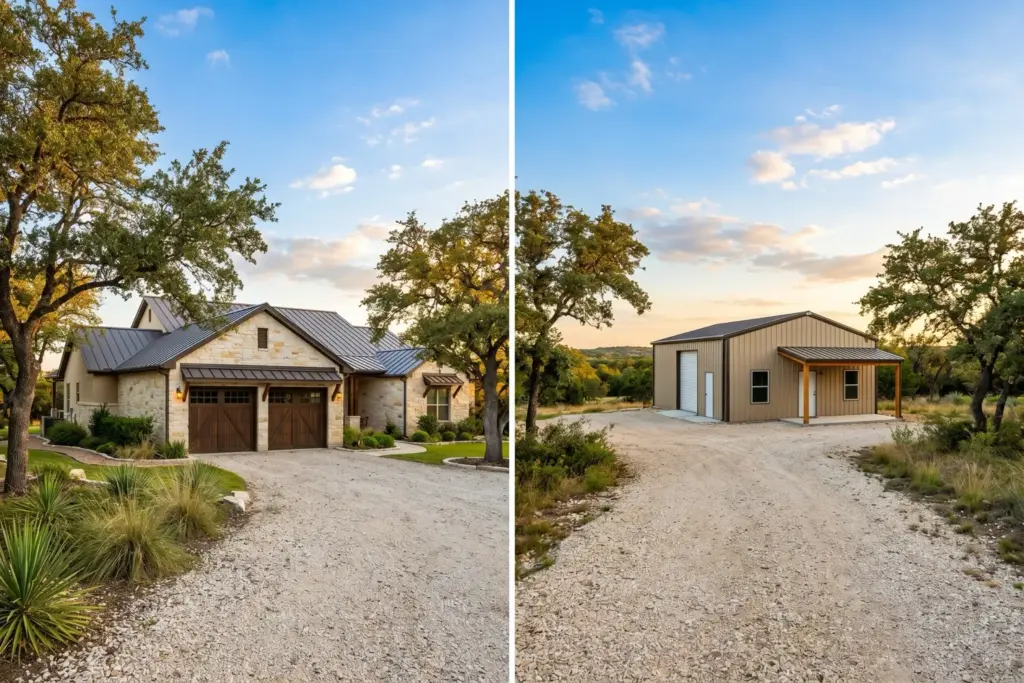
A detached workshop in the Austin area costs roughly $40 to $90 a square foot to build from scratch, which means a modest 400-square-foot shop runs $16,000 to $36,000 before you wire it, while a garage shop costs you nothing but the floor space you already paid for. That single number is the whole decision in a nutshell, and it is the first thing I tell every woodworker who is trying to choose between a garage vs detached workshop when buying a house here.
But the money is only half of it, and honestly not even the most important half. I have had a garage shop and I have had a detached shop, and they are different ways of living, not just different price tags. So before you go shopping for a house in Austin or the Hill Country, lets walk through what each one actually means day to day, because the right answer depends a lot on your family, your lot, and how much sawdust the people you live with can tolerate.
This is one piece of the bigger picture I lay out in the Woodworkers Home-Buying Guide for Austin. If you are starting from scratch, read that first, then come back here for the space decision.
The Garage Shop: Cheap, Convenient, Compromised
The garage shop is where almost everybody starts, including me. The appeal is obvious. The space is already there, it is already wired for at least basic power, it is attached so you are not walking across the yard in the rain, and it costs nothing extra to buy. In a typical Austin two-car garage you have about 400 square feet, which is genuinely enough to do real work if you are smart about mobile bases and folding outfeed.
The compromises are real though. You are sharing the space with cars, the water heater, the HVAC air handler, the holiday decorations, and the family stuff that has nowhere else to go. Every time you want to work, you are moving things. And the big one: the garage is attached to the house, which means the noise travels through the wall and the fine dust travels through the HVAC into the bedrooms. That dust issue is serious enough that I wrote a whole separate piece on it, dust collection in a home garage without wrecking family or neighbor relations.
There is also the heat. A garage in Austin in August is brutal, and unless it is insulated and conditioned you are looking at a shop you cannot use for a third of the year. That problem is solvable, and I cover how in the climate control article, but it is a cost you need to plan for.
The Detached Shop: Freedom, At a Price
A detached shop is a different animal. It is a separate building, so the noise and dust stay out there. You can leave a project clamped up and walk away. You can run the dust collector at whatever volume it wants. You can make an unholy mess and close the door on it. For a serious woodworker, that isolation is close to priceless, and it is why a detached shop is the dream for most people who get bitten by this hobby.
The price of that freedom is everything else. You are paying to build or buy the building. You are running a subpanel out to it, which means a trench, wire, and a permit, and that is its own real cost that I break down in the electrical reality check. You are conditioning a whole separate envelope. And depending on where you buy, you may be fighting setbacks, lot-coverage limits, and an HOA that does not want a metal building visible from the street.
That last point matters more than people expect. The same detached shop that is totally normal in Dripping Springs on an acre can be flat-out prohibited in a tighter Austin subdivision. Before you assume you can put up a shop, you read the deed restrictions, which is exactly the trap I describe in the HOA and deed rules article.
The Austin and Hill Country Reality
Here is where local knowledge actually changes your answer. In the core of Austin, on a standard quarter-acre or smaller lot, a detached shop is a hard build. Lot coverage rules, setbacks, and impervious-cover limits eat your options fast, and the cost of building anything in the city is high. For most Austin buyers, the garage is the shop, and the question becomes whether the garage is big enough and whether you can condition it.
Out in the Hill Country, the math flips. On an acre or more in Dripping Springs, Wimberley, or out past Bee Cave, a detached metal building is normal, useful, and often already there. I regularly show woodworkers and makers homes that already have a 30-by-40 metal building on the back of the lot, sometimes already wired and plumbed, because the previous owner used it for the exact same reason. When you find one of those, you have bypassed the single biggest cost of going detached.
So the geography of your search should follow your shop ambition. If you want a serious detached shop, you are looking at acreage, and that points you toward Dripping Springs and the rural edges. If a conditioned garage shop is enough, you have far more of the Austin metro to choose from, and your budget stretches a lot further.
The Hybrid Nobody Talks About
There is a middle path that gets overlooked, and it is the one I find myself recommending most. A lot of Austin and Hill Country homes have an oversized garage, a three-car bay, a tandem garage, or a garage with a deep extra section, that gives you a dedicated shop bay while still parking a car and keeping the convenience of attached space. You get a real shop without the cost and permitting of a separate building, and without giving up the whole garage to sawdust.
The other hybrid is a garage now, detached later. You buy a house with a good garage shop and enough lot to add a detached building down the road, when the budget and the projects justify it. That keeps your entry cost down and preserves the upgrade path. The thing you check before counting on it is whether the lot and the rules actually allow a future detached building, which loops right back to setbacks, lot coverage, and the deed restrictions I cover in the HOA and deed rules article. A side yard that looks perfect for a future shop is worthless if the HOA bans detached structures.
How to Decide
I ask woodworker clients a few honest questions. How big are the projects you actually build, not the ones you dream about? If you are building furniture and cabinets, a good 400-square-foot conditioned garage is plenty. If you are milling rough lumber, building boats, or running a small side business, you want detached space and you want it sooner rather than later.
Second question: who else lives there, and how do they feel about the noise and dust? A garage shop is a shared-life decision. If the answer is a hard no on dust in the house, you are buying acreage with room for a detached building, full stop.
Third: are you buying the building or building the building? Buying a house that already has a wired, conditioned detached shop is one of the best values in this market, because you are getting tens of thousands of dollars of someone else’s investment baked into the price, often underappreciated by other buyers. That is the kind of overlooked value I am always hunting for clients. The ceiling height, slab, and door specs of that existing building matter enormously, which is why you check them carefully, the way I lay out in the shop specs article.
And if you are ever going to sell, the building you choose has resale consequences. A detached building has an exit ramp a garage shop does not, because it can become an ADU. I get into that tradeoff in does a finished workshop add resale value.
Frequently Asked Questions
Lets Match the House to Your Shop
The garage-versus-detached question is really a question about the life you want and the lot you can afford, and it is one of the funnest searches I get to do. I am a woodworker myself, so when we walk a property I am genuinely picturing where the table saw goes. If you want help finding a house in Austin or the Hill Country with the right shop space, learn more on my agent profile or reach out through our contact page or at (512) 366-3270.


