 Ed
Ed 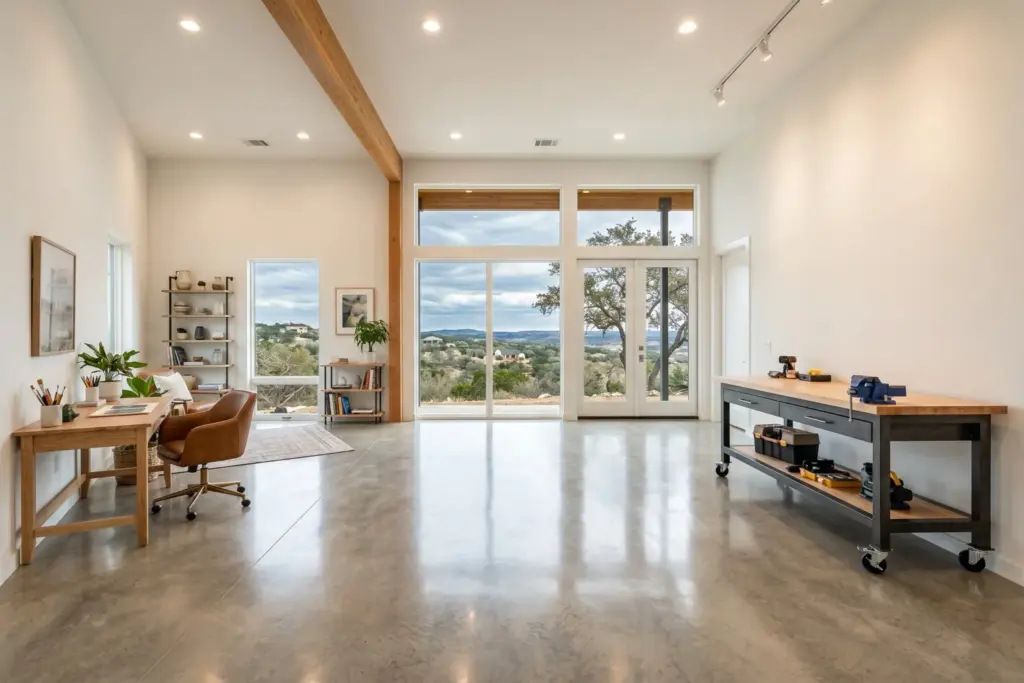
A finished workshop can add real resale value or quietly shrink your buyer pool, and which one happens comes down to a single thing: how reversible and flexible it looks to the next owner. A clean, well-lit, well-powered detached building that reads as a flex room helps you sell. A space that screams single-purpose woodshop, with a cyclone bolted to the ceiling and a tangle of 240-volt cords, can make a buyer mentally subtract the cost of ripping it out. Same building, same money spent, opposite effect on workshop resale value.
I sell homes for a living and I make sawdust for fun, so I sit on both sides of this. I have walked buyers through houses where the seller’s beloved shop was a selling point, and houses where it was the thing buyers wanted gone. The difference was never how good the shop was for woodworking. It was how the space read to someone who is not a woodworker. Lets break down what adds value and what scares buyers off, because if you ever sell, this matters.
This is the resale chapter of the Woodworkers Home-Buying Guide for Austin. It pairs directly with detached workshop versus ADU resale value, where I compare a shop to an income-producing ADU.
What Buyers Actually Value
Here is the key insight: most buyers are not woodworkers, so they do not value a workshop, they value a flexible, finished, high-quality space they can imagine using their own way. The features that make a shop great for you happen to be the same features that make a space appealing to everyone, as long as they read as general-purpose.
Good electrical service, including 240-volt circuits and a subpanel, reads as capability to a buyer, not just to a woodworker. Climate control, insulation, and a mini-split read as a usable year-round room. Good lighting reads as a finished space. A clean epoxy or sealed floor reads as quality. A roll-up door reads as flexibility. Those investments hold value because the next buyer sees a gym, a studio, a home office, a workout room, a teenager’s hangout, or yes, a workshop. Broad appeal is the whole game.
This is the same principle I lean on when I market any home with an unusual feature, which I write about in selling a home with a pool, acreage, or unique features in the Hill Country. You sell the flexibility and the quality, not the niche use.
What Scares Buyers Off
Now the other side. The things that make a buyer nervous are the things that look permanent, single-purpose, and expensive to undo. A massive dust collection system with ducting running across the ceiling looks like a removal project. Walls full of dedicated 240-volt outlets at workbench height look industrial. A floor stained with finish and embedded with sawdust looks like a job. Built-in lumber racks and a giant assembly bench bolted to the wall look like things they have to deal with.
None of those are bad in themselves. The problem is purely perception. A buyer who is not a woodworker does not see a great shop, they see a space they have to convert back, and they mentally deduct the cost. If your shop reads as a heavy, permanent, single-use installation, you have narrowed your buyer pool to the small slice of people who specifically want a woodshop. That is a much smaller market, and a smaller market usually means a longer sale or a lower price.
How to Finish a Shop So It Sells
So if resale is on your radar, and it should be at least a little, here is how I would think about it. Invest in the things that are universal: power, climate control, insulation, lighting, a clean sealed floor, and a finished interior. Those add value to almost any buyer and cost you nothing in appeal. Keep the woodworking-specific stuff as removable and tidy as you reasonably can: mobile tool bases instead of bolted-down machines, a dust collector you can roll out, lumber racks that come off the wall, ducting that is not a permanent architectural feature.
When you list, you stage the space as the flexible room it can be, not as the woodshop it is. Roll the tools to one side, clean it spotless, light it well, and let buyers picture their own use. A detached building staged as a finished flex space, with great power and climate control, photographs and shows beautifully and appeals to everyone. The exact same building left as a working woodshop, full of machines and dust, appeals to almost no one but the next woodworker.
And remember the bigger fork from the workshop-versus-ADU article: a detached building that was designed to be convertible to an ADU has the highest ceiling of all, because the next owner sees income potential, not just a room. If you built or bought with that in mind, you have the most valuable version of this asset. This also circles back to the very first decision in garage versus detached shop: a detached building simply has more resale paths than a garage bay does, and an HOA that bans detached structures, the kind I flag in the deed rules article, takes those paths off the table before you ever start.
The Buyer Pool Math
Let me put it in terms of buyers, because that is what actually moves your price. Every home sells to the buyer pool that wants it, and price is highest when that pool is biggest and most competitive. A finished, flexible detached building expands your pool: woodworkers want it, but so do people who want a home gym, a studio, an office, a guest space, or just storage and a project room. Lots of buyers, more competition, better price.
A heavy single-purpose woodshop does the opposite. It shrinks the pool to the small fraction of buyers who specifically want a woodshop and are willing to take it as-is. Everyone else sees a removal project. When your buyer pool shrinks, you lose the competition that drives price up, and you often sit on market longer waiting for the right niche buyer to walk through. In a normal Austin neighborhood, you simply cannot count on a woodworker showing up at the right moment, so betting your resale on that is a weak plan.
This is the same buyer-pool logic that governs any unusual feature, and it is exactly why staging and framing matter so much. You are not lying about what the space is, you are showing buyers the widest set of possibilities so the most of them can picture themselves using it. That framing is real estate 101, and it applies to a shop as much as to a bonus room or a converted garage.
The Honest Bottom Line
Does a finished workshop add resale value? Yes, if it is finished as a flexible, high-quality space and shown that way. No, or even slightly negative, if it is a heavy single-purpose installation that the average buyer wants gone. The money you spend on power, climate, insulation, and finish almost always comes back. The money and effort you put into permanent, woodworking-specific built-ins is for you, not for resale, so enjoy it but do not expect a buyer to pay for it.
Keep it flexible, keep it clean, keep it convertible, and your shop is an asset when you sell. Let it become a permanent industrial installation, and it becomes a thing buyers negotiate against. The choice is yours, and it is mostly made in how you finish and how you show it, not in how much you spend.
Frequently Asked Questions
Lets Make Your Shop an Asset When You Sell
Whether you are buying a home with a shop or planning to sell one, how that space reads to the market makes a real difference in your number. I know both the woodworking and the resale side, so I can tell you what to keep, what to make removable, and how to show it. Learn how I work on my agent profile, or reach the team through our contact page or at (512) 366-3270.
Thinking About Selling?
The first step is knowing what your home is actually worth. Our free tool uses real MLS comps — not Zestimate guesswork.


