 Ed
Ed 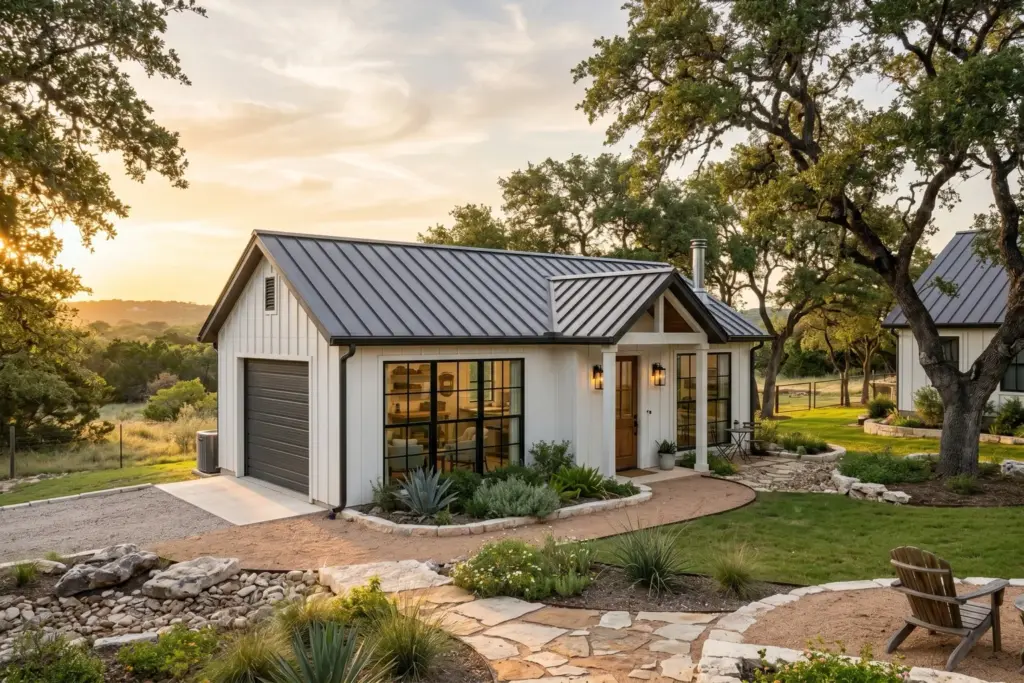
A permitted accessory dwelling unit in Austin can add roughly 20 to 35 percent to a home’s value and generate rental income, while a detached workshop, however nice, adds far less and appeals to a much smaller pool of buyers. That gap is the heart of the detached workshop vs ADU resale value question, and it is one every woodworker with a backyard building eventually has to think about. The same 600-square-foot detached structure is worth very different money depending on whether it is a shop or a permitted living space.
Now, I am a woodworker, so let me be honest about my bias up front: I love a real shop and I would keep one over a rental unit any day for my own life. But this is a money question, and you deserve the straight math, not my hobby preference. So lets compare the two directly, because the smart move for a lot of people is knowing which building they have and keeping the option to become the other one open.
This is the resale-strategy chapter of the Woodworkers Home-Buying Guide for Austin. It pairs with does a finished workshop add resale value, and it builds on my full Austin ADU guide and the breakdown of ADU rules in Austin for 2026.
What an ADU Actually Does for Value
An ADU is a legal, permitted second living unit on the property, with a kitchen, bathroom, and living space, and the key word is permitted. A permitted ADU does several things a workshop cannot. It can be rented for income, long-term or, where rules allow, short-term. It can house aging parents or an adult kid. And critically, it counts as livable square footage and a separate dwelling, which appraisers and buyers both value.
Austin has loosened its ADU rules considerably in recent years, allowing them on more lots and at larger sizes than before, which is part of why demand is strong. Listings that include or clearly allow an ADU tend to attract more interest and move faster, because the pool of buyers who want rental income, multigenerational space, or a home office is large and growing. The hard number people quote is that a well-built permitted ADU adds meaningful value, often in that 20-to-35-percent range, with detached units in strong neighborhoods sometimes adding six figures.
The catch, and I cannot say it loudly enough, is permitting. An unpermitted backyard building with a bootleg kitchen and bath is not an asset, it is a liability that a buyer’s lender and inspector will flag. If you want ADU value, you build it permitted, to code, with a real address and a certificate of occupancy. I walk through all of that in the ADU guide.
What a Workshop Does for Value
A detached workshop adds value too, just less, and to fewer buyers. A clean, well-built, well-powered detached building reads to most buyers as a flex space: a gym, a studio, a home office, a man cave, a she shed, storage. That broad-appeal framing is where a shop building gets its value. The narrower it reads as a single-purpose woodshop, with a giant dust system bolted to the ceiling and 240-volt outlets everywhere, the smaller the buyer pool gets.
So a shop building’s resale value tracks how flexible and how nice it is, not how good it is specifically for woodworking. A heated, cooled, drywalled, well-lit detached building with good power is valuable to almost everyone. A bare metal shed full of cyclone ducting is valuable mainly to the next woodworker. This is the exact tension I dig into in the finished-workshop resale article.
The Smart Play: Build for Conversion
Here is where 19 years of watching this market pays off. The best move for a lot of woodworkers is to build or buy a detached building that works great as a shop now but could be converted to an ADU later. That means thinking about the things an ADU needs even while you use it as a shop: a slab and footprint that meet ADU rules, enough ceiling height, the ability to add plumbing, electrical service sized for a future kitchen and HVAC, and a location on the lot that satisfies ADU setbacks.
If you frame it that way, you get the shop you want now and you preserve the higher-value ADU exit for later, whether that is for resale, for rental income, or for family. That dual-purpose thinking is exactly the kind of long-game, see-the-value-others-miss approach that runs through everything I do. The Houston land my grandfather assembled was worth almost nothing until someone saw what it could become. A detached building is a smaller version of the same idea: its value is in its potential, not just its current use.
None of this is tax or financial advice, by the way, and the rules and numbers shift. Before you make a six-figure decision based on rental income or appreciation, talk to a CPA and confirm current Austin permitting yourself. I will help you understand the real-estate side, but I am not your accountant.
Run the Rough Numbers
Lets put some round numbers on it so the comparison is concrete. Say you have a 600-square-foot detached building. As a finished, conditioned shop, it adds value the way a nice flex room does, real but modest, and tied to how broadly it appeals. As a permitted ADU with a kitchen, bath, and its own entrance, that same footprint can rent for a meaningful monthly figure in the Austin market and counts as a separate dwelling that buyers and appraisers reward.
The conversion is not free. Turning a shop into a permitted ADU means adding plumbing, a kitchen, a bathroom, code-compliant egress, HVAC, and going through permitting and inspection. That can run a significant five-figure sum depending on what the building already has. But the value it unlocks, plus the rental income along the way, frequently more than covers it in a strong market like ours. The math only works if you start permitted and to code, which is the recurring theme in the ADU rules article. A bootleg conversion adds risk, not value.
And the location of the building on the lot is its own constraint. ADUs have setback and placement rules a shop does not, so a detached shop crammed against a side property line might make a great shop but a non-compliant ADU. If conversion is even a maybe in your future, you want the building sited to satisfy ADU setbacks from day one. That foresight costs nothing up front and preserves everything later. The same is true for the building’s bones, the ceiling height, slab, and door size I cover in the shop specs article, since an ADU has its own height and code requirements. And before you assume you can build or convert anything, you confirm the HOA and deed restrictions allow it.
So Which Adds More?
On pure resale value, the permitted ADU wins, clearly. It adds more dollars, sells faster, and appeals to a far bigger buyer pool, because income and livable space are universal wants. A workshop adds less and depends heavily on how flexible the building looks.
But resale value is not the only thing you are buying a house for. If you are a serious woodworker, a real conditioned shop is worth more to your actual life than a rental unit you would never use, and that is a legitimate reason to choose the shop. The genuinely smart answer for most people is to choose a detached building that serves as a great shop now while keeping the ADU conversion open for later. You get your shop, and you keep the bigger financial upside in your back pocket. That is the move I would make, and the one I help clients structure.
Frequently Asked Questions
Lets Plan the Building for Both
Deciding between a shop and an ADU, or setting up a building to be both, is exactly the kind of long-game real estate thinking I love. I will help you weigh the resale math against the life you actually want. Learn how I work on my agent profile, or reach the team through our contact page or at (512) 366-3270.


