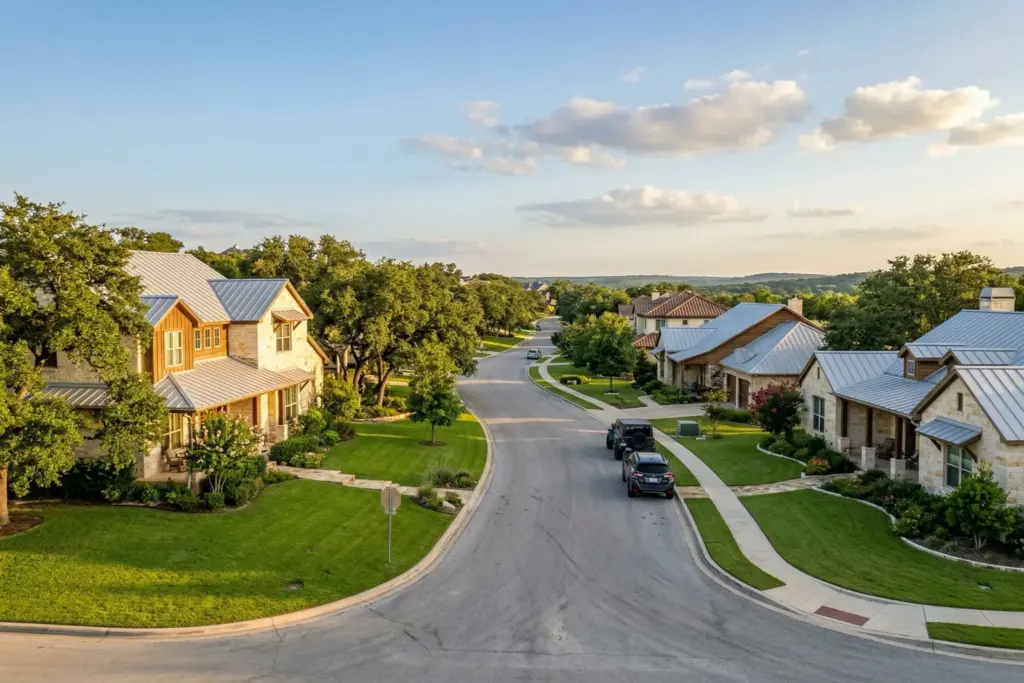
The median closed home price in Austin hit $565,000 in the first quarter of 2026, according to MLS data tracked by Neuhaus Realty Group. That number stops a lot of would-be buyers in their tracks. It shouldn’t. With 4.89 months of inventory on the market (the highest level in over a decade), buyers have more leverage, more choices, and more time than they’ve had since the pandemic scramble of 2021. If you’ve been sitting on the sidelines waiting for the “right time” to buy your first home in Austin, the math has shifted in your favor.
This guide walks through every step of the first time homebuyer process in Austin, TX. From getting your finances in order to picking up the keys on closing day. No fluff, no generic advice. Just the specific numbers, programs, timelines, and strategies that apply to buying a home in the Austin metro in 2026.
 live oak trees in Austin Texas Hill Country” class=”wp-image-3765″/>
How Much House Can You Actually Afford in Austin?
Before you start browsing listings and falling in love with that mid-century modern in Zilker, you need to know your number. And your number is not the maximum a lender will approve you for. It’s what you can comfortably pay each month without eating ramen every night.
Here’s the math for Austin in 2026. The median home price is $565,000 based on 1,701 closed sales in the first quarter. On a conventional loan with 5% down ($28,250), a 6.5% interest rate, and including property taxes at roughly 2% and homeowner’s insurance, your estimated monthly payment would be about $4,350. That means you need roughly $150,000 to $160,000 in household income for a median-priced home, assuming the standard guideline that housing costs shouldn’t exceed 28-33% of gross monthly income.
For a deeper breakdown of the income math, see our analysis: How Much Do You Need to Make to Buy a Home in Austin in 2026?
But median doesn’t mean minimum. Plenty of homes in the Austin metro sell below $400,000, especially in areas like Pflugerville, Round Rock, Hutto, and Kyle. First-time buyers are not locked into the city of Austin proper.
The Real Monthly Cost Breakdown
| Cost Component | $350,000 Home | $450,000 Home | $565,000 Home |
|---|---|---|---|
| Principal & Interest (6.5%, 5% down) | $2,103 | $2,704 | $3,393 |
| Property Taxes (~2%) | $583 | $750 | $942 |
| Homeowner’s Insurance | $250 | $300 | $375 |
| PMI (est. 0.5%) | $139 | $178 | $224 |
| Total Monthly Payment | $3,075 | $3,932 | $4,934 |
| Recommended Household Income | $110,000+ | $141,000+ | $177,000+ |
These numbers include the full PITI (principal, interest, taxes, insurance) plus PMI for buyers putting less than 20% down. They do not include HOA fees, which can range from $0 (most single-family homes outside planned communities) to $200-500/month in condo or master-planned neighborhoods.
Step 1: Get Your Finances Ready (3 to 12 Months Before Buying)
The biggest mistake first time homebuyers make is starting to look at homes before their finances are squared away. Looking is fun. Paperwork is not. But the paperwork comes first, and skipping it means you’ll either miss out on the home you want or pay more than you should.
Credit Score: Where You Need to Be
Your credit score determines which loan programs you qualify for and what interest rate you’ll get. Even a 40-point difference can save or cost you tens of thousands over the life of the loan.
| Credit Score Range | Loan Options | Estimated Rate Impact |
|---|---|---|
| 760+ | All loan types, best rates | Baseline rate |
| 720-759 | All loan types, good rates | +0.125-0.25% |
| 680-719 | Conventional, FHA, VA, USDA | +0.25-0.5% |
| 640-679 | FHA, VA, some conventional | +0.5-1.0% |
| 620-639 | FHA, VA, TSAHC/TDHCA programs | +1.0-1.5% |
| 580-619 | FHA only (3.5% down at 580+) | +1.5-2.0% |
| Below 580 | Very limited options | Significant premium or denial |
The minimum credit score for most Texas first time homebuyer programs is 620. The TSAHC (Texas State Affordable Housing Corporation) programs require 620. The TDHCA My First Texas Home program requires 640 for FHA, VA, and USDA loans. Conventional loans technically start at 620, but you’ll get meaningfully better rates at 680 or above.
If your credit score needs work, read our guide on how to buy a home in Austin with less-than-perfect credit. The short version: pay down credit card balances below 30% utilization, don’t open new accounts, dispute any errors on your report, and give yourself at least 3-6 months of clean payment history before applying.
Saving for Down Payment and Closing Costs
The 20% down payment is a myth that needs to die. Most first time homebuyers in Texas put down between 3% and 5%. Some put down zero with VA or USDA loans.
Here’s what you actually need in savings for a $450,000 home:
| Expense | 3% Down | 5% Down | 10% Down |
|---|---|---|---|
| Down Payment | $13,500 | $22,500 | $45,000 |
| Closing Costs (est. 2.5%) | $11,250 | $11,250 | $11,250 |
| Option Fee (paid upfront) | $500-2,000 | $500-2,000 | $500-2,000 |
| Earnest Money (1%) | $4,500 | $4,500 | $4,500 |
| Inspection Costs | $500-800 | $500-800 | $500-800 |
| Moving/Setup Costs | $2,000-5,000 | $2,000-5,000 | $2,000-5,000 |
| Total Cash Needed | $32,250-$37,050 | $41,250-$46,050 | $63,750-$68,550 |
That closing costs line item includes lender fees, title insurance, appraisal, survey, recording fees, and prepaid taxes/insurance. For a full breakdown, see What Are Closing Costs When Buying a Home in Texas?
One important note about Texas: the seller traditionally pays for the owner’s title insurance policy and the survey. This is negotiable but customary. That can save the buyer $2,000-4,000 depending on the sale price.
Debt-to-Income Ratio
Lenders care about two DTI numbers: your front-end ratio (housing costs divided by gross monthly income) and your back-end ratio (all monthly debts divided by gross monthly income). Most conventional loans cap the back-end DTI at 45%. FHA allows up to 50% with compensating factors.
If you earn $12,000/month gross and have $500 in car payments and student loans, your max monthly housing payment at 45% back-end DTI would be $4,900. That’s the ceiling, not the target. Comfortable is closer to 33% of gross income for total housing costs.
Step 2: Get Pre-Approved (Not Just Pre-Qualified)
There’s a real difference between pre-qualification and pre-approval, and it matters. Pre-qualification is a lender glancing at your self-reported numbers and saying “yeah, you probably qualify for around this much.” Pre-approval involves pulling your credit, verifying your income, reviewing your assets, and issuing a letter that says the lender has actually underwritten your file.
In Austin’s 2026 market, a pre-approval letter is table stakes. Sellers won’t take your offer seriously without one. Get pre-approved before you tour a single home.
For a deeper dive into the mortgage process, loan types, and how to choose a lender, see our Complete Guide to Getting a Mortgage in Austin.
What to Bring to the Pre-Approval Meeting
- Last 2 years of W-2s or 1099s
- Last 2 years of federal tax returns
- Last 30 days of pay stubs
- Last 2-3 months of bank statements (all accounts)
- Photo ID
- Proof of any additional income (rental income, side business, etc.)
- Documentation for any large deposits in the last 60 days
One thing that catches first-time buyers off guard: lenders will scrutinize any large deposits in your bank accounts. If your parents gave you $10,000 for the down payment, you’ll need a gift letter. If you sold a car and deposited the cash, you’ll need documentation. Unexplained deposits can delay or kill your loan.
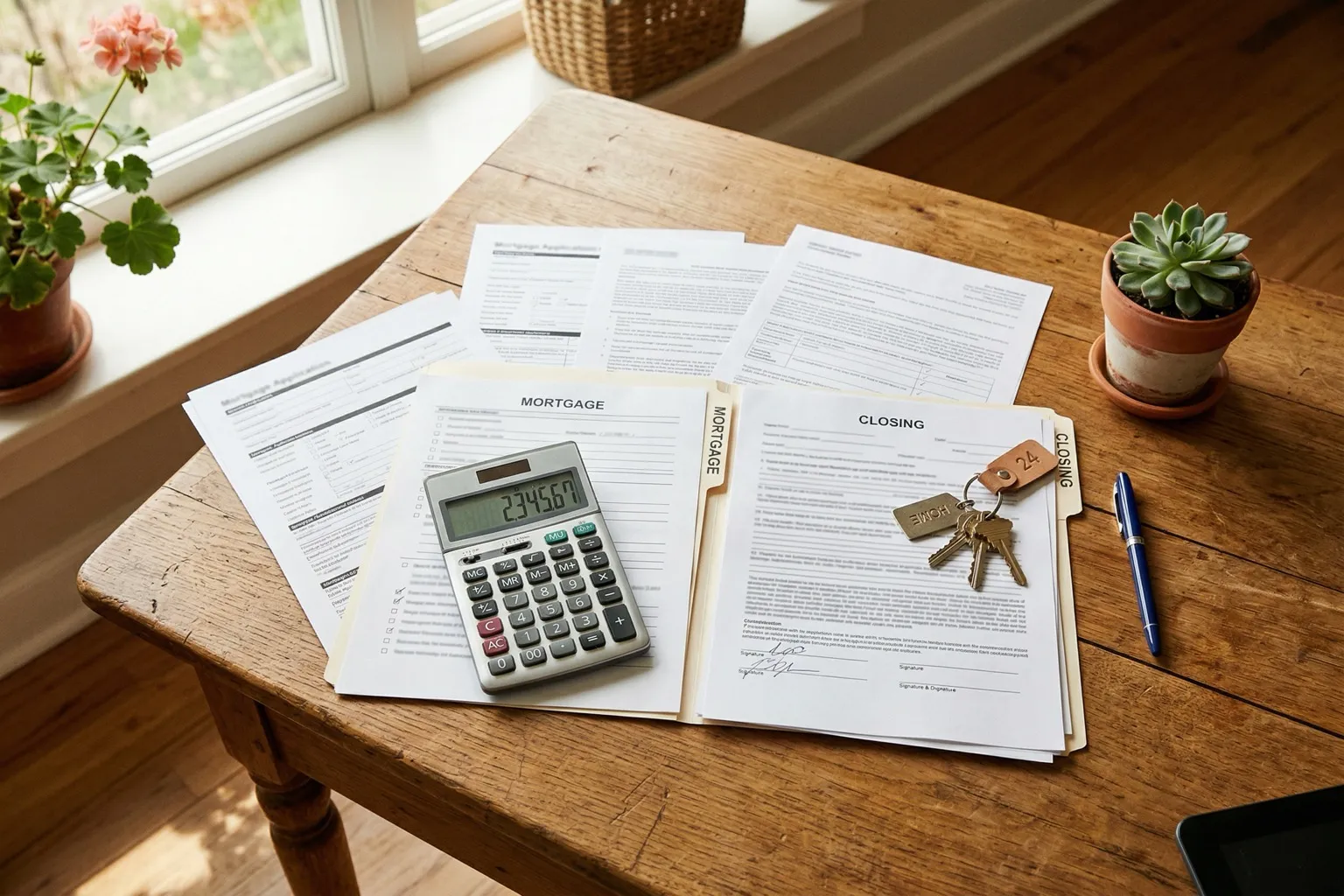
Step 3: Understand Your Loan Options
The loan you choose affects your down payment, monthly payment, and total cost of ownership over time. Here’s a simplified comparison of the main options available to first time homebuyers in Texas.
| Loan Type | Min Down | Min Credit | PMI? | Best For |
|---|---|---|---|---|
| Conventional | 3% | 620 | Yes, until 20% equity | Good credit, want PMI to drop off |
| FHA | 3.5% | 580 | Yes, for life of loan | Lower credit scores, lower down payment |
| VA | 0% | No min (most lenders want 620) | No | Veterans and active military |
| USDA | 0% | 640 | Reduced guarantee fee | Rural areas (some Austin suburbs qualify) |
| Texas Veterans Land Board | 5% | Varies | Varies | Texas veterans |
For veterans, the VA loan is almost always the best option. Zero down, no PMI, and competitive rates. If you qualify, use it.
A common question: FHA vs. conventional for first-time buyers? If your credit score is above 700 and you can put 5% down, conventional is usually the better choice because PMI drops off once you reach 20% equity. FHA’s mortgage insurance premium (MIP) sticks with you for the life of the loan unless you refinance. At a 640 credit score with 3.5% down, FHA is likely your only realistic option, and that’s perfectly fine.
Step 4: Down Payment Assistance Programs in Austin
Austin has some of the best first time homebuyer assistance programs in Texas. If you qualify, these programs can reduce or eliminate your down payment entirely. Most buyers don’t know about them, or assume they won’t qualify. Check the income limits before you write them off.
City of Austin Down Payment Assistance (DPA)
The City of Austin provides up to $40,000 in down payment and closing cost assistance. The money comes as a zero-percent interest, deferred, forgivable loan. That means you don’t make monthly payments on it. If you live in the home for 5 years (on loans up to $14,900) or 10 years (on loans up to $40,000), the loan is forgiven entirely. Free money, if you stay put.
Eligibility:
- Must be a first time homebuyer (haven’t owned a home in the past 3 years)
- Household income at or below 80% of Area Median Income (roughly $55,400 for a single person, higher for larger households)
- Home must be within Austin city limits
- Must complete a HUD-approved homebuyer education course
Travis County Hill Country Home DPA
This program has more generous income limits than the City of Austin program. Qualifying income can be up to 140% of Area Median Income, which is currently $138,460. Available for homes anywhere in Travis County, including Austin. Works with FHA, VA, USDA, and Freddie Mac HFA Advantage loans.
TSAHC Home Buyer Programs
The Texas State Affordable Housing Corporation offers two statewide programs: Homes for Texas Heroes (for teachers, first responders, veterans) and Home Sweet Texas (for low-to-moderate income buyers). Both provide down payment assistance as either a grant (no repayment) or a deferred forgivable second lien loan. Minimum credit score: 620.
TDHCA My First Texas Home
The Texas Department of Housing and Community Affairs runs the My First Texas Home program, providing a 30-year fixed-rate mortgage with up to 5% in down payment and closing cost assistance. Requires a 640 credit score for FHA/VA/USDA loans. Income limits apply based on your county and household size.
For our complete breakdown of every available program with current income limits and application links, see First-Time Homebuyer in Austin? Here Are the Programs That Actually Put Money in Your Pocket.
Can You Stack Programs?
In some cases, yes. You can potentially combine a TSAHC or TDHCA first mortgage with a City of Austin DPA grant, as long as the total assistance doesn’t exceed your actual costs. The rules get complicated quickly, and not every lender participates in every program. Work with a lender who specializes in DPA programs. They’ll know which combinations work.
Step 5: Choose the Right Real Estate Agent
Your agent is the most important hire in the entire process. A good buyer’s agent in Austin will save you money, time, and significant stress. A mediocre one will cost you all three.
What to Look For
- Local market knowledge. Austin is not one market. It’s dozens of micro-markets. An agent who knows Cedar Park inside and out may not know the first thing about Dripping Springs. Ask where they work most often.
- Experience with first-time buyers. The process is different for someone buying their first home versus a move-up buyer or investor. You want someone patient enough to explain things, but experienced enough to protect your interests.
- Negotiation track record. Ask how many transactions they closed last year, what percentage of list price their buyers typically paid, and how they handle multiple-offer situations.
- Responsiveness. When a good listing hits the market in Austin, you need to see it quickly. If your agent takes 24 hours to return a call, you’ll lose houses.
The Buyer Agency Agreement
As of 2024, new rules from the National Association of Realtors require buyers to sign a written agreement with their agent before touring homes. This agreement spells out the agent’s compensation, what services they’ll provide, and the duration of the relationship. This is not a trap. It’s a protection for both sides. Read it carefully, ask questions, and make sure you understand the terms before signing. For more on how the new rules work, see Understanding the New Rules of Real Estate.
Step 6: Start Your Home Search
Now the fun part. With your pre-approval in hand and your agent hired, you can start touring homes. But before you book 15 showings in a weekend, get clear on your priorities.
Must-Haves vs. Nice-to-Haves
Write two lists. The first is non-negotiable: number of bedrooms, school district, maximum commute time, single story (if that matters), garage. The second is aspirational: pool, large lot, updated kitchen, particular neighborhood. You’ll probably compromise on the second list. You should never compromise on the first.
Where to Buy in Austin on a First-Time Buyer Budget
If you’re working with a budget under $450,000, here are the areas where you’ll find the most options:
| Area | Median Price Range | Why Buyers Like It |
|---|---|---|
| Pflugerville | $350,000-$425,000 | Good schools, new construction, SH-130 access |
| Hutto | $300,000-$380,000 | Among the fastest-growing US cities, very affordable |
| Kyle | $300,000-$375,000 | I-35 corridor, young community, new builds |
| Round Rock | $375,000-$475,000 | Round Rock ISD (top-rated), Dell/Apple corridor |
| Manor | $280,000-$360,000 | Most affordable in metro, Tesla Gigafactory nearby |
| Buda | $325,000-$400,000 | Small-town feel, Hays CISD, quick I-35 access |
For a head-to-head comparison of these southern suburbs, check out Kyle vs Buda vs San Marcos: Where to Buy South of Austin.
New Construction vs. Resale
About 30-35% of home sales in the greater Austin metro are new construction. For first-time buyers, new builds can be attractive because builders often offer incentives (rate buydowns, closing cost credits, upgraded finishes) that reduce your upfront costs. The catch: you still need your own agent to represent your interests. The builder’s on-site sales agent works for the builder, not you.
Resale homes often offer more value per square foot, established landscaping, and known neighborhoods. They also come with potential maintenance issues that new construction doesn’t (yet). Neither option is universally better. It depends on your priorities and timeline.
Step 7: Making an Offer in Austin’s 2026 Market
With 4.89 months of inventory and homes sitting an average of 74 days on market, Austin’s 2026 market is notably different from the frenzied seller’s market of 2021-2022. Buyers have room to negotiate. That said, well-priced homes in desirable neighborhoods still move quickly. The strategy depends on the specific property and situation.
What Goes Into an Offer
- Offer price. Your agent will pull comparable sales data to help you determine a fair offer. In a buyer’s market, offering 3-5% below list price is common. For homes that have been sitting 60+ days, you may have room for more.
- Earnest money. Typically 1% of the purchase price in Austin. This deposit goes to the title company and is applied toward your down payment at closing. It shows the seller you’re serious.
- Option fee. This is a Texas-specific feature. You pay the seller a fee (usually $500-2,000 for a $400,000-600,000 home) for an unrestricted right to terminate the contract during the option period. This is your “get out free” card. The fee is non-refundable but credited at closing if you proceed.
- Option period length. Typically 7-10 days. This is when you conduct inspections and decide whether to move forward. You can walk away for any reason during this period and only lose the option fee.
- Closing date. Usually 30-45 days from the executed contract. Cash offers can close faster.
- Contingencies. Financing contingency (standard for financed purchases), appraisal contingency, and the option period effectively serve as your inspection contingency in Texas.
Negotiation Strategies for First-Time Buyers in 2026
The current market gives you leverage that didn’t exist two years ago. Consider asking for:
- Seller-paid closing costs. Sellers can contribute up to 3% (conventional), 6% (FHA), or 4% (VA) of the sale price toward your closing costs. In a market with nearly 5 months of inventory, many sellers will agree.
- Rate buydown. A seller-funded 2-1 buydown reduces your interest rate by 2% in year one and 1% in year two. On a $450,000 loan at 6.5%, that saves you about $6,771 in the first year and $3,471 in the second year.
- Home warranty. A one-year home warranty ($400-600) covers major systems and appliances. Standard ask on resale homes.
- Repair credits. Rather than asking the seller to make repairs, ask for a credit at closing so you can handle repairs yourself with your own contractors.

Step 8: The Inspection and Option Period
The option period is where the deal gets real. You’ve paid your option fee, and you have 7-10 days to learn everything about the condition of the home. Use every single day.
What the Inspector Checks
A standard home inspection in Austin costs $400-650 for a typical single-family home and covers:
- Foundation (critical in Austin due to expansive clay soils)
- Roof condition and estimated remaining life
- HVAC systems (Austin heat destroys AC units, expect 12-15 year lifespan)
- Plumbing (cast iron pipes in older homes are a major issue)
- Electrical panel and wiring
- Water heater age and condition
- Drainage and grading around the foundation
- Windows and doors
- Attic insulation and ventilation
For a detailed checklist of Austin-specific inspection items, read Austin Home Inspection Checklist: What Central Texas Buyers Need to Watch For.
Specialty Inspections Worth Ordering
Beyond the standard inspection, consider:
- Foundation inspection ($300-500): If the general inspector flags any concerns, get a structural engineer’s report. Austin’s clay soils cause more foundation issues than almost anywhere in the country.
- Sewer scope ($150-250): Especially important for homes built before 1990. Tree roots infiltrating sewer lines is common in established Austin neighborhoods.
- Pool inspection ($200-400): If the home has a pool, get it inspected separately. Pool equipment replacement can cost $5,000-15,000.
- WDI (termite) inspection ($75-125): Required for VA and FHA loans. Recommended regardless.
After the Inspection: Your Options
The inspection report will likely list dozens of items. Not all of them matter. Your agent will help you distinguish between serious issues (foundation cracks, HVAC replacement needed, electrical hazards) and cosmetic or maintenance items (minor caulking, loose doorknob, dripping faucet).
You can:
- Ask the seller to make repairs before closing
- Ask for a price reduction or repair credit
- Accept the property as-is
- Terminate the contract during the option period (you lose the option fee but get your earnest money back)
Step 9: The Appraisal
Once you’re past the option period, your lender orders an appraisal. The appraiser is an independent third party who determines the market value of the home. If the appraisal comes in at or above your purchase price, no problem. If it comes in below, you have a gap to address.
What Happens When the Appraisal Comes in Low
This happens more often than you might expect, especially in a shifting market. Your options:
- Renegotiate the price. The most common outcome. The seller may agree to lower the price to match the appraisal.
- Pay the difference. If you have extra cash and still want the home, you can cover the gap out of pocket.
- Split the difference. Meet in the middle between the appraised value and the contract price.
- Challenge the appraisal. Your lender can submit a Reconsideration of Value with better comparable sales data.
- Walk away. If your contract includes an appraisal contingency (standard with financing), you can terminate and get your earnest money back.
In Austin’s 2026 market, with inventory rising and prices stabilizing, low appraisals are more common than during the boom years. Budget for the possibility.
Step 10: From Clear to Close
Between the appraisal and closing day, the process mostly shifts to your lender. Here’s what happens behind the scenes and what you need to do.
The Lender’s Checklist
- Title search and title commitment. The title company verifies that the seller actually owns the property, that there are no outstanding liens, and that the title is “clear” for transfer.
- Survey. A surveyor maps the property boundaries and identifies any encroachments. In Texas, the seller typically pays for the survey.
- Underwriting. Your loan goes through final underwriting. The underwriter may request additional documentation. Respond quickly. Delays here push your closing date.
- Closing disclosure (CD). You’ll receive this document at least 3 business days before closing. It details every fee and cost. Compare it to your Loan Estimate. Ask your lender about anything that changed significantly.
What NOT to Do Between Contract and Closing
This is critical. Many first-time buyers inadvertently sabotage their own loan by making financial moves during escrow. Do not:
- Open new credit cards or take on new debt
- Make large purchases (furniture, car, appliances)
- Change jobs or quit your job
- Move large amounts of money between accounts without documentation
- Co-sign for anyone else’s loan
- Miss any bill payments
Your lender will pull your credit again right before closing. Any change can delay or kill the deal. Buy the furniture after you have the keys.
Step 11: Closing Day
Closing day in Texas is a document-signing event. It typically takes 45 minutes to an hour. Here’s what to expect.
Before You Arrive
- Complete your final walkthrough (usually 24-48 hours before closing). Verify that agreed-upon repairs were made and the home is in the expected condition.
- Wire your closing funds. Your title company will provide wiring instructions. Call the title company directly to verify the wiring instructions. Wire fraud targeting home closings is a real and growing problem. Never trust wiring instructions received solely by email.
- Bring a valid government-issued photo ID.
What You Sign
You’ll sign a stack of documents including the deed of trust (mortgage), promissory note, closing disclosure, and various affidavits. The title company will walk you through each one. It’s a lot of paper, but nothing should be a surprise if you’ve been paying attention throughout the process.
When You Get the Keys
In Texas, closing is not always the same day you get keys. Texas is a “dry funding” state for some transactions, meaning the lender must fund the loan after closing, and the county must record the deed. In practice, most closings fund the same day, and you’ll get keys in the afternoon. But plan for the possibility that funding and recording happen the next business day.
Austin-Specific Things First-Time Buyers Miss
Every market has its quirks. Austin has more than most. Here are the things that catch first-time buyers off guard in this particular city.
Property Taxes Are Higher Than You Think
Texas has no state income tax. The flip side: property taxes fund everything. The average effective property tax rate in the Austin metro is roughly 1.66% to 2.07% of assessed value, depending on which taxing jurisdictions your property falls within. On a $450,000 home, that’s $7,470 to $9,315 per year. That’s $622 to $776 per month added to your mortgage payment.
The good news: Texas passed Proposition 13 in 2025, which increased the school district homestead exemption to $140,000 (Texas Comptroller). That saves most Austin homeowners approximately $1,295 per year on the AISD portion of their tax bill alone. File your homestead exemption through the Travis Central Appraisal District as soon as you close. It’s free, and failing to file it is literally throwing money away.
For a complete breakdown of property taxes by area, including how MUD and PID districts affect your bill, read How Austin’s MUD and PID Districts Affect Your Property Tax Bill.
Flood Zones and Drainage
Austin sits on a network of creeks and watersheds. Flash flooding is a real risk. Some homes that don’t appear to be in a flood zone on FEMA maps have flooded in recent storms. Check the flood zone status of any property, and look at the topography around it. Homes at the bottom of a hill with poor drainage are a risk even outside official flood zones. For more detail, see Austin Flood Zones: What Every Homebuyer Needs to Know.
Homeowner’s Insurance Is Rising
Hail storms, flooding, and the general increase in Texas insurance claims have driven premiums up significantly. Budget $2,500-4,500 per year for a standard homeowner’s policy in the Austin area, and get quotes before you close, not after. Some neighborhoods (especially those in flood zones or with older roofs) have much higher premiums. Read our breakdown: How Much Is Homeowners Insurance in Austin?
HOA Rules Vary Wildly
Many Austin-area neighborhoods have Homeowner Associations. Some are relaxed. Others dictate the color of your front door. Before you buy, request and review the HOA documents: CC&Rs (covenants, conditions, and restrictions), current financial statements, meeting minutes, and the rules and regulations. Pay close attention to any planned special assessments or underfunded reserves.
The Heat
This sounds trivial until you get your first August electricity bill. Austin summers are long and brutal. When touring homes, pay attention to the age and size of the HVAC system, insulation levels, window quality, and the direction the house faces. A home with western-facing windows and a 15-year-old AC unit is going to cost significantly more to cool than one with energy-efficient windows and a 3-year-old system. Utility bills for a 2,000 sq ft home in peak summer can easily hit $300-500/month.
Buying a Home with a Partner
Buying with a partner, whether married or not, introduces financial and legal complexity. If you’re purchasing with someone you’re not married to, consult a real estate attorney. Texas community property laws create specific ownership implications for married couples that differ from unmarried co-buyers. Discuss who pays what, what happens if one person wants to sell, and how you’ll handle expenses. Get it in writing. For more on this topic, see Buying a Home for the First Time With a Partner? Here’s What to Discuss First.
The Rent vs. Buy Decision
Not everyone should buy. If you’re planning to stay in Austin for less than 3 years, or if buying would stretch your finances to the breaking point, renting can be the smarter financial move. The transaction costs of buying and selling (closing costs, agent commissions, moving expenses) mean you need to own for roughly 3-5 years to break even compared to renting in most Austin neighborhoods.
Run the numbers for your specific situation. Our analysis at Rent vs. Buy in Austin 2026: The Real Math Behind the Decision breaks down the actual math with Austin-specific data.
Your First-Time Homebuyer Timeline
From “I want to buy a home” to holding the keys, the typical timeline looks like this:
| Phase | Timeline | What Happens |
|---|---|---|
| Financial prep | 3-12 months before | Fix credit, save for down payment, reduce debt |
| Pre-approval | 1-2 weeks | Submit documents, lender reviews, approval letter issued |
| Hire agent | 1-2 weeks | Interview agents, sign buyer agreement |
| Home search | 2-8 weeks (average) | Tour homes, identify top picks |
| Make offer | 1-3 days | Write offer, negotiate, get contract executed |
| Option period | 7-10 days | Inspections, negotiate repairs |
| Appraisal | 1-2 weeks | Lender orders appraisal, review results |
| Loan processing | 2-3 weeks | Underwriting, title search, survey |
| Closing | 1 day | Sign documents, wire funds, get keys |
| Total | 4-7 months | (including financial prep) |
The home search phase varies the most. Some buyers find the right home on their second showing. Others take months. In Austin’s current market with ample inventory, most buyers can find and close on a home within 60-90 days once they’re pre-approved.
Common Mistakes First-Time Buyers Make in Austin
After helping hundreds of first-time buyers through this process, Ed Neuhaus of Neuhaus Realty Group sees the same mistakes come up again and again. Here are the most expensive ones to avoid.
- Shopping before getting pre-approved. You waste time looking at homes you can’t afford, and you lose out on homes you could have had because you weren’t ready to write an offer.
- Ignoring the total monthly cost. The mortgage payment is only part of the picture. Property taxes, insurance, HOA fees, utilities, and maintenance add 40-60% on top of your base payment.
- Skipping the option period inspections. Saving $500 on an inspection can cost you $15,000 in foundation repairs a year later.
- Falling in love with the staging. That furniture and those throw pillows don’t come with the house. Focus on the bones: layout, location, lot size, condition of major systems.
- Not budgeting for post-close expenses. You need a lawn mower, a ladder, basic tools, maybe a washer and dryer. And the first thing that breaks will cost $200 minimum. Set aside $3,000-5,000 as a home maintenance fund.
- Waiving contingencies to compete. In a balanced market like Austin in 2026, there’s no reason to waive your financing or appraisal contingencies. Those protections exist for a reason.
- Not filing the homestead exemption. Free money left on the table. File within 30 days of closing.
- Underestimating Austin’s property taxes. The sticker shock is real. A $500,000 home will cost you $800-1,000 per month in property taxes alone.
After You Close: The First 30 Days
Congratulations, you own a home. Now protect your investment.
- File your homestead exemption at traviscad.org (Travis County), wcad.org (Williamson County), or hayscad.com (Hays County). Do this immediately. It reduces your property taxes starting the year you file.
- Change your locks. You don’t know who else has keys to your home.
- Set up utilities in your name. Austin Energy, Texas Gas Service, and your trash/recycling provider. Budget for a higher-than-expected first few months as you learn the home’s energy patterns.
- Create a maintenance calendar. HVAC filter changes (monthly in Austin’s dust and pollen), gutter cleaning (twice a year), sprinkler system winterization (November), AC tune-up (March, before the heat hits).
- Meet your neighbors. They’ll be the first to tell you about upcoming HOA changes, package theft problems, the best local plumber, and which trash day actually gets picked up on time.
- Start a home file. Keep every receipt, warranty, manual, and contractor contact organized from day one. Future-you will be grateful.
Frequently Asked Questions
Ready to Start?
Buying your first home in Austin is a significant financial and personal milestone. The 2026 market, with its elevated inventory and stabilizing prices, offers first-time buyers more options and negotiating power than any point in the last five years. The hardest part is not the market conditions. The hardest part is getting started.
According to Ed Neuhaus, broker of Neuhaus Realty Group, “the buyers who do best are the ones who get their finances organized early, understand their real budget (not just the bank’s maximum), and work with an agent who knows their target neighborhoods.” The guide above covers every step. Now it’s about taking the first one.
Have questions about buying your first home in Austin? Contact Neuhaus Realty Group to connect with an agent who specializes in helping first-time buyers in the Austin metro and Texas Hill Country.
Browse Austin homes for sale | Complete Mortgage Guide | Down Payment Assistance Programs